Apatite Stone Meaning: Crystal Guide for Focus, Clarity, and Manifestation
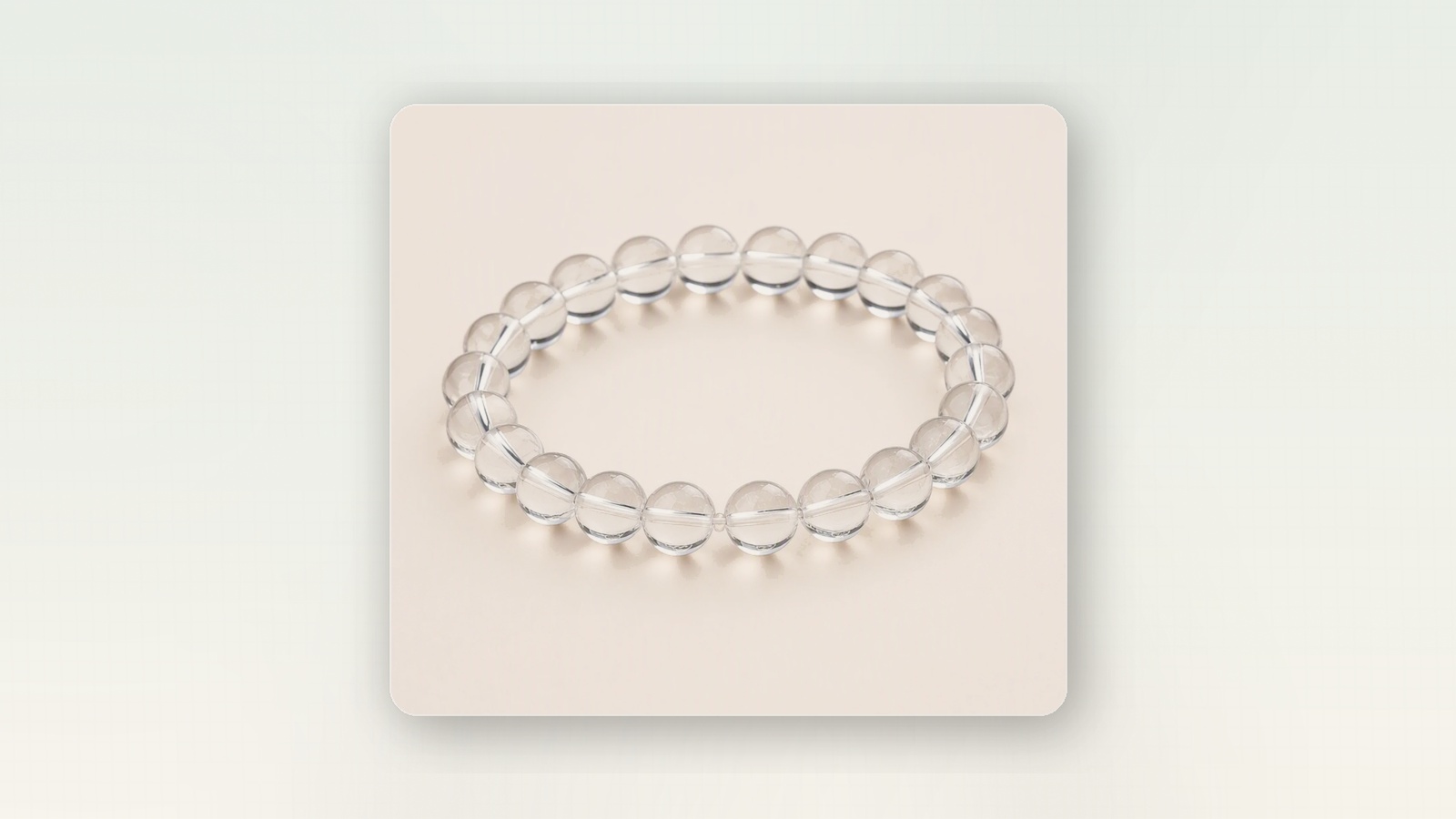
Table of Contents
- What Is Apatite Stone? The Name, Origins, and Why It's Called the "Deceiver"
- Apatite Meaning and Symbolism: Clarity, Inspiration, and Manifestation
- Apatite Colors and Their Meanings: Blue, Yellow, Green, and More
- Healing Properties of Apatite: Mental, Emotional, and Energetic Benefits
- How to Work With Apatite for Intuition, Focus, and Goal-Setting
- Apatite vs. Similar Stones: How to Identify Real Apatite
- Caring for Apatite Jewelry: Hardness, Cleansing, and Everyday Wear Tips
- How to Choose and Style Apatite: Buying Guide for Rings, Necklaces, and Bracelets
- FAQ: Quick Answers About Apatite Stone Meaning
- Sources
Apatite stone meaning centers on clarity, inspiration, and manifestation: it is a calcium phosphate mineral (most often fluorapatite) that has been valued since its 1786 discovery, and its name comes from the Greek word for "to deceive" because early miners confused it with peridot and beryl. In crystal practice, blue apatite is most often associated with the throat and third eye, yellow apatite with willpower and mental focus, and green apatite with heart-centered growth. On the Mohs scale it scores 5, which means it is too soft for careless daily wear and needs thoughtful setting and care.
What Is Apatite Stone? The Name, Origins, and Why It's Called the "Deceiver"
Apatite was first described in 1786 by A.G. Werner, and its name derives from the Greek apatao, meaning "to deceive or be misleading" — a reference to how easily it was mistaken for more valuable gems like peridot and beryl (Wikipedia).
Mineralogically, "apatite" is a field term for a group of calcium phosphate minerals rather than a single species. Most specimens are fluorapatite, while hydroxylapatite and chlorapatite make up the rest of the family (Mindat). That flexible chemistry — calcium phosphate combined with fluorine, chlorine, or hydroxyl — is exactly why apatite appears in so many colors (Mindat).
Notable deposits include Kirovsk on the Kola Peninsula in Russia, and the stone has historically been sourced from Switzerland, Brazil, and Madagascar (Wikipedia). Because apatite is also one of the world's most common sources of phosphorus, much of what is mined goes into fertilizer rather than jewelry — a reminder that gem-quality apatite is the exception, not the rule (Wikipedia).
Apatite Meaning and Symbolism: Clarity, Inspiration, and Manifestation
Apatite is sometimes called the "stone of manifestation" by those who use it as a personal reminder to pair clear thinking with creative follow-through. Whether that label resonates with you is entirely a matter of personal choice.
Three symbolic threads recur across sources:
- Clarity — often associated with cutting through mental fog and organizing scattered ideas.
- Inspiration — frequently linked to creative flow, fresh ideas, and the motivation to act on them.
- Manifestation — some people use apatite as a tangible cue for translating intentions into concrete steps and goals; this is a personal habit, not an inherent property of the stone.
Apatite sits in an honest middle place: it doesn't promise magic. It is often associated with the unglamorous work of showing up, focusing, and finishing what you started. That is the meaning most consistently supported by how people actually use the stone — on desks, in meditation spaces, and in jewelry worn during focused work.
Apatite Colors and Their Meanings: Blue, Yellow, Green, and More
Apatite ranges from deep blue-green to colorless, yellow, violet, pink, and brown, depending on its mineral chemistry (Smithsonian National Museum of Natural History). In crystal practice, color tends to map to specific intentions:
- Blue apatite — the most recognized variety; often associated with the throat and third eye, clear communication, intuition, and vision. Also called moroxite when blue and transparent (Wikipedia).
- Yellow apatite (golden apatite) — often chosen by those who like a visual reminder for focused work and disciplined goal-setting; any such association is a personal preference rather than a verified effect.
- Green apatite — linked to growth, renewal, and heart-centered balance. Transparent green stones have been traded as asparagus stone (Wikipedia).
- Cat's-eye apatite — chatoyant specimens cut as cabochons, prized for their shifting light band rather than a distinct color meaning (Wikipedia).
- Colorless, pink, violet, brown — rarer collector material; no strong symbolic tradition, so treat any specific "meaning" claim here with healthy skepticism.
If you're choosing by intention: blue for expression and intuition, yellow for discipline and study, green for personal growth. That is a practical shorthand, not a rule.
Healing Properties of Apatite: Mental, Emotional, and Energetic Benefits
In crystal practice — not medicine — apatite is often associated with several supportive roles:
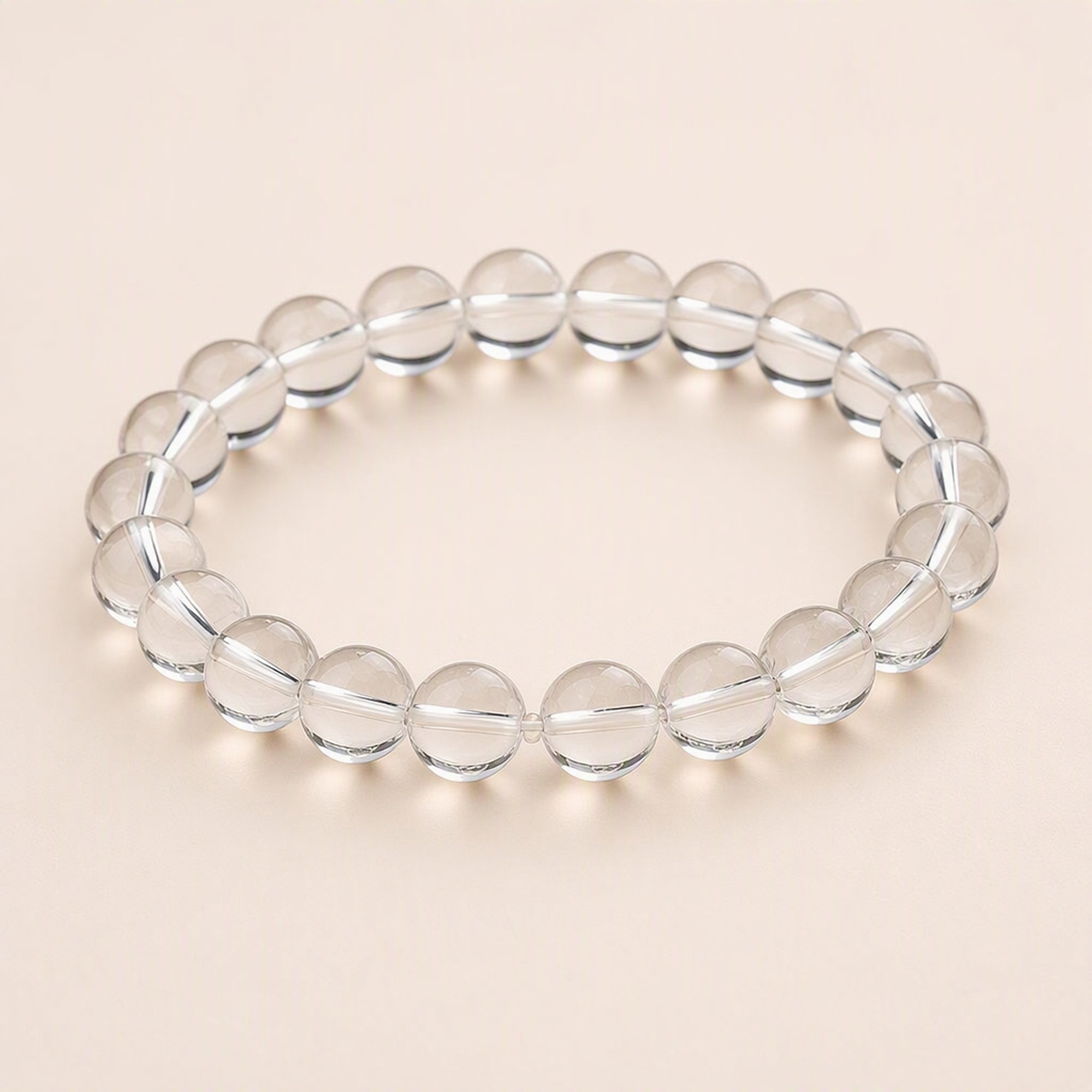
Clear Quartz Bracelet – Focused Intention
A quiet bracelet for turning this intention into a small daily ritual.
View the ritual piece- Mental: some people keep yellow apatite nearby during study or planning sessions as a personal cue for focus and follow-through; this is a habit, not a tested outcome.
- Emotional: blue apatite is sometimes chosen as a reminder to speak honestly and communicate clearly; this is a personal intention, not a guaranteed result.
- Energetic: it is sometimes used as a visual prompt for bridging ideas and action in personal goal-setting routines; this is a self-chosen reminder, not a property of the mineral.
Some people keep apatite near the bed or meditation cushion as a personal cue for reflection and visioning. These are individual habits, not treatments. If you are facing a health concern, a crystal is a companion at most — not a substitute for professional care.
How to Work With Apatite for Intuition, Focus, and Goal-Setting
Step-by-step: pairing apatite with a real goal
- Name one goal you can finish in 30 days. Vague ambitions dilute the practice.
- Choose the color that matches the bottleneck. Stuck on wording or speaking up? Blue. Losing focus mid-task? Yellow. Feeling burned out or stuck in a rut? Green.
- Place the stone where the work happens — your desk, keyboard corner, or journal cover — rather than in a drawer.
- Anchor a two-minute ritual: hold the stone, state the day's single task out loud, then put it down and begin.
- Review weekly. Note what actually got done. Adjust the goal, not the stone.
Boundaries: apatite is a 5 on the Mohs scale and fractures easily — it is not the stone to wear while lifting weights, gardening, or doing dishes. Keep it out of prolonged direct sun, and expect any "healing" claim to be reflective rather than clinical.
Apatite vs. Similar Stones: How to Identify Real Apatite
The "deceiver" name is earned. Apatite is routinely confused with peridot, beryl (aquamarine and emerald), and tourmaline — the exact reason for its Greek name (Wikipedia).
- Hardness: apatite is 5 on the Mohs scale; peridot is 6.5–7, beryl 7.5–8. If it scratches glass easily, it is probably not apatite (Smithsonian).
- Look: apatite's blue is often a slightly milky, greenish blue, whereas fine aquamarine is clearer and cooler in tone.
- Wear pattern: apatite shows edge wear and small chips quickly with daily use — a valuable identification clue in vintage jewelry.
- With confidence: a gemologist's refractive index and specific gravity test is the only reliable confirmation for faceted stones.
Treat "apatite" as a group name, not a single material — Mindat notes it is technically a field term for unidentified calcium phosphates in the apatite group (Mindat), so two apatite pieces can behave differently.
Caring for Apatite Jewelry: Hardness, Cleansing, and Everyday Wear Tips
The Smithsonian is blunt about this: at hardness 5, apatite is too soft to be widely used as a gemstone for jewelry (Smithsonian National Museum of Natural History). That doesn't make it unwearable — it makes it a stone you wear deliberately.
- Wear: pendants and earrings are far safer than rings and bracelets, which take the most impact.
- Protect: set rings in bezels rather than claw prongs, and remove before sports, cleaning, or showering.
- Store: in a soft pouch or separate compartment — apatite is vulnerable to being scratched by quartz, tourmaline, or corundum kept loose in the same box.
- Clean: lukewarm water, a drop of mild soap, and a soft brush. Avoid ultrasonic cleaners, steamers, and acid-based jewelry dips.
- Cleanse (energetic): moonlight, sound, or smoke are gentle options. Avoid long salt-water soaks, which can dull the surface over time.
- Charge: many people place apatite on selenite or clear quartz overnight; midday sun is best avoided to prevent any color fading.
How to Choose and Style Apatite: Buying Guide for Rings, Necklaces, and Bracelets
Buy for the piece you'll actually wear, not the biggest stone you can find.
- Necklaces and pendants: the safest format for apatite. A blue apatite drop near the throat reads as both elegant and intentional — fitting for a stone often associated with clear expression.
- Rings: choose a bezel setting and accept that you'll remove it often. A yellow apatite ring can work as a study or workday talisman, not a permanent piece.
- Bracelets: prefer smaller beads and a soft cord or elastic that cushions contact. Stone-on-stone bracelets will scratch.
- Quality check: look for even color, minimal internal fractures near the surface, and a lively polish. Slight inclusions are normal and often beautiful.
- Match to intention: blue for communication and intuition, yellow for focus and follow-through, green for growth and balance — then let the design decide.
- Metal pairings: silver and white gold keep cool blue and green tones crisp; yellow gold warms up golden apatite.
FAQ: Quick Answers About Apatite Stone Meaning
What is the spiritual meaning of apatite stone?
It is most often framed by enthusiasts as a stone of clarity, inspiration, and manifestation — a personal symbol for bridging the gap between having an idea and acting on it. Its name, "to deceive," adds a grounding note: appearances can mislead, so trust but verify.
What are the healing properties and benefits of apatite?
In crystal practice, apatite is associated with mental clarity, honest communication, motivation, and goal-setting. Yellow apatite is often linked with willpower and focus; blue with intuition and expression. These are reflective, personal associations, not medical ones.
What color apatite is best for manifestation or clarity?
Yellow apatite is the common choice for clarity, focus, and disciplined follow-through. Blue apatite is often used for visioning, intuition, and expressing your intentions clearly. Many people use both: blue to define the goal, yellow to execute it.
How do you cleanse, charge, and care for apatite jewelry?
Clean with lukewarm water, mild soap, and a soft brush — never an ultrasonic cleaner or harsh chemicals. Energetically, cleanse with moonlight, sound, or smoke, and avoid long salt-water baths. Store separately to prevent scratches.
Is apatite suitable for everyday wear, and how does its hardness affect use?
At Mohs 5, apatite is considered too soft for standard everyday jewelry (Smithsonian). Pendants, earrings, and bezel-set rings worn for limited occasions are the most realistic options. Expect wear if you treat it like a diamond.
Sources
- Apatite — Wikipedia
- Apatite: Mineral information, data and localities — Mindat
- Apatite — Smithsonian National Museum of Natural History
© 2026 Lumina Quartz. This content reflects traditional crystal lore and general gemstone care guidance; it is not medical, psychological, or financial advice.
Product Facts From the Current Catalog
These details come from the active Lumina Quartz catalog record checked on 2026-09-20. They are product-listing facts, not laboratory results or invented wear-test claims.
| Listed product | Clear Quartz Bracelet – Focused Intention |
|---|---|
| Format | Bracelet |
| Listed price snapshot | 34.99 |
Price, availability, and options may change. Check the live product listing before choosing.
A quiet piece for carrying this ritual into the day.
Clear Quartz Bracelet — Lumina Quartz