A Practical Guide to Calcite Crystal Meaning
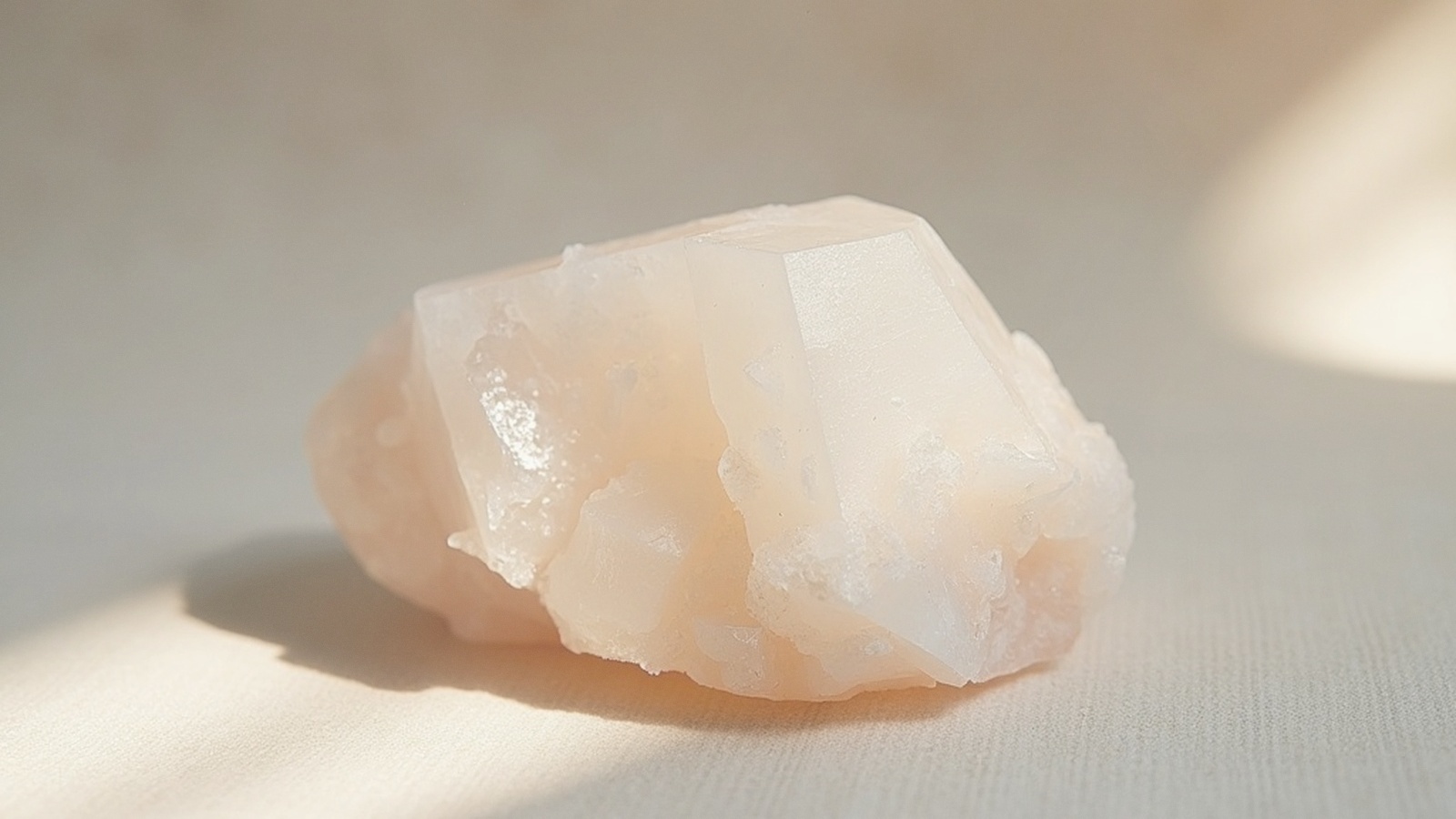
Table of Contents
- Table of Contents
- Key Takeaways
- What Is Calcite? Formation and Why It Matters
- Calcite Crystal Meaning: Amplifier, Clarity, and Balance
- What the Different Calcite Colors Mean
- Clear and White Calcite: Amplification and Purification
- Blue Calcite: Calm Communication
- Green, Yellow, Orange, Pink, and Red Calcite
- Choosing and Comparing Calcite: A Decision Module
- Table 1 — Purpose to Shade
- Table 2 — Calcite vs. Common Display Alternatives
- Step-by-Step Checklist: Is Calcite the Right Pick?
- Applicability Boundaries
- How to Cleanse and Charge Calcite
- FAQ
- What is the meaning of a calcite crystal?
- What are calcite's traditional properties and benefits?
- What do the different calcite colors mean?
- How do you cleanse and charge calcite?
- Is calcite suitable for jewelry and everyday wear?
- The Short Version
- Sources
Table of Contents
- Key Takeaways
- What Is Calcite? Formation and Why It Matters
- Calcite Crystal Meaning: Amplifier, Clarity, and Balance
- What the Different Calcite Colors Mean
- Clear and White Calcite: Amplification and Purification
- Blue Calcite: Calm Communication
- Green, Yellow, Orange, Pink, and Red Calcite
- Choosing and Comparing Calcite: A Decision Module
- How to Cleanse and Charge Calcite
- FAQ
- What is the meaning of a calcite crystal?
- What are calcite's traditional properties and benefits?
- What do the different calcite colors mean?
- How do you cleanse and charge calcite?
- Is calcite suitable for jewelry and everyday wear?
- The Short Version
The meaning of a calcite crystal is usually described in two layers: physically, calcite is the most common natural form of calcium carbonate (CaCO₃); in crystal traditions, it is often associated with amplification — not adding a new quality to your life, but making what is already there more noticeable. Because calcite forms in so many colors, the shade you choose tends to shape the meaning far more than the mineral name alone.
Key Takeaways
- Calcite is the most common natural form of calcium carbonate and is polymorphous with aragonite and vaterite — same chemistry, different crystal structure.
- In crystal traditions, calcite is often associated with amplification, clarity, and emotional balance rather than one fixed power.
- Color carries the practical meaning: clear, white, blue, green, yellow, orange, pink, and red are the shades most often discussed.
- Calcite rates about 3 on the Mohs hardness scale, so it scratches easily and reacts with acids.
- Cleanse it light and dry — a soft cloth, brief lukewarm water if needed, no salt bowls, ultrasonic cleaners, or steam.
- Store it away from harder stones such as quartz, amethyst, and pyrite.
What Is Calcite? Formation and Why It Matters
Calcite is widely distributed and known for the beauty and variety of its crystal development. It is polymorphous with aragonite and vaterite — identical in chemistry, different in structure — which is one reason the same mineral can look like a glass-clear rhomb or a chalky white mass. The name is linked to the Latin calx, meaning lime, and calcite is a principal component of chalk, marble, and limestone.
Why this matters for anyone holding a stone: calcite is not one thing. A collector-grade transparent specimen and a soft white chunk from a chalk cliff share a name and a chemistry, but they behave differently in your hand, in water, and on a shelf. Knowing you have calcite tells you more about care than it does about meaning.
Calcite Crystal Meaning: Amplifier, Clarity, and Balance
In crystal-writing traditions, calcite is commonly described as a versatile stone connected with energy, clarity, and emotional balance, and it is symbolically recognized for strength of spirit. Some older references frame it as an amplifier — a stone that makes an existing mood, intention, or train of thought harder to overlook. These are traditional and symbolic associations, not measurable effects.
If you take only one practical thing from that, take this: an amplifier is neutral about direction. In popular symbolism, calcite does not decide whether a room feels calmer or louder — it tends to make the existing tone more obvious. That is why people who work with calcite often pair it with something grounding rather than using it alone during an emotionally charged week.
What the Different Calcite Colors Mean
Clear and White Calcite: Amplification and Purification
Clear calcite is the closest thing to a "blank" amplifier: traditionally tied to clarity, focus, and clearing mental static before you begin something. White calcite reads softer — more like a quiet reset than a spotlight. Practical use: hold a piece during meditation when you want your intention to feel more defined.
Blue Calcite: Calm Communication
Blue calcite is often associated with calm expression, listening, and easing the tightness around difficult conversations. Practical use: keep it near the desk or the phone if you have a conversation you have been putting off. Treat it as a cue for tone, not a substitute for saying the real thing.
Green, Yellow, Orange, Pink, and Red Calcite
- Green calcite — renewal and growth; chosen when something is being rebuilt slowly.
- Yellow calcite — optimism and mental clarity; a morning-desk stone.
- Orange calcite — creativity and momentum; a working stone rather than a resting one.
- Pink calcite — warmth and self-compassion; the gentlest of the common shades.
- Red calcite — drive and forward motion; often described as the most forceful of the group.
Choosing and Comparing Calcite: A Decision Module
Use this module to match a shade to a purpose, compare calcite with harder alternatives, and check whether calcite is the right material for your situation at all.
Table 1 — Purpose to Shade
| If you want… | Choose | Because |
|---|---|---|
| A clearer sense of intention | Clear or yellow calcite | Traditionally linked to focus and mental clarity; both read as "beginning" stones. |
| Calmer communication | Blue calcite | Associated with listening and tone in difficult conversations. |
| Gentle, quiet support | Pink or white calcite | Warmth and self-compassion rather than momentum. |
| Motivation and drive | Orange or red calcite | Traditionally the most active, forward-moving shades. |
| Slow rebuilding | Green calcite | Symbolically tied to renewal and steady growth. |
Table 2 — Calcite vs. Common Display Alternatives
| Material | Mohs hardness | Everyday wear | Care tolerance | Best role |
|---|---|---|---|---|
| Calcite | About 3 | Not suitable for daily rings | Low — acids, salt, and repeated soaking can dull or etch it | Shelf, pouch, or occasional pendant |
| Quartz | About 7 | Workable with care | Higher, but still chippable | Everyday jewelry |
| Amethyst | About 7 | Workable with care | Moderate; can fade in prolonged sun | Jewelry and display |
Hardness figures are standard mineralogical values; treat them as durability guidance for the material, not a guarantee for a specific specimen.
Step-by-Step Checklist: Is Calcite the Right Pick?
- Decide the job first — display specimen, meditation cue, or a piece you actually wear.
- If the job is daily wear, stop here and choose quartz or amethyst instead.
- If the job is a shelf or pouch, pick the shade from Table 1.
- Check acid exposure: kitchen counters, fruit juice, cleaning sprays, perfume, and skin oils.
- Plan storage: a separate soft pouch, away from quartz, amethyst, and pyrite.
- Set a cleaning habit: dry cloth by default; brief lukewarm water only if needed, then dry immediately.
- Re-check the stone every few months for new scratches, cloudiness, or chipped edges.
Applicability Boundaries
- Works well for: colour-coded intention stones, display specimens, gentle personal rituals, and collectors who enjoy variety of crystal form.
- Poor fit for: everyday rings or bracelets, rough handling by children, acid-heavy environments, and anyone expecting a measurable or testable outcome.
- Not a substitute for: medical, psychological, or veterinary care. Traditional crystal meanings are symbolic and are not a treatment.
- Not for ingestion or water preparation: do not add calcite to drinking water, teas, or foods, and do not use it as a dietary calcium source.
How to Cleanse and Charge Calcite
Calcite is a soft, acid-sensitive carbonate, so cleansing is mostly about restraint. Wipe it with a soft dry cloth; if it needs more, use brief lukewarm water, then dry it immediately. Skip salt bowls, ultrasonic cleaners, steam, vinegar, and household cleaning sprays — all of them can etch or cloud the surface. For symbolic charging, moonlight or a quiet shelf is safer than prolonged direct sun, which can fade some shades, and safer than water immersion.
Store calcite separately from harder stones. Quartz, amethyst, and pyrite will scratch calcite long before calcite scratches them, and a single shared pouch is enough to leave marks.
FAQ
What is the meaning of a calcite crystal?
It is read in two layers: physically it is the most common natural form of calcium carbonate (CaCO₃), and in crystal tradition it is often associated with amplification — making an existing mood, intention, or sense of clarity more noticeable rather than adding something new. These associations are symbolic, not scientific findings.
What are calcite's traditional properties and benefits?
In crystal tradition, calcite is associated with amplification, clarity, and emotional balance, and is symbolically recognized for strength of spirit. These are traditional and symbolic associations only — they are not proven medical effects and are not a substitute for professional care.
What do the different calcite colors mean?
Clear and white point to amplification and purification, blue to calm communication, green to renewal, yellow to optimism and clarity, orange to creativity and momentum, pink to warmth and self-compassion, and red to drive and forward motion. Colour meanings are convention-based and vary between sources.
How do you cleanse and charge calcite?
Cleanse gently with a soft dry cloth or brief lukewarm water, then dry it. Avoid salt, ultrasonic cleaners, steam, and acids. For symbolic charging, use moonlight or a quiet shelf, and store it apart from harder stones.
Is calcite suitable for jewelry and everyday wear?
Usually not. At roughly 3 on the Mohs hardness scale, calcite scratches easily and reacts with acids, juices, cleaning sprays, and prolonged skin oils. A pendant worn occasionally is workable; a daily ring is not.
The Short Version
Calcite's meaning is best read as amplification with a colour attached: the mineral supplies the clarity, the shade supplies the direction. Let care decide how you keep it — dry, separated, and away from acid — and let the colour decide what you use it for. Treat every meaning as traditional symbolism rather than a health claim.
Interested in verified Calcite jewelry?
We are reviewing materials, sizing, supplier images, and shipping details before adding Calcite jewelry. Subscribe for launch updates.
Ask About AvailabilitySources
- Calcite | Mineral, Rock & Crystal | Britannica — britannica.com