Amazonite Crystal: Spiritual Meaning, Symbolism, and Daily Use
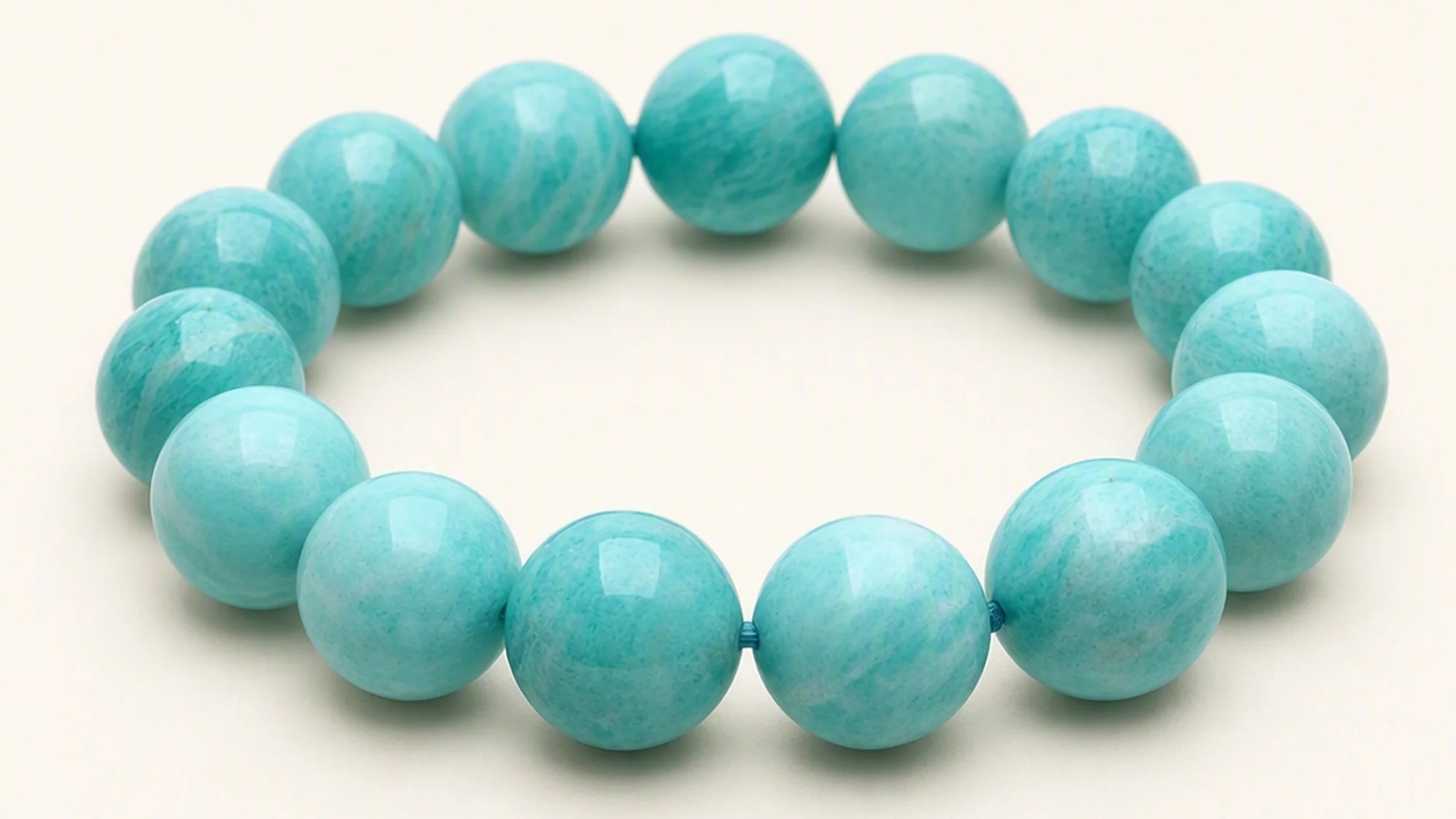
Table of Contents
- What Is Amazonite? The Peacemaker Stone at a Glance
- 10-Second Executive Summary / The Verdict Box
- Amazonite Spiritual Meaning and Symbolism
- Amazonite and the Heart and Throat Chakras
- Amazonite Healing Properties and Emotional Benefits
- How to Use Amazonite Daily: Jewelry, Home, Meditation, and Affirmations
- Step-by-Step: A Pre-Conversation Ritual with Amazonite
- Amazonite History and Origin: Myths, Color, and Sources
- How to Choose, Cleanse, and Care for Amazonite
- Frequently Asked Questions About Amazonite Meaning
- What is the spiritual meaning of amazonite crystal?
- Which chakras does amazonite work with?
- How do you use amazonite in daily life?
- Sources
What Is Amazonite? The Peacemaker Stone at a Glance
Amazonite is a blue-green variety of microcline feldspar, and its spiritual meaning centers on honest communication, emotional calm, and the courage to speak your truth. It is often called the "peacemaker stone" because it is associated with softening conflict and helping feelings and words line up. If you are asking what amazonite crystal meaning actually is, the short answer is this: it is a stone of truth spoken gently, tied most often to the throat and heart chakras.
10-Second Executive Summary / The Verdict Box
- Direct Verdict: Amazonite is best understood as a communication and emotional-balance stone, most often associated with the throat and heart chakras. Its core meaning is honest expression paired with calm.
- Mineral Identity: Amazonite is a blue-green microcline, a potassium feldspar. Its color is now believed to come from small quantities of lead and water within the feldspar structure, not from copper as was once thought.
- Mohs Hardness: 6 to 6.5. This means it is softer than quartz and can be scratched by harder stones, so it needs careful wear and storage.
- Chakra Association: Throat (Vishuddha) and heart (Anahata), often described as linking the two so that feeling and speech move together.
- Best Use Cases: Worn as jewelry during difficult conversations, held during journaling or affirmations, placed in a room to quiet tense energy, or used in meditation on truthful speech.
- Quality Note: For genuine, untreated color, look for stones that meet the Lumina Grade AAA Integrity Standard—natural rough, no chemical epoxy filling, and no irradiation or dye enhancement.
What follows is a grounded look at amazonite's meaning, its geology, its history, how to use it day to day, and how to tell a real, well-chosen stone from one that has been altered to look better than it is.
Amazonite Spiritual Meaning and Symbolism
Across crystal literature, amazonite is often associated with a single symbolic idea: truth without cruelty. Many modern writers describe it as a "peacemaker stone," linking it to the idea that the truest thoughts should surface and be spoken with ease. That idea—that honesty and kindness are not opposites—can be a useful personal reminder. You might keep a piece on your desk or by your journal as a prompt to choose kind honesty in daily conversations.
Several symbolic themes recur:
- Truth and courage: Some crystal writers call amazonite "the stone of courage and truth," tied to honest communication. As a personal practice, you could place it somewhere visible before a difficult conversation as a reminder to speak honestly and kindly—without treating the stone as a source of courage or a guarantee of better communication.
- Flow and trust: Amazonite's blue-green color and watery associations are often used as a visual metaphor for going with the flow. If that image resonates with you, you might carry it as a personal cue to trust your own pace and adapt to changing plans—rather than as a claim that the stone holds or transmits "fluid energy."
- Emotional harmony: Amazonite's calm color is often linked in popular literature to a balanced mindset. That is a personal symbolic choice, not a scientific claim. As a habit, you might pick it up during a mindful pause, take a few slow breaths, and check in with how you feel—without expecting the stone to stabilize mood or soothe stress.
Notice that these meanings are not about becoming louder or more forceful. They are about becoming clearer. That distinction matters, because it shapes how you would actually work with the stone—more often in quiet reflection than in confrontation.
Amazonite and the Heart and Throat Chakras
Amazonite is most frequently placed with two chakras rather than one, which is part of what makes its meaning distinct from other blue-green stones.
The throat chakra (Vishuddha) is a traditional symbolic concept associated with expression. In modern crystal practice, amazonite is sometimes linked to this idea as a reminder to speak with grace and clarity. If that idea appeals to you, you can use the stone as a personal prompt before meetings or journaling—especially if you find it hard to express emotions, apologize, or ask for what you need. Treat it as a reminder for your own communication habits, not as an energetic treatment or a way to clear blockages.
The heart chakra (Anahata) governs feeling and connection. Pairing the two suggests that the stone's real work is integration: not just saying more, but saying what is actually true for you, without hardening or hiding.
If you are choosing a stone specifically for public speaking or difficult conversations, the heart-throat pairing is the reason amazonite is often reached for instead of a purely throat-focused stone. It is associated with how you speak, not only whether you speak.
Amazonite Healing Properties and Emotional Benefits
Traditional and modern crystal sources most often associate amazonite with emotional steadiness rather than physical outcomes. Commonly listed properties include:
- Place it in busy spaces. In practice, some people choose to set amazonite on a desk or in a shared room as a visual cue to pause and take a breath. It is a personal habit, not a guarantee of calm, and the stone’s blue-green color comes from small quantities of lead and water in the feldspar (Smithsonian).
- Easing of stress and overthinking. It is often associated with a settled, balanced mindset rather than a high, energizing vibration.
- Support for honest self-expression. Frequently named for people who tend to swallow what they feel.
- A gentle nudge toward trust. Its water symbolism points to releasing the need to control every outcome.
A fair boundary: these are traditional associations within crystal practice, not medical claims. Amazonite is not a treatment for anxiety, depression, or any diagnosed condition, and it does not replace professional care. It is best understood as a supportive, grounding object—something that may help you slow down and notice what you actually feel.
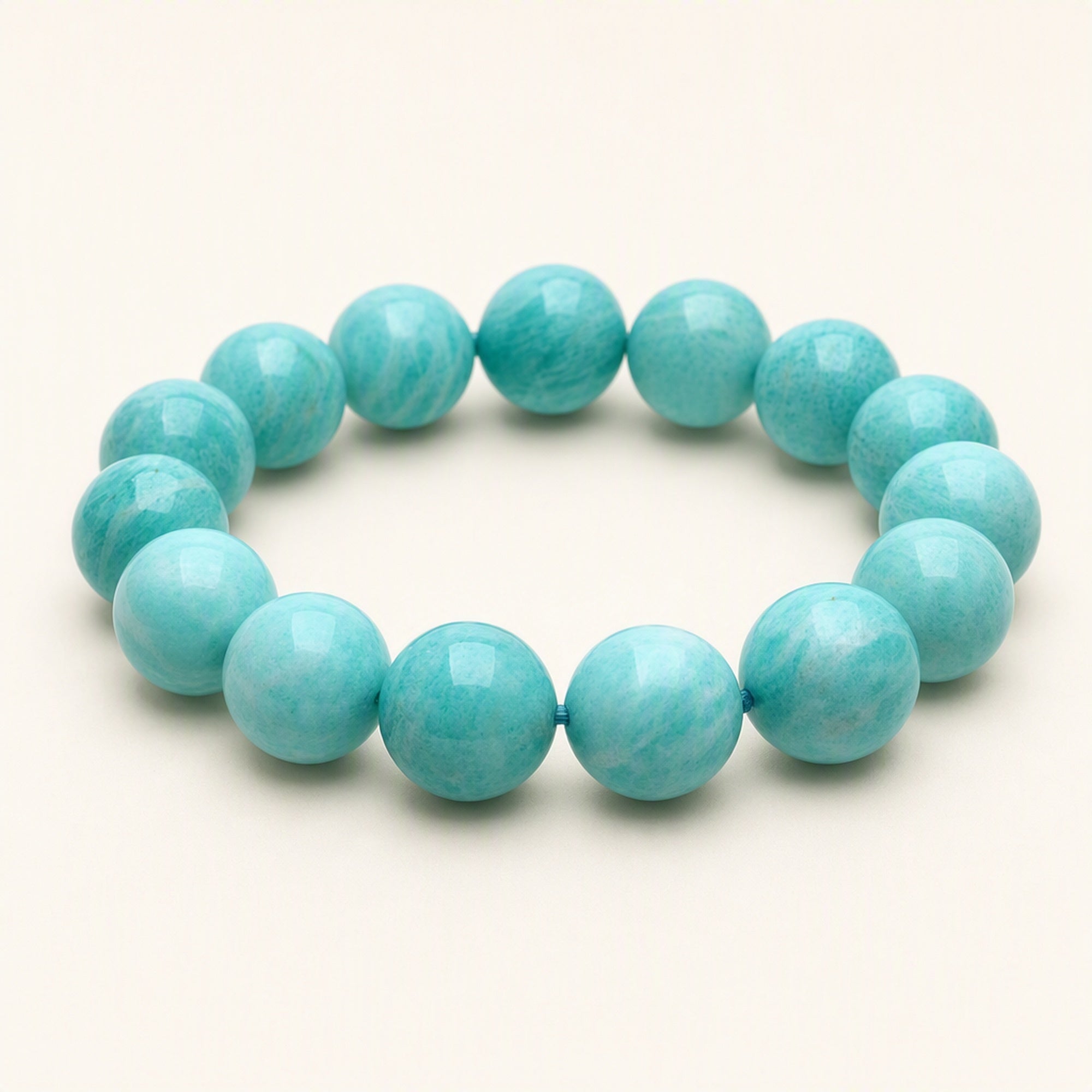
Amazonite Bracelet
A quiet bracelet for turning this intention into a small daily ritual.
Shop This Authentic Piece →How to Use Amazonite Daily: Jewelry, Home, Meditation, and Affirmations
Because amazonite is a communication stone, the most practical uses are the ones tied to moments when you need to speak or settle yourself.
Wear it where it can be touched. A bracelet or a pendant near the throat keeps the association close at hand. A smooth cabochon or bead is a good, low-risk way to wear amazonite (see care notes below).
Use it before a difficult conversation. Hold the stone for a minute, name the one true thing you want to say, and let the rest go. This is the heart-throat work in practice.
Set it in a room where you want a reminder. A piece on a desk, near a phone, or in a shared space can serve as a personal cue to check your pace and breathe before responding. This is a self-chosen habit; it does not change the energy of a room or anyone else’s mood.
Pair it with affirmations or journaling. Write one sentence you have been avoiding saying, then read it aloud. Amazonite is often used as a physical anchor for exactly this.
Pair it with a simple breath habit. If you like, hold your amazonite during a short breathing break: with each exhale, let go of the need to force an outcome. Treat this as a personal reminder rather than a therapy, and enjoy the stone as part of your own daily routine.
Step-by-Step: A Pre-Conversation Ritual with Amazonite
This is a specific, repeatable sequence rather than a general "hold your crystal" instruction. Use it when you know a conversation will be hard.
- Choose the stone's placement. Throat-level (pendant or a stone held at the collarbone) for the expression focus; pocket or hand for the calming focus. Pick one—do not do both.
- Name one true sentence. Not the whole speech. Just the core of what is true for you. Amazonite's symbolism is about clarity, not volume.
- Check the heart side. Ask whether the sentence is honest and kind. If it fails the second test, revise once. The heart-throat pairing is the whole point.
- Set a boundary before you start. Decide in advance what outcome you would accept. This matches the "trust the flow" symbolism and keeps you from over-controlling the moment.
- Afterward, note what you actually said versus what you intended. This is the part most people skip, and it is where the stone's practical value shows up over time.
When this does not apply: If you are facing an abusive, unsafe, or high-stakes legal situation, a grounding stone is not the tool. Seek appropriate support first. Amazonite's association with softening conflict should never be used to pressure yourself into speaking in a context where you are not safe.
Amazonite History and Origin: Myths, Color, and Sources
The name comes from the Amazon River, but the stone's real history is a good example of legend outrunning fact. According to the Smithsonian National Museum of Natural History, amazonite is named after the Amazon River—yet no deposits have been found there. The connection is legend, not geography.
According to a widely repeated story, the Amazons were said to have worn green stones and gifted them to visitors. As interest in minerals grew in the 18th century, that legend contributed to the name "amazonite" for green feldspar—even though, as the Smithsonian National Museum of Natural History notes, no deposits have been found near the Amazon River. Today, amazonite is found in Russia, Madagascar, Brazil, and the United States, and its blue-green color is believed to come from small amounts of lead and water in the feldspar. If you enjoy the Amazon legend, you can treat it as a colorful part of the stone's story rather than a verified historical tradition.
What actually makes it green-blue? Older sources attributed the color to copper. The Smithsonian notes that it is now believed the blue-green color results from small quantities of lead and water within the feldspar. This is a useful clue when buying, because it means the color is part of the mineral's structure—not a surface treatment.
Where it is found: The Smithsonian lists Russia, Madagascar, Brazil, and the United States among source locations, and Mindat records hundreds of documented localities worldwide. Amazonite forms in granite pegmatites, which is why it is often found alongside smoky quartz and feldspar.
How to Choose, Cleanse, and Care for Amazonite
Amazonite sits at Mohs 6 to 6.5, which is a genuinely useful number to know: it is a jewelry stone that can be scratched, chipped, or dulled by harder materials (quartz at 7, and anything above that). Care follows directly from that fact.
Choosing a stone:
- Look for even, natural color. Genuine amazonite ranges from pale green to deep blue-green with fine white veining or "grid" patterns. Color that is uniformly neon or unnaturally saturated is a caution sign.
- Check for treatment. Amazonite is sometimes dyed, irradiated, or epoxy-filled to strengthen lower-grade material. Stones that meet the Lumina Grade AAA Integrity Standard are natural rough, free of chemical epoxy filling, and free of irradiation or dye enhancement—so the color you see is the color the earth made.
- Ask about origin. Reputable sellers name the locality. "Amazonite" alone, with no source, is a reason to ask a follow-up question.
Cleansing and care:
- Rinse briefly with lukewarm water or wipe with a soft damp cloth. Avoid prolonged soaking.
- Do not use salt, vinegar, or ultrasonic cleaners—feldspar can be affected by acids and heat.
- Keep it away from perfumes, chlorinated pools, and direct prolonged sunlight, which can fade color over time.
- Store separately in a soft pouch, since a harder stone in the same box can scratch it.
- Cleanse by intention (moonlight, sound, or your own quiet attention) rather than by harsh methods the stone cannot tolerate.
Frequently Asked Questions About Amazonite Meaning
What is the spiritual meaning of amazonite crystal?
Amazonite is most often understood as a stone of honest communication and emotional calm, nicknamed the "peacemaker stone." Its core spiritual meaning is speaking your truth with grace rather than force.
Which chakras does amazonite work with?
It is most commonly associated with the throat chakra (Vishuddha) and the heart chakra (Anahata). Many sources describe it as linking the two so that what you feel and what you say move together.
How do you use amazonite in daily life?
Wear it as jewelry near the throat, hold it before a difficult conversation, place a piece in a tense shared space, or use it as an anchor during journaling and affirmations. Because it is Mohs 6–6.5, keep it away from harder stones and harsh cleansers.
Sources
- Smithsonian National Museum of Natural History — Amazonite
- Mindat — Amazonite: Mineral information, data and localities
- U.S. Geological Survey — Amazonite
This article reflects traditional crystal associations and mineralogy for educational purposes. It is not medical advice, and amazonite is not a substitute for professional care. © 2026 Lumina Quartz.
Product Facts From the Current Catalog
These details come from the active Lumina Quartz catalog record checked on 2026-10-16. They are product-listing facts, not laboratory results or invented wear-test claims.
| Listed product | Amazonite Bracelet – Honest Expression |
|---|---|
| Format | Bracelet |
| Listed price snapshot | 36.97 |
Price, availability, and options may change. Check the live product listing before choosing.