Amazonite Properties: Meaning, Healing Properties, and Daily Benefits
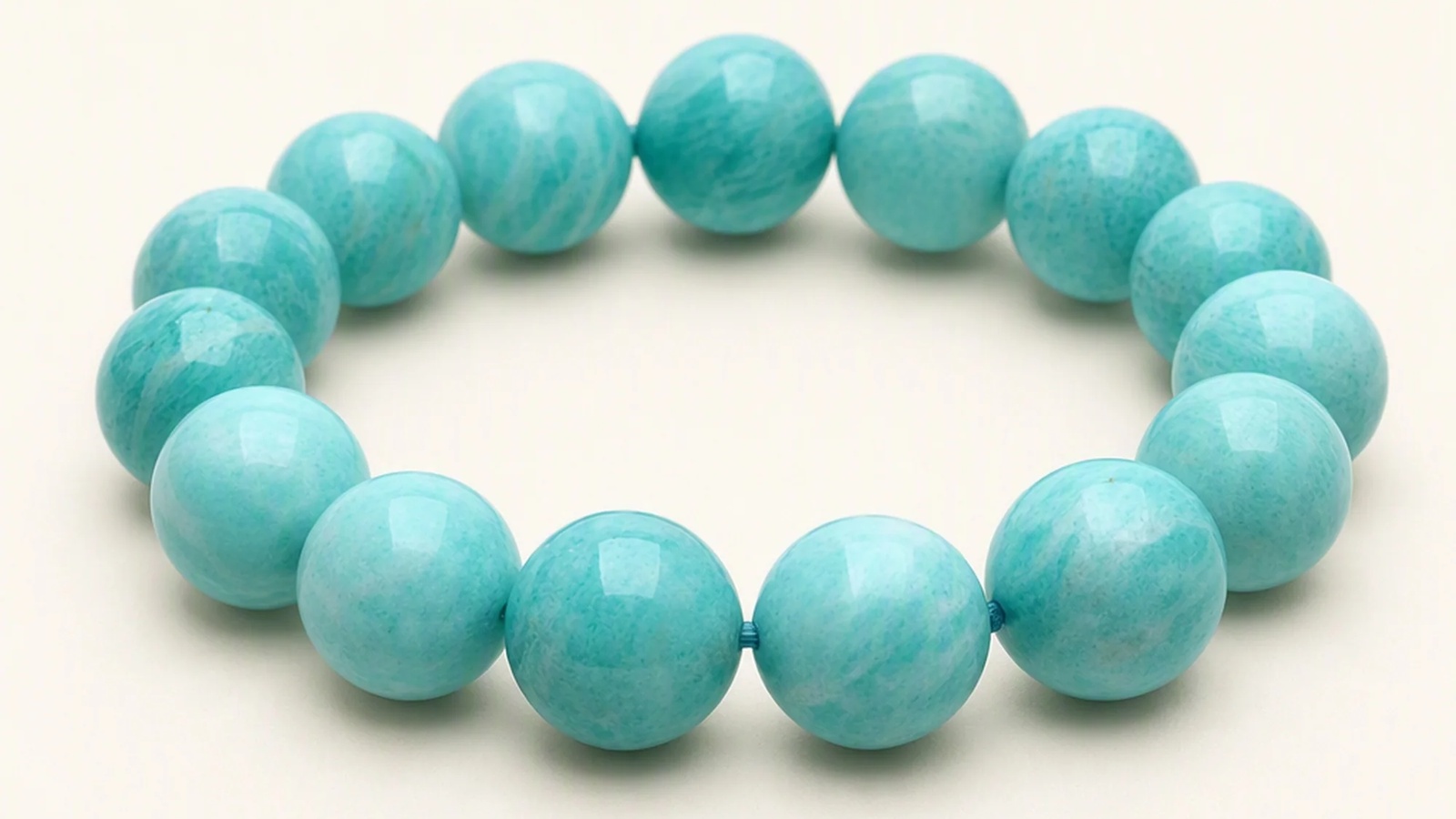
Table of Contents
- What Is Amazonite Properties?
- 10-Second Executive Summary / The Verdict Box
- What Amazonite Properties Mean in Plain Terms
- Common Meaning and Benefits
- How to Tell Real Amazonite From Treated or Mislabeled Stone
- Amazonite Buying Checklist — Step by Step
- Daily Ritual Ideas
- Why Amazonite Is Popular — and Where Its Limits Are
- What is amazonite properties?
- How do people use amazonite properties?
- Why is amazonite properties popular?
- Sources
What Is Amazonite Properties?
Amazonite’s properties come from its identity as a green to blue-green variety of potassium feldspar, usually microcline (K(AlSi3O8)), sometimes orthoclase. Its color is generally linked to elevated lead content (up to about 1.2% PbO in some analyses), though some green microcline may owe its hue to divalent iron; it is a 6–6.5 on the Mohs hardness scale, making it suitable for pendants, earrings, and other low-impact jewelry but vulnerable to scratching and chipping in rings worn daily. In crystal practice it is often associated with calm communication, truth-telling, and balancing the heart and throat, but those are cultural and symbolic associations rather than medically established effects.
10-Second Executive Summary / The Verdict Box
- Direct Verdict: Amazonite is a genuine mineral (green microcline feldspar) with real physical properties and long-standing symbolic associations with calm, honest communication; it is best understood as a grounding personal talisman, not a treatment.
- Mohs Hardness: 6–6.5 — fine for pendants and earrings, risky for everyday rings.
- Chemical Formula: K(AlSi3O8) (potassium feldspar).
- Color Source: Usually elevated lead content; some material may be colored by divalent iron.
- Best Use Cases: Throat-and-heart-centered rituals, conversation or public-speaking reminders, desk and bedside grounding stones, and low-impact jewelry.
- Buying Note: Look for the Lumina Grade AAA Integrity Standard — natural rough, no chemical resin filling, no irradiation or dye — since feldspar is often treated or mislabeled.
What Amazonite Properties Mean in Plain Terms
“Amazonite properties” is shorthand for two different things: the measurable properties of the stone itself, and the symbolic properties people assign to it. Keeping them separate is the most honest way to work with amazonite.
The measurable side is well documented. Amazonite is a green to blue-green variety of K-feldspar, typically microcline, with the formula K(AlSi3O8). Its color is usually caused by an elevated lead content — up to about 1.2% PbO in some samples — though researchers have also suggested divalent iron can produce green in certain microcline. One practical detail worth knowing: some grayish-green microcline is photosensitive and fades from greenish gray toward light smoky gray in prolonged light, while genuine amazonite color can sometimes be enriched by sunlight. That variability is why color alone is a weak test of quality.
The symbolic side is cultural. Amazonite has long been associated with calm communication, honesty, and the balancing of heart and throat energy. These are meaningful personal and spiritual frameworks — they are not claims that the stone changes mood, regulates the nervous system, or treats any condition.
Common Meaning and Benefits
Across crystal traditions, amazonite is most often linked to three themes:
- Calm, clear speech. It is frequently described as a “throat” stone — a reminder to speak gently and truthfully, especially in tense conversations.
- Heart–throat harmony. Many practitioners pair its blue-green color with the idea of aligning what you feel with what you say. This is symbolic language, and it may support reflective journaling or intention-setting.
- Grounding steadiness. Because it is a feldspar — an ordinary, abundant mineral — it is often chosen as a practical, everyday “anchor” stone rather than a dramatic showpiece.
What amazonite does not do, based on available evidence, is produce measurable physiological effects. If you are drawn to it, treat those benefits as invitations to pause, breathe, and choose your words — not as outcomes the stone delivers on its own.
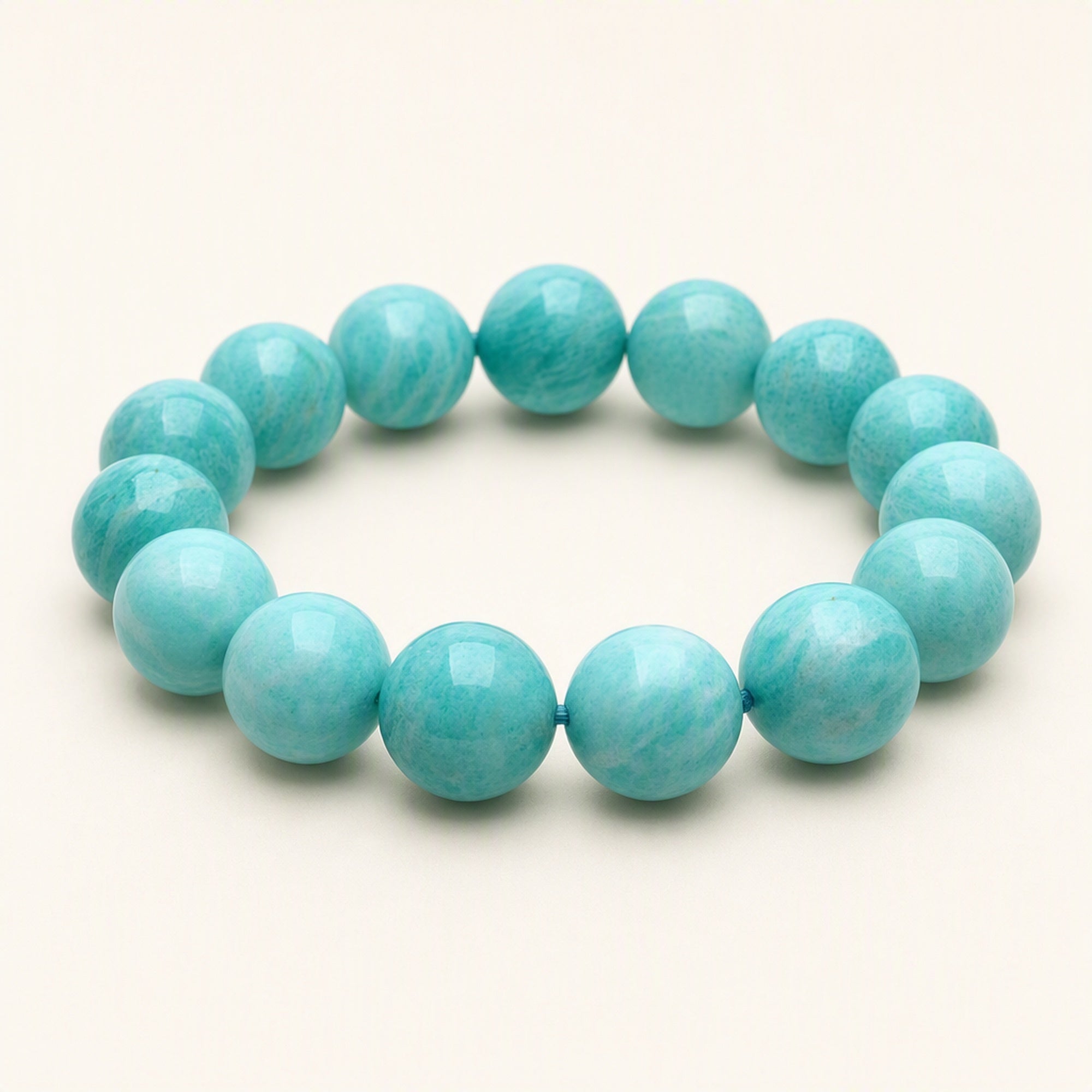
Amazonite Bracelet
A quiet bracelet for turning this intention into a small daily ritual.
Shop This Authentic Piece →How to Tell Real Amazonite From Treated or Mislabeled Stone
Feldspar is a frequent target for dyeing, resin filling, and loose naming, so a short verification routine matters more than any single test.
Amazonite Buying Checklist — Step by Step
- Confirm the mineral family first. Ask whether the piece is microcline or orthoclase feldspar. A seller who can name the species and formula (K(AlSi3O8)) is more likely to be sourcing honestly. Reference the mineral record at Mindat’s amazonite entry.
- Look at the color distribution. Natural amazonite usually shows subtle white veining, pale zoning, or a slightly milky blue-green base. Uniform, saturated turquoise with no variation is a red flag for dye.
- Check for resin fill. Tiny bubbles, a waxy sheen on fractures, or a plastic-like tap sound can indicate chemical stabilization. Under the Lumina Grade AAA Integrity Standard, pieces must be natural rough with zero chemical resin filling and no irradiation or dye.
- Ask about light exposure. Since some green-gray microcline is photosensitive and can fade, confirm whether the stone has been stored away from prolonged sun. Genuine amazonite color may also deepen in sunlight — treat dramatic, overnight color shifts with suspicion.
- Match hardness to use. At Mohs 6–6.5, amazonite scratches more easily than quartz (7) and far more easily than corundum (9). Choose pendants, earrings, or cabochons over daily-wear rings.
- Request a clear return policy. Because treatments are hard to detect visually, a no-questions return window is the most reliable safeguard.
Daily Ritual Ideas
Amazonite works best as a small, repeatable prompt rather than an elaborate ceremony. A few grounded ideas:
- Morning intention. Hold the stone for one slow breath and name the conversation you want to handle with care today.
- Desk anchor. Keep a tumbled piece beside your keyboard; when you notice it, unclench your jaw and soften your voice before replying.
- Evening reflection. Set it on your nightstand and ask one honest question: “Where did I speak clearly, and where did I hold back?”
- Jewelry with awareness. Wear amazonite as a pendant or earring — its hardness is a poor match for rings and bracelets that knock against hard surfaces.
These rituals are personal meaning-making. They may support mindfulness and self-reflection; they do not replace professional care for anxiety, communication difficulties, or any health condition.
Why Amazonite Is Popular — and Where Its Limits Are
Amazonite’s appeal is easy to understand: it is a genuinely beautiful mineral with a soft sea-glass palette, an accessible price point compared with many gemstones, and a long cultural association with calm speech that fits modern interest in mindful communication. It is also a feldspar — common enough to be widely available, which keeps it approachable.
The limits matter just as much. It is not a high-hardness gemstone, so it deserves gentle wear. Its color can fade or shift with light exposure in some material. And its most-touted “benefits” are symbolic traditions, not verified outcomes. Choosing it with clear expectations is what keeps the experience honest.
What is amazonite properties?
Amazonite is a green to blue-green variety of potassium feldspar, usually microcline (K(AlSi3O8)), with a Mohs hardness of 6–6.5 and color often linked to elevated lead content; it is culturally associated with calm, honest communication.
How do people use amazonite properties?
Most people use it as a personal talisman — a pendant, desk stone, or journaling prompt for speaking with care — rather than as a treatment, since no verified physiological effects are established.
Why is amazonite properties popular?
It is popular because of its soft blue-green color, accessible price, and long symbolic association with throat-and-heart communication; buyers should still check for dye, resin filling, and light-related color changes.
Sources
This article shares mineral facts and cultural traditions only. It is not medical advice. Crystal practices are personal and symbolic; they do not replace professional care. © 2026 Lumina Quartz.
Product Facts From the Current Catalog
These details come from the active Lumina Quartz catalog record checked on 2026-11-05. They are product-listing facts, not laboratory results or invented wear-test claims.
| Listed product | Amazonite Bracelet – Honest Expression |
|---|---|
| Format | Bracelet |
| Listed price snapshot | 36.97 |
Price, availability, and options may change. Check the live product listing before choosing.