Angelite Crystal Meaning, Benefits & Spiritual Guide
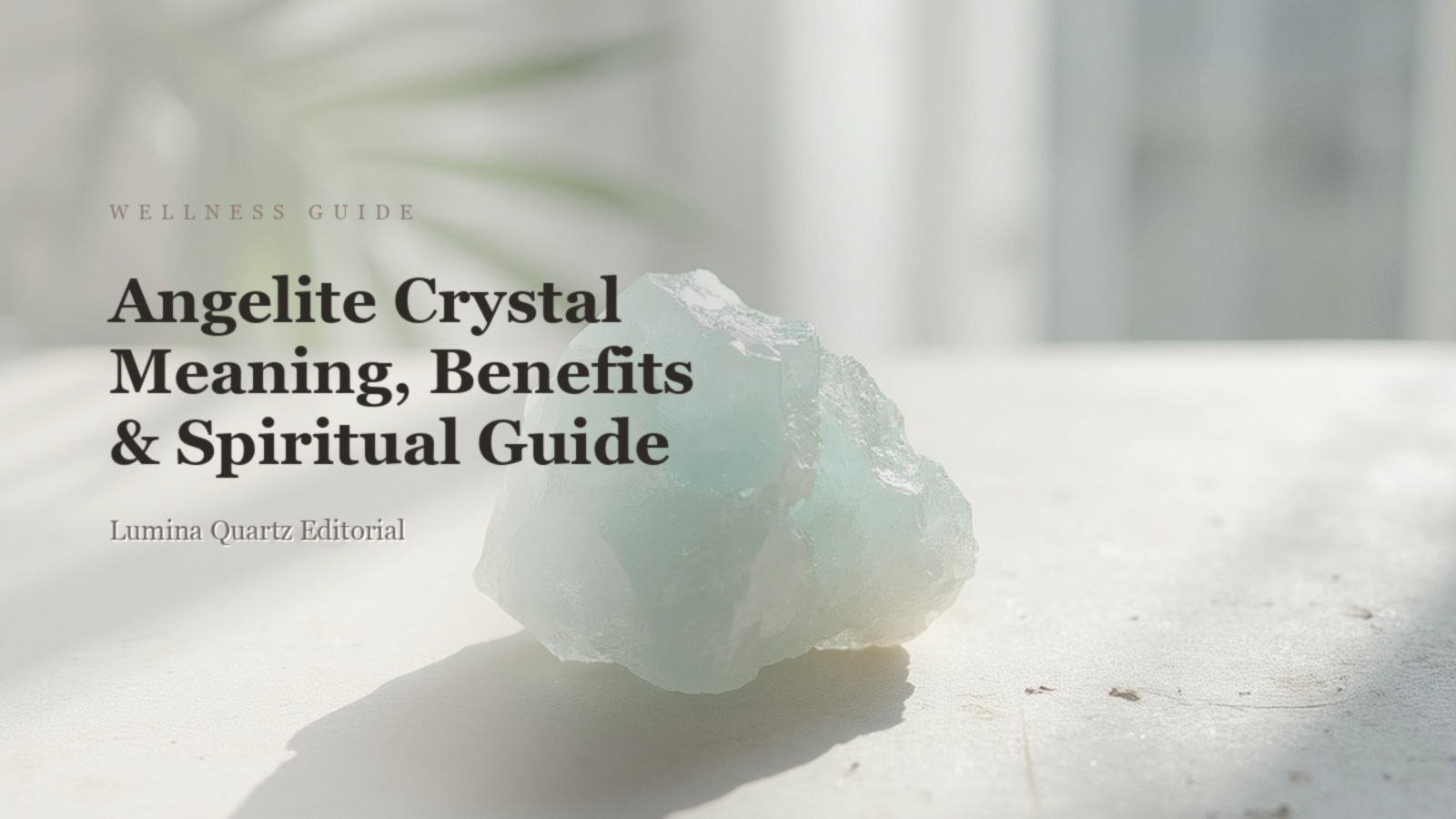
Table of Contents
- What is Angelite?
- Formation and Composition
- Historical Discovery
- Angelite Crystal Meaning and Symbolic Properties
- Chakra Associations and Spiritual Practice
- Emotional Support as a Ritual Object
- Communication and Expression
- How to Use Angelite
- Caring for Your Angelite
- Angelite or Blue Lace Agate? A Quick Comparison
- Frequently Asked Questions About Angelite
- Key Takeaways
What is Angelite?
There is a stone that seems to hold the echo of a distant, tranquil sea, or the quiet gaze of a cloudless sky. This stone is angelite. It is a gentle, grounding, and quietly uplifting presence, often associated with the space between breaths, the pause before a kind word, and the silent, knowing connection that exists beyond the bounds of spoken language. In a world that often feels loud and hurried, angelite offers a poetic whisper of peace, a reminder that stillness is not empty, but full of potential.
To hold angelite is to feel a subtle, cooling surface. Its texture, often ranging from a soft, chalky matte to a polished, silky smooth surface, invites touch. Its color, a spectrum from pale, almost white blue to a soft gray-blue, mirrors the shades of a winter sky or the gentle shallows of a tropical lagoon. This stone does not demand attention; it simply offers quiet, honest companionship. It is for those who wish to soften their edges, to speak their truth with compassion, and to connect with a deeper sense of inner calm.
Angelite is perhaps best understood as a trade name rather than a distinct mineral species. As mineral databases note, it is a semi-transparent, light blue-grey, fine-grained anhydrite marketed as a gem material, most famously sourced from Peru, where small lapidary workshops near Lima shape it into beads, cabochons, and tumbled stones. Mindat, the mineralogy reference database, lists angelite under this trade designation, which helps explain why its color and feel can vary slightly from piece to piece while its essential nature remains the same.
Formation and Composition
Angelite is a form of anhydrite, a mineral composed of calcium sulfate. Its chemical composition is CaSO₄. Unlike its cousin, gypsum, which contains water molecules, anhydrite is an anhydrous mineral. This lack of water is key to its character; it gives the stone a certain permanence, a crystalline structure that is both stable and gentle. It forms in sedimentary evaporite deposits, where ancient seas and salt lakes have long since dried up. Over millions of years, the minerals that were once dissolved in these ancient waters crystallized into the stone we now know as angelite.
During its formation, trace amounts of different elements, particularly titanium and strontium, can influence its final color, giving it that signature, ethereal blue. The stone is relatively soft, which is why it is often tumbled into smooth, comfortable shapes for jewelry and meditation. It is a stone born of water and time, a crystallized memory of an ancient world, carrying the energy of patience and slow, steady transformation.
Historical Discovery
While the mineral anhydrite was known well before, the specific, captivating blue variety we call angelite was officially named in 1987. It was discovered in Peru, in a region near the city of Pisco. The name "angelite" itself was chosen to reflect the stone's high, spiritual vibration and its association with angelic and celestial realms in crystal lore. The discovery of this stone felt like a gift from the earth, a tangible piece of the sky brought down for those seeking connection.
The timing of its discovery feels significant. In the late 1980s, a cultural shift toward new age spirituality and crystal work was blossoming. Angelite arrived at a moment when many were looking for tools to support inner peace and gentle communication. Its soft, inviting beauty and immediate sense of calm quickly made it a favorite among crystal healers, meditators, and anyone seeking a stone that felt both nurturing and uplifting. It is a stone whose history is much newer than its geological age, yet its impact has been profoundly felt in the modern world of healing stones.
Angelite Crystal Meaning and Symbolic Properties
The phrase "angelite crystal" points to something more than a pretty blue stone. In crystal traditions, angelite is considered a stone of profound spiritual and emotional meaning. It is not a stone of dramatic, forceful change. Instead, it works like water on stone, a persistent, gentle pressure that slowly and powerfully refines and clarifies. Its meaning is one of connection: connection to the higher self, to a sense of guidance, and to the deepest, most compassionate parts of our own hearts. To use angelite is to open a doorway to a softer, more honest way of being.
Many people who keep angelite describe a sense of being held or supported, as if a gentle hand rests on the shoulder. In crystal practice, this is often framed as an invitation to feel safe and accepted, which in turn may make it easier to sit with emotion and reflect with an open heart. It is a stone that seems to whisper, "You are not alone," and in that quiet truth, many find encouragement to be themselves. Its properties are traditionally associated with calm communication, peace, and spiritual clarity.
It is worth being clear about what angelite is not. It is not a medical treatment, and it does not diagnose or cure any condition. Its role is symbolic and ritual—a companion for mindfulness and reflection, not a substitute for professional care. If you are struggling with your emotional health, a crystal can sit alongside your self-care routine, but it should never replace the guidance of a qualified professional.
Chakra Associations and Spiritual Practice
Angelite is most often associated with the Throat Chakra (Vishuddha) and the Third Eye Chakra (Ajna) in crystal traditions. Its link to the Throat Chakra makes it a favored stone for those who wish to practice honest, kind communication. In crystal tradition, it is said to support the intention of speaking one's truth without anger or aggression, and of articulating feelings with clarity and compassion. It encourages a voice that comes from a place of heart-centered wisdom.
Simultaneously, angelite's gentle blue color is connected to the Third Eye, the traditional center of intuition and spiritual insight. This pairing makes it a popular focus for spiritual practice. Meditators often describe it as supporting an open, receptive state—whether that receptivity is framed as coming from higher realms, spirit guides, or one's own higher self. Meditating with angelite on the forehead is a common way to invite a state of calm attention, allowing images, feelings, or words to arise without the static of the active mind. It is a bridge between inner knowing and outer expression.
Emotional Support as a Ritual Object
In the realm of emotions, angelite is traditionally regarded as a balancing stone. It is often chosen as a companion during moments of anxiety, grief, and stress—not to suppress feelings, but as a ritual object that creates space to witness them with a sense of detachment and loving kindness. Many describe it as a supportive presence for gently setting down old patterns, like a tide smoothing footprints on a beach. It offers a symbolic safe space to feel without being swallowed by the feeling.
For those who feel emotionally raw or exhausted, angelite can serve as a soft place to rest. It can be held during quiet moments, its cool, steady presence serving as a simple anchor for the breath. Many find that holding a smooth stone and focusing on its texture is an easy way to settle into a few minutes of calm—a small, repeatable ritual that supports a more centered frame of mind without promising any particular outcome.
Communication and Expression
Because of its traditional association with the Throat Chakra, angelite is a favorite stone for anyone who wants to practice clearer, more compassionate expression. It is used by people who find themselves swallowing their words, by those who wish to soften a sharp tongue, and by anyone preparing for a difficult conversation. In crystal lore, angelite supports the intention to listen as deeply as you speak.
Writers, speakers, and teachers sometimes keep a piece of angelite on the desk as a small reminder of their voice and its purpose. Holding it before a meeting or a presentation can become a grounding ritual: one deep breath, one quiet intention, one steady word at a time. The stone does not speak for you—it simply offers a gentle prompt to choose your words with care.
How to Use Angelite
Angelite is wonderfully easy to work with because it asks so little of you. There is no complicated ceremony required; the most meaningful practices are often the simplest. Here are a few gentle ways to invite it into your daily life.
Meditation and Yoga
Place a small angelite stone on your forehead, your throat, or simply in your open palm while you meditate or rest at the end of a yoga practice. Let your attention rest lightly on its cool, smooth surface, and return to it whenever the mind wanders. A few minutes of quiet attention with the stone is often enough to feel more settled and present.
Jewelry and Wearable Stones
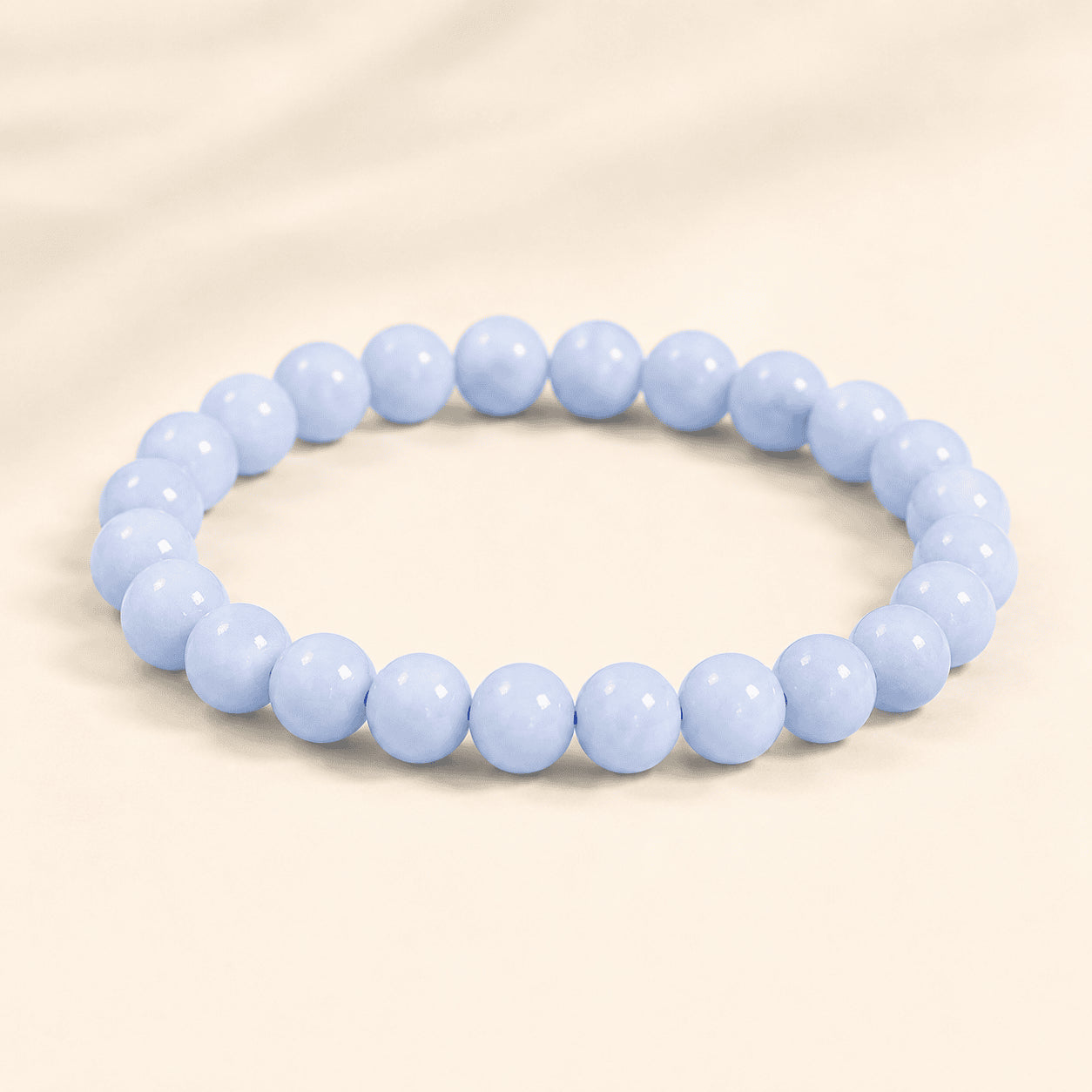
A bracelet or pendant keeps angelite close throughout the day, offering a quiet reminder to breathe and to speak kindly. Because the stone is soft, choose jewelry that protects it from scratches and knocks. Wearing it can become a small anchor—a touch of calm you can return to during a busy afternoon. If you are looking for an easy introduction, the Angelite Bracelet – Gentle Reassurance pairs the stone's soothing blue with an everyday, wearable design.
Home and Workspace Decor
A tumbled stone on a bedside table or a small polished piece near your workspace can soften a room's atmosphere. Place angelite somewhere you will see it during moments of transition—waking up, sitting down to work, or winding down for the evening—and let it act as a small visual cue to pause and reset.
What Angelite Can and Cannot Do
Crystal traditions are rich in meaning, and it is helpful to separate symbolic practice from medical fact. This quick guide keeps expectations grounded.
| Claim You May Hear | What We Can Honestly Say | A Grounded Way to Use Angelite |
|---|---|---|
| No crystal has been shown to treat or regulate the body. The stone itself is not a therapy. | Use it as a ritual object: hold it, breathe slowly, and let the pause support your own relaxation practice. | |
| "Angelite releases emotional blockages." | This is traditional symbolic language, not a measurable effect. | Treat it as a gentle prompt for journaling, reflection, or conversations with a trusted friend or therapist. |
| "Angelite enhances communication." | It cannot change how you speak; it can only serve as a reminder of your intention. | Keep it nearby when you want to practice listening, pausing, and choosing kinder words. |
| "Angelite connects you to angels or guides." | This belongs to personal spiritual belief and varies from person to person. | Enjoy it as part of a meditation or mindfulness routine that feels meaningful to you. |
Is Angelite for You? A Quick Fit Checklist
Before you buy or gift a piece, run through these practical checks. They focus on physical suitability and personal practice, never on health claims.
- I want a soft, matte-to-silky stone for meditation, reflection, or a desk piece—rather than a stone for hard daily wear.
- I understand angelite is a trade name for fine-grained blue anhydrite, and that its color and appearance can vary between pieces.
- I am comfortable keeping the stone dry: no soaking, no salt cleansing, no showers or dishwashing with it.
- I will store it separately from harder stones such as quartz, and wipe it with a soft dry cloth.
- I have realistic expectations: it is a symbolic ritual object, not a treatment, and I already have appropriate support for my emotional health.
If you tick most of these boxes, angelite can be a pleasant, low-friction addition to your mindfulness routine. If you need a durable everyday ring or a water-safe stone, choose a harder material instead.
Caring for Your Angelite
Anhydrite is a soft mineral—around 3.5 on the Mohs scale—so a little care will keep your stone looking its best for years.
Cleansing and Charging Methods
Avoid water and salt, both of which can dull, pit, or slowly dissolve the surface of anhydrite. Instead, cleanse your stone with moonlight, sound (a singing bowl or chime), or by passing it through the smoke of gentle incense. To "charge" it, simply rest it in soft, indirect light near a window for a few hours. These rituals are symbolic, but they can become a lovely part of your routine.
Storage and Handling Tips
- Store angelite separately from harder stones such as quartz or agate, which can scratch it.
- Keep it away from prolonged moisture, including the shower and humid bathrooms.
- Handle it with clean, dry hands, and wipe it with a soft cloth after use.
- Avoid harsh cleaners and ultrasonic jewelry cleaners for angelite pieces.
Angelite or Blue Lace Agate? A Quick Comparison
These two blue stones are often confused, and a quick comparison can help you choose with confidence.
| Feature | Angelite | Blue Lace Agate |
|---|---|---|
| Mineral family | Anhydrite (calcium sulfate) | Chalcedony (quartz family) |
| Appearance | Soft blue-grey, matte to silky, often opaque and uniform | Pale blue with delicate white bands and lace-like patterns |
| Hardness | Soft (about 3.5)—needs gentle care | Harder (about 6.5–7)—more durable for jewelry |
| Traditional association | Throat and Third Eye; calm communication and spiritual receptivity | Throat Chakra; soothing expression and gentle confidence |
| Best for | Meditation stones, occasional wear, desk and bedside pieces | Everyday jewelry, rings, and bracelets that see more handling |
If you want a soft, calming stone for reflection and are happy to handle it with care, angelite is a wonderful choice. If you want a blue stone for everyday wear, blue lace agate's greater hardness may serve you better.
Frequently Asked Questions About Angelite
Angelite Bracelet
A gentle ritual piece for bringing this intention into your daily routine.
Shop This Piece →What is angelite made of?
Angelite is a trade name for a fine-grained, light blue-grey variety of anhydrite, a calcium sulfate mineral (CaSO₄). It is the same mineral family as gypsum, but without water in its structure.
Can angelite go in water?
It is best to keep angelite dry. Anhydrite is soft and slowly affected by water, and salt can pit its surface. Cleanse it with moonlight or sound instead of soaking it.
Is angelite safe to wear every day?
Angelite is soft, so it scratches easily and is not ideal for rings or pieces that see heavy wear. A bracelet or pendant worn with care is fine, but remove it before showers, chores, or exercise.
Which chakra is angelite associated with?
In crystal tradition, angelite is most often linked with the Throat Chakra and the Third Eye Chakra, making it a popular stone for intentions around kind communication and quiet reflection.
Does angelite have medical benefits?
No. Angelite is not a medical treatment and does not cure or diagnose any condition. Its value is symbolic and ritual—a companion for mindfulness and calm, not a substitute for professional care.
Key Takeaways
- Angelite is a trade name for fine-grained blue anhydrite, most often sourced from Peru, and was named in 1987.
- In crystal tradition, it is a stone of calm communication, spiritual receptivity, and gentle emotional balance—symbolic rather than medical.
- It is soft and water-sensitive, so cleanse with moonlight or sound and store it away from harder stones.
- Use it in meditation, wear it with care, or place it in your space as a quiet reminder to breathe and speak kindly.
If you enjoy working with blue stones, you may also like our guide to fluorite meaning, properties, and everyday uses.
Sources
Crystal traditions are presented here as symbolic, cultural, and personal ritual practices. They are not medical tools; consult a qualified professional for health concerns.