Amethyst Anxiety Bracelet: How to Choose the Best Calming Crystal for Stress Relief
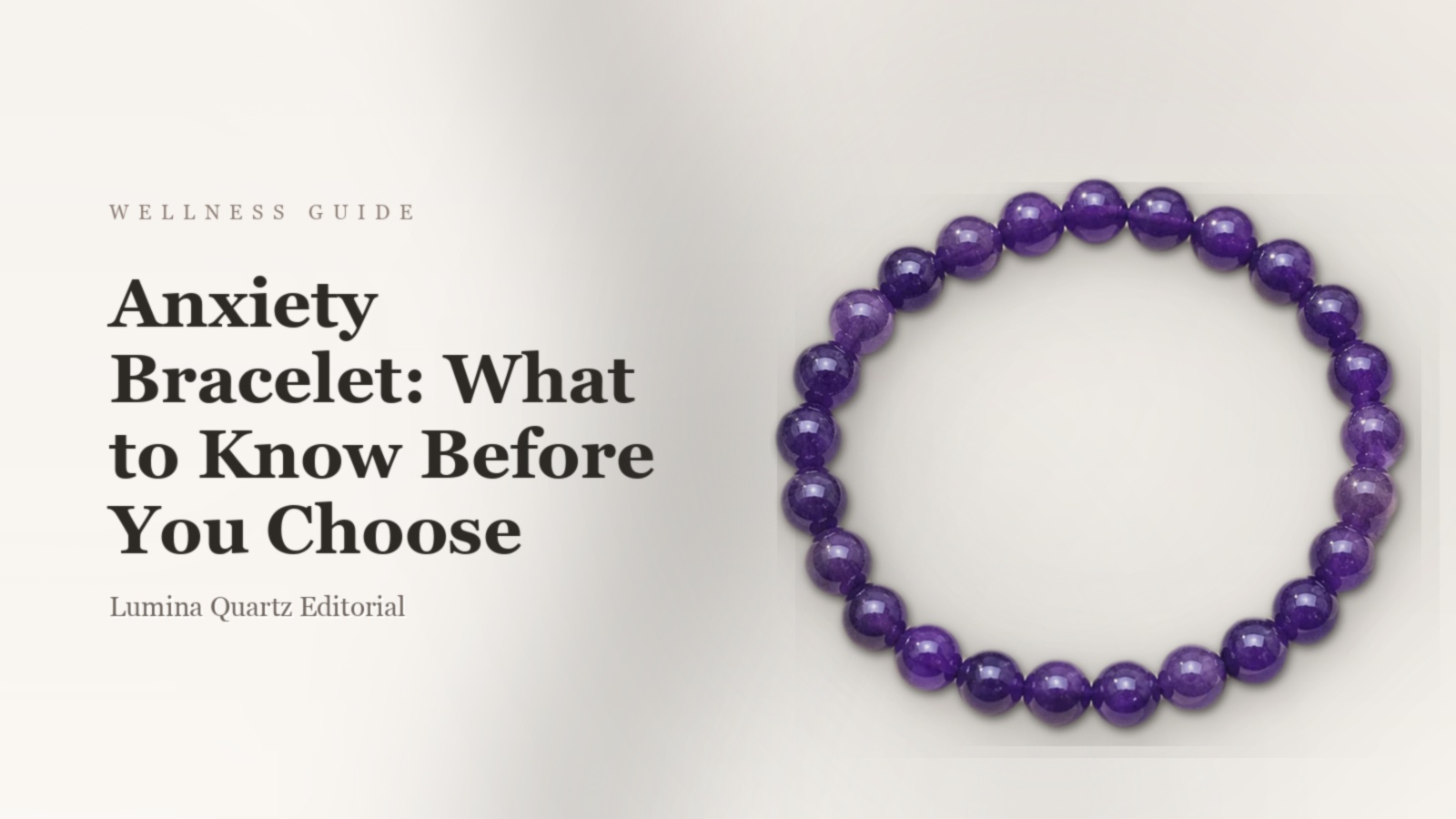
Table of Contents
- What Is an Anxiety Bracelet?
- How Anxiety Bracelets Aim to Support Calmness
- Types of Anxiety Bracelets: Which One Is Right for You?
- Crystal and Gemstone Bracelets
- Acupressure Bracelets
- Aromatherapy Bracelets
- Interactive or Reminder Bracelets
- Key Factors to Consider Before Choosing an Anxiety Bracelet
- Material and Durability
- Design and Fit
- Meaning and Intention
- Scientific Evidence vs. Personal Experience
- How to Use an Anxiety Bracelet Effectively
- Safety and Precautions
- Why Lumina Quartz Anxiety Bracelets Stand Out
- Frequently Asked Questions About Anxiety Bracelets
- Key Takeaways
There is a quiet kind of magic in the things we choose to wear close to our skin. A ring that holds a memory. A necklace gifted on an important day. And sometimes, a bracelet worn not for ornament alone, but as a gentle anchor for the mind. In a world that moves quickly, many of us carry a subtle hum of unease beneath the surface. It lives in the way we scroll, the way we breathe, the way we hold our shoulders just a little too tight. For those seeking a tangible reminder to return to themselves, the anxiety bracelet has become a beloved companion. But before you choose one, it is worth understanding what it truly is, what it may do, and how to select a piece that feels like yours.
What Is an Anxiety Bracelet?
An anxiety bracelet is a wearable accessory designed to support moments of stress, overwhelm, or scattered nervous energy. While the name might suggest a single, standardized tool, anxiety bracelets actually encompass a wide range of styles and purposes. Some are crafted from natural crystals and gemstones chosen for their calming associations. Others are made with smooth acupressure beads that press gently into the wrist. Still others are simple, elegant bands engraved with a word of encouragement or designed to be touched and turned throughout the day.
At their core, these bracelets are often associated with the practice of mindfulness. They offer a physical point of focus — something to touch, hold, or shift when the mind begins to spiral. The act of engaging with the bracelet can create a small pocket of awareness, a moment of grounding that interrupts the cycle of anxious thinking. Worn on the wrist, an anxiety bracelet becomes a quiet presence. It does not shout. It simply waits for you to remember it is there.
How Anxiety Bracelets Aim to Support Calmness
The mechanism behind an anxiety bracelet is rarely about the bracelet performing an action on its own. Instead, it is about the relationship you build with the object. When you wear a bracelet that carries intention, you are reminded throughout the day to return to yourself. The tactile sensation of a smooth stone against your skin, the gentle weight of the band, or the subtle click of beads as they shift can all serve as cues to take a slower breath.
Some bracelets are designed with specific mindful techniques in mind. For example, a bracelet with movable beads may invite a pattern of breathing — one bead for a slow inhale, another for an exhale. This gentle rhythm may support a sense of ease by helping to regulate the breath, which is often associated with the body's relaxation response. Other bracelets serve as visual reminders. Glancing down at a word like "breathe" or "still" can reorient your attention in the middle of a chaotic day.
It is important to be honest about what an anxiety bracelet is not. It is not a treatment, a cure, or a medical device. It does not promise to erase anxiety. What it offers is a tangible, wearable invitation to pause. It may support your existing coping strategies, deepen your self-awareness, and add a ritual of calmness to your daily life. But it does not replace professional care when that is needed.
Types of Anxiety Bracelets: Which One Is Right for You?
Because the term "anxiety bracelet" encompasses so many possibilities, choosing the right one may feel like a beautiful dilemma. The best place to begin is with intention. Ask yourself: what do I want this bracelet to do for me? Your answer will gently guide you toward the style that fits your life.
Crystal and Gemstone Bracelets
Crystal and gemstone bracelets are perhaps the most widely recognized category of anxiety bracelets. Each stone is chosen for its unique energetic qualities, which are often associated with specific emotional states. Amethyst, with its deep violet hue, is frequently linked to tranquility and mental clarity. Rose quartz is connected with compassion and self-love. Howlite, a soft white stone with delicate grey veins, is commonly chosen for its soothing, calming energy. Black tourmaline is often associated with grounding and protection.
While the scientific community does not validate the metaphysical properties of crystals, many people find that the ritual of choosing a stone — and the meaning they assign to it — creates a powerful psychological anchor. Whether you are drawn to the color, the texture, or the story behind a stone, that resonance may be exactly what supports your journey. The beauty of crystal bracelets is that they do not require you to believe in anything except your own experience.
Acupressure Bracelets
Acupressure bracelets, sometimes known as wrist pressure bands, are designed with a small stud or button that applies gentle pressure to a specific point on the inner wrist. This point, called the P6 or Neiguan point in traditional Chinese medicine, is often associated with easing nausea and is sometimes used to support overall relaxation. The theory is that stimulating this point may help balance the body's energy flow.
Some wearers report that acupressure bracelets help them feel more settled during travel, stress, or moments of heightened anxiety. While research on acupressure bracelets is mixed, the act of wearing one can still serve as a meaningful addition to a broader self-care routine. The physical pressure may be grounding in a subtle, embodied way.
Aromatherapy Bracelets
Aromatherapy bracelets combine the visual beauty of jewelry with the restorative power of scent. These bracelets typically feature a porous lava stone or a small felt pad designed to hold essential oils. As you wear the bracelet, the warmth of your skin gently releases the aroma throughout the day. Lava stone is a popular choice because it absorbs oils easily and is naturally porous, making it both functional and beautiful.
Lavender is one of the most commonly used essential oils for relaxation, while bergamot and chamomile are also often associated with a sense of calm. The act of lifting your wrist to your nose and taking a deep breath becomes a mindful ritual in itself. For those who find comfort in fragrance, an aromatherapy bracelet is a lovely way to carry a small pocket of tranquility with you wherever you go.
Interactive or Reminder Bracelets
Interactive bracelets are designed with movement in mind. They may feature loose beads that you can slide along a cord, a spinning element, or a textured surface that invites repetitive touch. This kind of gentle, repetitive motion can serve as a simple grounding technique during moments of stress, similar to the way some people fidget with a pen or twirl a strand of hair.
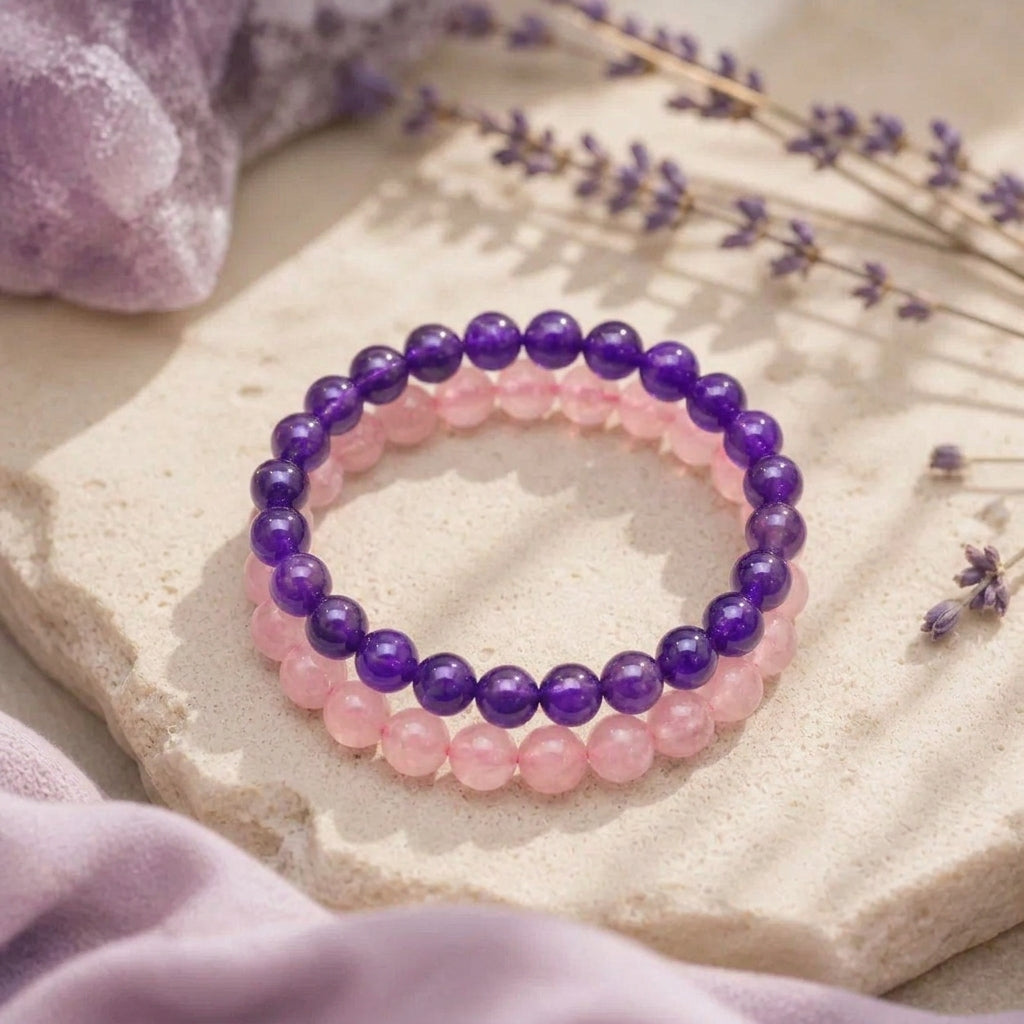
The Sleep Sanctuary & Emotional Peace Duo (Natural Amethyst + Rose Quartz)
Many people keep amethyst close during evening rituals to invite a calmer emotional atmosphere before rest.
Shop This Authentic Piece →Reminder bracelets take a quieter approach. They may be engraved with a single word, a short phrase, or a small symbol that holds personal meaning. Every time it catches your eye, it offers a soft prompt to check in with your breath, your posture, or your thoughts. For many people, this small visual cue is enough to create a moment of spaciousness in an otherwise crowded day.
Anxiety Bracelet Quick Comparison: Matching Style to Need
Before you decide, it helps to see the options side by side. The table below summarizes what each style offers, how it is typically used, and who may appreciate it most. This is a practical guide, not a promise of results — your own experience and preferences remain the most important factor.
| Bracelet Style | Primary Feature | How It Is Used | Best Suited To |
|---|---|---|---|
| Crystal & gemstone | Natural stone chosen for calming associations | Worn daily; touched or gazed at as a grounding cue | Those who connect with color, texture, and symbolism |
| Acupressure | Small stud pressing the P6 wrist point | Worn during travel, stress, or unsettled moments | People who prefer an embodied, pressure-based cue |
| Aromatherapy | Lava stone or felt pad for essential oils | Add oil, then lift wrist for a slow, mindful breath | Those soothed by fragrance and ritual |
| Interactive & reminder | Movable beads, spinner, or engraved word | Fidget gently or glance at the word as a pause cue | People who ground themselves through touch or visual prompts |
If you are unsure, begin with the style that matches how you already self-soothe. Someone who calms through scent may love an aromatherapy band; someone who calms through touch may prefer crystals or an interactive design. There is no wrong choice — only the one that feels right for you.
Key Factors to Consider Before Choosing an Anxiety Bracelet
Once you have a sense of the style you are drawn to, a few practical considerations can help you choose a piece you will genuinely enjoy wearing. These factors also matter for durability, comfort, and how well the bracelet fits into your daily life.
Material and Durability
The materials matter, both for longevity and for everyday comfort. Natural gemstones vary in hardness. Amethyst, for example, rates a 7 on the Mohs scale and has good toughness, which makes it suitable for all jewelry types according to the Gemological Institute of America. Softer stones may scratch more easily and are often better suited to occasional wear or protected settings.
Also consider the cord or band. Elastic cords are convenient and easy to slip on, but they can stretch over time. Sturdy nylon or leather cords may last longer with care. If you plan to wear your bracelet every day — in the shower, at the gym, or while sleeping — choose materials that can handle that rhythm, or plan to remove it during activities that could cause wear.
Design and Fit
Fit is not a small detail. A bracelet that is too tight may feel uncomfortable or leave marks, while one that is too loose may slide and distract. For beaded bracelets, a common guideline is to allow about half an inch of space between your wrist and the band, so it sits comfortably without pressing. If you are between sizes, sizing up slightly is often more comfortable for daily wear.
Design also plays a role in how often you reach for the bracelet. A piece that matches your wardrobe and personal style is more likely to become part of your routine. If the bracelet is meant to be a calming cue, it helps if you actually enjoy looking at it.
Meaning and Intention
The meaning you assign to your bracelet may be its most powerful feature. Perhaps amethyst reminds you of a quiet evening sky, or a particular word engraved on a band reflects a value you want to return to. This personal symbolism is what transforms a simple accessory into a meaningful anchor.
Some people like to set an intention when they first put on a new bracelet — a single word or phrase they want to carry with them. Others prefer to let the meaning grow naturally over time. Either way, the bracelet becomes a small, private reminder that belongs to you alone.
Scientific Evidence vs. Personal Experience
It is worth holding both perspectives gently. On one hand, the calming effects of crystals and acupressure are not firmly established in scientific research, and no bracelet should be presented as a proven treatment for anxiety. On the other hand, personal experience matters. Many people find that a meaningful object, a mindful ritual, or a sensory cue genuinely helps them feel more grounded.
The most honest position is this: an anxiety bracelet is a supportive tool, not a medical intervention. If it helps you pause, breathe, and reconnect with yourself, that is a real and worthwhile benefit. If anxiety feels persistent or overwhelming, please reach out to a qualified healthcare professional. A bracelet can accompany that care, but it cannot replace it.
How to Use an Anxiety Bracelet Effectively
A bracelet works best when it is woven into your daily rhythm. Here are a few gentle ways to make the most of yours:
- Set a cue. Decide that every time you notice the bracelet, you will take one slow, full breath.
- Use it as a pause button. When you feel tension rising, touch the bracelet and name one thing you can see, hear, or feel in the present moment.
- Pair it with a ritual. Put it on each morning with a single intention, or take it off at night as a signal that the day is complete.
- Keep it visible. Wear it on your dominant wrist if you want more frequent reminders, or on the other wrist if you prefer a subtler cue.
- Refresh the meaning. If the bracelet starts to feel ordinary, take a moment to reconnect with why you chose it.
Consistency matters more than intensity. A small, repeated moment of awareness can add up over time.
Safety and Precautions
Anxiety bracelets are generally low-risk, but a few precautions are worth noting. If you have sensitive skin, choose smooth materials and avoid tight fits that could irritate the wrist. Remove the bracelet if you notice redness, itching, or discomfort. If you use essential oils, dilute them according to the oil's guidance and avoid applying them directly to broken skin. People with pacemakers or other implanted devices should consult a healthcare professional before using an acupressure bracelet, as the pressure point may not be appropriate for everyone.
Keep small beads and loose parts away from young children and pets, as they can pose a choking hazard. Finally, remember that an anxiety bracelet is a complement to self-care, not a substitute for professional support.
Why Lumina Quartz Anxiety Bracelets Stand Out
At Lumina Quartz, we believe a calming bracelet should feel as considered as the intention behind it. Our pieces are chosen with attention to the quality of the stone, the comfort of the fit, and the quiet beauty of the design. If amethyst speaks to you, our Natural Amethyst Bracelet with 8mm genuine violet crystal beads is made to be a gentle daily companion — a soft reminder to breathe, pause, and return to yourself. It is not a promise of a cure, but a small, beautiful invitation to slow down.
Frequently Asked Questions About Anxiety Bracelets
Do anxiety bracelets actually work?
There is no scientific consensus that bracelets directly reduce anxiety. However, many people find that the sensory cue, ritual, and personal meaning of a bracelet help them pause and feel more grounded. Think of it as a supportive tool rather than a treatment.
How do I choose the right stone for stress relief?
Start with what draws you in. Amethyst is often associated with tranquility, rose quartz with self-compassion, and howlite with calm. The stone that feels meaningful to you is likely the one you will use most consistently.
Can I wear an anxiety bracelet every day?
Yes, with care. Choose durable materials and a comfortable fit, and remove the bracelet during activities that could damage it. Elastic cords may need replacing over time.
Are acupressure bracelets safe?
They are generally considered low-risk for most people, but those with implanted medical devices or certain health conditions should check with a healthcare professional first. Stop using one if you experience discomfort.
How do I care for a gemstone bracelet?
Clean gently with a soft cloth and lukewarm water, and avoid harsh chemicals or prolonged sunlight. Because amethyst rates a 7 on the Mohs scale and has good toughness, it is suitable for everyday jewelry types, but it still deserves gentle handling.
Key Takeaways
- An anxiety bracelet is a wearable mindfulness cue, not a medical device or treatment.
- Choose based on how you already self-soothe: crystal, acupressure, aromatherapy, or interactive styles.
- Prioritize comfort, durable materials, and personal meaning over trends.
- Use your bracelet as a repeated pause cue — one breath, one moment of awareness.
- Seek professional support if anxiety feels persistent or overwhelming.
Related Reading
If you enjoy learning about the stories behind calming stones, you may also like our gentle guide to Red Jasper: Meaning, Benefits, and Uses.