Aventurine Stone: Spiritual Meaning, Symbolism, and Daily Use
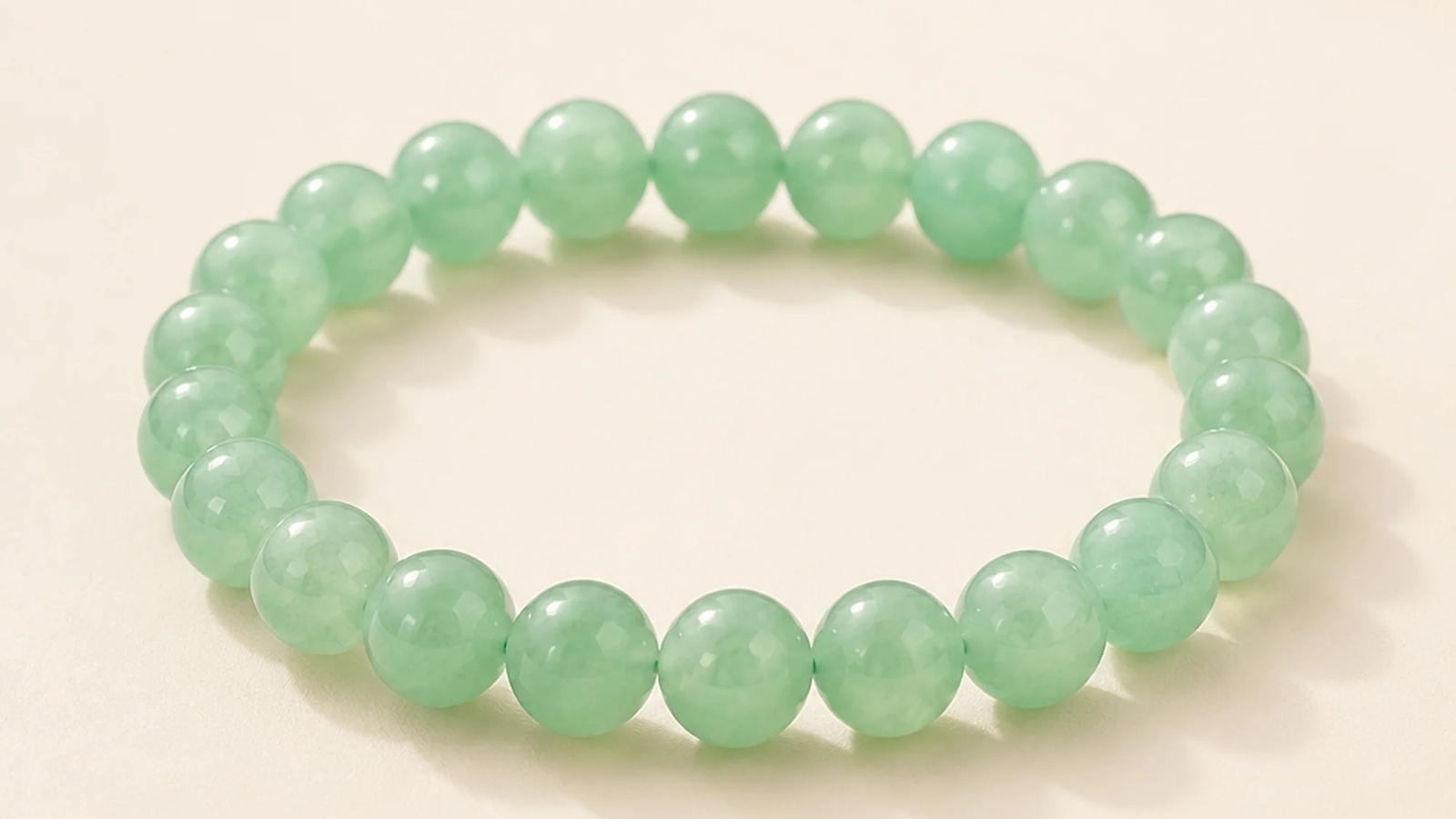
Table of Contents
- What Is Aventurine Stone?
- Aventurine vs. Goldstone (Aventurine Glass)
- Aventurine Stone Meaning: Symbolism at a Glance
- 10-Second Executive Summary / The Verdict Box
- The Spiritual Meaning of Aventurine by Color (Green, Red, Blue, Peach)
- Aventurine and the Heart Chakra
- Real or Goldstone? A 5-Step Verification Checklist
- Aventurine in Daily Use: Practical Ways to Work With It
- How to Cleanse, Charge, and Care for Aventurine
- Frequently Asked Questions About Aventurine Stone
- What is the spiritual meaning of aventurine stone?
- What does green aventurine symbolize and what is it good for?
- How can you tell real aventurine from goldstone or glass?
- Sources
What Is Aventurine Stone?
Aventurine is a translucent to opaque variety of quartz, defined by tiny mineral inclusions that scatter light and create a shimmering “aventurescence.” On the Mohs scale it sits at about 7, the standard hardness of quartz — hard enough for everyday jewelry but still vulnerable to sharp knocks and abrasion over time. The name comes from the Italian a ventura, “by chance,” and the stone is most often sold in green, with red, blue, peach, and gold varieties appearing less frequently. It is a mineral group term rather than a single fixed rock, which matters when you shop: dealers use “aventurine” loosely, and quality varies accordingly.
Aventurine vs. Goldstone (Aventurine Glass)
This is the most common mix-up. Goldstone is a manufactured glass — typically copper flecks suspended in glass — while aventurine is a natural quartz with mineral inclusions such as mica or hematite. Both sparkle, but the sparkle looks different: goldstone’s glitter is dense, uniform, and often metallic-bright, while natural aventurine’s shimmer is patchier and more subtle. If a piece is described as “blue goldstone” or “goldstone,” treat it as glass, not quartz. For natural stone, confirm the seller works to defined integrity standards; at Lumina, our Lumina Grade AAA Integrity Standard means natural rough origin, no chemical resin filling, and no irradiation or dye treatment.
Aventurine Stone Meaning: Symbolism at a Glance
In crystal traditions, aventurine is most often associated with luck, opportunity, and heart-centered optimism. Its shimmering surface has long been read as a symbol of possibility catching the light, and the green variety in particular is linked to growth and prosperity in popular lore. These are cultural and personal associations rather than measurable effects — treat them as a reflective practice, not a medical one. The stone may support a sense of calm focus and is often used as a tangible reminder to stay open to small good turns in daily life.
10-Second Executive Summary / The Verdict Box
- Direct Verdict: Aventurine is a natural quartz (hardness ~7 on the Mohs scale) prized for a light-scattering shimmer and traditionally associated with luck, opportunity, and heart-centered optimism. Green aventurine is the classic choice for everyday wear; red, blue, and peach offer different symbolic anchors.
- Key Physical Parameters: Mohs hardness ≈ 7; translucent to opaque; aventurescence from mineral inclusions (mica, hematite, and related); natural stone — not to be confused with goldstone glass.
- Best For: Daily-wear pendants, pocket stones, desk companions, and journaling or intention-setting rituals. Not ideal for high-impact rings or pieces worn during rough sport.
- Buying Criterion: Ask for natural, untreated stone; Lumina Grade AAA Integrity Standard = natural rough, no resin filling, no irradiation or dye.
The Spiritual Meaning of Aventurine by Color (Green, Red, Blue, Peach)
Color is the clearest guide to how people work with aventurine, because each shade carries its own symbolic register in crystal tradition.
- Green aventurine: The most common and most referenced. Often associated with prosperity, growth, and fresh starts — a “beginner’s luck” stone in spirit.
- Red aventurine: Warmer and more grounded in feel, sometimes linked to vitality, courage, and steady energy. Many people prefer it for evening or grounding practices.
- Blue aventurine: Less common and often softer in tone; frequently associated with clear communication and calm reflection.
- Peach aventurine: Gentle and warm, often chosen as a heart-companion stone for self-kindness and relationship-focused intentions.
Note that color in natural stone is rarely uniform — subtle banding and variation are normal, not flaws. A piece that looks perfectly flat and identical to the next one may have been dyed or treated.
Aventurine and the Heart Chakra
Green aventurine is most widely associated with the heart chakra, the center often understood in these traditions as the meeting point of feeling and steadiness. The stone’s meaning in this frame is less about intensity and more about warmth: it is used in meditation and intention work as a reminder to soften, to stay open, and to keep a gentle pace. Because aventurine is quartz, it holds a cool, smooth weight in the palm that many find anchoring — a sensory cue for a moment of pause rather than a claimed physical effect. If you use it in chakra-focused practice, pair it with breath work or journaling, and keep expectations grounded in ritual and reflection.
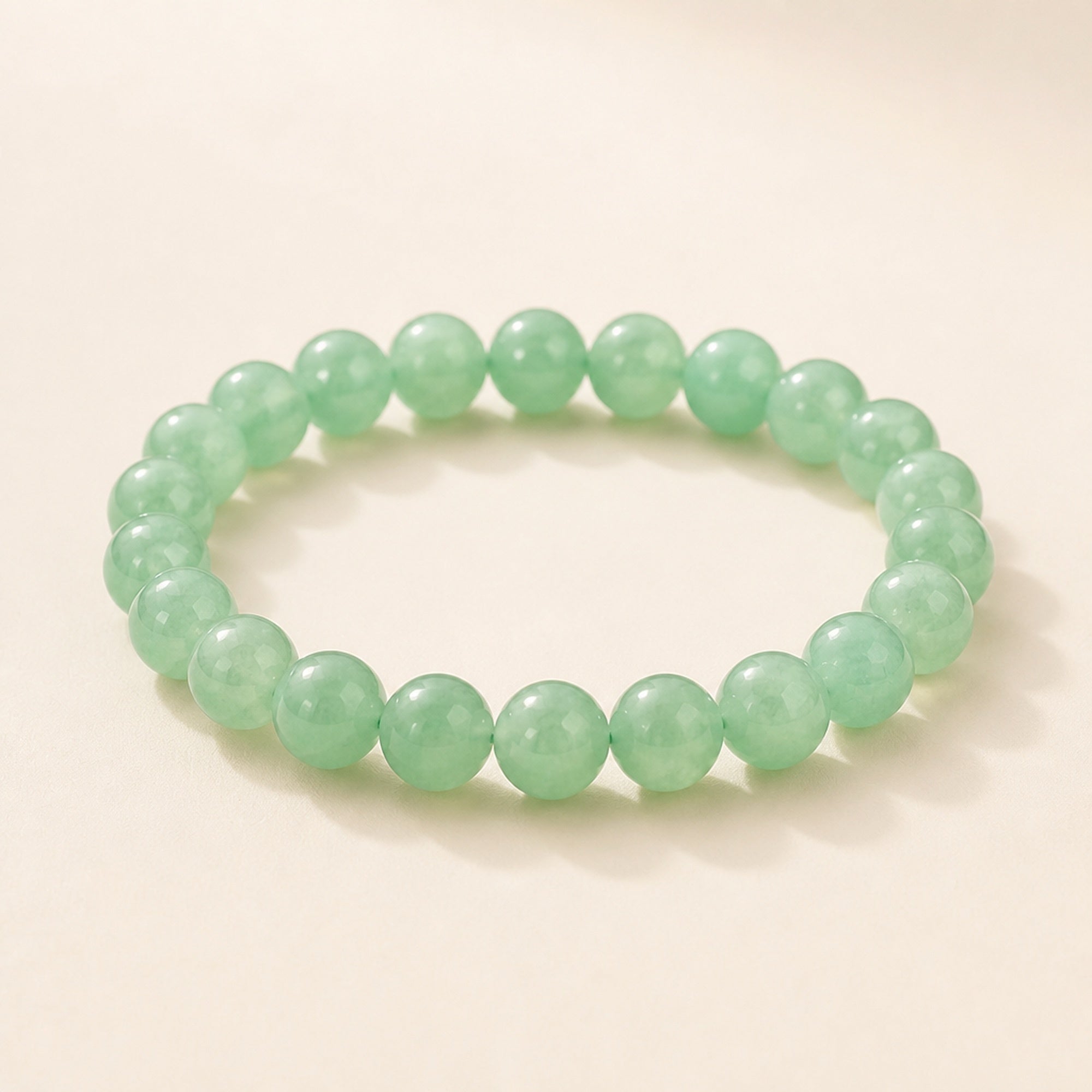
Green Aventurine Opportunity Bracelet
A quiet bracelet for turning this intention into a small daily ritual.
Shop This Authentic Piece →Real or Goldstone? A 5-Step Verification Checklist
Use this sequence when you’re deciding between a natural aventurine piece and a goldstone glass item.
- Look at the glitter pattern. Natural aventurescence is patchy and uneven across the stone; goldstone glass glitters densely and evenly throughout.
- Check translucency. Hold the stone to soft light: natural aventurine often shows gentle, cloudy depth; goldstone is usually opaque and metallic-bright.
- Ask about treatment. Confirm “natural, untreated.” If a seller cannot answer, assume risk. This is where the Lumina Grade AAA Integrity Standard functions as a filter: natural rough origin, no chemical filling, no irradiation or dye.
- Inspect color uniformity. Identical matching sets of vivid color are a red flag for dye; natural pieces vary slightly.
- Weigh hardness claims. Aventurine is quartz at about Mohs 7. Any seller claiming it is scratch-proof or suitable for heavy impact wear is overstating what the material supports.
Boundary note: These checks identify glass-versus-quartz and obvious treatment; they do not replace lab testing for finer distinctions within the quartz family.
Aventurine in Daily Use: Practical Ways to Work With It
You don’t need a full ritual setup to use aventurine meaningfully. The most sustainable approach is to attach the stone to something you already do.
- Morning intention: Hold a green aventurine palm stone for one breath before checking your phone; name one opportunity you’ll stay open to that day.
- Desk companion: Place small tumbled pieces near your workspace as a visual cue for steady pacing.
- Journaling anchor: Keep a peach or blue piece on your notebook and write one sentence of reflection after each session.
- Wearable reminder: A pendant or bead bracelet keeps the stone close; avoid rings if you work with your hands, since quartz can chip.
- Evening wind-down: Pair red aventurine with a short stretch or reading block to mark the transition into rest.
Treat these as personal reminders and reflective habits. Crystal traditions describe symbolic and emotional associations; they are not a substitute for professional care.
How to Cleanse, Charge, and Care for Aventurine
Care is where the physical and the ceremonial meet, and this is where aventurine differs from softer “delicate” stones.
- Cleanse gently: Rinse with lukewarm water and a drop of mild soap, then pat dry; avoid prolonged soaking if the piece is strung or set in adhesive.
- Skip harsh methods: Do not use ultrasonic cleaners on treated or strung pieces, and avoid salt-water soaks, which can dull polish and degrade cord.
- Charge by moonlight or daylight: A few hours on a windowsill is the standard tradition; avoid long direct sun if the color is vivid, as some dyed or heat-sensitive materials can fade.
- Store separately: At Mohs ~7, aventurine can scratch softer stones and pearls — keep it in its own pouch.
- Handle knocks: Quartz is tough but not indestructible; remove bracelets during heavy lifting or yard work.
Your cleansing routine can be as simple as a monthly rinse and a moment of quiet attention — consistency matters more than complexity.
Frequently Asked Questions About Aventurine Stone
What is the spiritual meaning of aventurine stone?
Aventurine is traditionally associated with luck, opportunity, and heart-centered optimism, with green varieties most often linked to growth and prosperity. These are cultural and personal associations, not proven effects.
What does green aventurine symbolize and what is it good for?
Green aventurine symbolizes fresh starts and steady growth, and it is often used as a daily reminder stone for intention-setting and heart-chakra reflection. Pair it with habits you already have rather than expecting it to change circumstances on its own.
How can you tell real aventurine from goldstone or glass?
Natural aventurine shows patchy, uneven shimmer and cloudy translucency at about Mohs 7, while goldstone glass has dense, uniform metallic glitter and looks opaque. Ask for natural, untreated stone — for example, under the Lumina Grade AAA Integrity Standard — and be wary of perfectly identical color sets.
Sources
© 2026 Lumina Quartz. This article shares cultural and mineral information for educational purposes; crystal traditions are not medical advice.
Product Facts From the Current Catalog
These details come from the active Lumina Quartz catalog record checked on 2026-11-07. They are product-listing facts, not laboratory results or invented wear-test claims.
| Listed product | Green Aventurine Opportunity Bracelet |
|---|---|
| Format | Bracelet |
| Listed price snapshot | 38.00 |
Price, availability, and options may change. Check the live product listing before choosing.