Black Crystals Meaning: Benefits, Uses, and Gentle Crystal Rituals
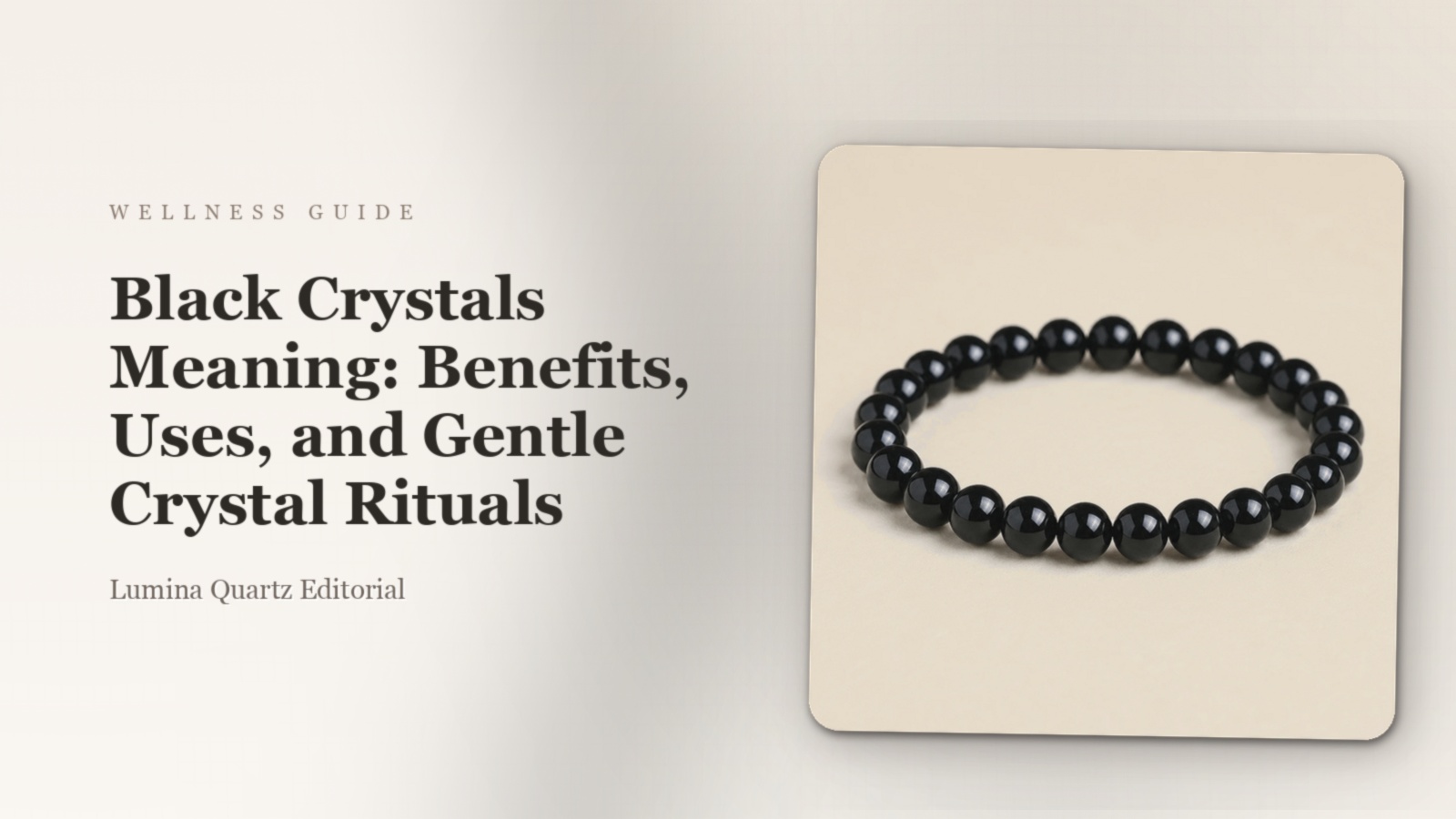
Table of Contents
- Key Takeaways
- Introduction to Black Crystals
- The Spiritual Meaning of Black Crystals
- The Meaning of the Color Black
- Protection and Grounding
- Transformation and Emotional Balance
- Black Stone Meaning: What the Phrase Really Points To
- Popular Black Crystals and Their Properties
- Benefits of Black Crystals
- How to Use Black Crystals in Daily Life
- Gentle Crystal Rituals with Black Stones
- Cleansing and Charging Your Black Crystals
- Choosing the Right Black Crystal for You
- Quick Reference: Matching the Stone to the Moment
- Related Reading
- FAQ about Black Crystals
- Conclusion
- Sources
There is something deeply reassuring about the color black. In nature, black stones are formed under immense pressure, in the quiet, slow work of the earth. Black crystals carry that memory of stillness and strength. They are often associated with protection, grounding, and honest self-reflection. Their beauty is not loud; it is the beauty of deep roots, of night skies, of the fertile soil before the first seed opens.
For many, working with black stones feels like coming home to oneself. They do not promise miracles or quick fixes. Instead, they invite us to pause, breathe, and remember what we already know deep inside. In this guide, we explore the meaning of black crystals, their gentle uses, and simple rituals that may support balance and a sense of safety in everyday life.
Key Takeaways
- Black crystals are often associated with grounding, protection, and emotional balance.
- Popular black stones include black tourmaline, obsidian, onyx, and jet.
- The meaning of a black stone shifts depending on the stone, the tradition, and your own intention.
- These crystals may support mindful rituals, stress relief, and clearer thinking.
- Cleansing and charging your black crystals regularly is a meaningful part of the practice.
- Choosing a black stone is a personal, intuitive process — let your heart guide you.
Introduction to Black Crystals
Black crystals have been honored by cultures around the world for centuries. Ancient civilizations used obsidian for tools and mirrors, jet for mourning jewelry, and black tourmaline as a protective talisman carried by travelers. While modern crystal work is not a replacement for medical care, many people find comfort in the slow, steady presence of these stones.
What makes black crystals unique is their relationship with stillness. While brighter stones like citrine or rose quartz are often celebrated for their uplifting, joyful energy, black crystals work in quieter ways. They are often associated with boundaries, patience, and the kind of healing that happens in silence. They ask us to sit with ourselves rather than run from discomfort. In a world that constantly demands our attention, that invitation alone can feel profoundly grounding.
Whether you are new to crystals or have been collecting them for years, black stones offer a gentle anchor. Their simple, honest appearance reminds us that we do not need to be flashy to be beautiful, and that strength often grows best in the dark.
The Spiritual Meaning of Black Crystals
The spiritual meaning of black crystals is deeply woven around the ideas of protection, grounding, and transformation. Black colors absorb rather than reflect, which is why these stones are often associated with helping to absorb heavy energies or emotional tension. They create a sense of containment, like a calm hand on your shoulder when the world feels overwhelming.
Black stones also speak to the cycles of life. Just as the earth rests in winter before blooming again in spring, black crystals remind us that pause is part of growth. They honor the shadow — not as something to fear, but as a natural space where we can rest, reflect, and renew.
The Meaning of the Color Black
Before we assign meaning to any stone, it helps to remember how much meaning we already place on the color black. Across cultures it has stood for mourning and formality, for mystery and dignity, for endings and beginnings. In the United States, the "Black is Beautiful" movement of the 1960s and 1970s reclaimed black culture and identity as a worthy legacy, turning a color that had been used against people into a source of pride. A single color can hold grief and celebration at the same time, much as the colors and symbols of a flag can carry both heritage and the hope of unfulfilled promises.
That layered history is worth holding gently. When we work with black crystals, we are touching a color that has never meant only one thing — and our own relationship with it can hold more than one thing too.
Protection and Grounding
Protection is perhaps the most common meaning connected to black stones. Throughout history, travelers and healers have carried black crystals as a way to create a felt sense of safety. Black tourmaline, in particular, is often associated with shielding, much like a soft layer of insulation between you and the stresses of daily life.
Grounding is the other side of the same coin. When you feel scattered, anxious, or lost in your thoughts, a black crystal may support a gentle return to your body and the present moment. Holding one during a difficult conversation or placing it at your feet during meditation can help you feel more rooted and more yourself.
Transformation and Emotional Balance
Black is the color of the void, the space before creation. In this way, black crystals are often associated with transformation. They can support us during periods of change — the end of a relationship, a new job, a season of grief — by making space for the old to fall away. Obsidian, in particular, is sometimes described as a mirror stone, reflecting back the truths we may not want to see, but need to acknowledge in order to move forward.
Emotionally, black crystals may support a sense of balance. They do not suppress feelings; rather, they help you sit with them without being overwhelmed. By calming an overactive mind, these stones may support clearer thinking, deeper patience, and a sweeter relationship with your own inner world.
Black Stone Meaning: What the Phrase Really Points To
"Black stone" is a folk term rather than a scientific one. It gathers many different materials under a single shade — volcanic glass, crystalline mineral, and even fossilized wood. That is why the meaning of a black stone is never one fixed answer. What ties them together is a shared theme rather than a shared formula: containment, boundaries, stillness, honesty, and the quiet strength of things that grow in the dark.
In practice, the meaning you experience tends to come from three places: the stone itself, the tradition you are drawing on, and the intention you bring to it. A piece of jet carried through grief means something different than a tumbler of onyx kept on a desk during a demanding season, even though both are black. So when you read that black stones are protective or grounding, treat it as an invitation rather than a rule. Hold the stone, notice how you feel, and let your own sense of its meaning take shape from there.
Popular Black Crystals and Their Properties
There are many black crystals to choose from, each with its own personality and gentle gifts. Here is a closer look at four beloved black stones and the properties they are often associated with.
Black Tourmaline
Black tourmaline is arguably the most famous black stone, and for good reason. It is often associated with protection and grounding, making it a favorite for those who work in busy environments or spend time around many people. Some say it may support a sense of calm in chaotic spaces, as it is believed to create a gentle buffer against heavy energy. Its long, striated crystals look almost like dark bamboo shoots, each one quietly reaching upward from the earth.
Obsidian
Obsidian is a volcanic glass, formed when lava cools rapidly. Because of its fiery origin, it carries a powerful, ancient presence. Obsidian is often associated with truth and honest self-reflection. Black obsidian, with its glossy, mirror-like surface, is known as the truth stone — it may support the courage to see yourself clearly, including your shadow. For those ready to do deep inner work, obsidian can feel like a steady companion, though some people find its energy intense at first and prefer to pair it with a gentler stone such as rose quartz.
Onyx
Black onyx is a smooth, banded form of chalcedony that has been carved for centuries into cameos, seals, and talismans. It is often associated with quiet strength, endurance, and steady focus. Where obsidian invites reflection, onyx tends to feel more like support for follow-through — a stone for the long, unglamorous middle of a project or a promise you have made to yourself.
Jet
Jet is the warm-hearted exception among black stones: it is not a mineral at all, but fossilized wood that has been compressed over millions of years. Light in the hand and warm to the touch, jet became beloved in Victorian mourning jewelry, worn as a companion through loss. Today it is often associated with gentle comfort, protection, and reassurance — a stone that sits with you in sadness rather than rushing you past it.
Benefits of Black Crystals
Many people turn to black crystals as part of a broader wellbeing practice. Reported benefits include:
- A greater sense of steadiness and presence during stressful moments.
- Support for setting and holding personal boundaries.
- Help winding down an overactive mind at the end of the day.
- A comforting focal point for meditation, journaling, or breathwork.
- Encouragement to reflect honestly on patterns you want to change.
These are subjective, personal experiences rather than guaranteed outcomes, and crystal work is best treated as a complement to — never a substitute for — professional care when you need it.
How to Use Black Crystals in Daily Life
Wearing Black Crystal Jewelry
A bracelet, pendant, or ring keeps a stone close without asking anything of you. Black tourmaline and onyx are popular choices for everyday wear because they feel unobtrusive, while a small obsidian pendant can serve as a quiet reminder to stay honest with yourself. If you feel drawn to working with one, a simple bracelet or a smooth tumbled stone kept in your pocket is plenty to begin with. Wear it the way you would a favorite sweater — consistently, and without ceremony if you prefer.
Placing Black Crystals in Your Space
Black stones settle beautifully into a home. A piece near an entryway is a common choice for those who like the idea of leaving the day's noise at the door. A tumbler on a desk may support focus during work, and a stone beside your bed can feel like company during restless nights. Keep the placement simple and tidy — one or two pieces that you actually notice will do more for your practice than a crowded shelf.
Meditation with Black Crystals
To meditate with a black stone, sit comfortably and rest it in your palm or on the floor at your feet. Close your eyes and let your attention settle on the weight and temperature of the stone. When your mind wanders, return to that physical sensation. Even five minutes of this simple practice can feel grounding, and it is a gentle way to begin if sitting in stillness is new to you.
Gentle Crystal Rituals with Black Stones
Morning Grounding Ritual
Before you reach for your phone, hold your black stone for three slow breaths. Name one thing you want to protect your energy for today — a meeting, a conversation, a few quiet hours of work. Place the stone back where it lives and carry that intention with you. The whole ritual takes less than a minute.
Evening Protection Ritual
At the end of the day, hold your stone and let yourself review what felt heavy. Rather than solving anything, simply acknowledge it and set it down — mentally and physically. A short phrase such as "this can rest until tomorrow" can help close the loop. Then place the stone somewhere it can sit undisturbed overnight.
Cleansing and Charging Your Black Crystals
Because black stones are often used to absorb or buffer, many people like to refresh them regularly. Gentle methods include resting them on a selenite slab, passing them through incense or sound from a singing bowl, or leaving them in moonlight overnight. Keep water use limited: jet is soft and porous, so it should not be soaked, while obsidian and tourmaline are generally fine with a quick rinse and a thorough dry. As for charging, moonlight, sunlight in short doses, and simply returning the stone to a meaningful spot in your home are all kind options.
Choosing the Right Black Crystal for You
There is no single "best" black crystal. Start with what you need right now rather than what sounds most impressive. If you want daily steadiness, tourmaline or onyx are comfortable companions. If you are in a season of honest reckoning, obsidian may meet you there. If you are moving through grief, jet's softness can be a relief. When you are in a shop, let your hand decide — the stone you keep picking up is usually the one worth taking home.
Quick Reference: Matching the Stone to the Moment
The table below is a practical starting point, not a set of rules. Use it to narrow your choices, then trust your own response to the stone in your hand.
| If this sounds like your moment | Stone often reached for | Why people choose it | A simple way to use it |
|---|---|---|---|
| Busy workplace, crowded days, feeling drained by other people | Black tourmaline | Traditionally associated with shielding and steadiness | Wear a bracelet or keep a tumbler in a bag pocket |
| A pattern you keep repeating and want to see clearly | Obsidian | Known as a mirror stone for honest self-reflection | Hold it during journaling or a five-minute sit |
| A long project, habit, or promise you want to keep | Black onyx | Associated with endurance and steady focus | Keep it on your desk as a work-time anchor |
| Grief, loss, or a tender season that needs patience | Jet | Historically worn as a companion through mourning | Carry it in a pocket; hold it when you need comfort |
| Restless evenings and a mind that will not switch off | Any of the above | The shared theme is containment and quiet | Place it beside the bed and hold it for three breaths |
What Black Crystals Are Not
- They are not a treatment for medical or mental health conditions, and they do not replace care from a qualified professional.
- They are not a guarantee of any specific outcome — experiences with crystals are personal and varied.
- They are not a reason to stay in a situation that is harming you; boundaries and support matter more than any stone.
Related Reading
- Black Tourmaline Meaning: Meaning, Properties, and Everyday Uses
- Red Jasper: A Gentle Guide to Meaning, Benefits, and Uses
- Rose Quartz Crystal: A Gentle Guide to Meaning, Benefits, and Uses
- Kyanite Crystal Meaning: A Guide to Benefits, Uses, and Chakra Alignment
FAQ about Black Crystals
What does black stone mean spiritually?
Spiritually, black stones are most often connected with protection, grounding, and transformation. Their dark color is associated with absorbing rather than reflecting energy, and with the stillness of winter soil — a pause that makes new growth possible. The exact meaning shifts depending on the stone and the tradition you draw on.
What are the benefits of black crystals?
People commonly use them for a felt sense of steadiness, clearer thinking, better boundaries, and comfort during change or grief. These are personal, subjective experiences. Black crystals are best used alongside — not instead of — professional support when you are struggling.
How do you use black crystals for protection?
Most people keep them close: a bracelet, a pendant, or a tumbled stone in a pocket or bag. Others place one near an entryway or on a desk. The intention you set when you pick it up matters more than the placement itself — a stone is a reminder, not a shield.
What are the most popular black crystals and stones?
Black tourmaline, obsidian, black onyx, and jet are the most familiar. Other options include black agate, shungite, and hematite, each with its own character and traditional associations.
How do you cleanse and charge black crystals?
Selenite slabs, sound, incense smoke, and moonlight are all gentle options. Avoid soaking jet, which is soft and porous, and dry any stone thoroughly after contact with water. Charging can be as simple as leaving your stone in moonlight or returning it to a meaningful place in your home.
Can black crystals help with anxiety and emotional healing?
Some people find that holding a black stone during anxious moments helps them slow their breathing and feel more present. That can be genuinely soothing, but it is a supportive practice, not a treatment. If anxiety or grief is affecting your daily life, please reach out to a qualified professional.
What is the difference between black tourmaline and obsidian?
Black tourmaline is a crystalline mineral, often associated with shielding and steady grounding. Obsidian is volcanic glass, formed when lava cools quickly, and is more often associated with truth-telling and deep self-reflection. In short: tourmaline buffers, obsidian mirrors.
How to choose the right black crystal for me?
Start with the season you are in rather than the stone's reputation. Busy and drained? Try tourmaline. Facing hard truths? Try obsidian. Steadying a long effort? Try onyx. Grieving? Try jet. Then hold a few and notice which one you keep coming back to.
Conclusion
Black crystals ask very little of us. They do not glitter for attention or promise transformation overnight. They simply sit with us — steady, dark, and patient — while we do the slower work of returning to ourselves. Whether you choose black tourmaline for protection, obsidian for honesty, onyx for endurance, or jet for comfort, the practice is the same: hold the stone, breathe, and let the quiet do its work.
Sources
- Black is Beautiful: The Emergence of Black Culture and Identity in the 60s and 70s — National Museum of African American History and Culture
- African-American Flag — Smithsonian Institution