Blue Lace Agate Benefits: How This Calming Crystal Supports Stress Relief and Clear Communication
Introduction to Blue Lace Agate
There are stones that roar and stones that whisper. Blue lace agate is decidedly one of the whisperers—a soft-spoken companion whose pale blue bands resemble clouds pressed between time and tide. In the world of mindful living, it has earned a quiet reputation: not for drama, but for presence. It asks nothing of you when you hold it. It simply is. And in a culture that constantly demands more, faster, louder, that steadiness alone can feel like a form of care.
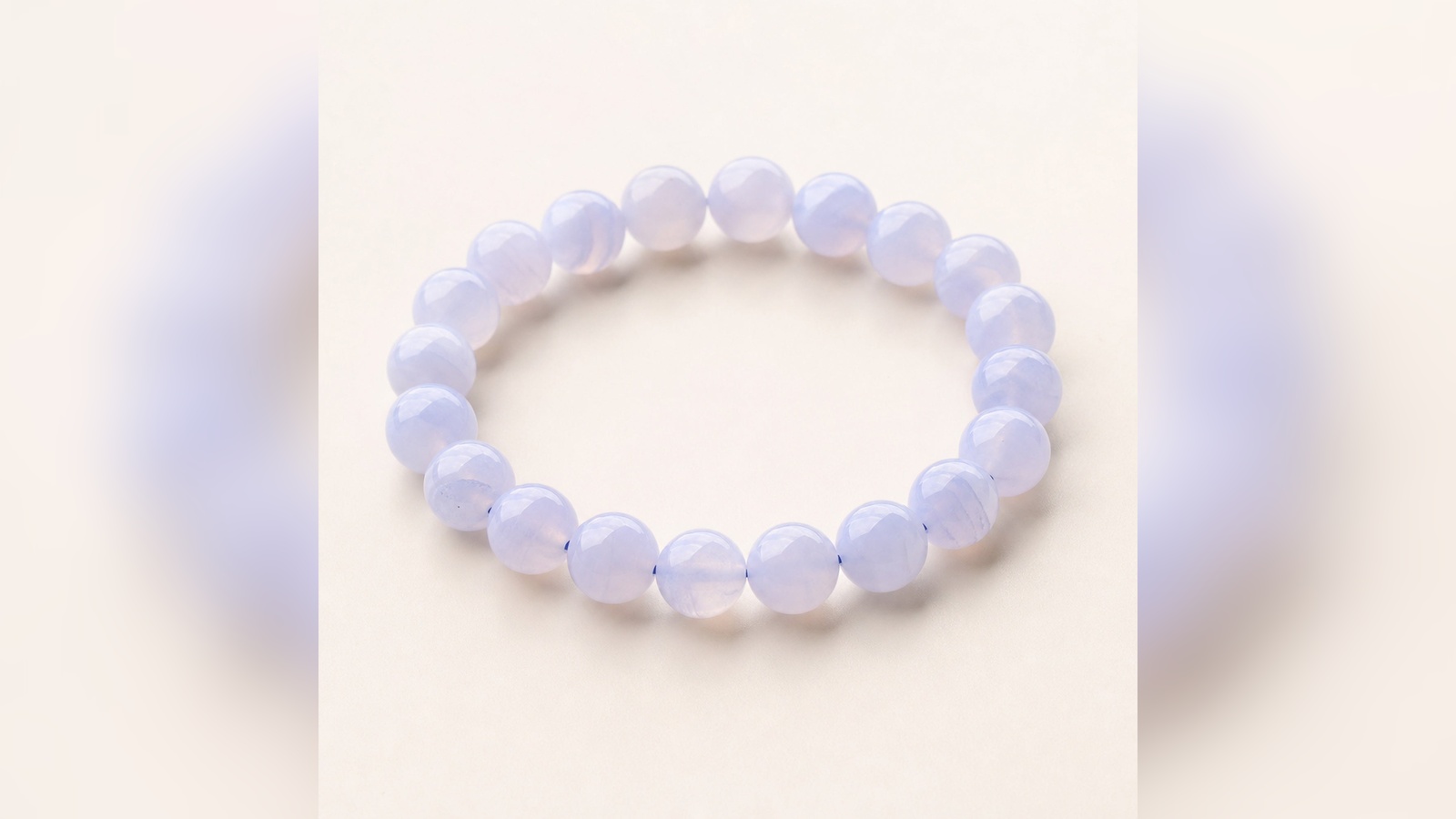
Blue lace agate is a banded variety of chalcedony—a form of microcrystalline quartz built from crystals too small to be seen with the naked eye. It forms over long spans of time as silica-rich water deposits layer after layer of mineral material, and those layers are what give the stone its character. Unlike agates with bold, high-contrast rings, blue lace agate tends toward pale blue, periwinkle, white, and soft grey, with fine, lace-like banding that feels closer to watercolor than to stone.
Its name comes directly from that pattern. The delicate, curving lines resemble handmade lace, and the color palette sits in the cooler end of the spectrum—the blues of early morning, shallow water, and open sky. Because it is a natural formation, no two pieces are identical. Some lean almost entirely white; others carry a deeper blue that seems to shift depending on the light. In the broader language of crystal traditions, blue lace agate is often described as a stone of peace and voice, commonly associated with the throat chakra—the energy center traditionally linked to speech, self-expression, and truth.
Key Takeaways
- Blue lace agate is a gentle, banded variety of chalcedony widely appreciated for its calming aesthetic.
- Its traditional associations center on communication, emotional balance, confidence, and clarity—understood as symbolic and supportive, not clinical.
- Regular engagement—through jewelry, meditation, or mindful placement—may accompany a softer, more centered daily rhythm.
- Crystal practices are personal tools for reflection and intention, not substitutes for professional care or medical treatment.
- Authenticity and honest sourcing are essential when choosing a stone that will accompany you through your days.
Blue Lace Agate: What It Is and Who It Suits
Because blue lace agate is often described in emotional and energetic terms, it helps to keep a clear picture of what the stone actually is—and what it is not. The mineral facts below come from established mineralogical records; the traditional associations are offered as tradition, not as clinical claims. There is no scientific evidence that a stone produces emotional or neurological effects on its own.
A Quick Mineral Primer
- Mineral family: Chalcedony, a microcrystalline form of quartz. Blue lace agate is one recognized variety within that family.
- Appearance: Fine, lace-like banding in pale blue, white, and soft grey. Banding is usually subtle rather than sharply contrasted.
- Durability: Chalcedony generally falls around 6.5–7 on the Mohs hardness scale, which makes it reasonable for everyday wear with sensible care.
- Typical origin: Southern Africa is the best-known source region for material sold under this name.
- Traditional association: The throat chakra, calm communication, and steady emotional balance—not a physical treatment of any kind.
What This Stone Can and Cannot Do
Setting clear expectations is part of choosing any companion stone well. Here is an honest boundary guide.
| What it can accompany | What it cannot do |
|---|---|
| Serve as a tactile reminder for a breathing practice, a journaling pause, or a moment of grounding before a hard conversation. | |
| Act as a visual cue for the intention you attach to your day—patience, honesty, or gentleness. | Replace therapy, diagnosis, or professional advice of any kind. |
| Support a personal ritual of reflection when paired with practical habits you already value. | Replace practical communication skills such as preparation, listening, and asking clarifying questions. |
Is This Stone a Good Fit for You?
- You want a quieter companion. If bold, dramatic stones feel like too much, blue lace agate's understated palette may suit you better.
- Speaking feels difficult right now. If you are preparing for a hard conversation or rebuilding confidence in your own voice, its traditional associations line up with that intention.
- You prefer a tactile ritual. A piece you can hold or wear works best when you already have a small daily pause—three breaths, a journal line, a moment before a meeting.
- You are looking for a medical or therapeutic fix. This is not that. Crystal practice sits alongside professional care, never in place of it.
Choosing a Piece You Can Trust: A Step-by-Step Check
- Inspect the banding. Natural lace patterns are irregular and slightly uneven. Perfectly uniform stripes can suggest dyeing or a synthetic imitation.
- Read the label, not just the photo. Reputable sellers name the variety and the region when they can.
- Ask how it was sourced. A stone meant for daily reflection deserves a supply chain you feel comfortable with.
- Handle it thoughtfully. Mineralogical references note that specimens should always be treated with care—this is a keepsake, not a piece of equipment.
- Set your own boundaries. Decide in advance that the stone is a cue for reflection, not a promise of an outcome.
Top 5 Benefits of Blue Lace Agate
The qualities most often attributed to blue lace agate are subtle rather than sudden. They are not the kind of shifts you notice in a single dramatic moment; they arrive like weather changes—slowly, gently, and often only in the way you look back and realize something has softened. Below are five ways this stone commonly accompanies those who work with it, understood as tradition and intention rather than medical effect.
1. A Calming Presence for Stressful Days
The first thing most people notice about blue lace agate is the sense of mental space it seems to carve out of a busy day. In a world that prizes constant connection and quick responses, the stone's muted, sky-toned bands feel like a visual exhale. Many crystal practitioners describe blue lace agate as a soothing presence—one that, in their personal experience, accompanies a settled mind, eased nervous energy, and a small buffer between you and the demands of the day.
That is not to say the stone erases stress or turns difficult moments into pleasant ones. It simply offers a grounding cue. Holding a polished piece in the palm, closing your eyes, and taking three slow breaths is a micro-practice anyone can do—and when the stone is in your hand, the practice carries a tactile reminder to return to yourself. Over time, this small ritual may accompany a meaningful shift in how you respond to pressure, largely because the pause itself is what helps.
2. A Traditional Symbol for Clearer Communication
Blue lace agate is perhaps best known for its traditional connection to the throat chakra—the energy center often linked to speech, self-expression, and truth. In energy-healing traditions, the throat chakra is described as the place where the inner voice meets the outer world. When this center is described as out of balance, tradition associates it with hesitation, unclear speech, or the fear of being misunderstood.
Blue lace agate is often associated with easing that tension symbolically. Its pale blue color aligns thematically with the throat chakra's visual expression, and tradition holds that it encourages honest, measured words. Whether you are preparing for a difficult conversation, a public presentation, or simply trying to name what you feel after a long day, blue lace agate may serve as a supportive touchstone for a calmer, more grounded way of communicating.
For those who wear it, a piece near the collarbone acts as a subtle reminder. Each time the hand rises to the stone, it is also an opportunity to remember: breathe, pause, choose your words with care.
3. Companionship Through Emotional Seasons
Emotions are not problems to be solved. They are weather systems to be moved through. Blue lace agate has a reputation within crystal traditions for accompanying this movement with uncommon gentleness. Because it offers a cool, soothing presence rather than an insistent one, it is often chosen by people who find stronger stones overwhelming—those who want a quiet ally while they process a season of change, grief, or quiet reinvention.
The practice, in this context, is simple awareness. Keep the stone nearby during a journaling session or a quiet cup of tea, and let it stand as a reminder that feelings can be observed without being judged. Balance, in this tradition, is not the absence of difficulty; it is the capacity to hold difficulty with steadier hands.
4. A Cue for Quiet Confidence
Confidence is often described as a loud quality, but the confidence that blue lace agate is traditionally associated with is quieter: the willingness to be heard without overexplaining, to say no without hardening, to voice an opinion without apology. In crystal traditions, this stone is favored by people who shrink from the sound of their own voice and wish to grow more comfortable with it.
Some practitioners pair the stone with a simple written intention—one sentence about how they want to show up in a conversation—and revisit it before meetings or difficult exchanges. The stone is not doing the work; it is keeping the intention close at hand, which is often the harder part.
5. A Touchstone for Clarity and Focused Calm
Clarity rarely arrives all at once. More often, it settles in when the noise quiets enough to hear the next right step. Blue lace agate's pale, layered bands are traditionally read as an invitation to that kind of quiet focus—less a lightning bolt of insight than a clear morning after a restless night.
Try placing the stone on your desk or near your workspace. Between tasks, let a glance at it cue one deliberate breath before reaching for the next thing. These small points of return, repeated over a day, can accompany a more settled and attentive pace—especially on days when everything feels urgent at once.
How to Use Blue Lace Agate Day to Day
- As worn jewelry: A bracelet or stone worn near the collarbone keeps the intention close and makes the practice tactile. Holding or touching the piece during a hard conversation can serve as a quiet reminder to breathe and choose words with care.
- In meditation: Rest the stone in your palm or at your heart, close your eyes, and pair it with three slow breaths. Keep sessions short and regular rather than long and occasional.
- On a workspace desk: Use it as a visible cue for one deliberate pause between tasks, meetings, or messages.
- With a journal: Place the stone beside you when writing. Let it mark the intention of being honest on the page.
If you are drawn to a wearable form, a soft-spoken bracelet can be an easy way to keep that reminder on your wrist throughout the day: Blue Lace Agate Bracelet – Soft-Spoken Calm.
Blue Lace Agate Buyer's Checklist
Before you bring a piece home, run through these quick checks so your stone matches both your intentions and your standards.
- Pattern: Natural banding is irregular and slightly uneven; uniform stripes warrant a second look.
- Color: Pale blue, white, and soft grey are typical. Beware of exaggerated saturation, which can indicate dyeing.
- Labeling: A reputable seller names the variety and, when possible, the region of origin.
- Care: Chalcedony is reasonably durable but should be handled thoughtfully and kept away from harsh chemicals and hard knocks.
Frequently Asked Questions
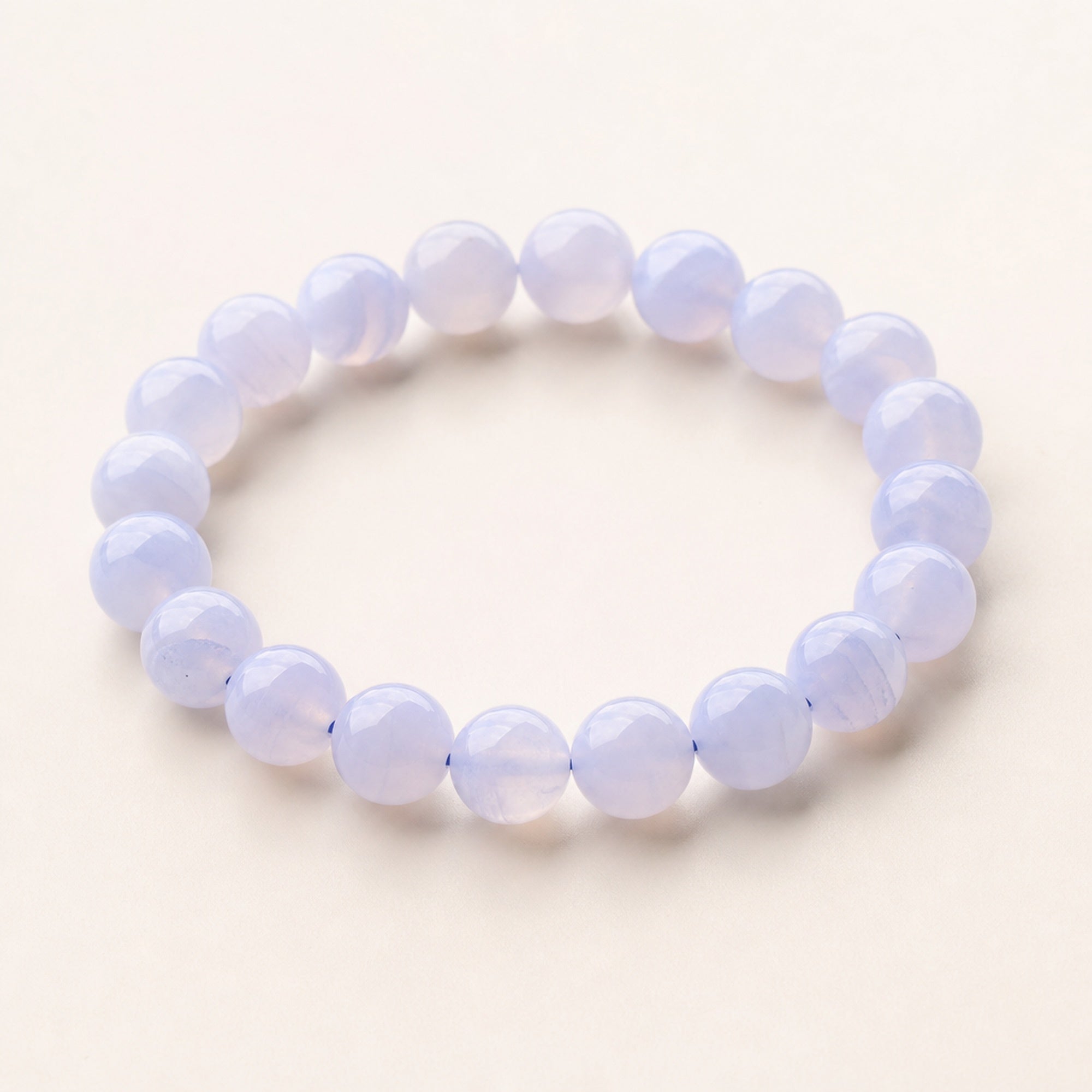
Blue Lace Agate Bracelet
A gentle ritual piece for bringing this intention into your daily routine.
Shop This Piece →Can blue lace agate really reduce stress?
Crystal traditions associate blue lace agate with a calm, grounding presence, but there is no scientific evidence that the stone itself reduces stress. What may help is the practice it accompanies—holding the stone, slowing your breath, and taking a deliberate pause. Think of it as a tactile cue for a wellness habit, not a treatment.
Which chakra is blue lace agate associated with?
In crystal traditions, blue lace agate is most often linked to the throat chakra—the energy center traditionally associated with speech, self-expression, and truth. This is a symbolic association, not a medical or physiological claim.
How do I know if my blue lace agate is real?
Look for irregular, lace-like banding in pale blue, white, and soft grey; perfectly uniform stripes can suggest dyeing or imitation. Ask sellers about origin and sourcing, and prefer businesses that name the variety and region. No single check is definitive, so buy from sources you trust.
Can I wear blue lace agate every day?
Yes, with sensible care. Chalcedony generally falls around 6.5–7 on the Mohs hardness scale, which is reasonable for everyday wear, but the stone should be kept away from harsh chemicals and hard knocks. Follow the care guidance from your seller.
Is blue lace agate a replacement for therapy or medical care?
No. Crystal practices are personal tools for reflection and intention and are never a substitute for professional care, diagnosis, or treatment. If you are struggling with stress, anxiety, or low mood, reach out to a qualified professional.
Related Reading
- Kyanite Crystal Meaning: A Guide to Benefits, Uses, and Chakra Alignment
- Rose Quartz Crystal: A Gentle Guide to Meaning, Benefits, and Uses
- Fluorite Meaning: Meaning, Properties, and Everyday Uses
- Black Tourmaline Meaning: Meaning, Properties, and Everyday Uses
Sources
Crystal traditions are presented here as symbolic, cultural, and personal ritual practices. They are not medical tools; consult a qualified professional for health concerns.