Dalmatian Jasper Crystal: Meaning, Benefits, and How to Use It
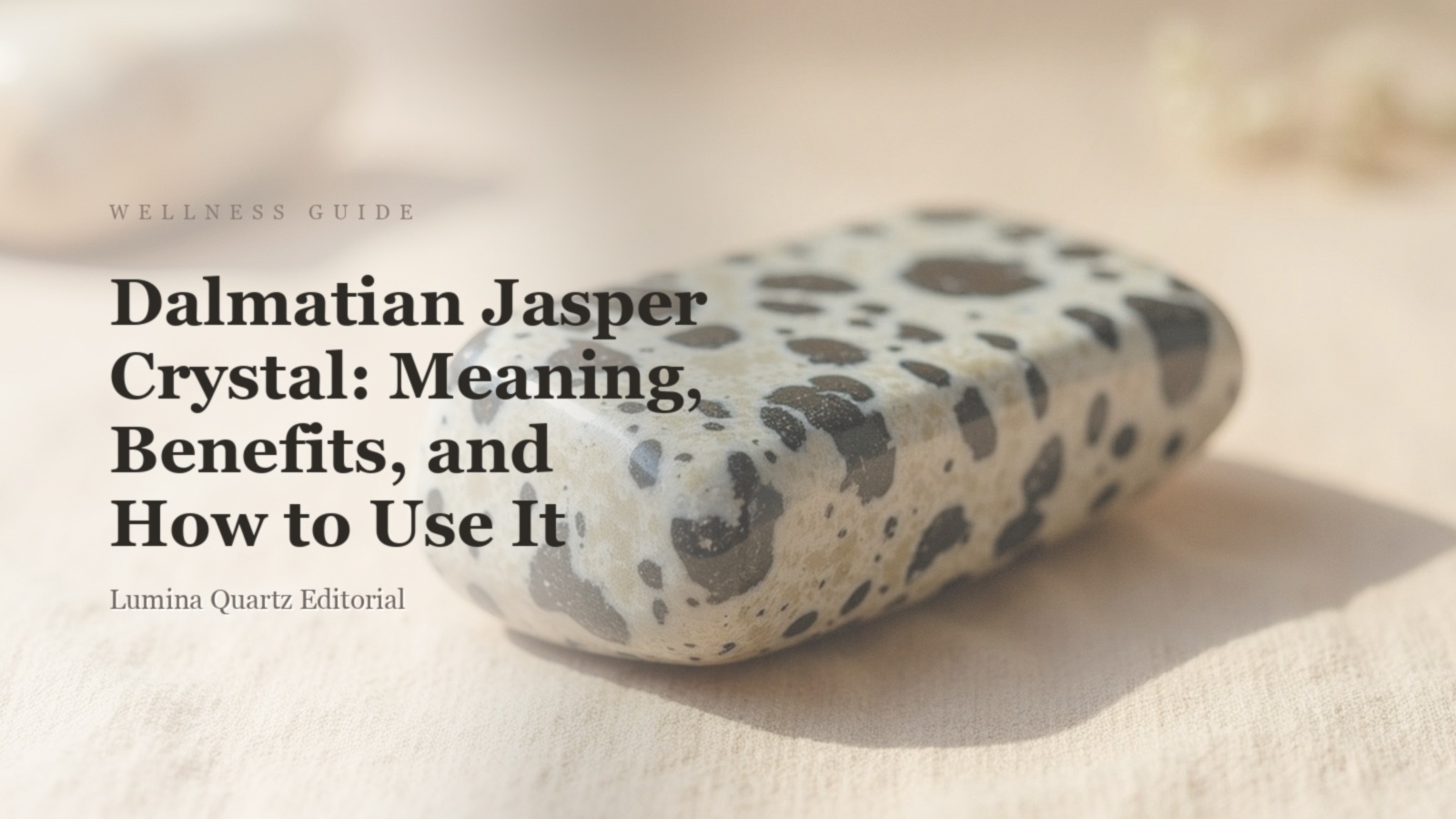
Table of Contents
- Dalmatian Jasper or Dalmatian Stone? A Buyer's Quick Comparison
- Key Takeaways
- What is Dalmatian Jasper?
- Dalmatian Jasper Crystal Meaning
- Dalmatian Jasper vs. Dalmatian Stone: Understanding the Difference
- Physical and Visual Characteristics of Dalmatian Jasper
- Where is Dalmatian Jasper Found?
- Meaning and Healing Properties of Dalmatian Jasper
- How to Use Dalmatian Jasper in Jewelry and Everyday Life
- Choosing Dalmatian Jasper Jewelry
- Caring for Your Dalmatian Jasper
- Frequently Asked Questions About Dalmatian Jasper
- Sources
- Final Thoughts: Embrace the Joy of Dalmatian Jasper
Some stones whisper. Others hum with a quiet, playful energy that feels like a familiar friend arriving at your doorstep. Dalmatian jasper belongs to the latter. With its warm cream base and scattered charcoal spots, it carries an unmistakable charm—a stone that does not demand your attention so much as invite it. There is something joyful and grounding about its presence, as if it remembers what it means to play.
At Lumina Quartz, we believe that crystals serve as gentle companions on the journey inward. Dalmatian jasper, in particular, speaks to the child within us—the part that finds wonder in simple moments, laughter in the ordinary, and courage in moments of uncertainty. In this guide, we explore the origins, physical traits, and everyday uses of this beloved stone, and share gentle ways to welcome its grounding energy into your daily life.
Dalmatian Jasper or Dalmatian Stone? A Buyer's Quick Comparison
Both names appear on labels, listings, and gem show cards. They describe the same material—so the choice is about accuracy and expectation, not quality.
- "Dalmatian stone" — the geologically preferred term. Research published in Gems & Gemology identified the material as a feldspar- and quartz-rich volcanic rock with black spots of arfvedsonite, and the authors recommended "dalmatian stone" because the rock does not meet the gemological definition of jasper.
- "Dalmatian jasper" — the trade term. It is the name most shops, jewellery designers, and search listings use, so it remains the easiest way to find the stone you want.
- Practical difference: none in appearance, hardness, or care. A cream-and-charcoal spotted stone is the same material under either name.
Four-Point Checklist Before You Buy
- Look at the base color. It should read cream, beige, or soft gray—not chalky white with spots that look applied.
- Check that the spots sit inside the stone. Real spots are mineral inclusions, so they should look flush with the polished surface rather than painted on top.
- Ask about the setting. A stone rated 6–7 on the Mohs scale wears differently in sterling silver, gold fill, or stainless steel.
- Buy the piece you will actually wear. A quiet stone like this works best as jewellery that fits your real routine, not your ideal one.
Where This Stone Is Not the Right Fit
Crystal practices are personal and complementary. They are not a substitute for medical care, mental health support, or professional advice, and no stone should be relied on in an emergency. If you are looking for a symbolic, decorative companion for everyday moments, dalmatian jasper is a lovely one. If you are looking for a treatment, this is not that.
Key Takeaways
- Dalmatian jasper is often associated with playfulness, gentle emotional release, and inner-child connection.
- Although commonly called jasper, it is technically a rhyolite; many geologists and gemologists prefer the name "dalmatian stone."
- The stone is most often sourced from Mexico, particularly the state of Chihuahua, with additional material reported from the southwestern United States.
- Its energy is traditionally described as supporting emotional balance, a lighter perspective, and a sense of steadiness during transitions.
- Simple cleansing practices—mild soapy water, moonlight, or sound—help maintain the stone's natural beauty.
What is Dalmatian Jasper?
Dalmatian jasper is a distinctive stone that resembles the beloved spotted dog breed that shares its name. Its creamy beige or soft gray base is dotted with rounded spots of black, dark brown, or occasionally reddish tones, creating a pattern that feels both playful and elegant. It is a favorite among crystal enthusiasts, jewelry designers, and collectors who appreciate stones with personality.
From a geological perspective, dalmatian jasper is an igneous rock—specifically a variety of rhyolite. It forms when silica-rich lava cools slowly beneath the Earth's surface, allowing crystals to develop gradually. For those who work with crystals, dalmatian jasper is often associated with grounding and joy. It is said to help bridge the gap between responsibility and play, encouraging a balanced approach to life's demands. Many people turn to this stone during periods of stress, transition, or creative blocks, finding that its steady presence may support a lighter outlook. This is not a stone of dramatic intensity, but rather a quiet companion that encourages you to take yourself a little less seriously and reconnect with the simple pleasures of being alive.
Dalmatian Jasper Crystal Meaning
The dalmatian jasper crystal meaning comes down to two words: play and steadiness. The spotted pattern reads as lighthearted, while the dense, opaque body of the stone reads as solid—so it is often described as joy with a floor under it. Practitioners commonly link it with the inner child, with gentle emotional release, and with the kind of patience that helps you keep going through a long season.
Because rhyolite forms from cooled silica-rich lava, it also carries a quiet "slow down and settle" reputation. Many people keep a piece nearby when they are balancing work and rest, starting something new, or trying to take themselves a little less seriously. These meanings are traditional and symbolic rather than clinical—think of them as a frame for your own attention, not as promises about outcomes.
What Dalmatian Jasper Is Made Of
Analysis published in Gems & Gemology describes the rock as consisting predominantly of feldspars (mesoperthite), quartz, alkali amphiboles, and lesser amounts of hematite and epidote. The black spots examined in that study were identified as arfvedsonite, an amphibole mineral—a useful detail if you have read older descriptions attributing the spots to manganese oxide.
Dalmatian Jasper vs. Dalmatian Stone: Understanding the Difference
If you have browsed crystal shops or online marketplaces, you may have noticed this stone listed under two names. While the two terms are used interchangeably, there is a subtle distinction worth knowing.
True jasper is a variety of chalcedony, a microcrystalline form of quartz. It is opaque, typically colored by iron oxides, and forms in sedimentary or metamorphic environments. Dalmatian jasper is not technically a jasper at all—it is a rhyolite, a volcanic rock formed from felsic lava. The geological community generally prefers "dalmatian stone" as the more accurate descriptor.
That said, "dalmatian jasper" remains the more widely recognized name in the crystal and jewelry world. For practical purposes, the two names refer to the same beautiful stone. The distinction is a matter of geological precision rather than quality or energetic character. Whether you pick up a tumbled piece from a bead bin or a polished pendant from a fine jewelry case, you are holding a piece of the Earth's ancient volcanic history.
Physical and Visual Characteristics of Dalmatian Jasper
One of the most endearing qualities of dalmatian jasper is its unmistakable appearance. Each stone is like a tiny canvas painted by nature, with patterns that range from sparse and subtle to dense and dramatic. The base color is typically a warm cream, beige, or light gray, while the spots vary in shade from deep charcoal and black to warm brown. Occasionally you may find pieces with reddish or rust-colored spots, which come from iron-bearing minerals such as hematite.
In terms of hardness, dalmatian jasper measures approximately 6 to 7 on the Mohs scale. That makes it suitable for tumbled stones, beads, cabochons, and carved pieces, and durable enough for regular wear in jewelry—though it is softer than quartz or corundum. For a bracelet or pendant worn daily, a little care goes a long way.
No two stones are identical. Some pieces carry a few scattered spots; others are densely flecked. That variety is part of the charm, and it means the piece you choose is genuinely one of a kind.
Where is Dalmatian Jasper Found?
Dalmatian jasper is most commonly associated with Mexico, particularly the state of Chihuahua, where it has been mined commercially for decades. Additional material has been reported from deposits in the southwestern United States. Because rhyolite is a widespread volcanic rock, similar spotted material can occur in other regions as well, and mineral databases such as mindat.org maintain locality records for the material worldwide.
Most of the dalmatian jasper you see in shops arrives as tumbled stones, beads, or polished cabochons rather than large display specimens, which is one reason it has become such a familiar presence in bracelets and beaded strands.
Meaning and Healing Properties of Dalmatian Jasper
In crystal lore, dalmatian jasper is often described as a stone of joyful grounding. Practitioners may turn to it for:
- Inner-child connection — a reminder to make room for play, curiosity, and lightness.
- Emotional balance — a steadying presence during transitions, stress, or creative blocks.
- Patience and persistence — support for staying with a long project or a slow season.
- A lighter perspective — encouragement not to take yourself too seriously.
- Grounding — a sense of being settled in your body and your day.
These associations are traditional and symbolic. Crystals are not a substitute for medical or mental health care, and individual experiences vary. Many people find that the value lies less in a specific outcome and more in the moment of pause the stone invites.
How to Use Dalmatian Jasper in Jewelry and Everyday Life
Because it is durable and comfortable to wear, dalmatian jasper fits easily into daily routines:
- As jewelry. A bracelet or pendant keeps the stone in contact with your day and turns it into a quiet visual anchor.
- As a pocket stone. A smooth tumbled piece is easy to hold during a commute, a meeting, or a difficult conversation.
- On a desk or bedside table. Placing it somewhere visible lets the intention meet you again later.
- In a simple pause practice. Hold the stone, take three slow breaths, and name one thing you are looking forward to. That is the whole ritual.
- During creative work. Keep it nearby when you want to loosen up, draft freely, or start something without overthinking.
The most useful approach is a repeatable one. Tie the stone to a moment that already happens every day—putting on jewelry before work, sitting down to write, or winding down in the evening—and it becomes a gentle cue rather than another task.
Choosing Dalmatian Jasper Jewelry
When shopping, look for stones with clear contrast between the cream base and the darker spots, and a smooth, even polish without visible cracks or pits. Beads should be well matched in size and pattern if you want a uniform look, or deliberately varied if you prefer a more organic feel.
Consider how you will wear it. A beaded bracelet is the simplest entry point and suits everyday use; a pendant or pair of earrings works well if you prefer the stone close to the heart or near the face. If you would like a ready-to-wear starting point, our Dalmatian Jasper Bracelet – Playful Grounding keeps the stone's cream-and-charcoal pattern front and center in a simple beaded form made for daily wear.
Caring for Your Dalmatian Jasper
Dalmatian jasper is relatively easy to look after. A few gentle habits will keep it looking its best:
- Clean with mild soapy water. Use lukewarm water and a soft cloth or brush, then pat dry. Avoid harsh chemicals, bleach, and acidic cleaners.
- Skip the ultrasonic and steam cleaners. At 6–7 on the Mohs scale, the stone can be affected by aggressive cleaning methods.
- Store separately. Keep it in a soft pouch or a compartment of its own so it does not rub against harder stones.
- Cleanse energetically in gentle ways. Moonlight, sound from a bell or singing bowl, or a brief rest in dry herbs are all traditional options. If you use water, keep the soak short and dry the stone thoroughly afterward.
- Recharge with intention. Many people simply hold the stone, set it down somewhere visible, and let that placement serve as the reset.
Frequently Asked Questions About Dalmatian Jasper
What is dalmatian jasper good for?
It is most often used as a grounding, mood-lightening companion for everyday life. People keep it nearby during busy seasons, transitions, or creative work, and wear it as jewelry when they want a quiet reminder to stay steady and not take things too seriously.
Is dalmatian jasper a true jasper?
No. True jasper is a variety of chalcedony, a microcrystalline quartz. Dalmatian jasper is a rhyolite—a volcanic rock rich in feldspar and quartz. Research in Gems & Gemology recommends the more accurate name "dalmatian stone," though "dalmatian jasper" remains the common trade term.
What are the black spots in dalmatian jasper?
Analysis identified the black spots as arfvedsonite, an alkali amphibole mineral. The surrounding rock also contains hematite and epidote in smaller amounts, which help account for the occasional reddish or rust-toned markings.
Where is dalmatian jasper found?
Commercial material is most often associated with Mexico, particularly the state of Chihuahua, with additional deposits reported in the southwestern United States. Because rhyolite is a common volcanic rock, similar spotted material can occur in other regions too.
What are the healing properties of dalmatian jasper?
In crystal tradition, it is associated with joyful grounding, inner-child connection, emotional balance, patience, and a lighter outlook. These associations are symbolic rather than medical, and experiences vary from person to person.
How do you cleanse and care for dalmatian jasper?
Clean it with lukewarm water and a little mild soap, then pat dry. Avoid harsh chemicals, ultrasonic cleaners, and steam. For energetic cleansing, moonlight, sound, or a short rest in dry herbs are gentle options. Store it separately from harder stones to prevent scratches.
Can I wear dalmatian jasper every day?
Yes. At roughly 6 to 7 on the Mohs scale, it is durable enough for regular wear in bracelets and pendants. Simply take it off before heavy cleaning, gardening, or activities where it might be knocked against hard surfaces.
Sources
- True Colors of "Dalmatian Jasper" — Gems & Gemology, GIA
- Dalmatian Jasper: Mineral information, data and localities — mindat.org
Final Thoughts: Embrace the Joy of Dalmatian Jasper
Dalmatian jasper does not ask for much. It simply sits there, spotted and cheerful, reminding you that steadiness and playfulness are not opposites—they are companions. Whether you wear it as a bracelet, keep a tumbled stone in your pocket, or place one on your desk, this stone offers a small, daily invitation to lighten your grip and stay grounded at the same time.
If you would like to explore stones with similar grounding energy, these guides may be helpful: