How To Cleanse Agate: Complete Practical Guide
Table of Contents
- Why Cleanse Agate? Physical Cleaning vs. Energetic Cleansing
- 10-Second Executive Summary / The Verdict Box
- How to Physically Clean Agate: Safe Step-by-Step Methods
- Gentle Dusting and Damp Wiping for Tumbled or Polished Agate
- Deep Cleaning Agate Geodes and Raw Specimens
- Decision Table: Which Cleaning Method Fits Your Agate?
- How to Energetically Cleanse Agate: 5 Safe Methods
- Water Cleansing (What to Avoid)
- Salt, Smoke, Sound, and Moonlight Cleansing
- How Often to Cleanse Agate and How to Recharge It
- Common Agate Cleansing Mistakes to Avoid
- Choosing the Right Agate for Your Collection
- How do you cleanse agate without damaging it?
- Can I cleanse agate with water or salt?
- How often should I cleanse agate?
Why Cleanse Agate? Physical Cleaning vs. Energetic Cleansing
To cleanse agate without damaging it, use the gentlest method that matches the stone's finish: dust polished or tumbled pieces with a soft dry cloth, wipe them with a barely damp cloth for light grime, and reserve water, mild soap, and a soft brush for durable raw specimens and geodes. Keep salt, harsh chemicals, heat, and ultrasonic cleaners away from dyed, sealed, or fracture-prone pieces, and treat "energetic cleansing" as a separate, symbolic practice rather than a physical cleaning step.
10-Second Executive Summary / The Verdict Box
- Direct Verdict: Clean agate physically with a soft cloth (damp wipe for light grime, mild soap and water for raw or geode specimens), then recharge by air-drying fully and storing it away from direct sun and heat. Energetic cleansing methods (smoke, sound, moonlight) are optional and symbolic.
- Mohs Hardness: Agate is a variety of chalcedony (microcrystalline quartz) and sits at about 6.5–7 on the Mohs scale, so it resists scratching but not impact or thermal shock.
- Water & Salt: Water is generally fine for durable raw agate; salt is best avoided because it can leave residue or stress dyed and sealed surfaces.
- Best For: Collectors and everyday wearers who want a low-risk routine that protects polish, dye, and natural fractures.
- Quality Anchor: When buying, look for natural, untreated specimens. The Lumina Grade AAA Integrity Standard represents natural rough, zero chemical resin-filling, and no irradiation or dye treatment.
How to Physically Clean Agate: Safe Step-by-Step Methods
Physical cleaning is the part of agate care that actually affects the stone. Because agate is relatively hard but can contain natural fractures and may be dyed or sealed, the goal is to remove dust and oils without scrubbing, soaking for long periods, or swinging between hot and cold temperatures.
Gentle Dusting and Damp Wiping for Tumbled or Polished Agate
- Start dry. Use a clean, soft microfiber or lint-free cloth to lift dust. This alone is enough for most display pieces.
- Dampen, don't soak. For fingerprints or light grime, wring a soft cloth until it is barely damp and wipe gently. Avoid dripping water into drilled beads or settings.
- Skip the abrasives. Do not use scouring pads, toothpaste, or polishing compounds on polished faces; they can dull the finish.
- Dry immediately. Buff with a dry section of cloth and let the piece air-dry completely before storing it.
Deep Cleaning Agate Geodes and Raw Specimens
Raw agate and geodes tolerate more water than finished jewelry, but they still deserve care. Rinse with lukewarm water and a drop of mild, fragrance-free soap, work the surface with a soft brush, and rinse well so no soap film remains. Never pour boiling water on a cool stone or move it from hot to cold quickly, since thermal shock can crack specimens with internal fractures. Let geodes drain and air-dry fully, especially if they have hollow cavities that can trap moisture.
Decision Table: Which Cleaning Method Fits Your Agate?
Use this table to match the method to the piece rather than applying one routine to everything.
| Agate Type | Best Method | Avoid | Why It Matters |
|---|---|---|---|
| Tumbled / polished pieces | Dry cloth; barely damp wipe | Soaking, abrasives, ultrasonic cleaners | Protects polish and any dye or sealant |
| Agate jewelry (beads, cabochons) | Damp cloth around settings; dry immediately | Long water exposure, salt water | Moisture can reach metal findings and drilled holes |
| Raw specimens | Lukewarm water, mild soap, soft brush | Boiling water, sudden temperature change | Thermal shock can crack fractured stones |
| Geodes | Rinse, drain, air-dry fully | Trapped moisture in cavities, harsh chemicals | Residue and moisture can cloud or damage interiors |
| Dyed or sealed agate | Dry or barely damp cloth only | Soaking, salt, solvents | Treatments can fade, leach, or weaken over time |
How to Energetically Cleanse Agate: 5 Safe Methods
Energetic cleansing is a personal, cultural, and symbolic practice, not a physical cleaning process or a health treatment. Many people use it as a mindful ritual; none of these methods are required for the stone's care, and none should replace the physical cleaning steps above.
Water Cleansing (What to Avoid)
Holding raw agate under running lukewarm water is a simple, often-used ritual. Avoid very hot water, salt water, and long soaks for jewelry, dyed pieces, or stones with visible fractures. If you choose water as a symbolic cleanse, dry the stone fully afterward.
Salt, Smoke, Sound, and Moonlight Cleansing
- Salt: Dry salt or salt beds are popular in crystal traditions, but salt can leave abrasive residue and stress dyed or sealed surfaces. If you use it, keep it brief and brush the stone clean afterward.
- Smoke: Passing agate through incense or smudge smoke is a gentle, low-risk symbolic method that will not affect the stone physically.
- Sound: Tuning forks, bells, or singing bowls are often associated with clearing practices and pose no physical risk to agate.
- Moonlight: Leaving agate in moonlight overnight is a common symbolic recharge. It is safer than direct sunlight for dyed pieces, which may fade over time.
How Often to Cleanse Agate and How to Recharge It
Clean agate physically whenever you notice dust, fingerprints, or dullness, and after heavy wear or handling. For jewelry, a quick dry buff after each wearing is a good habit. Energetic cleansing has no fixed schedule; many people do it monthly, after an emotional season, or whenever they feel the stone needs a reset, which is a personal preference rather than a requirement.
To recharge agate, there is no scientific procedure: simply air-dry it fully, place it on a clean, dry surface, and store it away from direct heat and sunlight. Recharging in the sense of "renewing" an agate is symbolic; physically, the stone needs only dryness, gentle handling, and a safe place to rest.
Common Agate Cleansing Mistakes to Avoid
- Soaking dyed or sealed agate. Water can fade treatment and weaken seals over time.
- Using salt on jewelry. Salt and metal findings are not a good mix, and salt residue can cling to porous surfaces.
- Thermal shock. Boiling water on a cool geode, or moving it to a cold surface while warm, can crack it.
- Abrasive cleaning. Toothpaste, scouring pads, and harsh cleaners dull polish and can scratch softer inclusions.
- Confusing cleaning with cleansing. Physical cleaning removes dust and oils; energetic cleansing is a symbolic ritual. Neither requires the other.
Choosing the Right Agate for Your Collection
Cleansing is easier when the stone itself is natural and untreated. When shopping, ask whether a piece is dyed, heat-treated, or resin-filled, and look for honest descriptions of treatment. The Lumina Grade AAA Integrity Standard is a useful benchmark: natural rough, no chemical resin-filling, and no irradiation or dye treatment. Under this standard, a simpler water-and-cloth routine may support the stone's longevity rather than fighting a fragile finish.
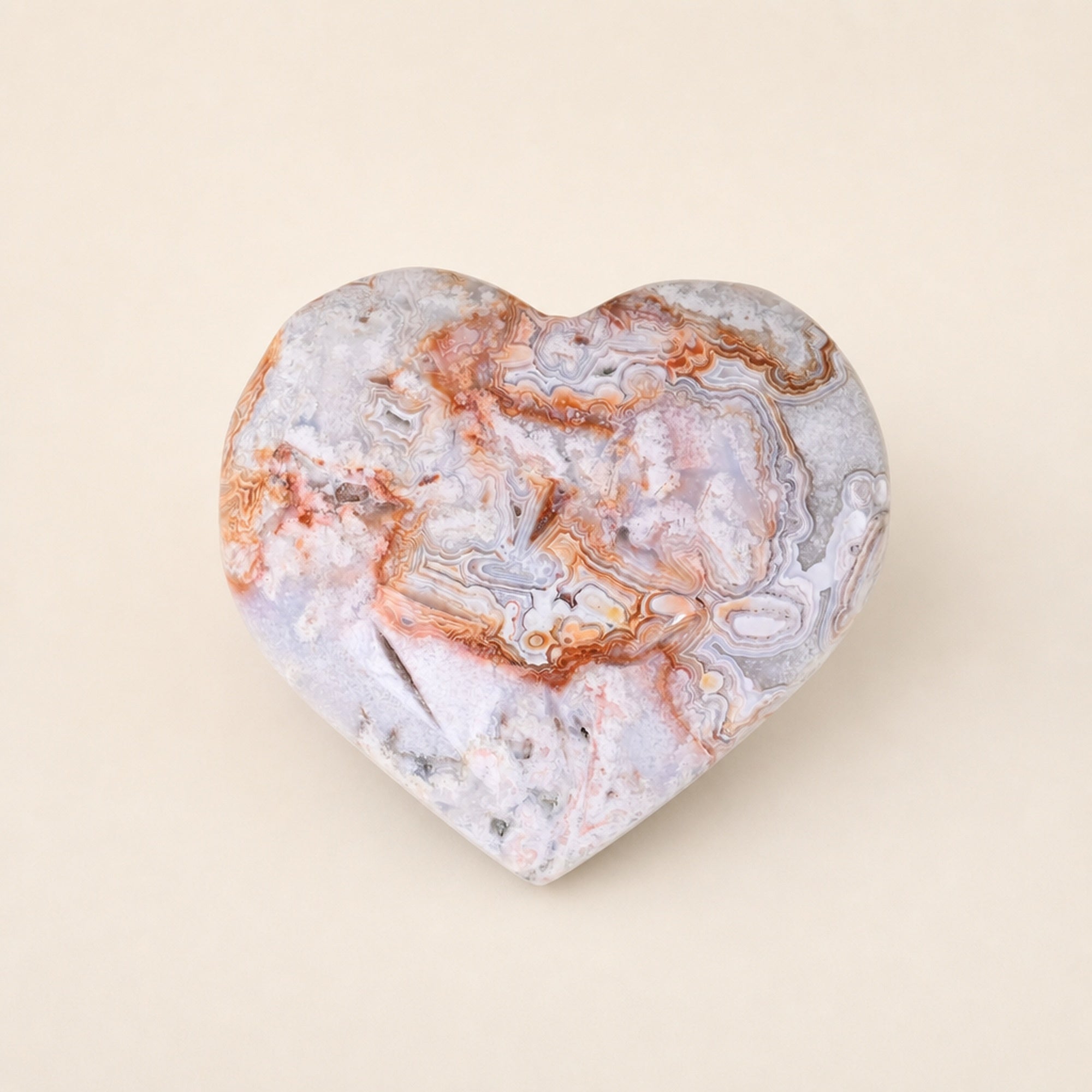
A related stone-family option
Crazy Lace Agate Heart Stone – Joyful Movement
This is a related variety in the same stone family, not a Agate product. We only identify jewelry as Agate when that exact material is verified.
Explore this related optionBeyond treatment, consider how you will care for the piece. A raw geode needs little more than a rinse and air-dry; dyed tumbled stones need dry handling. Matching the agate to your cleaning habits keeps the collection honest and easy to maintain.
How do you cleanse agate without damaging it?
Use the gentlest method that fits the finish: dry cloth first, a barely damp wipe for light grime, and lukewarm water with mild soap only for durable raw specimens. Avoid abrasives, thermal shock, and long soaking.
Can I cleanse agate with water or salt?
Rinsing raw agate with lukewarm water is generally safe, but salt is best avoided because it can leave residue and stress dyed or sealed pieces. Keep jewelry and dyed stones to dry or barely damp cleaning.
How often should I cleanse agate?
Physically clean agate whenever it looks dull or smudged and after heavy wear. Energetic cleansing has no set schedule; monthly or after a meaningful season is a common personal choice.
This guide is for practical care and cultural context only. It is not medical advice, and energetic cleansing is a personal ritual rather than a physical process.
© 2026 Lumina Quartz