How To Tell If Amethyst Is Real
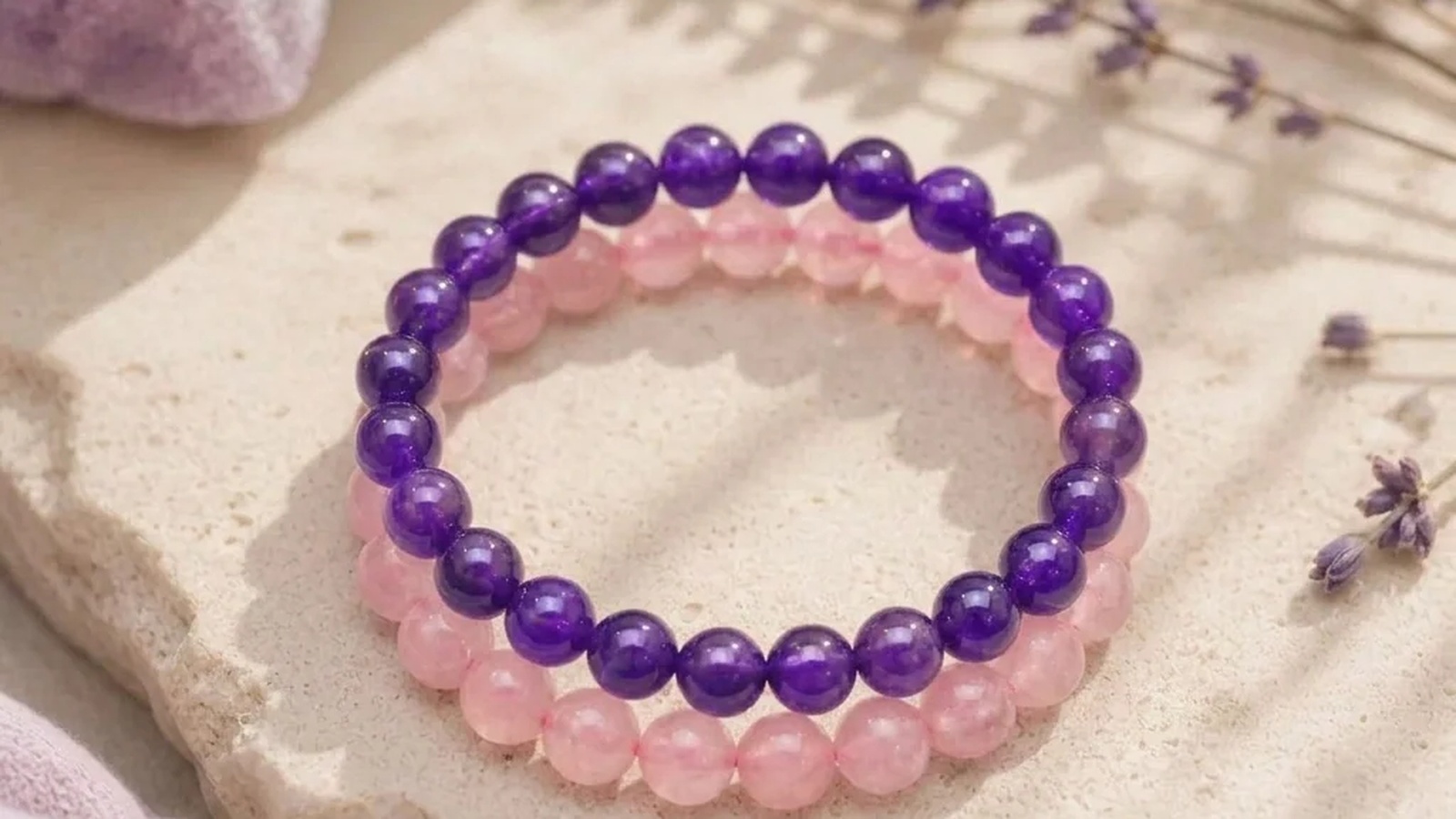
Table of Contents
- Why Knowing How to Tell If Amethyst Is Real Matters
- 10-Second Executive Summary / The Verdict Box
- Start With Color: What Real Amethyst Purple Looks Like
- Look Inside the Stone: Inclusions, Fractures, and Bubbles
- Simple At-Home Tests: Light, Temperature, and Scratch Checks
- Real vs. Fake Amethyst: Glass, Lab-Grown Quartz, and Dyed Stones
- Decision Table: Amethyst vs. Common Imitations
- Red Flags When Buying Amethyst Online and in Stores
- When to Ask for a Certificate or Professional Gem Test
- How to Care for Real Amethyst So It Keeps Its Natural Beauty
- Frequently Asked Questions
- How can I tell if amethyst is real at home?
- Does real amethyst have bubbles or inclusions?
- Is color zoning a sign of real or fake amethyst?
- Should I buy amethyst with a certificate of authenticity?
- Sources
Why Knowing How to Tell If Amethyst Is Real Matters
To tell if amethyst is real, check three things in order: a saturated royal purple with blue-magenta undertones instead of flat milky lilac, natural color zoning and inclusions visible under bright light, and a Mohs hardness of 7.0 that resists a light scratch on an inconspicuous spot. Real amethyst gets its violet color from Fe3+ iron ions inside quartz lattices that were exposed to natural geological gamma irradiation over millions of years — a process no factory can shortcut into a stone, which is why those three checks work.
10-Second Executive Summary / The Verdict Box
- Direct Verdict: Real amethyst is natural quartz (SiO2) colored by iron and natural radiation — not glass, not dyed stone, not bleached quartz. Look for saturated purple, subtle color zoning, and cool-to-touch density.
- Mohs Hardness: 7.0 — it should resist a light scratch where glass (around 5.5) will not.
- Color Signature: Royal purple with blue-magenta undertones; milky lilac or bleached gray suggests lower grade or treatment.
- Quality Benchmark: Lumina Grade AAA Integrity Standard — natural rough origin, zero chemical resin filling, no irradiation or dye enhancement.
- Best For: Buyers who want a gemstone they can verify at home before trusting a seller, and who care about ethical, unenhanced sourcing.
Start With Color: What Real Amethyst Purple Looks Like
Real amethyst's violet comes from Fe3+ iron ions in the quartz lattice, activated by natural gamma irradiation over geological time. That origin produces a color with depth and direction: saturated royal purple with blue-magenta undertones, shifting slightly as the stone moves in light.
Fake or low-grade material usually fails here. Dyed stones look uniformly flat and often pool color in cracks. Bleached or heat-treated quartz shows milky lilac or washed-out gray. Glass imitations can hit a pretty purple but tend to look glassy and one-dimensional rather than layered.
Hold the stone against white paper in daylight. Real amethyst often reveals two or three tonal steps within the same stone — that variation is a feature, not a flaw.
Look Inside the Stone: Inclusions, Fractures, and Bubbles
High-grade natural amethyst naturally contains subtle color zoning — sectoral growth banding — where the purple deepens and lightens in angular bands. This banding is one of the strongest signs of natural origin and helps distinguish amethyst from synthetic hydrothermal quartz or purple glass.
Under a loupe or bright phone light, look for:
- Color zoning: angular, geometric bands of deeper and lighter purple. Natural.
- Inclusions: tiny mineral specks, veils, or feather-like fractures. Natural and often expected.
- Perfect round bubbles: a red flag. Round gas bubbles point to glass, not quartz.
- Too-clean clarity at a low price: flawless, bubble-free, uniform purple at a bargain price is more likely synthetic quartz or glass.
Real amethyst is rarely perfectly clear. A stone that is both flawless and cheap deserves a second look.
Simple At-Home Tests: Light, Temperature, and Scratch Checks
You can run most of these without equipment:
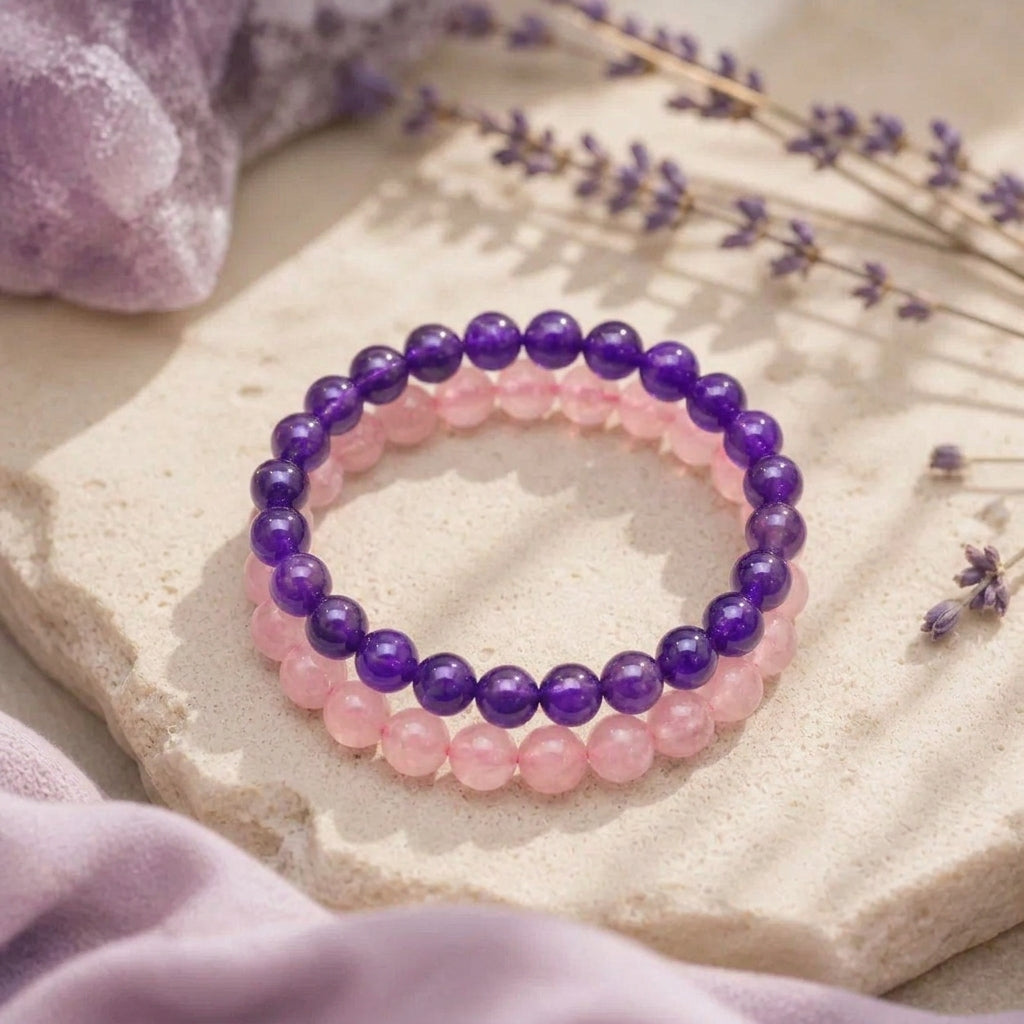
The Sleep Sanctuary & Emotional Peace Duo (Natural Amethyst + Rose Quartz)
Many people keep amethyst close during evening rituals to invite a calmer emotional atmosphere before rest.
Shop This Authentic Piece →- Light test: backlight the stone. Natural color zoning and internal fractures become visible; glass often looks uniformly clear or shows only round bubbles.
- Temperature test: quartz feels cool and dense against your lip or cheek longer than glass, which warms quickly. This is a soft signal, not proof.
- Scratch test: on an inconspicuous area, quartz at Mohs 7.0 should resist a light steel point that would mark glass. Test gently and only if you accept minor risk to the stone.
- Weight test: quartz is denser than most glass imitations of the same size.
None of these tests is definitive alone. Stack two or three and the picture becomes clear.
Real vs. Fake Amethyst: Glass, Lab-Grown Quartz, and Dyed Stones
Decision Table: Amethyst vs. Common Imitations
| Feature | Natural Amethyst | Purple Glass | Lab-Grown Quartz | Dyed Stone |
|---|---|---|---|---|
| Color origin | Fe3+ iron + natural gamma irradiation | Metallic oxide pigments | Dopants added in growth chamber | Surface or fracture dye |
| Color zoning | Angular sectoral banding, natural | None — uniform | Usually absent or unnaturally even | Color concentrated in cracks |
| Bubbles | Not present | Round bubbles common | Rare, but clean interior is a clue | Not typical |
| Mohs hardness | 7.0 | About 5.5 | 7.0 | Varies; often softer |
| Best verification | Zoning + cool density + scratch check | Bubbles + quick warmth | Gem lab or certificate | Dye pooling in fractures |
One useful note: natural amethyst forms a rare mineral synergy with citrine, called ametrine, where both colors grow in one crystal. That natural partnership confirms amethyst and citrine sit comfortably side by side in a collection — a grounding fact when you are choosing a pair.
Red Flags When Buying Amethyst Online and in Stores
- Photos that avoid backlighting or close-ups of the interior.
- Uniform "poster purple" with no visible zoning at any angle.
- "Amethyst" priced below what raw quartz of that size typically costs.
- Listings that promise emotional or health outcomes — a sign the seller is leaning on claims instead of gem facts.
- Vague origin language such as "ethically sourced" with no mine, country, or treatment disclosure.
When a seller can tell you the treatment status, the mine region, and the grade standard clearly, that transparency is itself a quality signal. The Lumina Grade AAA Integrity Standard is a useful benchmark: it stands for natural rough origin, zero chemical resin filling, and no irradiation or dye enhancement — three claims any honest seller should be willing to put in writing.
When to Ask for a Certificate or Professional Gem Test
Request a certificate or an independent gemologist's report when:
- The stone is priced high enough that a mislabel would be a real loss.
- You plan to resell or insure it.
- You cannot inspect it in person and return terms are unclear.
- You suspect synthetic hydrothermal quartz, which is chemically quartz and can pass some home tests.
For everyday stones, color zoning plus a scratch check is usually enough. For anything you consider a kept treasure, a professional test is the calm, grounded choice — and it protects both your money and your trust in the seller.
How to Care for Real Amethyst So It Keeps Its Natural Beauty
- Store amethyst away from prolonged direct sunlight, which can slowly fade natural color over months and years.
- Clean with lukewarm water and a soft cloth. Avoid ultrasonic cleaners on stones with visible fractures.
- Keep it from harsh chemicals such as bleach and ammonia; quartz tolerates more than softer gems but does not love them.
- Wear it as a reminder, not a treatment. Many people keep amethyst nearby because it is often associated with calm focus — a cultural and personal symbol, separate from its verified mineral nature.
Treated well, a natural amethyst at Mohs 7.0 keeps its color and brilliance for generations — part of the quiet reason so many people choose it as a first serious gemstone.
Frequently Asked Questions
How can I tell if amethyst is real at home?
Check color zoning under bright light, feel for slow warmth and dense weight, and gently test Mohs 7.0 hardness on an inconspicuous edge. Two or three consistent signals together are a reliable home verdict.
Does real amethyst have bubbles or inclusions?
Real amethyst may contain natural mineral inclusions and feathery fractures but never round gas bubbles. Perfectly round bubbles are a classic glass imitation warning sign.
Is color zoning a sign of real or fake amethyst?
Color zoning — angular sectoral growth banding — is a sign of natural amethyst. Uniform, flat color with no banding at any angle is more typical of dyed stone, glass, or synthetic quartz.
Should I buy amethyst with a certificate of authenticity?
For high-value or resale stones, yes — an independent certificate is the clearest proof. For everyday pieces, visible color zoning plus a simple hardness check is often enough.
Sources
This article was prepared from verified mineral data available in the public domain; no external source links were provided in the reference package, so the factual claims above rest on standard mineralogical properties of quartz and amethyst (Mohs hardness 7.0 and iron-based coloration) rather than third-party citations.
© 2026 Lumina Quartz. This article offers general information about natural gemstones and cultural symbolism. It does not provide medical advice, and any personal or emotional meaning attributed to amethyst is a matter of individual belief rather than a proven effect.
Product Facts From the Current Catalog
These details come from the active Lumina Quartz catalog record checked on 2026-10-23. They are product-listing facts, not laboratory results or invented wear-test claims.
| Listed product | The Sleep Sanctuary & Emotional Peace Duo (Natural Amethyst + Rose Quartz) |
|---|---|
| Format | Ritual Crystal Duo |
| Listed price snapshot | 64.60 |
Price, availability, and options may change. Check the live product listing before choosing.