Iolite Crystal Meaning: A Guide to Its Intuition and Meditation Benefits
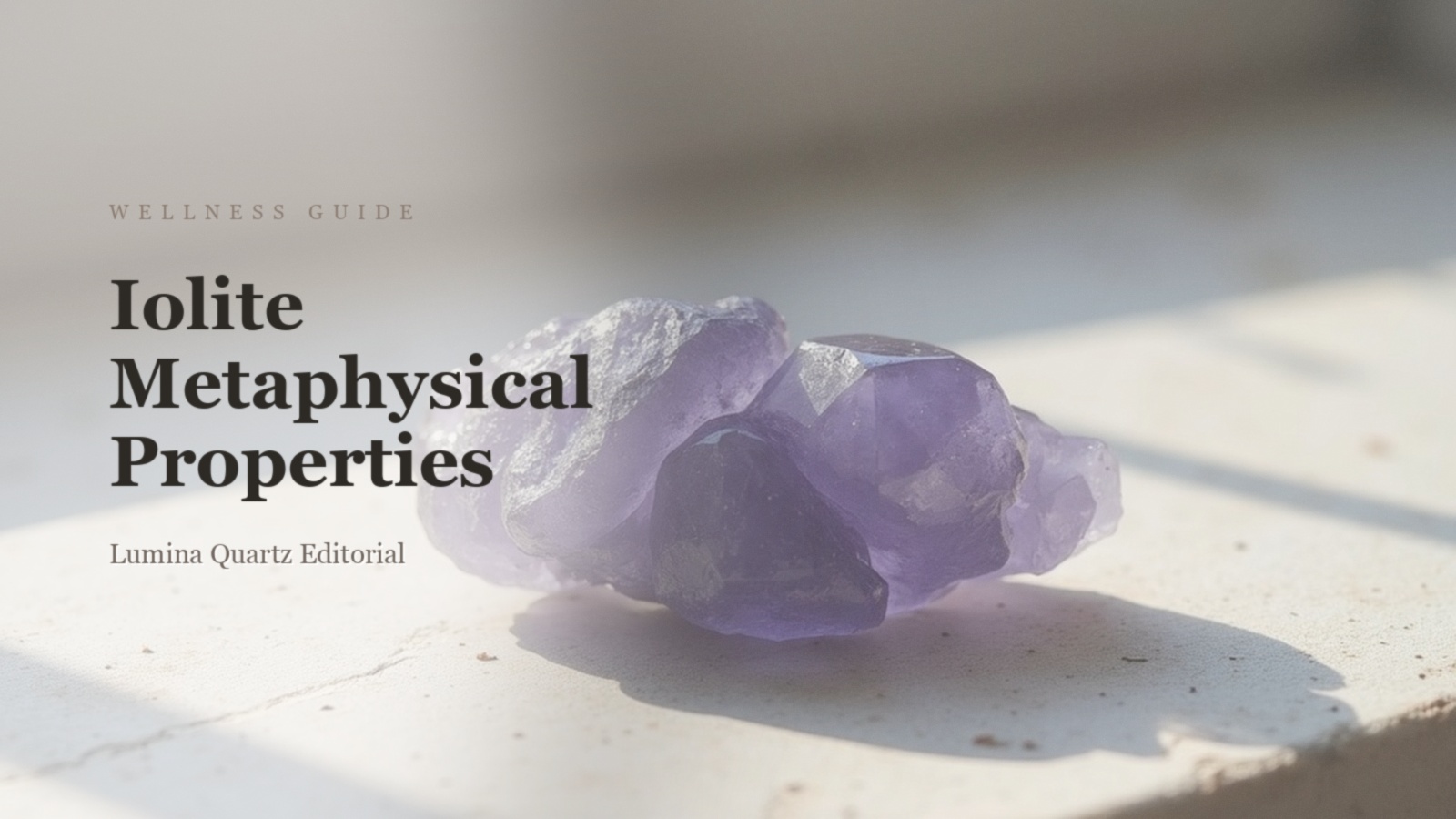
Table of Contents
- Introduction to Iolite Metaphysical Properties
- What is Iolite? A Gemstone of Vision and Transformation
- The Unique Pleochroism of Iolite and Its Energetic Significance
- Iolite as a Stone of Travelers and Pathfinders
- Key Metaphysical and Healing Properties of Iolite
- Enhancing Intuition, Psychic Abilities, and Inner Vision
- Iolite Stone Benefits: What This Gem Is Traditionally Used For
- Activation of the Third Eye and Auric Field
- Emotional Healing and Promoting Self-Acceptance
- Protection and Shamanic Use in Rituals
- Is Iolite Right for You? A Boundary and Fit Guide
- Iolite and Zodiac Signs: Libra, Sagittarius, and Taurus
- How to Use Iolite in Meditation, Jewelry, and Daily Life
- Meditation and Spiritual Practices with Iolite
- Wearing Iolite as Jewelry for Energy Alignment
- Caring for Your Iolite: Cleansing and Charging
- Conclusion: Harnessing Iolite's Powerful Energy
- Frequently Asked Questions About Iolite
Some stones whisper. Iolite, with its shifting violet-blue depths and quiet luminosity, is one of those gentle companions—a gem that invites you to pause, breathe, and trust what lies beneath the surface. It does not announce itself with a blaze of light; instead, it glows from within, like the last trace of dusk reflecting on still water. For centuries, this lesser-known stone has been a quiet guide for travelers, dreamers, and seekers of truth. In this article, we explore iolite metaphysical properties with an open heart and a grounded perspective—honoring its ancient lore while offering honest, accessible ways it may support you on your own path.
Key Takeaways
- Iolite is the gem variety of the mineral cordierite, traditionally associated with inner vision, intuition, and navigating life transitions.
- Its pleochroism—shifting colors from different angles—is a beautiful reminder to welcome multiple perspectives.
- Iolite is traditionally connected to the third eye chakra and may support meditation, dreamwork, and quiet self-reflection.
- Gentle and grounding rather than forceful, iolite may encourage emotional honesty, self-acceptance, and personal clarity.
- Simple care—lukewarm water, smoke, or soft moonlight—keeps your iolite vibrant for years to come.
Introduction to Iolite Metaphysical Properties
Before we dive into the specifics, it feels important to sit with the question: what draws us to a stone like iolite? In a world that often prizes the loud, the bright, and the immediate, iolite asks us to slow down. Its metaphysical properties are subtle and layered, unfolding gradually—much like the insights you may gain when you begin working with it. This is not a crystal that shouts; it is one that listens alongside you.
Throughout this guide, we will explore iolite's origins, its energetic associations, and practical ways to invite its presence into your daily rituals. We will also address some frequently asked questions, so whether you are new to crystals or have walked with them for many years, there is something here for you. As always, we speak of these properties as supportive companions to your own awareness—never as replacements for professional medical care, and never with the promise of a quick fix. Iolite simply walks beside you, a small, steady light in your pocket.
What is Iolite? A Gemstone of Vision and Transformation
Iolite is the gemstone variety of the mineral cordierite, known for its striking blue to violet-blue coloration. The name comes from the Greek word ios, meaning "violet"—a detail noted by the Gemological Institute of America (GIA), which also records the long-held belief that the gem aids sleep and helps unlock creativity. It has been appreciated for its beauty and its unusual optical behavior for centuries, yet it remains something of a hidden treasure in the mineral kingdom—a stone that rarely demands attention but is unforgettable once encountered.
Iolite is also more affordable than many of the blue gems it resembles. According to the Smithsonian National Museum of Natural History, gem cordierite is most often found in alluvial gravels as water-worn pebbles, and it is commonly seen in jewelry today because it resembles the color of tanzanite or sapphire while costing considerably less. The National Gem Collection's own 63.83-carat iolite is the largest cordierite gem it holds—a lovely reminder that quiet stones can still be remarkable.
Historically, iolite is linked to travel, direction, and finding your way when the sky appears grey. On an energetic level, it is a stone of transformation, gently guiding movement through life's questions, thresholds, and transitions, without ever hurrying you.
The Unique Pleochroism of Iolite and Its Energetic Significance
One of the most enchanting qualities of iolite is its pleochroism, which means it displays different colors when viewed from different angles. In one direction it may appear deep ocean blue, in another a soft violet, and in yet another a smoky, translucent grey. Mineralogists still study exactly how these blue tones arise; a 2022 study indexed on Mindat examined the factors that influence color in blue iolite. For the crystal lover, though, the point is simpler: this is not a flaw in the stone. It is a gift. It reminds us that how we hold a thing determines what we see.
Energetically, iolite's shifting hues may serve as a mirror for our own capacity to perceive multiple possibilities. When you feel stuck in a single story, holding iolite can be a quiet reminder that perspective is always available—that the same situation can be experienced differently when you shift your gaze. This is why iolite is often associated with clarity of mind, honest self-inquiry, and the courage to embrace new viewpoints without abandoning your center.
Iolite as a Stone of Travelers and Pathfinders
A popular legend holds that Norse navigators used iolite as a "sunstone"—a polarizing filter that helped them locate the sun's position even on overcast days. Whether or not the story is precisely true, it captures something people have long sensed about this gem. Iolite has been regarded as a protective companion for physical and spiritual journeys, and it is often associated with easing transitions and illuminating the path ahead. It does not promise smooth roads; it offers a steady, compass-like presence for the journey.
For pathfinders of the inner kind—those exploring meditation, shamanic states, or deep creative work—iolite may support a sense of grounding while navigating unseen territories. It asks you to remember that you are never truly lost. You may simply be in the tender space between what was and what is becoming, and iolite is willing to hold that space with you.
Key Metaphysical and Healing Properties of Iolite
Iolite's metaphysical properties are like the stone itself: layered, gentle, and quietly profound. It is not a crystal that bombards you with energy or demands immediate change. Rather, it works slowly, like a whisper in your own inner ear, helping you tune into what you already know but have perhaps forgotten.
In energy-healing traditions, iolite is most often associated with the brow chakra, or third eye, and is understood to support mental clarity, intuition, and honest self-reflection. Below, we explore some of the key ways iolite is used in modern crystal practice—offering insight, not instruction, and honoring the uniqueness of every practitioner.
Enhancing Intuition, Psychic Abilities, and Inner Vision
If you have ever had a gut feeling that proved to be exactly right, you have tasted the kind of knowledge iolite is said to amplify. Iolite is often associated with intuition, subtle knowing, and the quiet currents of inner awareness that guide us before our rational minds catch up. It supports the space where instinct and insight meet.
Working with iolite may support a deeper trust in your own intuitive voice. Some people find that placing a small piece on their pillow or keeping it in a pocket invites more vivid dreams and waking clarity. Iolite is not about forcing visions or chasing dramatic experiences; it is about noticing what is already there and giving it room to speak.
Iolite Stone Benefits: What This Gem Is Traditionally Used For
If you are exploring iolite stone benefits, it helps to know that most of them are quiet rather than dramatic. In crystal practice, iolite is most often reached for when someone wants steadiness, perspective, or a clearer inner signal. The traditional associations include:
- Mental clarity and decision-making. Iolite is often kept nearby when choices feel tangled, as a reminder to slow down and consider more than one angle.
- Dream recall and nighttime reflection. The GIA notes the long-standing belief that iolite aids sleep; many people keep a small stone on the nightstand for exactly this reason.
- Creative unblocking. Because the gem is linked with fresh perspectives, it is sometimes used by writers, artists, and makers who feel stuck in a single approach.
- Support through transitions. Moves, career shifts, and new chapters are common moments to carry iolite, echoing its reputation as a traveler's stone.
- Emotional honesty. Rather than soothing feelings away, iolite is associated with seeing them clearly and kindly.
- Gentle grounding. It is often described as grounding without being heavy—useful for meditation, energy work, or simply a busy day.
These are traditional and intuitive associations, not promises. Think of them as invitations to pay attention, and let your own experience be the final word.
Activation of the Third Eye and Auric Field
Iolite's affinity for the third eye chakra is perhaps its best-known energetic association. In crystal traditions, the brow chakra is linked with perception, insight, and the ability to see beyond surface appearances. Placing iolite gently on the forehead during quiet rest, or holding it in the palm while breathing slowly, is a simple way to work with this connection.
Some practitioners also use iolite when clearing or balancing the auric field, describing it as a stone that helps "tidy" the space around the body so that subtle information can be felt more easily. Whether you experience it that way or not, iolite works beautifully as a focal point for calm, steady attention.
Emotional Healing and Promoting Self-Acceptance
Iolite is not a stone of avoidance. It is often described as encouraging emotional honesty—the willingness to look at what is really going on without turning away or exaggerating. In gentle practice, this can be deeply freeing: you stop arguing with your own experience and start understanding it.
Many people find that iolite supports self-acceptance in particular. It is associated with releasing the need to be finished, perfect, or certain, and with making peace with the messy middle of a process. Held during journaling or an honest conversation with yourself, iolite may help soften the inner critic without silencing discernment.
Protection and Shamanic Use in Rituals
Iolite has a long folk reputation as a protective stone for journeys, and this extends to inner journeys as well. In shamanic and journey-based traditions, it is sometimes used as a grounding anchor—a small, familiar object to hold or keep in view while exploring expanded states of awareness through guided meditation or breathwork.
Its protective quality is generally described as boundary-setting rather than shield-like: iolite helps you stay centered in your own experience rather than being swept along by everything around you. It is a favorite among people who do energetic or intuitive work and want to remain clear-headed and kind while doing it.
Is Iolite Right for You? A Boundary and Fit Guide
Iolite is a gentle stone, but gentle does not mean right for every moment. This short guide can help you decide whether it belongs in your practice right now—and what to expect from it.
A good fit if you…
- Prefer subtle, steady support over intense or forceful energy.
- Are navigating a transition—a move, a new role, a change in routine.
- Want help slowing down enough to hear your own intuition.
- Keep a journal, practice dreamwork, or enjoy quiet evening reflection.
- Travel often, physically or inwardly, and like the idea of a compass-like companion.
Probably not the stone for you if you…
- Are looking for a dramatic, high-energy experience—iolite is quiet by nature.
- Want a stone that primarily soothes rather than reveals; iolite is associated with honesty first and comfort second.
- Prefer working with a single, strongly grounding stone such as black tourmaline.
- Need support for a health concern. Please speak with a qualified professional; crystals are companions, not treatment.
What iolite is not
- It is not a medical, psychological, or therapeutic treatment.
- It is not a guarantee of outcomes in love, money, or career.
- It is not a substitute for your own judgment—it works best alongside it.
Read this guide as an invitation to experiment gently, and to trust what you notice over time rather than what any single description promises.
Iolite and Zodiac Signs: Libra, Sagittarius, and Taurus
Iolite is most often connected with Libra, Sagittarius, and Taurus, though anyone may feel drawn to it.
- Libra is linked with balance, relationships, and the search for fairness. Iolite's ability to hold multiple perspectives at once may resonate with Libra's natural desire to see every side.
- Sagittarius, the traveler and truth-seeker, shares iolite's association with journeys, vision, and the wider view.
- Taurus is grounded, patient, and appreciates beauty that endures—qualities that suit iolite's calm steadiness and its quietly shifting color.
If your sign is not listed, there is no rule against working with iolite. Many crystal lovers choose stones by instinct rather than by birth chart, and that instinct is worth listening to.
How to Use Iolite in Meditation, Jewelry, and Daily Life
Working with iolite rarely requires ceremony. The simplest approaches are often the most meaningful.
Meditation and Spiritual Practices with Iolite
Begin by sitting comfortably and holding a piece of iolite in your left hand, or resting it gently near your brow. Let your breathing slow. Rather than trying to empty your mind, simply notice the quality of your attention—where it drifts, where it settles. If a question has been circling you, hold it lightly, as though turning the stone in the light. Many people find that answers arrive not as thunderclaps but as quiet, obvious thoughts they had been overlooking.
Iolite is also a lovely companion for dreamwork. Keep a piece beside your bed, and note what you remember on waking before you reach for your phone.
Wearing Iolite as Jewelry for Energy Alignment
For many people, the easiest way to stay connected to a stone is to wear it. Iolite works beautifully as a bracelet, pendant, or ring, sitting close to the skin where its energy is felt gradually throughout the day. If you would like a simple way to keep that steady, inward direction with you, our Iolite Bracelet – Inner Direction was made with exactly that intention.
There is no "correct" hand or placement. Some traditions suggest wearing iolite on the left side to receive its energy and on the right to express it; try both and see which feels natural. The most important factor is comfort—jewelry you enjoy wearing is jewelry you will actually wear.
Caring for Your Iolite: Cleansing and Charging
Iolite sits around 7 to 7.5 on the Mohs hardness scale, which is reasonably durable for jewelry, but it has distinct cleavage and appreciates gentle handling. For energetic cleansing, lukewarm water, sound, or smoke from a bundled herb or incense are all kind options. To charge your stone, a night in soft moonlight or simply a rest on a windowsill is enough.
To keep it physically beautiful, avoid harsh chemicals, ultrasonic cleaners, and abrupt temperature changes, and store iolite separately from harder stones so its surface stays as clear as the day you received it.
Conclusion: Harnessing Iolite's Powerful Energy
Iolite will not remake your life in a flash of violet light. What it offers is quieter and, in many ways, more useful: perspective when you feel stuck, honesty when you would rather look away, and a steady sense of direction when the sky is overcast. Its shifting colors are a daily reminder that the same situation can look entirely different depending on where you stand.
Whether you meditate with iolite, sleep near it, carry it in a pocket on your travels, or simply admire it on your wrist, you are invited to move at your own pace. Let it be a companion to your own awareness—no more, and no less. Sometimes that small, steady presence is exactly what a season needs.
Frequently Asked Questions About Iolite
What is iolite good for?
Iolite is traditionally used to support intuition, mental clarity, dream recall, and emotional honesty, and it is often carried during transitions or travel. Think of it as a stone of perspective and inner direction rather than a source of dramatic energy.
Is iolite the same as cordierite?
Iolite is the gem-quality variety of the mineral cordierite. In jewelry, the two names are often used interchangeably, but "cordierite" is the broader mineralogical term.
Which chakra is iolite associated with?
Iolite is most commonly linked with the third eye, or brow, chakra, which is associated with perception, insight, and inner vision. Some practitioners also use it when working with the auric field.
How do I cleanse and charge my iolite?
Lukewarm water, sound, or smoke are all gentle ways to cleanse iolite. To charge it, rest it in soft moonlight overnight. Avoid harsh chemicals, ultrasonic cleaners, and sudden temperature changes.
Can I wear iolite every day?
Yes. At roughly 7 to 7.5 on the Mohs scale, iolite is durable enough for regular wear. Because it has distinct cleavage, it is best to remove iolite jewelry before heavy lifting, gardening, or contact sports, and to store it separately from harder gems.
Is iolite expensive compared to tanzanite or sapphire?
Iolite is generally far more affordable than the tanzanite and sapphire it resembles in color, which is one reason it has become a popular choice in modern jewelry.
Related Reading
- Kyanite Crystal Meaning: A Guide to Benefits, Uses, and Chakra Alignment
- Fluorite Meaning: Meaning, Properties, and Everyday Uses
- Sunstone Meaning: Meaning, Properties, and Everyday Uses
- Black Tourmaline Meaning: Meaning, Properties, and Everyday Uses