Kambaba Jasper Meaning: A Calming Green Crystal Guide
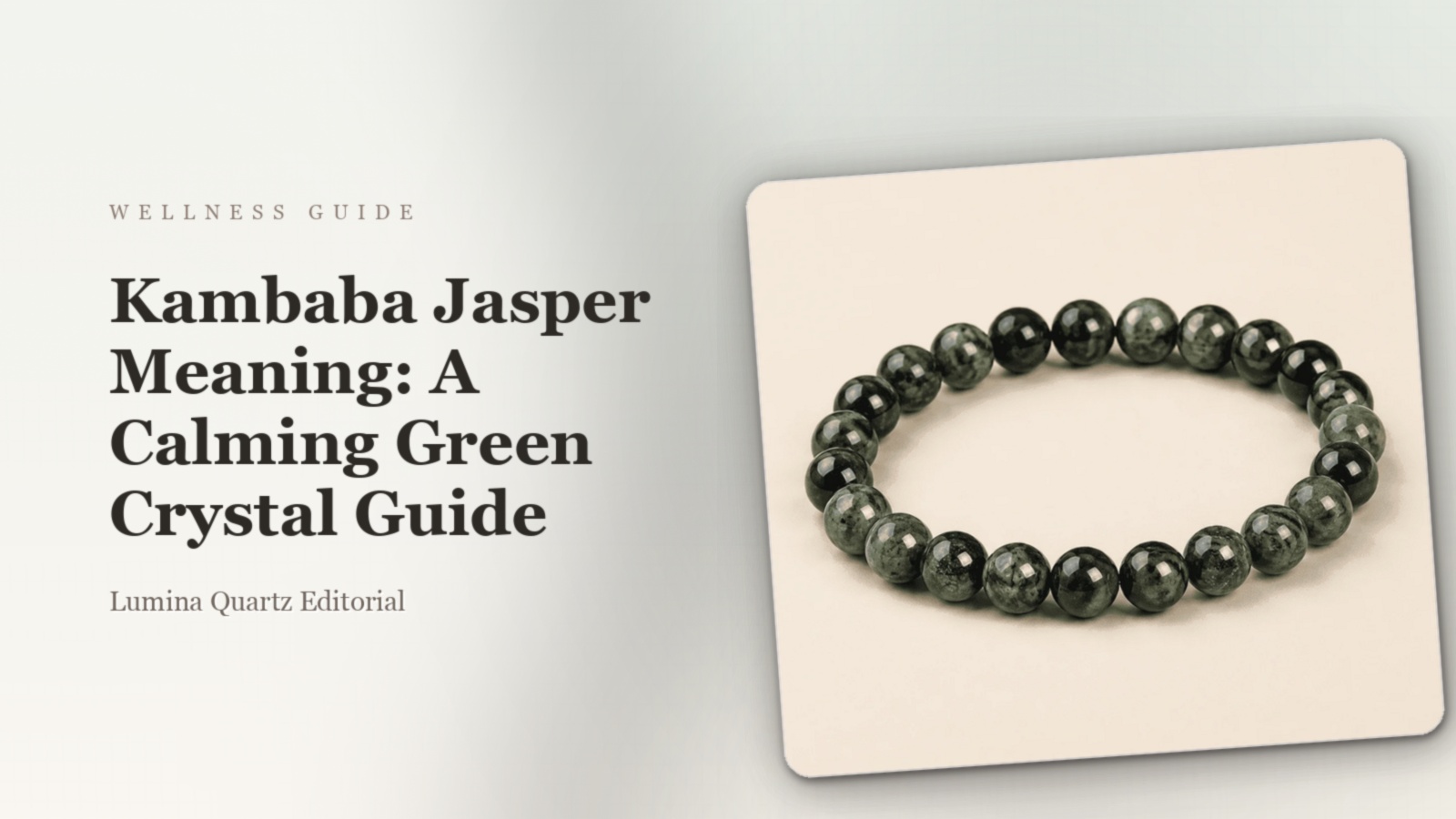
Table of Contents
- Key Takeaways
- Kambaba Jasper Meaning: What the Stone Represents
- What Is Kambaba Jasper?
- Overview and Common Names
- Why Is It Called "Crocodile Jasper"?
- The Geological Truth: Is Kambaba Jasper a Stromatolite?
- Scientific Analysis: Rhyolite Origin
- Mineral Composition
- Physical Characteristics of Kambaba Jasper
- Where Is Kambaba Jasper Found?
- Metaphysical and Healing Properties
- Emotional Healing and Peace
- Chakra Association
- Spiritual Benefits
- How to Use Kambaba Jasper
- Jewelry
- Meditation
- Home Decor
- How to Care for Your Kambaba Jasper
- Cleaning and Cleansing
- Charging
- Frequently Asked Questions
- Is Kambaba Jasper a fossil?
- What are the healing properties of Kambaba Jasper?
- Where is Kambaba Jasper found?
- Which chakra is Kambaba Jasper associated with?
There are stones that feel less like objects and more like stories — ancient, patient, and quietly alive. Kambaba jasper is one such stone. With its swirling greens and dark, dreamlike orbs, it invites us to slow down, breathe, and reconnect with the stillness that lies beneath our busy minds. Whether you are drawn to it for its beauty, its earthy presence, or the quiet sense of calm it seems to carry, this stone asks only one thing: that you be present with it.
Key Takeaways
- Kambaba jasper is a green orbicular stone, most often sourced from Madagascar.
- Although once believed to be a fossilized stromatolite, modern scientific analysis points to a rhyolite (volcanic) origin.
- It is commonly called crocodile jasper because of its scaly, reptile-like patterns.
- In metaphysical practice, kambaba jasper is often associated with emotional grounding, patience, and the heart chakra.
- Gentle cleaning and mindful charging methods help preserve both its luster and its subtle energetic presence.
Kambaba Jasper Meaning: What the Stone Represents
The meaning of kambaba jasper rests in its two defining qualities: its deep, forest-green color and the quiet rhythm of its orbicular patterns. Together, they shape a stone that is widely read as a symbol of calm endurance — the kind of steadiness that does not rush, does not force, and does not fade.
In crystal practice, that symbolism carries into a few recurring themes:
- Grounding: Its earthy palette is often linked to feelings of staying rooted and present, especially during busy or scattered days.
- Patience: The stone's slow-forming orbs are seen as a reminder that meaningful change takes time.
- Heart-centered calm: In metaphysical circles, its green tones connect it to the heart chakra and to themes of emotional ease.
- Ancestral stillness: Because it was long mistaken for a fossil, many people still associate kambaba jasper with a sense of deep, ancient time — an association that persists even though the geology has since been clarified.
These meanings are interpretive rather than clinical, but they are remarkably consistent across crystal literature and community practice. If a stone's meaning is what you make of it in daily use, kambaba jasper is a stone of unhurried presence.
What Is Kambaba Jasper?
Kambaba jasper is a striking green stone marked by dark, circular orbs and wavy bands of deep forest and mossy green. It is an opaque stone that takes a beautiful polish, making it a beloved choice for jewelry makers, collectors, and energy workers alike. Its surface feels almost alive, like a reflection of the primordial world staring back at you.
Overview and Common Names
Kambaba jasper goes by several names. You may see it listed as crocodile jasper, green orbicular jasper, or simply kambaba stone. Some sellers describe it as "the spirit of the earth" — and with its ancient-looking patterns, it is easy to understand why. The name "kambaba" likely references the region or the local name associated with its discovery in Madagascar, although its exact linguistic roots remain a little mysterious. What is certain is that the stone has captured the imagination of crystal lovers around the world.
Why Is It Called "Crocodile Jasper"?
Look closely at a polished piece of kambaba jasper and the nickname becomes immediately clear. The dark, rounded inclusions often resemble the clustered eyes of a crocodile half-submerged in green water, while the wavy lines evoke the texture of reptilian scales. There is something ancient and watchful about the pattern — a quiet reminder that patience and stillness have their own kind of power. It is this unique visual character that makes kambaba jasper so instantly recognizable.
The Geological Truth: Is Kambaba Jasper a Stromatolite?
There is a beautiful story that often accompanies kambaba jasper — that it is a fossilized form of ancient microbial life known as a stromatolite. While this tale has captured many hearts, the geological reality is a little different. Understanding the stone's true origin only deepens our appreciation for it.
Scientific Analysis: Rhyolite Origin
For years, kambaba jasper was described as stromatolite jasper, with the green orbs said to be fossilized colonies of cyanobacteria. Stromatolites are real, layered structures created by algae and bacteria in shallow water, and they are among the oldest known evidence of life on Earth. It is a romantic idea — carrying a piece of the planet's earliest biology in your pocket. But when geologists examined the stone more closely, the fossil theory began to crack.
Geologists found no clear fossil structures in kambaba jasper. Instead, the stone is now widely classified as rhyolite — a silica-rich volcanic rock that formed when ancient lava cooled and crystallized. The orbicular patterns are likely the result of spherulitic growth, where minerals arranged themselves in radial, concentric shapes during the slow cooling process. In other words, the orbs are geological formations, not biological ones. This does not make the stone any less remarkable; it simply changes the story from one of ancient life to one of ancient fire, pressure, and transformation.
Mineral Composition
Kambaba jasper is composed primarily of quartz and feldspar, with inclusions of chlorite and other green minerals that give it its characteristic color. Its hardness falls around 6.5 to 7 on the Mohs scale, making it durable enough for everyday wear and gentle handling. The interplay of light and dark minerals creates the stone's signature contrast, and every slab reveals a unique arrangement of orbs, bands, and speckled textures. No two pieces are ever truly alike.
Kambaba Jasper vs. Ocean Jasper: Quick Comparison
These two Madagascar stones are often confused, since both are orbicular and both are traded as jaspers. Here is how they differ in practice.
- Color palette: Kambaba jasper is predominantly dark green and black; ocean jasper tends to be lighter, with tan, cream, pink, and olive tones.
- Visual character: Kambaba jasper shows dark orbs and blobs on a green field; ocean jasper shows small, tightly packed "eyes" in varied colors.
- Geology: Kambaba is classified as rhyolite; ocean jasper is a silicified volcanic rock with spherulitic and sometimes agate-like features.
- Hardness and care: Both sit around 6.5–7 on the Mohs scale, so both are safe for jewelry and both respond well to gentle cleaning with lukewarm water and a soft cloth.
- Best for: Kambaba when you want a darker, grounding, earthy presence; ocean jasper when you prefer a lighter, more playful palette.
- Not ideal for: ultrasonic or steam cleaning, harsh chemicals, or prolonged sun exposure for either stone.
Physical Characteristics of Kambaba Jasper
Visually, kambaba jasper is unmistakable. Its palette ranges from pale sage to deep, almost black-green, with circular eyes that seem to float in a sea of swirling color. Holding one in your hand, you get the sense of depth — as if you are looking into a forest canopy rather than at a polished surface.
In hand, the stone feels smooth, weighty, and cool, with the soft sheen of a well-polished opaque material. Pieces are commonly cut into cabochons, tumbled stones, spheres, and slabs. Because the patterns are so varied, collectors often seek out stones with especially distinct "eyes" or bands, while jewelers value slabs with even color and clean, crack-free surfaces.
Where Is Kambaba Jasper Found?
The vast majority of kambaba jasper on the market comes from Madagascar, where it is mined alongside other orbicular stones from the same general region. Madagascan material is the reference point for the stone's classic look: dark green ground with black orbs and wavy bands.
Occasionally, similar orbicular green material from other locations is sold under the kambaba name, but it may differ in color balance, orb density, and overall feel. If origin matters to you, ask your supplier for the specific source, and expect Madagascan material to show the deepest, most contrast-rich patterning.
Metaphysical and Healing Properties
In metaphysical practice, kambaba jasper is described as a stone of grounding, patience, and quiet emotional support. These are traditional associations rather than medical claims, and they are best held as intentions you set for yourself rather than promises of a specific outcome.
Emotional Healing and Peace
Many people reach for kambaba jasper during periods of change, stress, or mental clutter. Its dark green tones are often associated with calm and renewal — the feeling of standing in shade on a warm day. Practitioners often describe it as a stone that helps soften restlessness and encourages a slower, more measured response to daily pressure.
Chakra Association
Kambaba jasper is most commonly linked to the heart chakra, where green stones are traditionally placed to support feelings of balance and emotional ease. Some practitioners also connect it to the root chakra because of its dark, earthy appearance. Either association is a personal anchor, not a rule — choose the one that feels most natural to you.
Spiritual Benefits
In meditation and energy work, kambaba jasper is often used as a stillness stone. Its ancient-looking patterns are said to encourage reflection on time, patience, and the long view. For some, that makes it a helpful companion for journaling, breathwork, or simply sitting quietly without needing to solve anything.
How to Use Kambaba Jasper
There is no single correct way to work with this stone. What matters is that the practice is simple enough to repeat — a small, steady ritual rather than an occasional gesture.
Jewelry
Wearing kambaba jasper as a bracelet or pendant keeps its earthy presence close throughout the day. It pairs naturally with linen, denim, and other natural textures, and its durability makes it comfortable for daily wear. If you want a simple daily anchor, a Kambaba Jasper Bracelet – Earthy Stillness can serve as a quiet reminder to pause and breathe between tasks.
Meditation
To use kambaba jasper in meditation, hold it in your palm or rest it on your chest and take a few slow breaths. Let your attention settle on the stone's weight and temperature. When your mind wanders, return to the sensation in your hand — a simple, repeatable way to practice presence.
Home Decor
Placed on a desk, nightstand, or entryway tray, kambaba jasper can act as a visual cue for calm. Spheres and slabs work especially well in spaces where you want a softer, more grounded atmosphere. Position pieces where you will see them during ordinary moments — that is where small reminders do their best work.
How to Care for Your Kambaba Jasper
Kambaba jasper is durable, but it still responds best to gentle handling. A few simple habits will keep it looking beautiful for years.
Cleaning and Cleansing
Clean your stone with lukewarm water and a soft cloth, then pat dry. For crystal-practice cleansing, many people use moonlight, sound, or a brief rest on a bed of dry herbs or salt (wrapped so the salt does not contact the stone directly). Avoid harsh chemicals, ultrasonic cleaners, and steam, which can dull the polish or stress the surface over time.
Charging
To charge kambaba jasper, leave it in moonlight overnight or place it beside a clear quartz point. If you use sunlight, keep sessions brief — prolonged exposure can fade the green over time. Charging is a personal, intention-setting ritual rather than a technical requirement, so choose the method that feels meaningful to you.
Frequently Asked Questions
Is Kambaba Jasper a fossil?
No. It was once widely described as a fossilized stromatolite, but modern analysis found no fossil structures in the stone. It is now generally classified as rhyolite, a volcanic rock whose orbicular patterns formed through geological processes rather than biological ones.
What are the healing properties of Kambaba Jasper?
In metaphysical practice, kambaba jasper is associated with grounding, patience, and emotional calm, and it is often linked to the heart chakra. These are traditional associations and personal intentions, not medical claims or guaranteed outcomes.
Where is Kambaba Jasper found?
The stone is most commonly sourced from Madagascar, where it is mined alongside other orbicular stones from the same region. Similar material from other locations occasionally appears on the market, but Madagascan pieces typically show the deepest green and the strongest orb patterns.
Which chakra is Kambaba Jasper associated with?
It is most often connected to the heart chakra because of its green tones, and some practitioners also link it to the root chakra due to its dark, earthy appearance. Either association can serve as a personal anchor during meditation or energy work.
Sources
Continue Reading
- Obsidian Crystal Meaning: Meaning, Properties, and Everyday Uses
- Lepidolite Crystal Meaning: Properties, Uses, and Calming Benefits
- Fluorite Meaning: Meaning, Properties, and Everyday Uses
- Sunstone Meaning: Meaning, Properties, and Everyday Uses
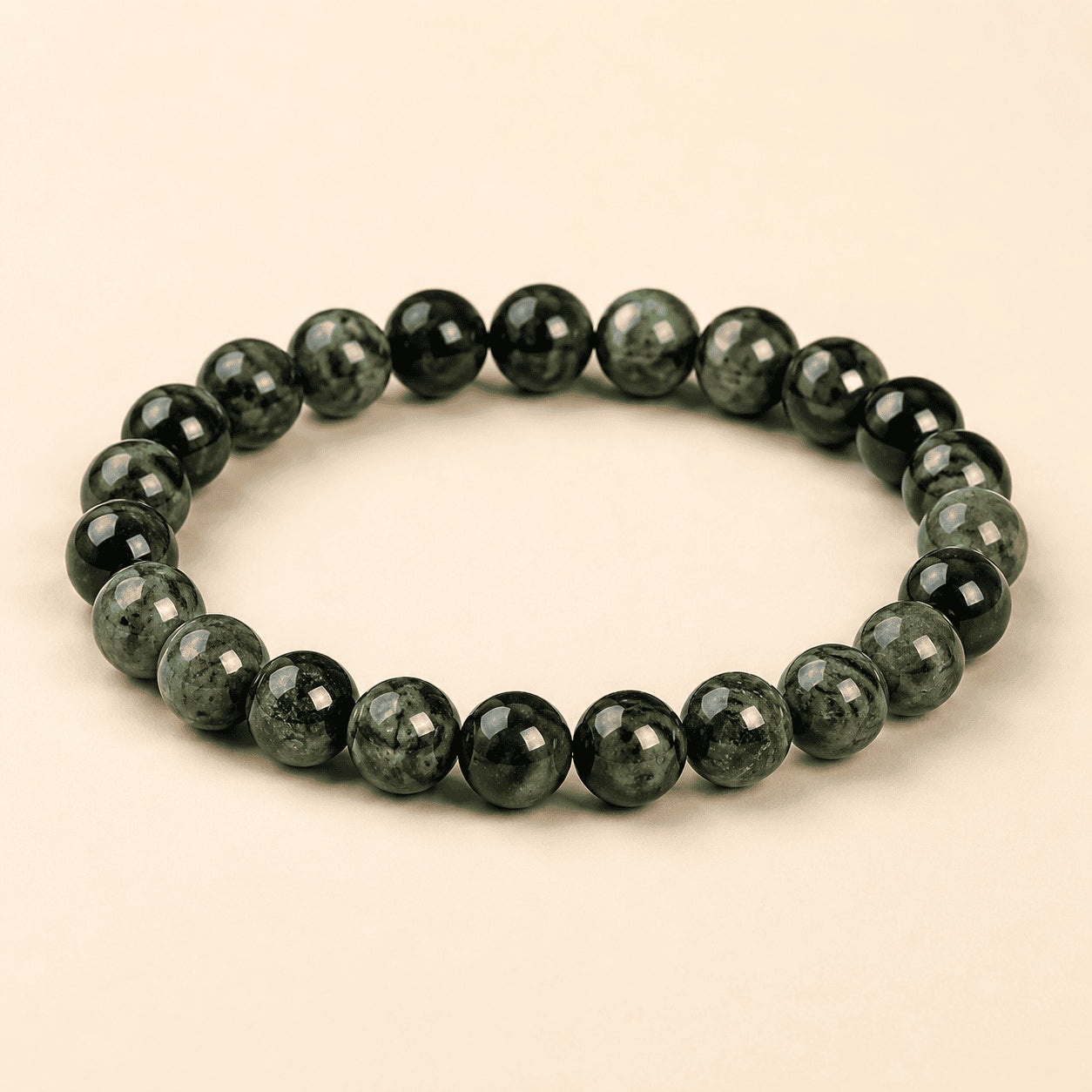
Kambaba Jasper Bracelet
A gentle ritual piece for bringing this intention into your daily routine.
Shop This Authentic Piece →