Malachite Crystal Meaning: Benefits, Grounding & How to Use It
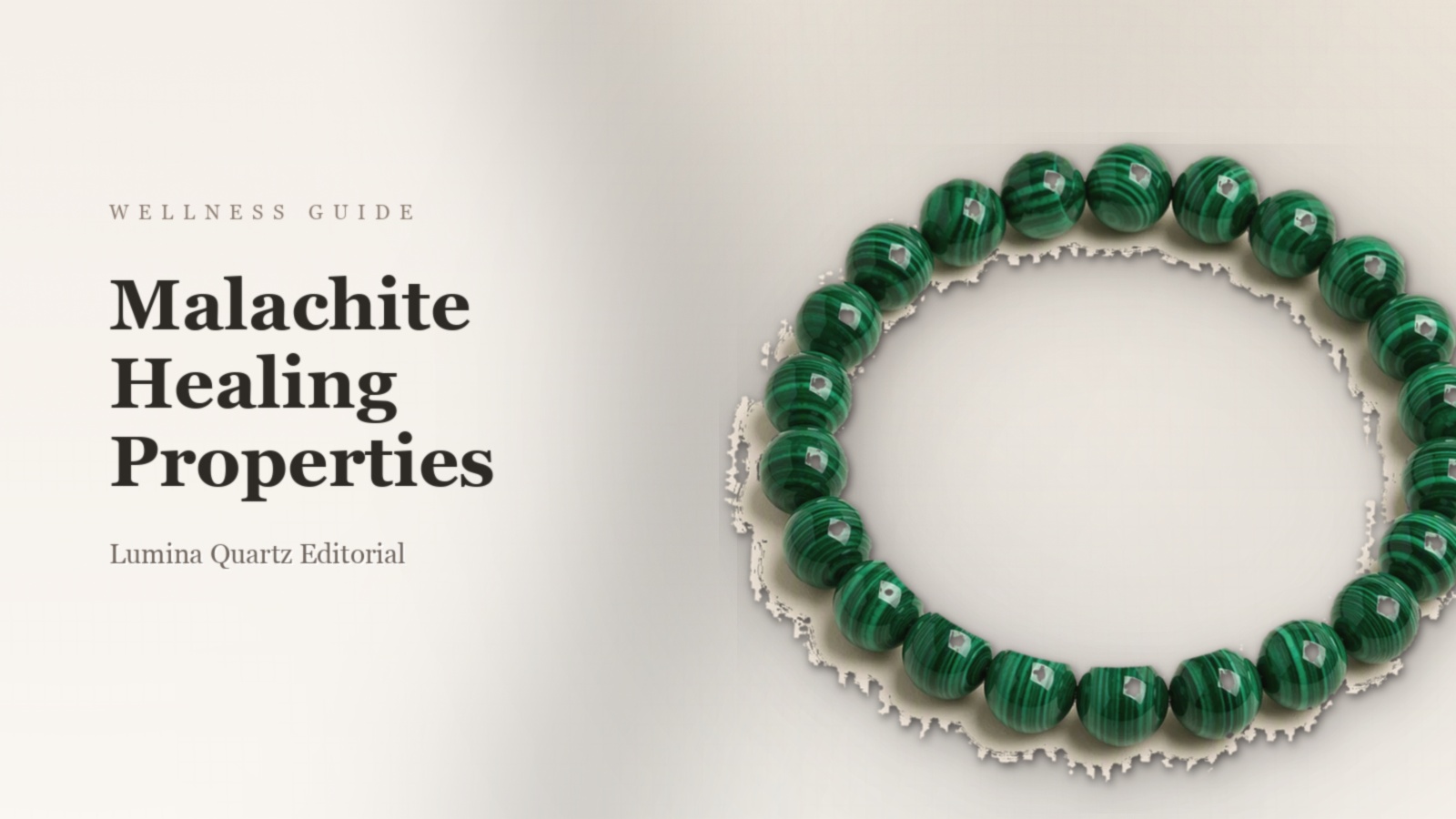
Introduction to Malachite Crystal Meaning
There is something undeniably magnetic about malachite. Its deep green swirls feel less like a pattern and more like a memory — a whisper of ancient forests, a pulse of deep earth, a slow river of copper moving through stone. For centuries, people have been drawn to its dense, hypnotic beauty, and for just as long it has been honored as a stone of transformation, protection, and inner truth. When we speak of malachite's meaning, we are not listing medical effects; we are describing a relationship between the stone and the person holding it, a quiet dialogue that unfolds over time.
Malachite is also one of the most grounding stones you can keep close. In crystal tradition its presence is described as steady and powerful, yet tender — a gentle hand on your back as you take a brave step. Whether you are new to crystals or have spent years walking with them, malachite invites you to look honestly at what you carry, release what no longer serves you, and step forward with clearer vision. In this guide, we will explore its meaning, history, traditional associations, grounding qualities, and practical ways to use it in daily life.
Key Takeaways
- Malachite is a copper carbonate hydroxide mineral known for its distinctive green banding and deep, earthy presence.
- It has been used for centuries in ancient Egypt, Greece, and Russia for protection, ritual, and ornament.
- In crystal tradition, malachite is linked with emotional balance, personal growth, grounding, and the release of old patterns. These are cultural associations, not medical claims.
- Practical ways to work with malachite include wearing it as jewelry, placing it in your home or workspace, and holding it during meditation or quiet reflection.
- Keep malachite outside the body: never ingest it, never use it to make elixirs or drinking water, and never breathe the dust produced by cutting, sanding, or polishing it.
- Malachite is a soft stone (3.5–4 on the Mohs scale) that requires gentle care, and it should be sourced responsibly.
What is Malachite?
Malachite is a copper carbonate hydroxide mineral that forms in the upper oxidation zones of copper deposits, often alongside azurite, chrysocolla, and cuprite. Its striking green hue ranges from pale mint to deep forest, always arranged in those recognizable banded swirls that form as mineral-rich water slowly deposits layer upon layer over time. Because of this formation process, no two pieces of malachite are alike. Each stone carries its own unique pattern, which makes it a deeply personal companion.
Malachite's mineral story is closely tied to azurite, its blue copper cousin. The U.S. Geological Survey notes that both are copper minerals that were once used as pigments and are now mostly valued as collector minerals — a helpful reminder that malachite's beauty has been appreciated for both practical and aesthetic reasons long before it entered modern crystal collections.
With a hardness of only 3.5 to 4 on the Mohs scale, malachite is a relatively soft stone, which means it needs care in daily wear and storage. Yet that softness is part of its charm — it feels smooth and slightly cool to the touch, warming quickly against your skin. For those who work with crystal energies, malachite is often described as a stone of attunement, one that mirrors your internal state and helps bring hidden truths to the surface.
Historical Significance of Malachite
Malachite's history is long and deeply interwoven with human culture. In ancient Egypt, it was ground into powder and used as eye paint and pigment for ceremonial objects. The Egyptians associated malachite with the goddess Hathor and regarded it as a protective stone, especially for travel and childbirth. Its green color symbolized rebirth and the fertile vitality of the Nile, making it a stone of both life and afterlife rituals.
In ancient Greece, malachite was dedicated to the goddess Hera and worn as ornamental jewelry and amulets, often carved with the image of the sun or animals. It was regarded as a protective stone for children and travelers, and it appears in early ritual practice. In Russia, malachite was beloved by royalty and used to adorn the famous Malachite Room in the Winter Palace, a space that still speaks to the stone's majestic presence. Across cultures and centuries, one theme repeats: transformation, protection, and the courage to become more fully oneself.
Choosing How to Work With Malachite
Malachite can be used in several simple ways, and the best approach usually depends on what kind of support you are looking for. Use the decision table below to match a practice to your day, then work through the boundary checklist before you begin.
Decision Table: Match the Practice to the Moment
| What you want | Practice that fits | Time and setup | Keep in mind |
|---|---|---|---|
| A steady daily reminder | A well-set polished bracelet or pendant | Seconds to put on; worn through the day | Tie it to one fixed moment — before work, before meditation, or before an evening reset |
| A calmer room | A tumbled stone or small specimen on a shelf, desk, or bedside table | No routine required | Choose a spot you already look at every day |
| Slowing down to reflect | Holding a polished piece during slow breathing or journaling | 3–5 minutes | Short, regular sessions are easier to keep than rare long ones |
| Emotional work | Malachite as a cue alongside journaling, therapy, or an honest conversation | Varies | The stone marks the moment; it does not do the work for you |
| A companion stone | One intentional pairing rather than a crowded grid | No routine required | Rose quartz for softness, citrine for warmth, black tourmaline or red jasper for a more grounded feel |
Boundary Checklist Before You Begin
- Respect the dust. A solid, polished piece is generally safe to handle, but prolonged exposure to malachite dust from cutting, sanding, polishing, or crumbling the stone without protective gear is a known health risk. Wear a mask and work wet if you cut or polish it.
- Wash your hands after handling rough or unpolished material.
- Keep small tumbled stones away from children and pets who might put them in their mouths.
- Treat it as a supportive practice, not a treatment. Malachite does not replace medical care and is not a solution for urgent or serious health concerns.
- Take jewelry off before showering, swimming, exercising, or cleaning. Water, sweat, and chemicals dull the surface, and malachite is soft enough to scratch.
- Buy from sellers who can speak to where their malachite came from and how it was handled.
Malachite "Benefits" in Crystal Tradition — and What They Are Not
Most lists of malachite "benefits" mix two very different things: long-standing cultural associations, and claims about the body. It is worth separating them.
Crystal tradition associates malachite with comfort, renewal, protection, and transformation — ideas that trace back to its use in Egyptian, Greek, and Russian ornament and ritual. Those associations are part of the stone's cultural history, and part of why people enjoy working with it. They are not medical findings, and they are not statements about how the body works. Malachite has not been shown to treat, cure, or prevent any illness, and it is not a therapy for pain, inflammation, breathing, or circulation. Lists that say otherwise are repeating folklore rather than evidence.
What is genuinely useful to know about malachite and the body is the safety side, which comes from mineralogy rather than lore: a solid, polished piece is generally safe to handle, while dust from cutting, sanding, or breaking the stone is a real hazard. That is the part worth acting on, and the Sources section at the end of this guide points to the mineralogical references behind it.
Emotional and Spiritual Meaning in Crystal Tradition
Where malachite is most often appreciated is in emotional and spiritual practice. This is the heart of malachite's meaning: a stone of honest reflection, deep feeling, and steady change. It is frequently described as encouraging rather than comforting — it does not always tell you what you want to hear, but it tends to meet you where you are.
Transformation and Personal Growth
Malachite has long been called a stone of transformation. Many people work with it during periods of change — a new role, a move, a shift in a relationship, or a season of personal growth. In crystal tradition it is described as helping you see a pattern clearly so you can decide what to do with it, rather than staying stuck in a loop.
Emotional Balance and Protection
In crystal tradition, malachite is also a protective stone, though its protection looks more like boundaries than armor. It is associated with releasing old emotional patterns, speaking truth with kindness, and staying grounded when feelings run high. Many people keep a piece nearby during difficult conversations or emotionally demanding weeks.
Grounding and Spiritual Connection
Because of its dense, earthy nature, malachite is often described as one of the most grounding stones in a collection. Grounding, in this context, means feeling present in your body and steady in the moment — a subjective sense of steadiness, not a physical effect on the body. Paired with slow breathing or quiet meditation, many people find it supports that sense of rootedness, and that steadiness is often what makes deeper reflection possible in the first place.
How to Use Malachite in Daily Practice
Wearing Malachite Jewelry
Wearing malachite is one of the simplest ways to keep it close, and it works best when it is tied to a repeatable moment — putting it on before work, before meditation, or before an evening reset. A bracelet or pendant makes the stone part of your routine rather than an object you have to remember. Because malachite is soft, choose pieces that are well-set and take them off before exercise, showering, or household cleaning. If you are looking for a simple daily anchor, the Malachite Mindful Bracelet is designed for exactly that kind of gentle, everyday wear.
Placing Malachite in Your Environment
A tumbled stone or small specimen on a desk, shelf, or bedside table can serve as a quiet reminder to pause. Choose a spot you already look at often, and let the stone mark a moment in your day — answering an email, sitting down to dinner, or turning off the light.
Meditation with Malachite
For meditation, hold a polished piece in one hand or rest it nearby. Begin by feeling your feet on the floor and noticing three steady points of contact, then let your breath slow naturally. Malachite does not require a long practice; three to five minutes done regularly often feels more meaningful than an occasional longer session.
Pairing Malachite with Other Crystals
Choose one companion stone with a different role rather than several at once. Rose quartz can add softness, citrine can add warmth, and black tourmaline or red jasper can deepen the grounding quality. A single intentional pairing is usually easier to connect with than a crowded grid.
Caring for Your Malachite
Malachite is soft and sensitive, so gentle care keeps it beautiful. Wipe it with a dry or very slightly damp soft cloth and dry it immediately — avoid soaking it, vinegar, lemon, or household cleaners, which can dull the surface. Store malachite separately from harder stones so it does not get scratched, and keep it away from prolonged direct sunlight and heat, which can fade its color. For energetic cleansing, use sound, moonlight, or a brief pass through incense smoke rather than water or salt.
Precautions and Ethical Sourcing
Malachite should always be handled with common sense. Do not ingest it, do not place it in drinking water, and do not breathe dust from cutting, sanding, or crumbling pieces — this is a real health consideration, not a formality. Wash your hands after handling rough or unpolished material, and keep small tumbled stones away from children and pets who might put them in their mouths.
Sourcing matters too. Malachite is often mined in regions where labor and environmental standards vary widely, so look for sellers who can speak openly about their supply chain, prefer reputable lapidary or mineral dealers, and be cautious of unusually cheap pieces with no provenance. A stone that carries a story of fair handling is easier to work with honestly.
Conclusion
Malachite is a stone of deep green beauty and equally deep presence. Its meaning weaves together centuries of history, a grounded connection to the earth, and a quiet invitation to grow. Whether you wear it, place it in your space, or hold it during a few minutes of stillness, malachite asks only that you meet it honestly — and that you take care of it, and yourself, along the way.
Frequently Asked Questions
What does malachite mean in crystal tradition?
In crystal tradition, malachite is associated with grounding, transformation, protection, and honest reflection. It is also linked with emotional balance during periods of change. These are cultural and symbolic associations rather than medical claims: malachite has not been shown to treat, cure, or prevent any health condition, and it is never a substitute for care from a qualified healthcare professional.
How do you use malachite?
The most common approaches are wearing malachite as jewelry, placing a tumbled stone or specimen in your home or workspace, and holding it during meditation or quiet reflection. Pair it with one simple, repeatable moment in your day so the practice becomes a natural part of your routine rather than a task. If you cut, sand, or polish raw material, do it with proper protective gear and never breathe the dust.
Can malachite be used for emotional healing?
Emotional work is where malachite is most often appreciated. It is associated with releasing old patterns, setting boundaries, and speaking truth with kindness, and many people find it helpful during periods of change. It works best alongside reflective practices such as journaling, therapy, or honest conversation with someone you trust — the stone is a cue for that work, not a replacement for it.
Is it safe to wear malachite every day?
Polished, well-set malachite is generally considered safe for everyday wear against the skin. Take it off before showering, swimming, exercising, or cleaning, since water, sweat, and chemicals can dull the surface and the stone is soft enough to scratch. If you have sensitive skin or any concern, try short periods of wear first and remove the piece if you notice irritation.
Is malachite toxic?
Solid, polished malachite is not a hazard in normal handling. The concern relates to dust: prolonged exposure to malachite dust from cutting, sanding, or breaking down the stone without protective gear is a known health risk, which is why malachite should never be ingested, used in elixirs, or worked without proper protection.
Can you put malachite in water or make a crystal elixir with it?
No. Malachite is a copper mineral and should never be ingested, chewed, or placed in drinking water, and it should not be used to make elixirs or tinctures. Keep it outside the body at all times: solid polished pieces are fine to handle and wear, but the material never belongs in anything you consume.
Sources
- Malachite: Mineral information, data and localities.
- Azurite with malachite | Smithsonian National Museum of Natural History
Related Reading
If malachite's grounding energy resonates with you, these guides may be a helpful next step:
- Black Tourmaline Meaning: Meaning, Properties, and Everyday Uses
- Red Jasper: A Gentle Guide to Meaning, Benefits, and Uses
- Rose Quartz Crystal: A Gentle Guide to Meaning, Benefits, and Uses
Crystal traditions are presented here as symbolic, cultural, and personal ritual practices. They are not medical tools; consult a qualified professional for health concerns.