Mookaite Jasper Meaning: A Crystal Guide for Grounding and Emotional Balance
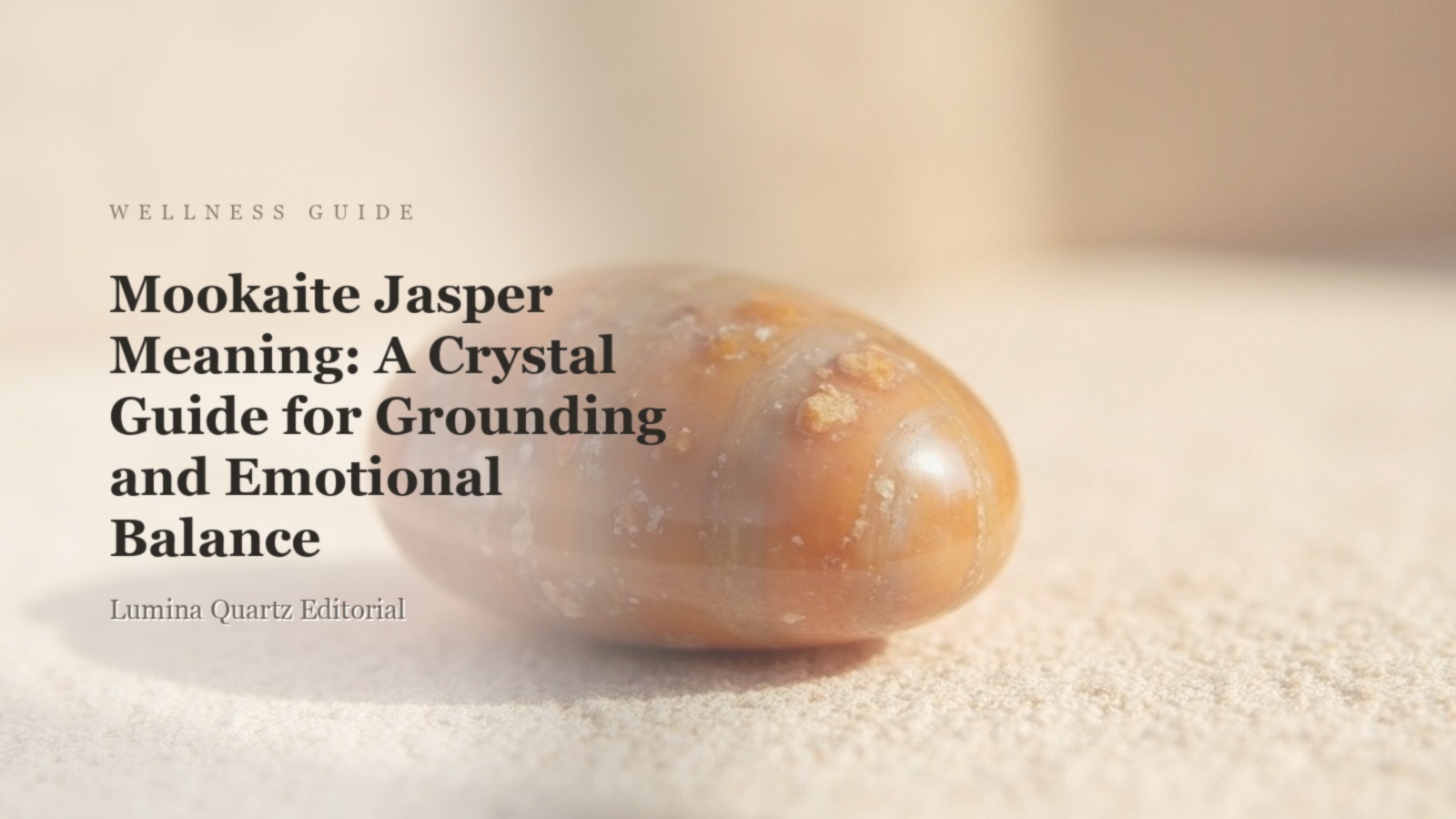
Table of Contents
- Key Takeaways
- What is Mookaite Jasper?
- Geological Origins and Formation
- Unique Colors and Patterns
- Mookaite Jasper Meaning
- Healing Properties and Meanings
- Physical Healing Benefits
- Emotional and Spiritual Healing
- How to Use Mookaite Jasper
- In Jewelry and Fashion
- For Meditation and Chakra Balancing
- How to Care for Your Mookaite Jasper
- Where to Buy Authentic Mookaite Jasper
- Frequently Asked Questions
- Related Reading
- Sources
Some stones whisper. Others hum with the quiet memory of ancient tides, carrying their stories in veins of color and flecks of fossilized time. Mookaite Jasper is one of the quiet ones—understated, grounded, and yet undeniably alive with the echo of a prehistoric seabed. Found only in a remote pocket of Western Australia, this stone has a way of slipping into your heart the moment you see it, and staying there.
Perhaps it is the way its colors catch light—deep burgundy, mustard gold, dusty cream, and soft sage—all of them drawn from the warm, earthy palette of an Australian outback sunset. Perhaps it is the feel of it in your hand: cool, dense, reassuringly weighty. Or perhaps it is simply that Mookaite remembers things we have forgotten. Whatever the reason, there is something about this stone that asks you to pause, breathe, and remember your own roots.
Mookaite Jasper vs. Common Look-Alikes
Earthy, opaque, and often banded, Mookaite is easy to mix up with other warm-toned stones on a crowded shop shelf. A few visual cues can help you tell them apart.
- Mookaite Jasper: creamy yellow to mustard and burgundy, opaque, with a satin or waxy polish. Patterns follow sedimentary layers or swirl softly like clouds.
- Red Jasper: typically a more uniform brick or rust red that appears worldwide. It rarely shows Mookaite's cream-and-mustard contrast.
- Picture Jasper: tan and brown with landscape-like scenes. The palette leans brown rather than the golden yellow Mookaite is known for.
- Carnelian: translucent orange to red-orange, often glowing when backlit. Mookaite stays opaque even under strong light.
- Banded Agate: crisper, more regular banding with a glossier, glassier finish. Mookaite's layers tend to be softer and more irregular.
A Simple Authenticity Checklist
- Look for a seller who names the Kennedy Ranges or Mooka Creek in Western Australia.
- Expect natural variation. Genuine Mookaite rarely repeats a pattern exactly.
- Check the weight and feel—dense, cool, and smooth with a soft luster rather than a plastic sheen.
- Ask about treatments. Dyes are sometimes used on pale jasper to imitate richer reds.
- Be cautious of listings that describe Mookaite as coming from anywhere other than its single known locality.
Key Takeaways
- Unique Origin: Mookaite Jasper forms from ancient marine sediments in Western Australia's Kennedy Ranges and is found only in that remote region.
- Meaning & Energy: It is often associated with grounding, emotional balance, resilience, and gentle support during times of transition.
- Distinctive Palette: Its creamy yellows, burgundy reds, and earthy browns make each piece a one-of-a-kind work of natural art.
- Simple Care: A gentle wipe with lukewarm water and a soft cloth keeps the stone vibrant; avoid harsh chemicals and prolonged direct sunlight.
- Authenticity Matters: Because true Mookaite comes from a single locality, genuine pieces are treasured—buy from reputable sellers with clear sourcing.
What is Mookaite Jasper?
Mookaite Jasper—sometimes affectionately called Mookalite—is a striking ornamental stone that comes from one extraordinary place on Earth. Beneath the shifting surface of the Australian continent, tiny marine organisms drifted down to the floor of an ancient inland sea, layering quietly for millennia. Over time, silica-rich groundwater moved through those sediments and hardened them into the richly patterned material we know today.
In mineralogical terms, Mookaite is best described as a silicified porcelanite—a name coined locally rather than formally approved by mineral naming bodies—and it is often grouped with jasper because of how it looks and behaves. Jaspers themselves are not a single mineral but a broad family of quartz-based rocks formed under very different conditions, from sedimentary seafloor deposits to metamorphic and volcanic ones. Mookaite sits comfortably in that family: opaque, beautifully textured, and dense to the touch, with a deep connection to one specific landscape.
Geological Origins and Formation
The story begins roughly one hundred million years ago, during the Cretaceous period, when much of Western Australia lay beneath a warm, shallow sea. Microscopic radiolarians and diatoms—single-celled organisms with delicate silica skeletons—floated in those waters. When they died, they sank to the seafloor, accumulating in deposits that could grow hundreds of meters thick. Over vast stretches of time, silica from these tiny fossils dissolved, re-crystallized, and cemented the surrounding sediment into the stone we now recognize.
Mookaite is found in the Kennedy Ranges, a rugged and breathtakingly remote mountain range in the Gascoyne region of Western Australia, particularly near Mooka Creek—from which the stone takes its name. This is a land of red earth, spinifex grass, and endless sky, shaped by ancient upheavals, volcanic activity, and the slow but relentless work of erosion. Today, Mookaite is harvested by small, dedicated mining operations, making each piece a rare gift from one of the most isolated places on the planet.
Unique Colors and Patterns
One of the first things people notice about Mookaite Jasper is its breathtaking range of color. From soft cream and buttery yellow to rich burgundy, brick red, chocolate brown, and even gentle hints of mauve and sage, the stone mimics the dramatic horizons and layered earth of its homeland. No two pieces look the same—each slab, tumbled stone, or cabochon carries a pattern that is entirely its own, like a fingerprint pressed into ancient sediment.
Some specimens display clear banding, echoing the sedimentary layers where they formed, while others reveal swirling, cloud-like patterns or fine dendritic inclusions. When cut and polished, Mookaite glows with a gentle, satiny luster that seems to hold light rather than reflect it. That range of color means the stone pairs beautifully with silver, gold, and brass, and sits just as comfortably in a delicate pendant as in a bold statement ring.
Mookaite Jasper Meaning
When people search for the mookaite stone meaning, they are usually looking for more than a definition. They want to know what this stone has come to represent for the people who carry it—and the answer tends to circle back to three ideas: rootedness, resilience, and quiet emotional balance.
What the Name Means
Mookaite takes its name from Mooka Creek in Western Australia, the area where the stone was first identified and is still found today. In that sense, its meaning begins with place: a single, specific landscape rather than a worldwide distribution. That specificity is part of why the stone feels so tied to the earth. It is, quite literally, a record of one small corner of the planet.
The Meaning People Read in Its Colors
Like many earth-toned stones, Mookaite invites gentle interpretation rather than hard rules. Its warm golds and reds are often associated with vitality and forward momentum, while its creams and browns suggest steadiness and patience. The way those tones sit side by side in a single stone—bold and subdued at once—is frequently read as a reminder that energy and calm do not have to be opposites. Many people describe Mookaite as a stone of steady action: the kind that keeps going without burning out.
Mookaite Jasper Healing Properties and Meanings
For centuries, people have been drawn to jasper as a stone of endurance, courage, and deep connection to the earth. Mookaite Jasper carries that lineage forward with its own particular temperament—grounded, warm, and quietly encouraging. The properties below come from crystal tradition and the lived experience of people who work with the stone; they are offered as supportive practices, not as a substitute for professional care.
Physical Healing Benefits
In crystal lore, Mookaite is often described as a stone of physical steadiness. Practitioners associate it with feeling settled in the body, with slow and steady energy rather than sudden bursts, and with the kind of low-level stamina that carries you through a long week. Some people hold it during restorative practices or keep a small tumbled piece nearby during periods of change. If you are dealing with a health concern, please treat these as complementary rituals only—a qualified professional is the right source for medical guidance.
Emotional and Spiritual Healing
Emotionally, Mookaite is most often linked to balance and resilience. Because it is a jasper, it carries that family's reputation for patience under pressure, but its softer palette gives it a gentler feel than some of its redder cousins. People reach for it during transitions—a move, a new role, a season of decision-making—when they want to stay open without becoming unmoored. In meditation, it is often used as a grounding anchor: something warm and solid to return your attention to when the mind wanders.
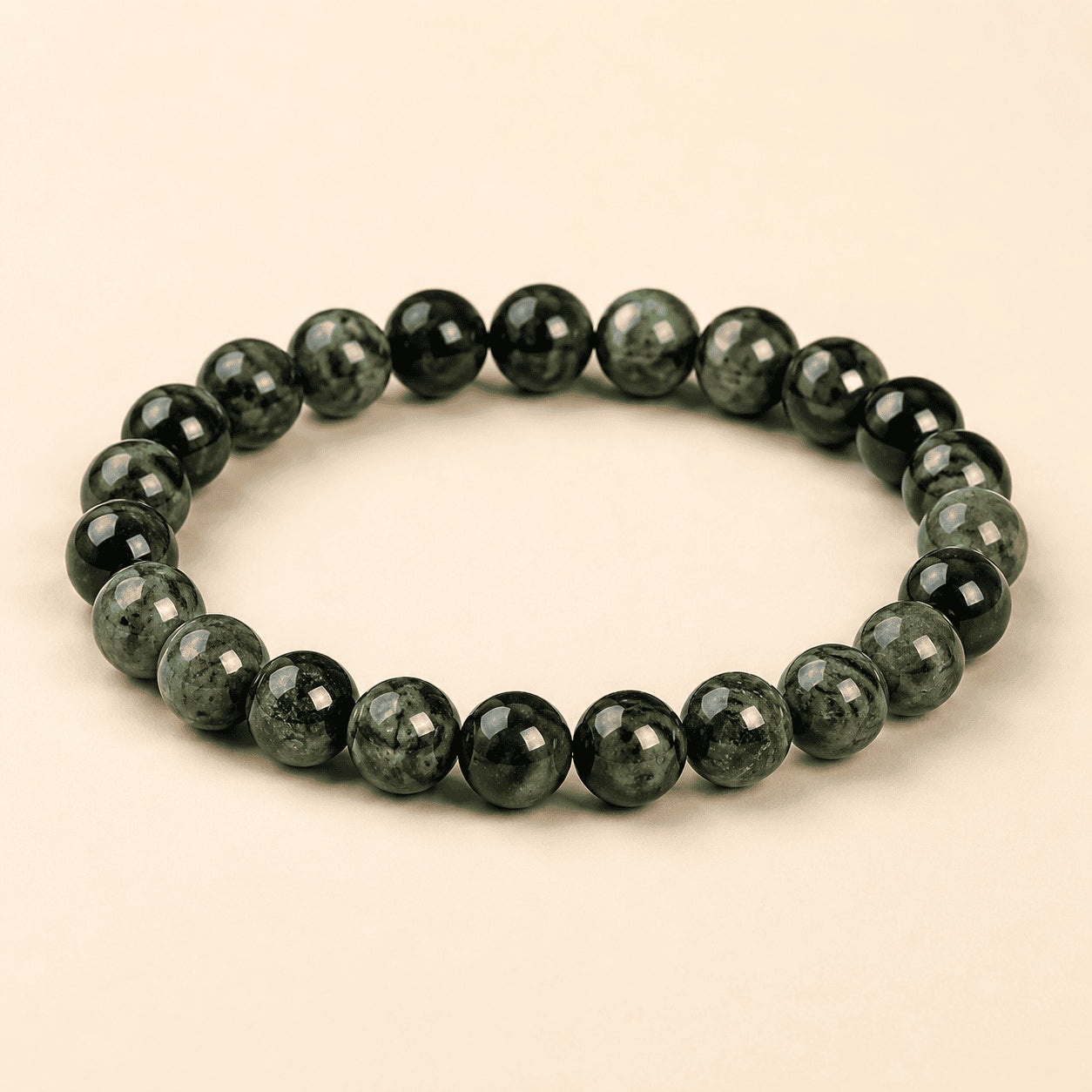
Kambaba Jasper Bracelet
A gentle ritual piece for bringing this intention into your daily routine.
Shop This Authentic Piece →How to Use Mookaite Jasper
There is no single right way to work with Mookaite. The most meaningful approach is usually the simplest: keep it somewhere you will actually see it, and let it mark a moment in your day.
In Jewelry and Fashion
Mookaite's earthy palette makes it an easy everyday stone. A beaded bracelet keeps the color against your skin, where it can serve as a small recurring reminder—putting it on before work, before a meditation session, or before an evening wind-down. If you prefer a wearable anchor in this warm, grounded palette, the Mookaite Jasper Bracelet – Adventurous Choice is a simple way to keep the stone close. Pendants and rings work just as well, and the stone layers beautifully with silver, brass, or matte gold.
For Meditation and Chakra Balancing
In chakra practice, Mookaite is most commonly associated with the root chakra and, by extension, the lower body's sense of stability. Some practitioners also connect its warmer tones with the sacral area, where creativity and emotional flow are said to reside. A simple practice: sit comfortably, rest the stone in your open palm or on your lap, and spend three to five minutes following your breath. When your attention drifts, let the weight of the stone bring you back. That is all it needs to do.
How to Care for Your Mookaite Jasper
Mookaite is a durable stone, but it responds well to gentle handling. Wipe it with a soft, slightly damp cloth and lukewarm water, then dry it thoroughly. Avoid ultrasonic cleaners, steam cleaners, and harsh household chemicals, all of which can dull the finish over time. Because prolonged direct sunlight may slowly soften the vibrancy of its colors, it is best stored in a pouch or a shaded spot. To cleanse it energetically, many people leave it overnight in moonlight or pass it through the smoke of dried herbs—both are gentle options that will not harm the stone.
Where to Buy Authentic Mookaite Jasper
Because genuine Mookaite comes from a single locality, sourcing matters more than it does for stones found on every continent. Reputable sellers will tell you where their material came from, show you clear photographs of the actual piece, and be honest about any treatments. Independent or small-batch miners and lapidary artists are often the best sources for distinctive, well-cut specimens. If a price seems unusually low for a large, richly colored piece, it is worth asking a few extra questions before you buy.
Frequently Asked Questions about Mookaite Jasper
What is Mookaite Jasper?
Mookaite Jasper is an opaque, silica-rich stone from the Kennedy Ranges in Western Australia. It formed from ancient marine sediments that were gradually silicified over millions of years, and it is prized for its warm cream, mustard, and burgundy colors. Mineralogically it is often described as a silicified porcelanite, and it is grouped with jasper because of its appearance and composition.
What are the healing properties of Mookaite Jasper?
In crystal tradition, Mookaite is associated with grounding, emotional balance, resilience, and steady energy during periods of change. Many people use it as a supportive companion for meditation or as a small daily anchor. These properties reflect traditional and personal practice rather than medical treatment, and they are not a replacement for professional care.
Where is Mookaite Jasper found?
It is found in one region: the Kennedy Ranges in the Gascoyne area of Western Australia, particularly near Mooka Creek. No other commercially significant source is known, which is part of what makes the stone so distinctive.
How do you cleanse Mookaite Jasper?
For physical cleaning, use lukewarm water and a soft cloth, then dry it fully. Avoid chemicals and ultrasonic or steam cleaners. For energetic cleansing, moonlight, sound, or herbal smoke are all gentle, stone-safe options.
What chakra is Mookaite Jasper associated with?
It is most often linked with the root chakra, reflecting its grounding character. Some practitioners also connect it with the sacral chakra because of its warm red and gold tones. Either way, it is typically used as a stabilizing rather than energizing presence.
Is Mookaite Jasper a true jasper?
It is a matter of naming convention. "Mookaite" is an unofficial, locally coined term, and the material is more precisely described as a silicified porcelanite. Because it is opaque, quartz-based, and visually similar to jasper, it is widely sold and loved under the jasper name.
Related Reading
- Fluorite Meaning: Meaning, Properties, and Everyday Uses
- Lepidolite Crystal Meaning: Properties, Uses, and Calming Benefits
- Crystal Meanings Encyclopedia: Complete Guide to Amethyst, Rose Quartz, Citrine & More