Natural Lapis Lazuli Bracelet Buying Guide: Color, Pattern, and What to Compare
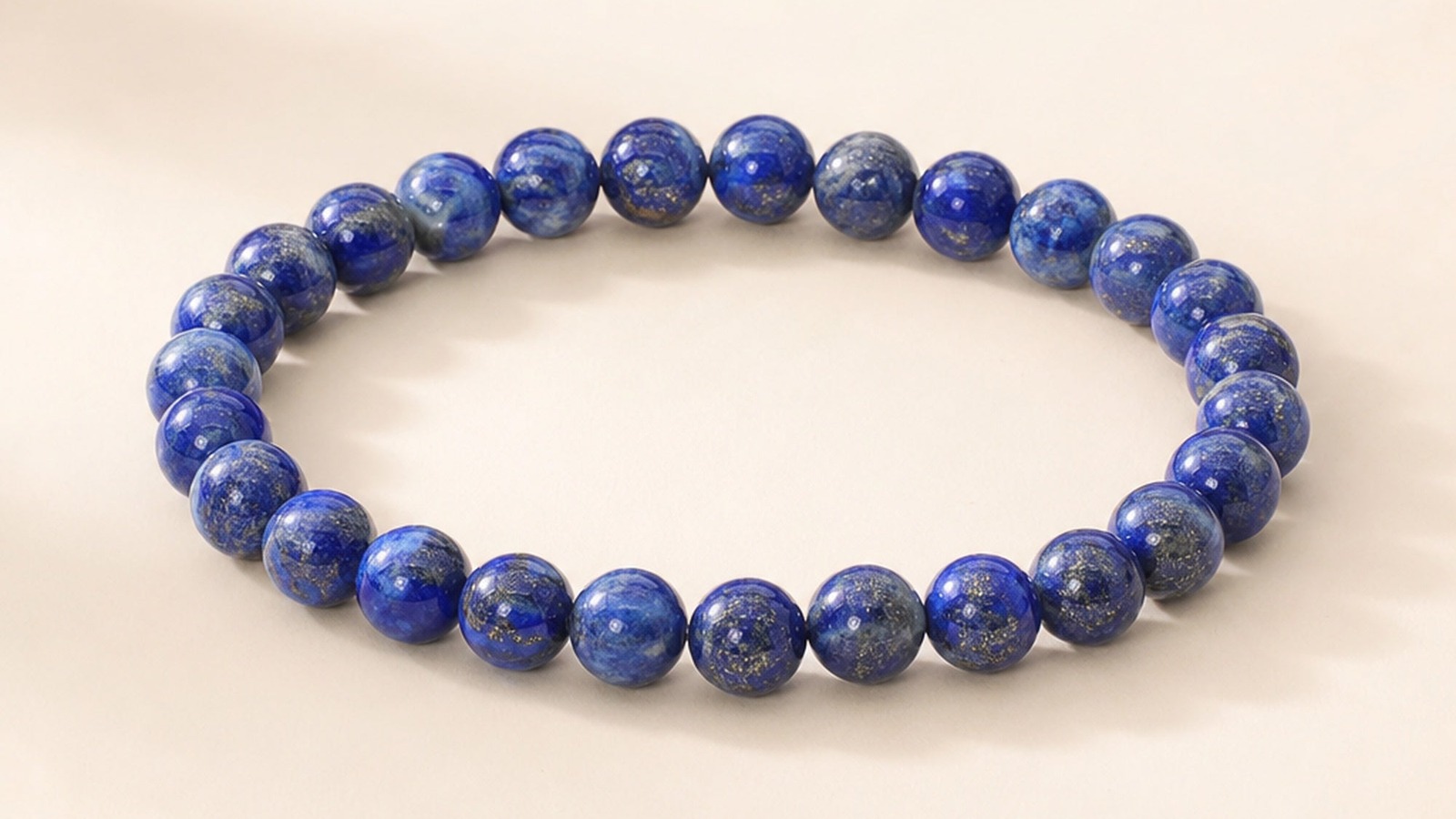
Table of Contents
- Why Buying Natural Lapis Lazuli Is Different
- Understanding Lapis Lazuli Color: The Deep Blue Scale
- Pattern Talk: Pyrite, Calcite, and the “Gold Fleck” Effect
- What Is Good Pyrite Distribution?
- White Calcite – Friend or Foe?
- How to Compare Lapis Lazuli Bracelets: From Grade to Craft
- Gem Grade vs. Commercial Grade: What Does AAA Mean?
- Bead Size and Shape Consistency
- Cord vs. Stretch vs. Clasp – Construction Matters
- Red Flags: Dyed, Treated, and Fake Lapis
- Quick Comparison Checklist for Your Next Purchase
- Care Tips for Your Natural Lapis Bracelet
- Key Takeaways
- Frequently Asked Questions
- How can you tell if lapis lazuli is real?
- What color of lapis lazuli is most valuable?
- What does AAA grade mean for lapis lazuli?
- What size beads are best for a lapis lazuli bracelet?
- Should lapis lazuli have pyrite or gold flecks?
There are stones that whisper, and stones that remember. Lapis lazuli belongs to the second kind. Carried through six thousand years of human history—carved into royal seals, ground into ultramarine pigment for sacred paintings, and worn as a talisman close to the skin—this deep blue stone has echoed through civilizations that looked at the same color and saw something infinite.
To shop for a natural lapis lazuli bracelet is to learn how to read a stone. Lapis is not a single crystal but a mosaic of minerals: lazurite for its celestial blue, pyrite for scattered gold, calcite for delicate white veins. Because no two pieces share the same mineral fingerprint, every bead holds its own quiet geography. That uniqueness is part of the allure—but it also makes buying lapis a more thoughtful process than simply adding the first listing to your cart.
Consider this your natural lapis lazuli bracelet buying guide: an invitation to slow down, compare with clarity, and choose a piece that feels true to the stone and true to you.
Why Buying Natural Lapis Lazuli Is Different
Most gemstones are judged on clarity, cut, and brilliance. Lapis does not follow those rules—and that is precisely why it asks for your presence. Lapis lazuli is technically a rock, composed of several minerals fused together deep within the earth over millions of years. The Gemological Institute of America describes it plainly as “a beautiful rock; an aggregate of several minerals, mainly lazurite, calcite, and pyrite.” Lazurite creates its signature blue. Pyrite arrives as small golden sparkles. Calcite weaves in soft white patterns. Each bead is a tiny landscape, a conversation between geological forces that you can hold in your palm.
Because it is a composite stone, natural lapis rarely looks perfectly uniform—and this is not a flaw. It is evidence of authenticity. A bracelet made from genuine lapis will often display gentle color shifts between beads, subtle differences in texture, and stones that catch the light in slightly different ways. These variations are not imperfections to be smoothed away; they are the stone’s handwriting.
This is also why comparison matters more than memorizing a grade. Two lapis bracelets may both be labeled “AAA,” yet one may glow with deep royal blue while the other looks darker and duller. Understanding what you are looking at—rather than relying only on a label—will serve you far better than any single grade on a product page.
Understanding Lapis Lazuli Color: The Deep Blue Scale
Close your eyes and think of lapis. You are probably picturing a blue so dense it feels like a fragment of night sky. But natural lapis unfolds across a spectrum, from soft denim blues to the velvety, saturated blue that has captivated collectors for centuries.
When you compare bracelets, color is usually the first thing your eye notices. Hold two strands side by side and look carefully. A denim-toned lapis feels softer, more muted, often with more visible calcite. A royal blue lapis has a vivid, even presence that seems to glow from within. The deepest, most prized lapis leans toward midnight or indigo—rich and intense, with enough depth to draw the eye inward. Generally, the most valuable lapis is associated with that deep royal-to-midnight range, where the blue feels concentrated rather than diluted.
One honest caveat: natural lapis is rarely perfectly flat in color. A natural bead may show a gentle deepening along its curve or a whisper of paler blue near its edges. These subtle gradations often indicate a real stone. In contrast, dyed lapis tends to look suspiciously even—a flat, monotonous blue that seems almost too perfect. When every bead shares the same untextured hue, it may be worth asking more questions.
Always assess color in natural daylight. Indoor lighting can flatter or flatten a stone, and online photos are often saturated to emphasize richness. Ask the seller to photograph the bracelet near a window or against a plain white background. Remember that a stone may also appear deeper in person—but the color should feel alive, not static.
Pattern Talk: Pyrite, Calcite, and the “Gold Fleck” Effect
Look closely at a strand of lapis and you will notice it is rarely just blue. Golden glints of pyrite catch the light like stars, while veins of white calcite may drift across the surface like high clouds. These two minerals shape the stone’s personality and are among the most debated features in the lapis market.
There is a persistent myth that genuine lapis must contain visible gold flecks. In truth, lapis from some regions is naturally rich in pyrite, while others—including some of the most highly regarded Afghan material—can be almost free of visible pyrite. The presence of pyrite may confirm that a stone belongs to a certain source, but its absence does not make a stone fake. What matters more is how the pyrite sits within the blue and whether the overall pattern feels balanced to your eye.
What Is Good Pyrite Distribution?
When pyrite appears, distribution matters more than quantity. In a quality bracelet, pyrite usually presents as fine, bright metallic flecks scattered evenly across the surface of the bead—enough to catch light without overwhelming the blue. This delicate scattering creates a subtle shimmer, often described as “gold dust on a night sky.”
Large, chunky pyrite veins or concentrated clusters can look striking in a statement piece, but they also raise two concerns. First, coarse pyrite may run along internal fractures, which could make a bead more fragile over time. Second, pyrite is a sulfide mineral and may oxidize or dull with prolonged exposure to moisture and perfume. A fine, well-integrated pyrite distribution is generally more durable—and, for many collectors, more beautiful.
White Calcite – Friend or Foe?
Calcite is the white mineral that shows up as flecks or streaks within lapis, and it draws strong opinions. The GIA’s educational materials note that the finest lapis is often described as having no calcite you can see—meaning that for the highest grades, a cleaner, more saturated blue is prized. Yet many collectors fall in love with the more painterly look that calcite creates.
Neither view is wrong; they simply describe different tastes and price bands. If you want the deepest, most uniform blue, you will likely prefer beads with little visible calcite. If you enjoy a stone that reads more like a landscape, a touch of white can add character. What is worth avoiding is a strand where calcite is so abundant that the blue itself feels washed out or gray. When you compare bracelets, ask yourself whether the calcite feels intentional and balanced—or whether it dilutes the color you came for.
How to Compare Lapis Lazuli Bracelets: From Grade to Craft
Words like “AAA” and “gem grade” are common in jewelry listings, but they are marketing shorthand rather than regulated standards. Two sellers can use the same term to describe noticeably different stones. That is why a side-by-side comparison of what you can actually see—color, pattern, bead consistency, and construction—will always tell you more than a label alone.
Gem Grade vs. Commercial Grade: What Does AAA Mean?
In general usage, so-called gem grade or AAA lapis tends to lean toward deep, even blue with minimal visible calcite, while commercial grade may be lighter, more heavily flecked with white, or dyed to deepen its color. But these are conventions, not rules. When a listing says AAA, treat it as a starting point and let the photos and your own eyes confirm whether the stone lives up to the phrase.
Bead Size and Shape Consistency
Run your eye down the strand. Do the beads look uniform in size, or do some sit noticeably larger than others? Do they sit in a smooth, even line, or does the bracelet wobble? Slight natural variation is expected in a hand-strung piece, but wildly inconsistent beads often signal lower-grade material. Consistency in shape and size is one of the quiet signs of careful craftsmanship.
Cord vs. Stretch vs. Clasp – Construction Matters
A bracelet is only as good as the way it is held together. Stretch bracelets are convenient but rely on elastic that can loosen over time. Cord-strung bracelets often feel more traditional and can be restrung if needed. Pieces finished with a clasp tend to offer the most durable, adjustable wear. Pay attention to how the strand is finished at the ends and whether the clasp or cord feels substantial. These details decide whether a bracelet will live with you for years or quietly come apart after a few months.
A Comparison Guide: Reading a Lapis Bracelet Before You Buy
Use this table as a practical companion when you are weighing two listings, or two strands in a shop, against each other.
- Color: Look for deep, saturated royal-to-midnight blue in natural daylight. Beware a flat, unnaturally even tone that suggests dye.
- Pyrite: Fine, evenly scattered gold flecks read as balanced. Oversized clusters or veins may signal internal fractures.
- Calcite: A little is characterful; too much can wash out the blue. Decide whether you want the cleanest blue or a more textured look.
- Bead consistency: Smooth, uniform sizing and even alignment suggest better material and craft.
- Construction: Consider whether a clasp, cord, or elastic suits your daily wear; check the quality of the finish and closure.
- Grade claims: Treat “AAA” and “gem grade” as descriptive, not guaranteed. Let the photos and details confirm the claim.
When you find a bracelet, ask yourself whether the blue still draws you in after a week of looking. A stone you keep returning to is usually the right one for you.
Red Flags: Dyed, Treated, and Fake Lapis
Dyed lapis is one of the most common concerns in the market. When color is artificially deepened, it often appears unnaturally uniform—every bead a single flat hue with no gentle gradation. On close inspection, dye may also settle into cracks or show a faint brightness that feels artificial rather than geological.
Other lookalikes exist as well: blue glass, dyed jasper, and synthetic composites can imitate the look of lapis at a distance. The most reliable safeguard is a seller who is transparent about origin, treatment, and material, and willing to show clear, unfiltered photographs. When a piece is described as natural, ask for details in return. A seller who welcomes your questions is usually a better sign than one who only offers a grade label.
Quick Comparison Checklist for Your Next Purchase
Before you commit, walk through these questions:
- Is the color deep and alive, with subtle natural variation rather than a flat, painted look?
- If there is pyrite, is it fine and evenly scattered rather than clustered into large veins?
- Is the amount of visible calcite in line with the look and price you want?
- Do the beads look consistent in size, shape, and alignment?
- Does the construction—cord, elastic, or clasp—feel suited to how you will wear it?
- Is the seller clear and responsive about the stone’s nature and treatment?
A bracelet that passes these checks is one you can wear with confidence—and, if it speaks to you, a quiet daily ritual like the Lapis Lazuli Bracelet – Thoughtful Expression can become a small anchor in your day.
Care Tips for Your Natural Lapis Bracelet
Lapis is a relatively soft rock on the gemstone scale, and it deserves gentle handling. Keep your bracelet away from harsh chemicals, household cleaners, and prolonged moisture, since pyrite can dull with exposure. Put it on after perfume and lotion have dried, and take it off before swimming, showering, or a heavy workout. When you are not wearing it, store it in a soft pouch or a separate compartment so it does not rub against harder pieces. A quick wipe with a soft, dry cloth is usually all the care it needs.
Key Takeaways
Natural lapis lazuli is a story written in minerals, not a single flawless crystal, and its subtle variation is a sign of authenticity rather than a flaw. Color, pyrite distribution, calcite presence, bead consistency, and construction all matter more than any single grade label. When you shop, slow down and compare—look at the stone in natural light, ask the seller honest questions, and choose the bracelet whose blue still holds your attention. And if you are building a small collection of meaningful stones, our guides to amethyst calm and rose quartz and self-love are gentle companions for the journey.
Frequently Asked Questions
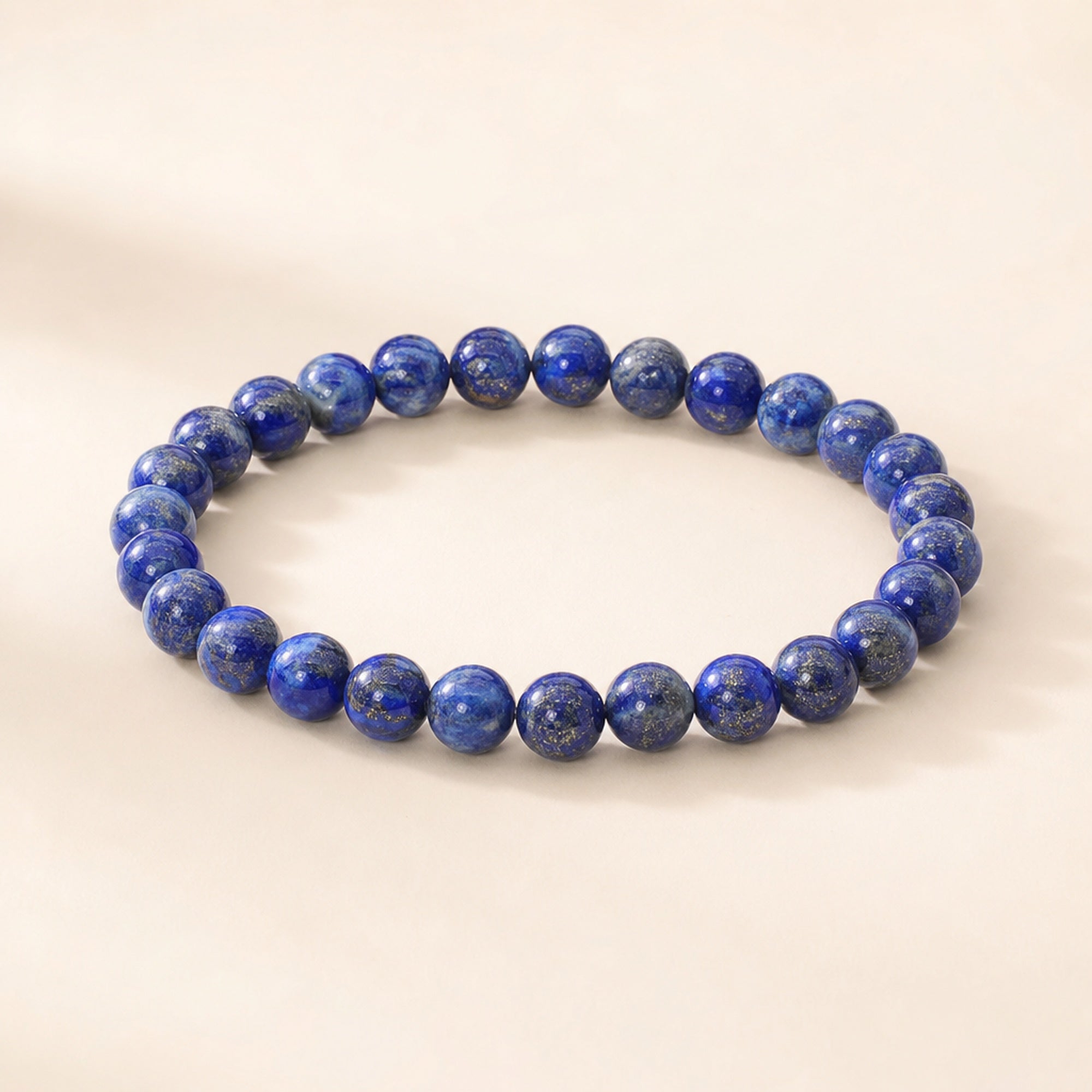
Lapis Lazuli Bracelet
A gentle ritual piece for bringing this intention into your daily routine.
Shop This Authentic Piece →How can you tell if lapis lazuli is real?
Real lapis usually shows natural variation—gentle shifts in blue, subtle texture, and mineral details like fine pyrite or calcite. Dyed or imitation material often looks flat and monotonously even. Checking in natural daylight and asking the seller about treatment and origin are the most practical steps.
What color of lapis lazuli is most valuable?
Generally, the most valued lapis falls in the deep royal-to-midnight blue range, where the color feels saturated and intense rather than diluted by white calcite. Lighter, softer blues are still lovely, just usually more affordable.
What does AAA grade mean for lapis lazuli?
AAA is a widely used trading term rather than a regulated standard. It typically suggests deep color and minimal visible calcite, but two sellers can apply the label differently—so it is best treated as a description to verify against photos and details rather than a guarantee.
What size beads are best for a lapis lazuli bracelet?
There is no single “best” size—it depends on your wrist and your preference. Smaller beads (around 6 mm) feel delicate and refined, while larger beads (10 mm and up) create a bolder statement. What matters most is that the beads are consistently sized and comfortably fitted to you.
Should lapis lazuli have pyrite or gold flecks?
Not necessarily. Some lapis is naturally rich in pyrite, while other high-quality material—including much Afghan lapis—can be nearly free of visible flecks. Pyrite can be a lovely feature when it is fine and evenly scattered, but its absence does not make a stone fake.