Onyx Stone: Meaning, Healing Properties, and Daily Benefits
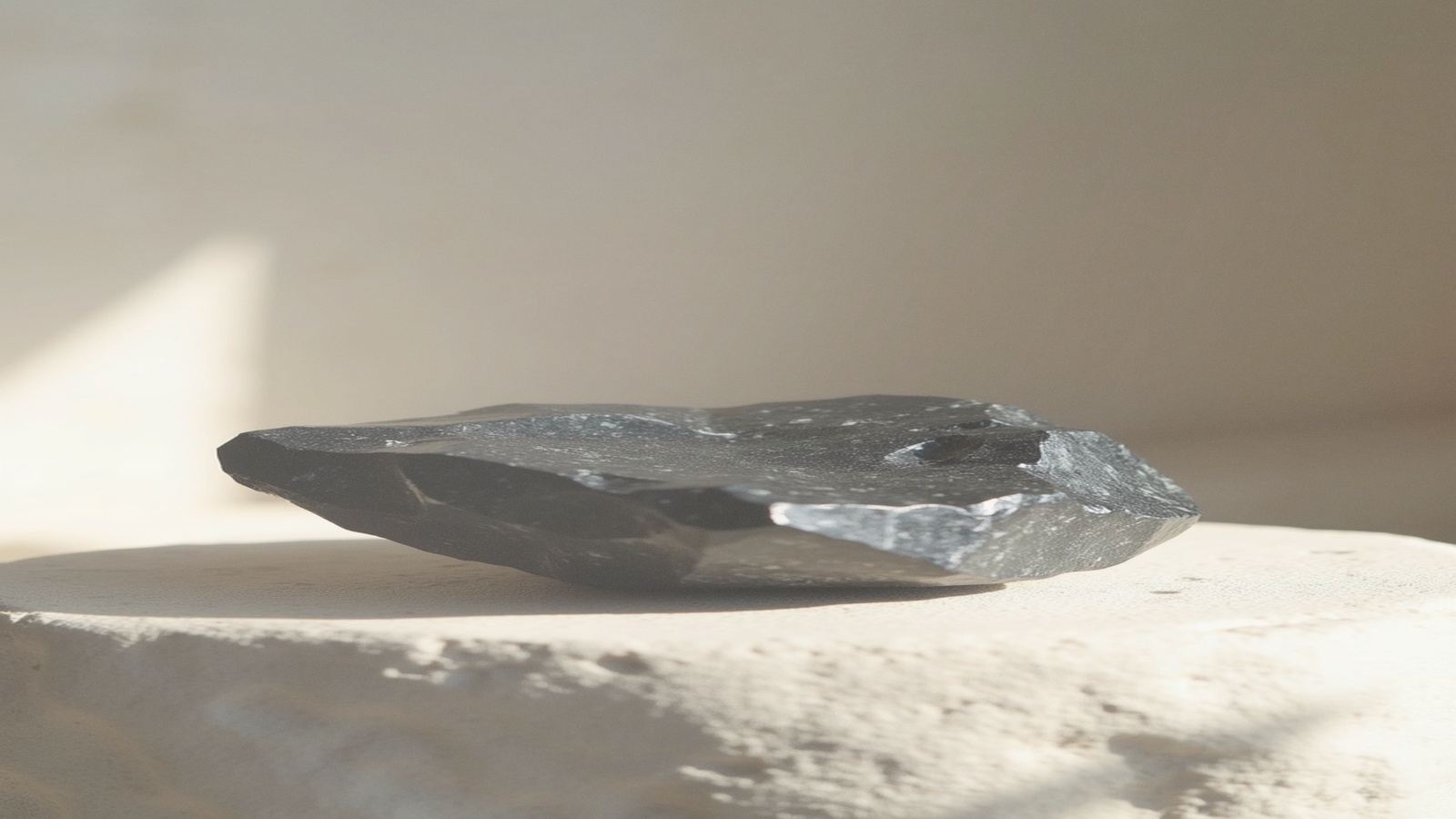
Table of Contents
- 10-Second Executive Summary / The Verdict Box
- What Is Onyx Stone? Mineralogy, Colors, and Banding
- Onyx Meaning and Symbolism Through History
- Onyx Stone Benefits: What the Tradition Says
- Grounding, Focus, and Emotional Steadiness
- Confidence, Boundaries, and the Root Chakra
- How to Wear and Use Onyx Daily
- Onyx Durability, Care, and Buying Tips (Natural vs. Dyed)
- Decision Table: Reading Onyx Labels Before You Buy
- Onyx vs. Sardonyx vs. "Mexican Onyx": What You're Really Buying
- FAQ: Onyx Stone Benefits, Cleansing, and Who Should Wear It
- What are the benefits of wearing onyx stone?
- Is black onyx good for healing and protection?
- What chakra is onyx associated with and how do you use it?
- How do you cleanse and care for onyx jewelry?
- Is real black onyx natural or dyed, and does it matter?
- Sources
Wearing onyx stone is traditionally associated with grounding, focus, and steadiness, and black onyx is often valued as a protective talisman. Physically, onyx is a banded chalcedony (a variety of quartz, SiO₂) that mineralogists rate at Mohs 6½–7 — hard enough for daily rings, soft enough to require care around impact and harsh cleaners.
10-Second Executive Summary / The Verdict Box
- Direct Verdict: Onyx is a durable, traditionally protective stone. Its "benefits" are cultural and symbolic rather than medical. If you want a grounding everyday stone with strong visual contrast, natural banded onyx is an honest, lasting choice.
- Mohs Hardness: 6½–7 (quartz family) — good for daily wear with reasonable care.
- Specific Gravity: 2.6–2.65; Lustre: waxy; Colour: typically black-and-white banding, with brown varieties called sardonyx.
- Chemistry: SiO₂ (chalcedony / agate variety).
- Best For: Rings, pendants, and talismans for people who want a steadying, protective-feeling stone; a classic "yes" for minimalist and grounded-luxury styling.
- Watch Out: Much "black onyx" on the market is dyed or heat-treated chalcedony. The Lumina Grade AAA Integrity Standard means natural material, zero chemical resin-filling, and no irradiation or dyeing.
What Is Onyx Stone? Mineralogy, Colors, and Banding
Onyx is, in correct usage, a banded variety of agate — itself a form of chalcedony, which is a microcrystalline quartz. Its chemical formula is silicon dioxide (SiO₂), and it crystallizes in the trigonal system with a waxy lustre and a specific gravity of roughly 2.6–2.65. The name comes from the Greek ónyx ("claw" or "fingernail"), likely because flesh-toned and white bands can resemble a fingernail. Mineralogical data from Mindat confirms these properties.
Onyx differs from ordinary agate in the flatness of its layers: where agate bands curve and swirl, onyx layers run strikingly parallel, alternating white with black (or sometimes red). The brown-and-white variety is traditionally called sardonyx. Most onyx today comes from India and South America, and it has long been cut into cameos, vases, lamps, and bookends as well as jewelry.
It's worth naming a common confusion early: "Mexican onyx" is not true onyx at all — it's a banded limestone (calcite), which is softer and behaves very differently. More on that below.
Onyx Meaning and Symbolism Through History
Onyx carries a long, layered cultural history. In Roman times the word "onyx" was applied loosely to several banded stones, including alabaster and onyx marble. The stone's parallel bands made it ideal for intaglio seals and cameos, where carvers used contrasting layers to carve figures against a darker ground. Later, in the Victorian era, black onyx became a fixture of mourning jewelry — a somber, elegant stone associated with remembrance and dignity rather than decoration alone.
Across these eras, the symbolic thread is remarkably consistent: onyx is often associated with protection, boundaries, and steady resolve. It is traditionally seen as a stone that holds its ground.
Onyx Stone Benefits: What the Tradition Says
Here we need to be honest about what "benefits" means. The benefits attributed to onyx are cultural and symbolic, rooted in centuries of tradition — not clinical claims. There is no scientific evidence that wearing onyx stabilizes mood, eases anxiety, or "regulates" the body. What the tradition may support is a personal sense of grounding, a tangible reminder of an intention, and a visual anchor in a day that feels scattered.
Grounding, Focus, and Emotional Steadiness
Black onyx is traditionally used as a grounding stone. Many people describe wearing it as a cue to slow down and return to what matters — a tactile reminder rather than a treatment. If you find that holding a small stone or touching a ring helps you pause and reset, that ritual is real even if the mechanism is personal rather than mineral.
Confidence, Boundaries, and the Root Chakra
In modern crystal traditions, onyx is associated with the root chakra and themes of confidence, boundaries, and security. Practitioners often place black onyx near the base of the spine during meditation or keep it on a desk as a symbol of steady decision-making. Treat these as meaningful rituals, not therapies: onyx may support a sense of groundedness in the way any well-chosen talisman can, but it does not replace professional care for health or mental-health concerns.
How to Wear and Use Onyx Daily
Onyx works beautifully in everyday jewelry because it is dark, striking, and reasonably hardy. A few practical ways to wear and use it:
- As a ring: Choose a bezel or protective setting — onyx is hard but can chip on sharp impact. Wear it as a daily talisman for focus.
- As a pendant or bracelet: Close to the skin, a black onyx pendant is a quiet reminder of an intention — a boundary, a decision, a promise to yourself.
- On a desk or bedside: A small tumbled or polished piece can anchor a morning or evening ritual, such as a minute of breathwork or journaling about your priorities.
- Paired with lighter stones or metals: Onyx's contrast makes it visually versatile — it reads as grounded luxury with gold and as minimal calm with silver.
If you want a stone to carry, onyx is a good "everyday" candidate precisely because its hardness (6½–7) tolerates regular wear better than many softer gemstones.
Onyx Durability, Care, and Buying Tips (Natural vs. Dyed)
Onyx is hard and holds a polish well, but it deserves care. Clean it with mild soap and lukewarm water, dry it with a soft cloth, and avoid harsh chemicals, ultrasonic cleaners, or long soaking — especially if the stone is dyed or has been resin-treated. Store it separately from harder stones like diamond or sapphire to avoid scratches.
The most important buying issue is natural versus treated material. Many "black onyx" pieces sold today are dyed, heat-treated, or resin-filled chalcedony. The trade does not always disclose this clearly, and gemologists note that identifying black opaque materials can require advanced testing. Our stance is simple: the Lumina Grade AAA Integrity Standard means natural material, zero chemical resin-filling, and no irradiation or dyeing — so what you buy is what the earth made. When shopping, ask whether the color is natural, inspect the banding (natural onyx shows subtle, parallel layers; dyed pieces can look suspiciously uniform), and prefer sellers who state their treatment policy in plain writing.
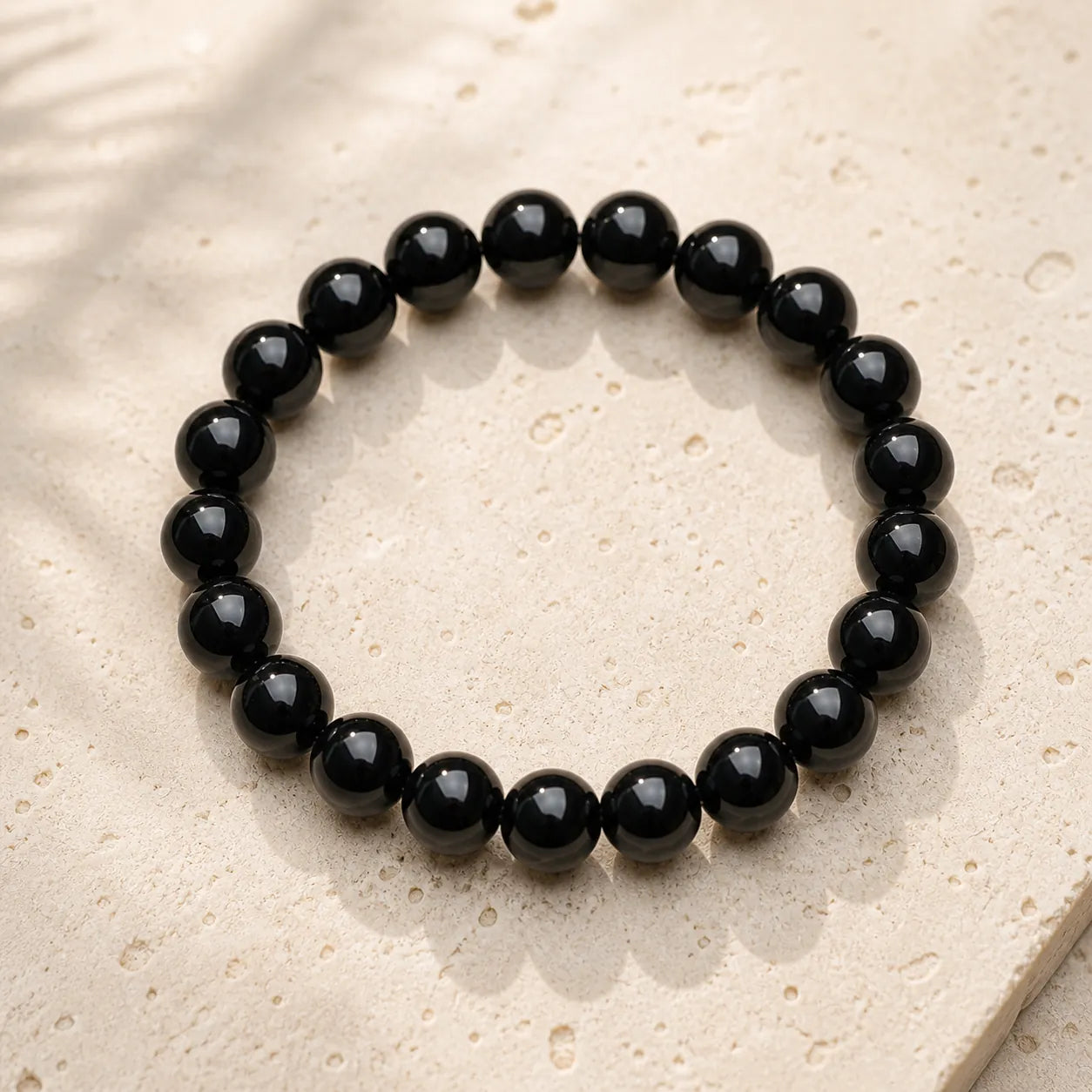
A related intention option
Black Obsidian Protection Bracelet
This is a related grounding, protection option, not a Onyx product. We only identify jewelry as Onyx when that exact material is verified.
Explore this related optionDecision Table: Reading Onyx Labels Before You Buy
| What You See | What It Usually Means | Reliable Next Step |
|---|---|---|
| "Black onyx," uniform pitch-black, very low price | Often dyed chalcedony; color may be surface-level | Ask about dyeing; look for faint parallel banding and waxy lustre |
| Visible black-and-white parallel bands | Consistent with natural banded agate/onyx | Confirm origin and treatment disclosure |
| "Mexican onyx" | Banded limestone (calcite), not quartz onyx — much softer | Expect lower hardness; avoid for high-wear rings |
| Brown-and-white banding | Traditionally sardonyx | Judge as its own variety; same care needs |
| Seller states "natural, untreated" in writing | Matches Lumina Grade AAA Integrity Standard expectations | Ask for care instructions tied to natural material |
Onyx vs. Sardonyx vs. "Mexican Onyx": What You're Really Buying
These three names are often used interchangeably, but they describe different things:
- Black onyx: The classic black-and-white banded agate (SiO₂), Mohs 6½–7. This is what most people mean by "onyx."
- Sardonyx: The brown-and-white banded variety of the same material — a traditional name for a warmer-colored onyx.
- "Mexican onyx": A banded limestone (calcite), much softer and chemically different. It can look luminous and beautiful, but it is not quartz onyx and will not wear like it.
The practical takeaway: if you want durability and the traditional "onyx" feel, ask for natural black onyx or sardonyx and confirm the material. If you love "Mexican onyx" for its look, buy it as limestone — and treat it gently.
FAQ: Onyx Stone Benefits, Cleansing, and Who Should Wear It
What are the benefits of wearing onyx stone?
Traditionally, onyx is worn as a grounding, protective talisman associated with focus, boundaries, and steady confidence. These are symbolic and personal benefits — it may support an intention or ritual, but it is not a medical treatment.
Is black onyx good for healing and protection?
In crystal traditions, black onyx is one of the most common protection stones, often used as a reminder to stay grounded and set boundaries. Treat "healing" as cultural meaning rather than a physical or medical effect.
What chakra is onyx associated with and how do you use it?
Onyx is associated with the root chakra in modern crystal practice. People often hold or place it near the base of the spine during meditation, or carry it as a steadying reminder — there is no requirement to "do it right."
How do you cleanse and care for onyx jewelry?
Clean onyx with mild soap and lukewarm water, dry with a soft cloth, and avoid harsh chemicals, ultrasonic cleaners, and long soaking. Store it separately from harder gemstones to prevent scratches.
Is real black onyx natural or dyed, and does it matter?
Natural banded onyx exists, but a great deal of "black onyx" on the market is dyed or treated chalcedony. Whether it matters depends on your values and budget — but you deserve clear disclosure. The Lumina Grade AAA Integrity Standard favors natural, untreated material for lasting authenticity.
Onyx has earned its place across centuries — as an engraver's stone, a mourner's jewel, and a quiet talisman for people who need a little steadiness. Worn with intention and bought with honesty, it is a small, beautiful anchor for the ordinary day.
Sources
- Mindat — Onyx: formula, hardness, specific gravity, lustre, and name origin
- Britannica Kids — Onyx: chalcedony/quartz composition, banding, artificial coloring, and Roman-era usage
- GIA — Challenges in identifying black opaque gem materials
© 2026 Lumina Quartz. Crystal meanings and traditions are cultural and symbolic, not medical claims. Onyx is not a substitute for professional health or mental-health care.