Peridot Stone: Spiritual Meaning, Symbolism, and Daily Use
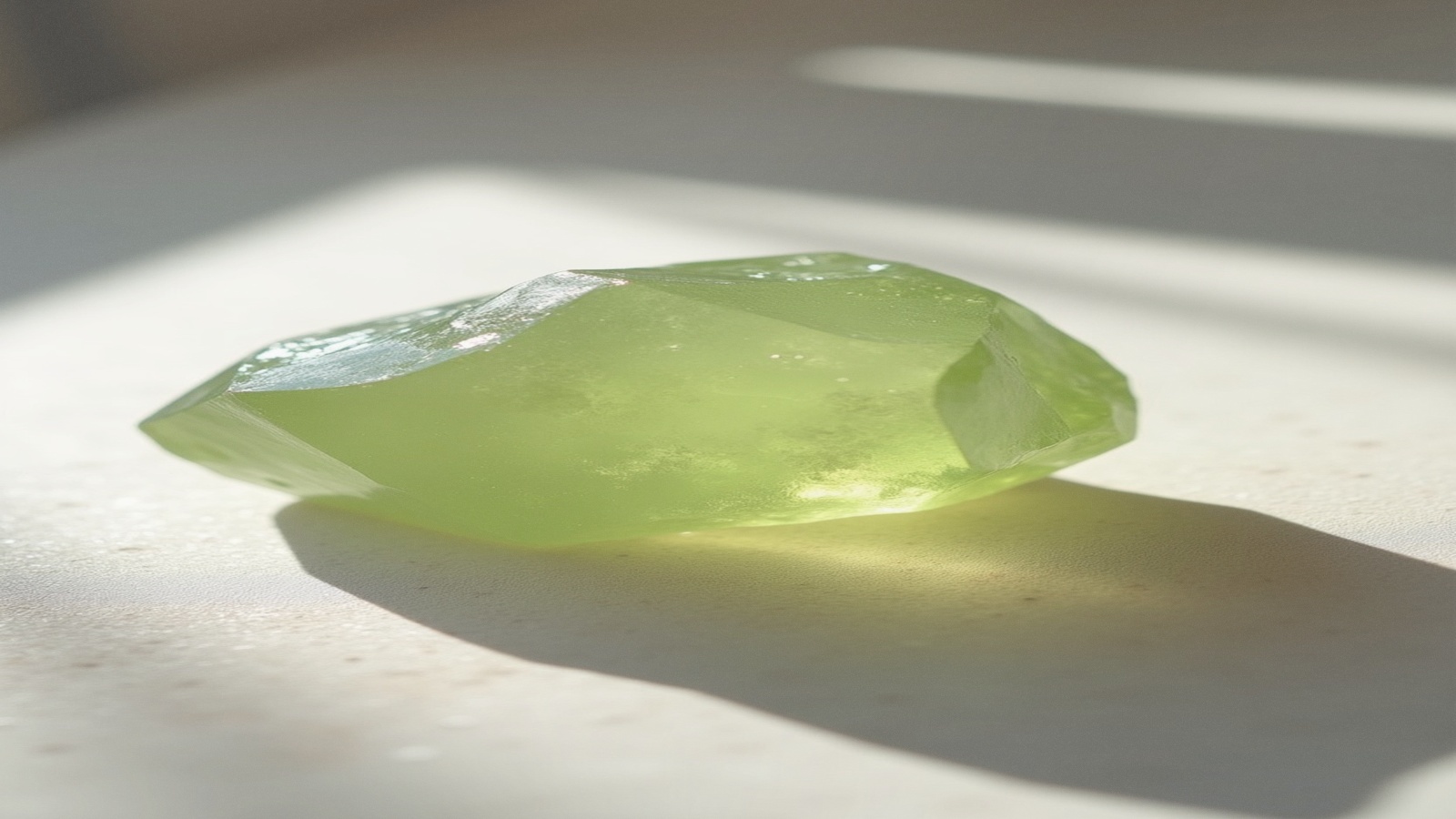
Table of Contents
- What Is Peridot? The Gem of the Sun Born in the Mantle
- Olivine vs. Peridot: Geology in Plain Language
- Why Peridot's Color Comes From Iron, Not Light Tricks
- Peridot Stone Meaning Through History and Culture
- Egyptian "Gem of the Sun" and Protection From Night Terrors
- Peridot in Vedic Astrology, the Bible, and Hawaiian Lore
- Spiritual Meaning and Symbolism: Light, Renewal, and Emotional Balance
- Hope, Optimism, and Confidence in Difficult Seasons
- Protection, Cleansing, and Releasing Jealousy or Anger
- Eloquence, Creativity, and Heart-Centered Love
- Peridot Buying Decision Table: What Actually Changes the Stone
- How to Use Peridot in Daily Life
- Is Peridot a Birthstone, and Which Zodiac Signs Are Linked to It?
- Frequently Asked Questions About Peridot
- What is the spiritual meaning of a peridot stone?
- How do you cleanse, charge, and care for peridot jewelry?
- Is peridot a birthstone, and which zodiac signs benefit from it?
- The Honest Bottom Line
- Sources
What Is Peridot? The Gem of the Sun Born in the Mantle
Peridot is the gem-quality variety of the mineral olivine, and it is one of the very few gemstones that forms deep within the Earth's mantle rather than in the crust. Its signature yellow-green color is intrinsic to the mineral itself—not the result of impurities, treatments, or light tricks—which is why peridot has long been described as a stone that carries its own light.
Core Diagnostic Verdict: Peridot is the gem-quality variety of the mineral olivine, and it is one of the very few gemstones that forms deep within the Earth's mantle rather than in the crust.
- Core Intention: Peridot Stone Meaning
- Authenticity Standard: Grade AAA Genuine Natural // Verified Untreated
- Lumina Standard: Grade AAA Natural Gemstones // Verified Untreated
One distinctive fact worth knowing: peridot also arrives on Earth via meteorites. Pallasite meteorites, which are believed to originate from the boundary between a planetesimal's core and mantle, contain olivine crystals that can be cut into gemstones. This makes peridot one of the rare gems with both a terrestrial and an extraterrestrial origin story.
Olivine vs. Peridot: Geology in Plain Language
The distinction is simple once you separate the mineral from the gem. Olivine is the mineral species—a magnesium iron silicate with the chemical formula (Mg,Fe)₂SiO₄. It is extremely common and forms the dominant mineral of the upper mantle. Peridot is the name used for olivine that is transparent, clean enough, and vivid enough to be faceted into jewelry. Not all olivine is peridot; all peridot is olivine.
This matters for buyers because olivine occurs in many opaque, dull, or heavily included forms that are not gem material. When you shop for peridot, you are looking for the gem-grade end of that spectrum—clear, well-saturated stones with lively color.
Why Peridot's Color Comes From Iron, Not Light Tricks
Peridot's color is caused by iron within its crystal structure. In peridot, iron exists in the Fe²⁺ (ferrous) state, which absorbs certain wavelengths of light and transmits the yellow-green we see. This is a genuine body color, not a surface effect or an optical phenomenon like the play-of-color in opal.
Because the color is structural, peridot's hue is stable and does not depend on lighting angle to appear. The finest peridots are often described as "bottle green" or a vivid olive with strong saturation, and stones with a pure green hue—without a strong brownish or yellowish modifier—are generally the most prized. On the Mohs hardness scale, peridot sits at 6.5 to 7, which is softer than quartz (7) and considerably softer than sapphire (9). That single number drives most of the practical care advice later in this article.
Peridot Stone Meaning Through History and Culture
Across cultures, peridot's meaning has clustered around light, protection, and renewal. The Gemological Institute of America (GIA) notes that peridot has always been associated with light; the Egyptians called it the "gem of the sun." This light association is the thread that connects nearly every historical interpretation of the stone.
Egyptian "Gem of the Sun" and Protection From Night Terrors
Ancient Egyptians mined peridot on the island of Zabargad (St. John's Island) in the Red Sea, and the location was guarded and its whereabouts kept secret for centuries. The GIA records that some believed peridot protected its owner from "terrors of the night," especially when it was set in gold.
It is worth being honest about what this means: this is a cultural belief recorded in historical lore, not a medical or psychological claim. Peridot may be associated with a sense of protection in the dark, but it is not a treatment for sleep disorders or anxiety. If night terrors are affecting your life, a healthcare professional is the right resource—the stone's role is symbolic and personal.
Peridot in Vedic Astrology, the Bible, and Hawaiian Lore
In Vedic astrology, peridot is often linked to the planet Mercury and is traditionally associated with communication, intellect, and clear expression; some sources connect it to the Sun as well. Because traditions vary by region and lineage, it is best to treat these as cultural associations rather than fixed rules.
In Biblical tradition, peridot is sometimes identified with the "chrysolite" mentioned among the twelve stones of the high priest's breastplate, and it appears in descriptions of the foundations of the New Jerusalem in the Book of Revelation. The identification is debated by scholars, since ancient mineral names are not always identical to modern ones—but the association has been carried forward for centuries.
In Hawaiian lore, peridot is connected to Pele, the volcano goddess, and to the island's volcanic landscape, where olivine is found in basaltic rock and in the famous green sand beaches of Papakōlea on the Big Island. The stone is often associated with the idea of new land forming from fire—an image of renewal that echoes its broader symbolism.
Spiritual Meaning and Symbolism: Light, Renewal, and Emotional Balance
If you want the short answer to "what is the spiritual meaning of peridot," it is this: peridot is most often associated with inner light, renewal, and the gentle release of resentment. In contemporary crystal practice it is frequently described as a heart-centered stone that encourages optimism and honest self-expression. These are symbolic and meditative associations, not clinical claims, and they are best held as invitations to reflection rather than promises of change.
Hope, Optimism, and Confidence in Difficult Seasons
Because peridot's color is literal—it does not need light tricks to appear green—it is often used as a reminder that brightness can be inherent rather than borrowed. Practitioners sometimes hold peridot during journaling or intention-setting when they are working through a difficult season, using the stone as a tangible cue to look for what is still growing.
The honest framing: a stone cannot manufacture optimism. What peridot can do is serve as a physical anchor for a habit of noticing—a small, consistent prompt to check whether you are seeing a situation only through its hardest edges.
Protection, Cleansing, and Releasing Jealousy or Anger
Peridot's historical link to protection from night terrors has carried into modern practice as a stone associated with clearing heavy emotions, particularly jealousy, resentment, and anger. Some practitioners use it in cleansing rituals—placing it on a windowsill in morning light, or holding it during a few minutes of slow breathing to mark the end of a difficult day.
This is where peridot's meaning is most useful: not as a barrier against bad feelings, but as a ritual marker for putting them down. The stone is often associated with the idea of release rather than suppression.
Eloquence, Creativity, and Heart-Centered Love
Through the Mercury association, peridot is often tied to clear speech, writing, and creative expression. Writers and makers sometimes keep a piece on the desk as a reminder to say the true thing simply. In relationship contexts, it is frequently described as a stone of heart-centered honesty—associated with speaking kindly but without evasion.
Notice the common thread across all three themes: light, release, and truthful expression. Peridot's meaning is less about adding something to you and more about making what is already there visible.
Peridot Buying Decision Table: What Actually Changes the Stone
Use this table to decide where to spend your attention and budget. It is built specifically around peridot's geology and market realities—not a generic crystal checklist.
| Decision Factor | What to Look For | Why It Matters for Peridot | Practical Boundary |
|---|---|---|---|
| Color hue | Pure green to slightly yellowish green with strong saturation; avoid a strong brown modifier | Iron in the Fe²⁺ state creates the body color; brownish tones often read as less vivid | Color preference is personal—a warmer olive is still genuine peridot |
| Clarity | Eye-clean stones; small inclusions are common and acceptable | Peridot frequently contains lily-pad inclusions and tiny crystals | Inclusions are not automatically a defect; they can verify natural origin |
| Hardness (Mohs 6.5–7) | Choose protective settings for daily-wear rings; consider pendants or earrings for constant wear | Softer than quartz, so it is more vulnerable to scratching and abrasion | Not a suitable everyday ring for rough use (gardening, gym, manual work) |
| Treatments | Confirm the stone is natural and untreated; avoid fracture-filled or dyed material | Peridot is typically not heat-treated for color, but lower-grade material can be treated | Under the Lumina Grade AAA Integrity Standard, stones are natural, with zero chemical fracture-filling and no irradiation or dyeing |
| Cut | Even facets and good symmetry; check for windowing (a see-through "hole" in the middle) | A poor cut can make even vivid rough look flat | Precision cuts usually cost more but improve light return noticeably |
When peridot is the right choice: you want a bright, optimistic stone with real geological character and a light-related history, and you are willing to treat it as a softer gem.
A related intention option
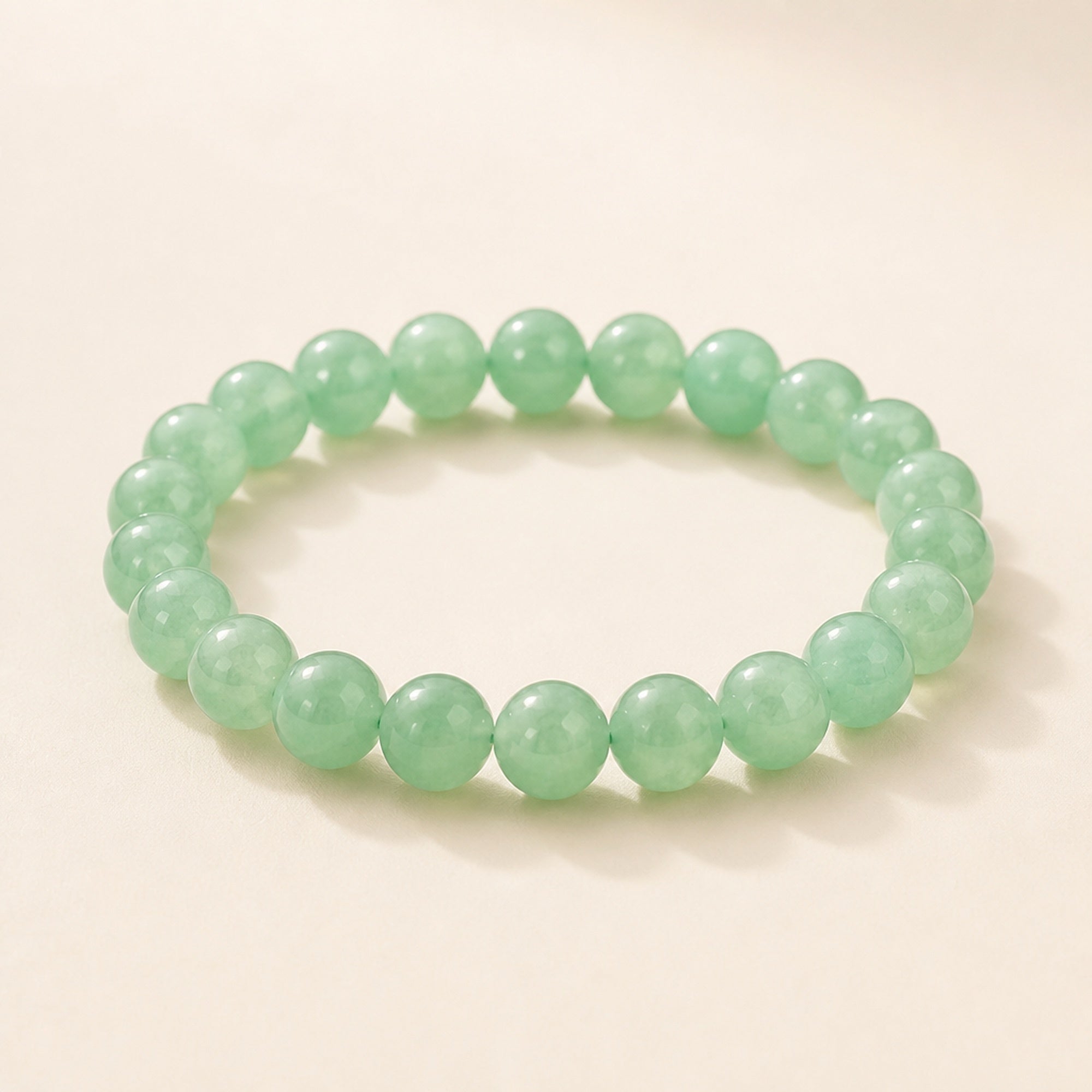
Green Aventurine Opportunity Bracelet
This is a related growth option, not a Peridot product. We only identify jewelry as Peridot when that exact material is verified.
Explore this related optionWhen peridot is the wrong choice: you need a scratch-proof everyday ring, or you want a stone whose meaning centers on grounding and weight rather than brightness.
How to Use Peridot in Daily Life
Peridot is easy to integrate into daily practice because its meaning is tied to a simple, repeatable action: noticing light. Here are concrete ways to use it without turning it into a performance.
1. Wear it as a morning cue. Put on a peridot pendant or ring as part of a short morning routine and use that moment to name one thing you want to see more clearly that day. A pendant or earring placement protects the stone from the knocks a ring would take.
2. Keep it at your desk for honest expression. If you write, negotiate, or have hard conversations, keep a small peridot nearby as a prompt to say the true thing plainly and kindly—the eloquence association in practice.
3. Use it in a short release ritual. Hold the stone for two or three minutes of slow breathing at the end of the day, then set it down. The ritual is the point; the stone is the marker.
4. Meditate with it in morning light. Place it where you can see it while you sit quietly. Peridot's light association makes it a natural focal point for a brief gratitude or intention practice.
5. Cleanse and recharge simply. Wipe it with a soft, damp cloth, avoid harsh chemicals and ultrasonic cleaners, and let it rest in gentle daylight (not prolonged direct sun) or on a selenite plate. Because peridot is relatively soft, store it separately from harder gems like quartz, sapphire, and diamond to avoid scratches.
Is Peridot a Birthstone, and Which Zodiac Signs Are Linked to It?
Yes—peridot is the modern birthstone for August, and it is also one of the traditional birthstones for that month alongside spinel and sardonyx. In zodiac terms, peridot is most commonly associated with Leo (the August fire sign), and through its Mercury association it is also often connected to Gemini and Virgo. Some practitioners link it to the Sun-ruled signs more broadly.
Treat zodiac associations as cultural and symbolic frameworks, not as prescriptions. If peridot's themes—light, renewal, honest expression—match what you are working on, the stone is a reasonable choice regardless of your sign.
Frequently Asked Questions About Peridot
What is the spiritual meaning of a peridot stone?
Peridot is most often associated with inner light, renewal, and the gentle release of jealousy or anger, along with clear, heart-centered expression. These are symbolic and meditative associations rather than medical claims.
How do you cleanse, charge, and care for peridot jewelry?
Wipe it with a soft damp cloth, avoid harsh chemicals and ultrasonic cleaners, and store it separately from harder stones; gentle daylight or a selenite plate is often used for recharging. Because peridot is Mohs 6.5–7, it scratches more easily than quartz, so protective settings and careful storage matter most.
Is peridot a birthstone, and which zodiac signs benefit from it?
Peridot is the August birthstone and is most commonly linked to Leo, with additional associations to Gemini and Virgo through its Mercury connection. These are traditional and symbolic links, not requirements.
The Honest Bottom Line
Peridot's meaning is unusually consistent across history and geology: it is a stone of light that does not need to be lit from outside. Its green is real, its origins are deep—sometimes literally from space—and its cultural story runs from Egyptian mines to Hawaiian volcanoes. Used as a daily reminder rather than a promise, peridot may support a habit of noticing what is still growing in your life, and it often serves as a gentle cue for honest, heart-centered expression.
Choose it for its brightness and its character, care for it according to its real hardness, and let the meaning be something you practice rather than something the stone performs for you.
Sources
© 2026 Lumina Quartz. This article shares cultural symbolism and mineral facts for educational purposes. It is not medical, psychological, or financial advice, and crystal practices are not a substitute for professional care.