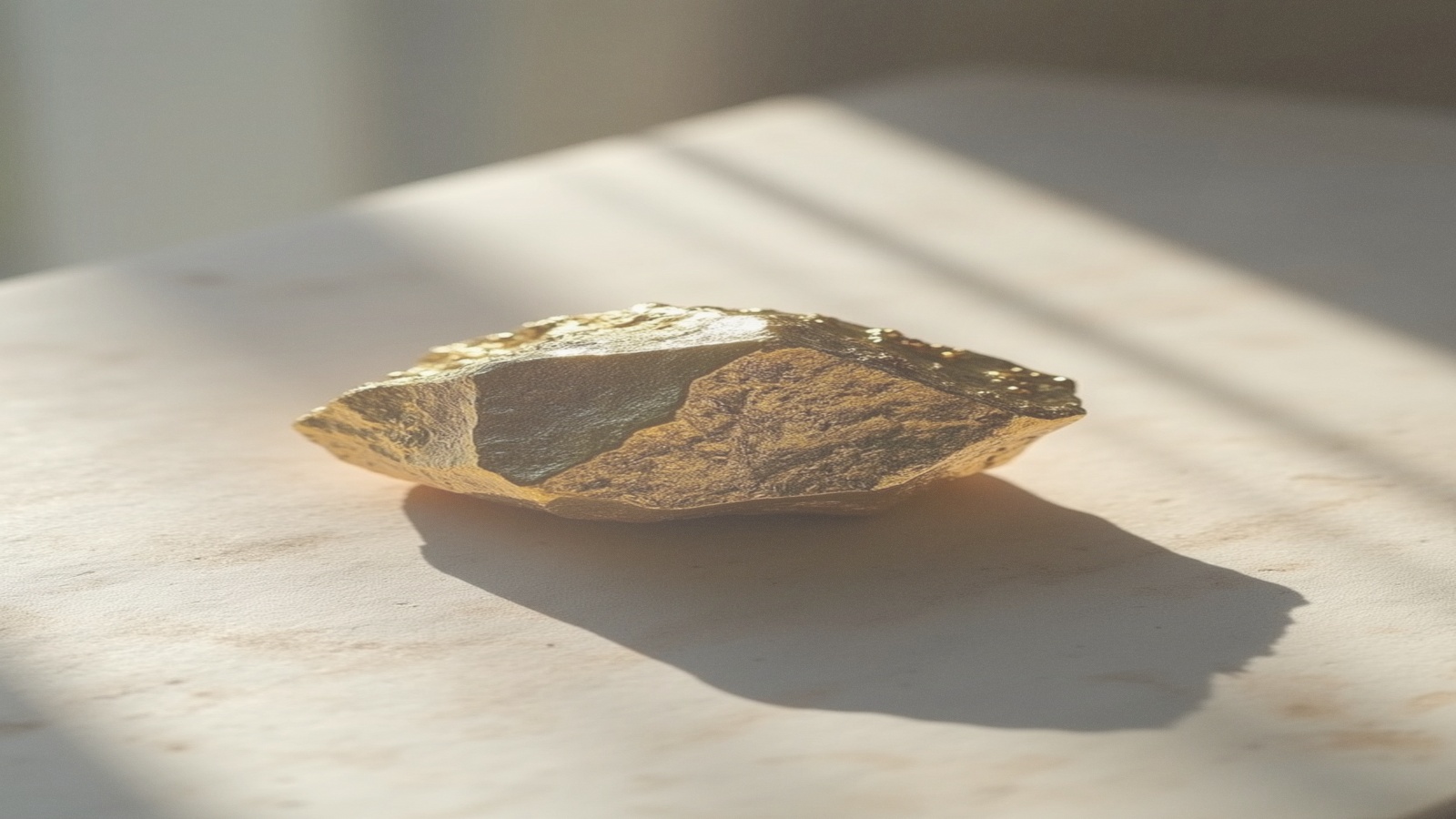
Pyrite crystal meaning centers on willpower, protection, and grounded abundance — and no, it is not literally gold. Pyrite is an iron sulfide mineral with a metallic luster and brassy yellow color that is often mistaken for gold, which is why it is commonly called "fool's gold"; it is distinguishable from gold because it is harder, resists scratching, and is lighter in heft (Smithsonian National Museum of Natural History). In spiritual and symbolic traditions it is associated with fire, action, and protective boundaries — a stone of momentum rather than magic.
10-Second Executive Summary / The Verdict Box
- Direct Verdict: Pyrite is a natural iron sulfide — "fool's gold" — valued for symbolic willpower, protection, and abundance themes, not for literal gold content.
- Mohs Hardness: 6–6.5. Harder than gold (about 2.5–3), which is why it resists scratching — a key identification test (Smithsonian).
- Composition: Iron sulfide (FeS₂); isometric/cubic polymorph of marcasite (Mindat).
- Best For: Desk and workspace placement, decision-making rituals, boundary-setting intentions, and raw or tumbled display pieces.
- Care Note: Keep dry and away from prolonged moisture; do not cleanse with water.
What Is Pyrite Crystal? (Fool's Gold Explained)
Pyrite is a very common iron sulfide mineral with a metallic, brassy-yellow appearance that is associated with other ore minerals in nature (Smithsonian). Mineralogically, it belongs to the Pyrite Group and is the isometric (cubic) polymorph of orthorhombic marcasite, with some specimens appearing pseudo-cubic (Mindat). Its nickname, "fool's gold," comes from its resemblance to gold — but the two differ in hardness and heft, which makes pyrite easy to distinguish with simple tests.
Pyrite Crystal Meaning and Symbolism
Fire, Willpower, and the Greek Roots of "Pyrite"
The name pyrite is often linked to the Greek word pyr, meaning fire — a fitting association for a stone that strikes sparks against metal and has long been tied to flame, drive, and forward motion in symbolic traditions. That fire association is cultural and symbolic, not a physical property you can measure in a lab.
Abundance Without Greed: Reframing "Fool's Gold"
Where gold symbolizes accumulated wealth, pyrite is often associated with the effort that creates value — discipline, follow-through, and honest work. Reframing the "fool" label is part of its appeal: it invites you to value the process, not just the payoff. This is a symbolic reading, not a claim that the stone attracts money.
Pyrite's Spiritual Meaning and Healing Properties
Confidence, Action, and Follow-Through
In crystal traditions, pyrite may support confidence and decisiveness — it is often associated with the energy to begin tasks and the stamina to finish them. Treat this as a personal reminder practice rather than a medical or psychological effect; no stone can regulate mood or replace professional care.
Protection and Clearing Heavy Emotions
Pyrite is commonly described as a protective stone, often associated with boundary-setting and clearing stagnant or "heavy" feelings from a space. These are cultural and meditative associations. If you are navigating persistent low mood or anxiety, please seek support from a qualified professional rather than relying on a stone.
Pyrite Through History: Egypt, Greece, and the Gold Rush
Pyrite has a long social and scientific history. The Smithsonian Libraries notes that historical accounts of pyrite's social uses sit alongside its scientific nature, and that scholarship on the mineral is useful to both researchers examining old metalwork and readers curious about the raw material (Smithsonian Libraries). In popular lore, pyrite appears in ancient decorative and fire-striking contexts and later in gold-rush-era confusion with real gold — but treat specific historical claims cautiously and verify them before repeating them as fact.
How to Use Pyrite Daily: Desk, Jewelry, and Home Placement
Pyrite works best as a visible, tactile reminder. Practical placements include:
- Desk or workspace: Place a raw or tumbled piece near your task area as a cue for focus and follow-through.
- Jewelry: Pyrite is harder than gold and resists scratching, but it can still chip — choose settings that protect edges and remove pieces before heavy activity.
- Home placement: A specimen on an entryway shelf or study corner can serve as a symbolic boundary marker for the space.
- Ritual use: Hold it during journaling or intention-setting; the practice, not the stone, does the work.
Pyrite vs. Gold: A Quick Identification Checklist
Use this step-by-step check when you are unsure whether a brassy piece is pyrite or gold:
A related color-family option
Citrine Abundance Bracelet
This broader color-family option is not presented as Pyrite. We only identify jewelry as Pyrite when that exact material is verified.
Explore this related option- Scratch test: Pyrite is harder (Mohs 6–6.5) and resists scratching; gold is much softer and scratches easily (Smithsonian).
- Heft: Pyrite is lighter in heft than gold for the same volume.
- Crystal form: Look for cubic or pseudo-cubic shapes typical of pyrite's isometric structure (Mindat).
- Streak and luster: Metallic luster and a dark streak point toward pyrite rather than gold.
- Integrity check: At Lumina Quartz we apply the Lumina Grade AAA Integrity Standard — natural, unaltered specimens with zero chemical resin-filling and no irradiation or dye treatment. Ask any seller whether a piece has been stabilized or coated; a coated or resin-filled pyrite is not a natural specimen.
How to Cleanse, Charge, and Care for Pyrite
Pyrite is sturdy but not waterproof. Keep it dry: prolonged moisture and humidity can encourage surface oxidation or rust-like discoloration on iron sulfide specimens. Cleanse by smoke, sound, or moonlight rather than water. To "charge" it, place it in indirect sunlight for short periods and set a clear intention. Store pieces separately to avoid scratching softer stones, and wipe with a dry, soft cloth when dusty.
Frequently Asked Questions
What does pyrite crystal mean spiritually?
It is most often associated with willpower, protection, and grounded abundance — a symbolic stone of action and follow-through rather than literal wealth.
Is pyrite good luck or bad luck?
In most crystal traditions it is considered a positive, protective stone; the "fool's gold" label is about mistaken identity, not misfortune.
Is pyrite the same as fool's gold?
Yes — "fool's gold" is the common nickname for pyrite, an iron sulfide that resembles gold but is harder and lighter in heft (Smithsonian).
Sources
- Smithsonian National Museum of Natural History — Pyrite
- Mindat — Pyrite: Mineral information, data and localities
- Smithsonian Libraries — Pyrite [Fool's Gold]
This article is for cultural and educational purposes only and is not medical advice. Crystal traditions are symbolic; they do not replace professional care.
© 2026 Lumina Quartz