Red Jasper: A Gentle Guide to Meaning, Benefits, and Uses
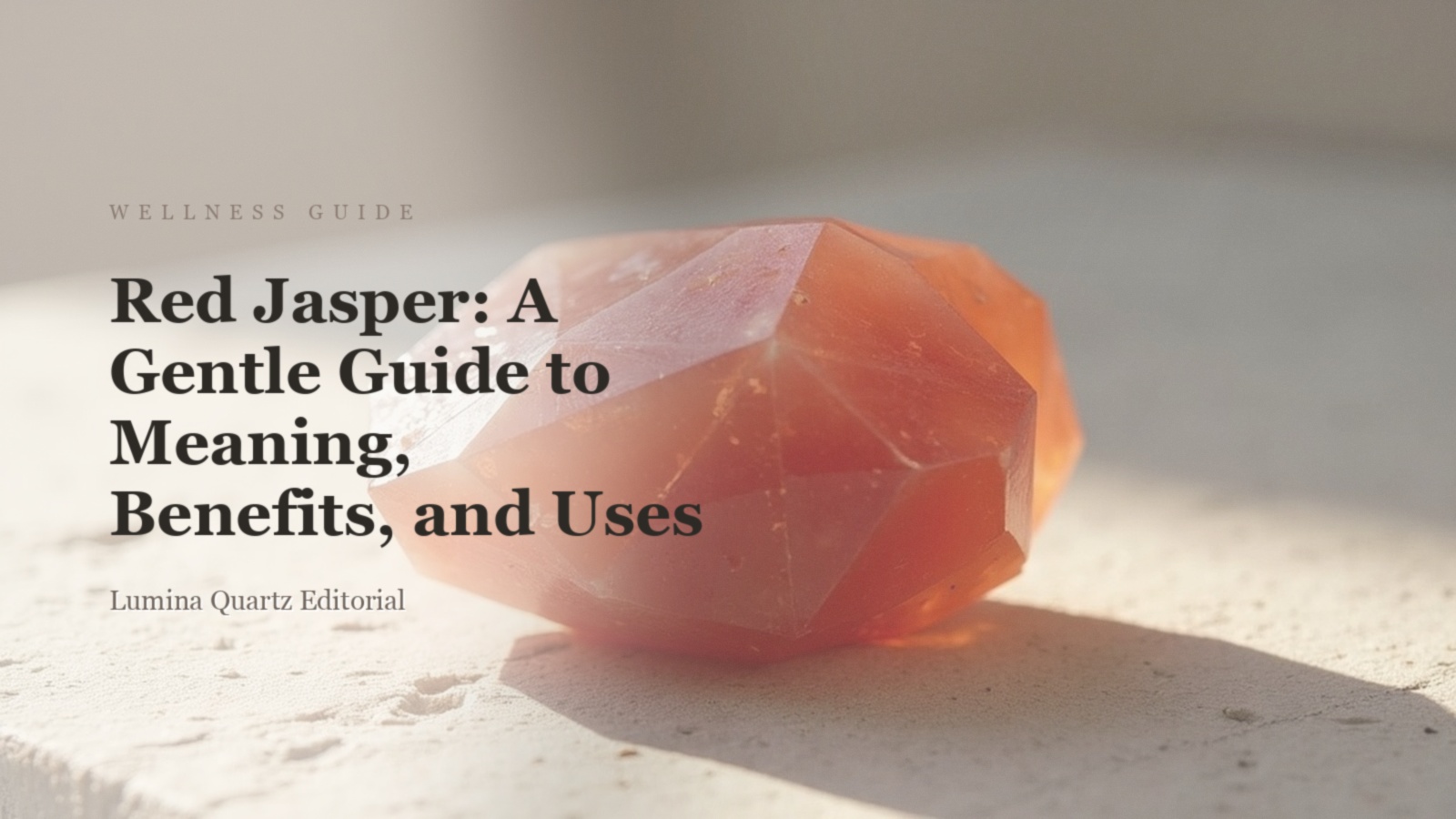
There is a quiet strength that lives deep within the earth, pressed from ancient sediments and the slow pulse of time. Red Jasper is one such stone — unassuming, sturdy, and remarkably honest. Carrying a warmth that feels almost primal, it invites us to slow down, breathe, and remember that we are already grounded. In this gentle guide, we’ll explore the meaning, benefits, and everyday uses of Red Jasper, not as a cure, but as a companion in your journey toward balance and presence.
Introduction to Red Jasper
Red Jasper has been a quiet companion to humanity for millennia. Unlike the flashier crystals that catch the light and the eye, Jasper prefers to speak in whispers — a steady heartbeat beneath the noise. It is often associated with the root of existence: our physical body, our survival instincts, and the simple joy of being alive. For those who feel scattered, anxious, or unmoored, this stone may support a return to center, like the comfort of bare feet on cool soil after a long day.
In the world of crystal healing and holistic wellness, Red Jasper is celebrated not for spectacle, but for substance. It does not promise miracles; instead, it offers a hand, a branch to hold onto when the winds become strong. This article is written with a sense of reverence for that humble resilience — and a hope that you may find within these words a gentle nudge toward your own anchoring strength.
What is Red Jasper?
Red Jasper is a variety of chalcedony, a microcrystalline form of quartz. Its deep, earthy red hues come from iron inclusions, giving it the appearance of rust, sun-baked clay, and dried earth. It is opaque, smooth when polished, and often displays subtle bands or speckles that tell stories of ancient geological formations. Perhaps its most profound characteristic is its abundance — Jasper is one of the most common gemstones on the planet, which makes it accessible, humble, and deeply democratic.
Composition and Properties
On a chemical level, Red Jasper is silicon dioxide with iron oxide impurities. Its hardness sits at around 6.5 to 7 on the Mohs scale, making it durable enough for everyday wear. Unlike translucent crystals, Jasper’s opacity invites a different kind of relationship — one less about looking through and more about sitting with. Its structure is dense and fine-grained, which is why it can be carved, tumbled, or left raw. In energetic practices, it is considered a stone of endurance, willpower, and physical vitality.
Historical Significance
Red Jasper appears in the annals of many ancient cultures. In Egyptian tombs, it was carved into amulets to accompany the dead into the afterlife, symbolizing protection and the eternal cycle of life. Native American tribes used it as a talisman for hunting and as a tool for connecting with the Earth Mother. In Greco-Roman times, it was often engraved with images of deities or warriors. Across continents, Red Jasper has consistently been recognized as a stone of strength, courage, and fertility. Its association with the life-giving force of blood and the rich redness of iron connects it to the very essence of survival.
Red Jasper Meaning and Symbolism
To hold a piece of Red Jasper is to hold a fragment of the earth’s ancient memory. Its meaning is deeply tied to the root chakra — the energetic center located at the base of the spine that governs our sense of safety, belonging, and stability. In crystal tradition, Red Jasper is known as the “supreme nurturer,” a stone that offers reassurance without demanding anything in return.
Its symbolism is layered. The deep red speaks of vitality, passion, and the warmth of lifeblood. The iron within it whispers of resilience — the ability to withstand pressure and time. And its opacity reminds us that not everything needs to be transparent to be beautiful. Red Jasper teaches that groundedness is not stagnation; it is the foundation from which we grow.
Root and Sacral Chakra Connection
Red Jasper is closely linked to both the root (Muladhara) and sacral (Svadhisthana) chakras. The root chakra, associated with survival and security, resonates with Red Jasper’s steady, protective energy. The sacral chakra, tied to creativity and emotion, finds in Red Jasper a gentle warmth that encourages passion without recklessness.
When these chakras feel out of balance, we may experience anxiety, restlessness, or a sense of disconnection from our own bodies. Red Jasper, used mindfully, can serve as a tactile reminder to return to the present moment — to feel your feet on the ground, your breath in your chest, and the quiet rhythm of your own aliveness.
Emotional and Spiritual Benefits
Red Jasper is not a stone of grand gestures. Its gifts are subtle: a sense of steadiness, a softening of fear, a gentle encouragement to keep going. In emotional and spiritual practice, it is often used to support:
- Grounding: A return to the body and the present moment.
- Courage: A quiet resolve to face challenges without bravado.
- Stability: An anchor during times of change or uncertainty.
- Vitality: A warm reminder of the life force that moves through us.
- Protection: A sense of energetic boundaries without isolation.
These benefits are experiential rather than guaranteed. Crystal healing is a personal, complementary practice — a way of inviting mindfulness and intention into daily life. Red Jasper works best as a companion, not a cure.
Benefits of Red Jasper
A Practical Guide to What Red Jasper Is Often Used For
| Area of Support | Traditional Use | How to Work With It |
|---|---|---|
| Grounding & stability | Held during moments of anxiety or overwhelm | Carry a tumbled stone in your pocket or hold it during slow breathing |
| Everyday courage | Worn as an amulet in challenging situations | Wear as a bracelet or place near your workspace |
| Root chakra balance | Placed at the base of the spine during meditation | Lie down and rest the stone on or near your pelvic area |
| Protective boundaries | Placed at entrances or carried in a pouch | Keep near your front door or in a bag you carry daily |
| Creative vitality | Paired with sacral chakra practices | Hold during journaling or creative work to invite warmth |
Boundary note: Red Jasper is a supportive, complementary tool. It is not a substitute for medical care, therapy, or professional advice. If you are experiencing persistent anxiety, pain, or health concerns, please reach out to a qualified healthcare provider.
Physical Healing Properties
In crystal healing traditions, Red Jasper is often associated with physical vitality and endurance. It has been used historically to support stamina, recovery, and a sense of physical grounding. Some practitioners place it near the lower body during rest or meditation to encourage a feeling of stability and warmth.
These uses are rooted in tradition and personal practice, not clinical evidence. Red Jasper is best understood as a mindfulness aid — a tangible reminder to care for your body, rest when needed, and move with intention.
Emotional Grounding and Stability
When life feels like a storm, Red Jasper offers the stillness of a stone in a stream. It does not stop the current, but it remains unmoved. Many people find that simply holding or wearing Red Jasper helps them feel more centered, more capable of responding rather than reacting.
This grounding quality makes it a gentle companion for transitions — moving homes, changing jobs, navigating grief, or simply facing a day that feels too loud. It is not a magic wand, but it is a steady presence.
Protection and Energy Shield
Red Jasper has long been regarded as a protective stone. In ancient Egypt, it was placed in tombs to guard the deceased. In Native American traditions, it was carried for safety and connection to the earth. Today, many people use it to create a sense of energetic boundary — not to shut others out, but to feel secure enough to stay open.
You might place a piece near your front door, carry it in your bag, or wear it as jewelry. The intention matters more than the method. Red Jasper is a reminder that you are allowed to take up space, to say no, and to protect your peace.
How to Use Red Jasper
Wearing and Carrying Red Jasper
The simplest way to work with Red Jasper is to wear it. A bracelet, pendant, or tumbled stone in your pocket keeps its steady energy close throughout the day. If you choose a bracelet, you might find a simple, well-crafted piece like the Red Jasper Bracelet – Steady Resolve to be a gentle daily companion.
Meditating with Red Jasper
To meditate with Red Jasper, find a comfortable seat or lie down. Hold the stone in your hand or rest it near your root chakra. Close your eyes and breathe slowly. With each exhale, imagine roots growing from your body into the earth. With each inhale, feel the earth’s steady warmth rising back up. There is no need to force anything — just notice, breathe, and return.
Placing Red Jasper in Your Home
Red Jasper can be placed in areas where you want to cultivate stability and calm. Consider:
- Near the front door: A gentle guardian for your space.
- On your desk: A grounding presence during work.
- Beside your bed: A quiet companion for rest.
- In a meditation corner: An anchor for your practice.
Red Jasper vs. Other Jaspers
Jasper comes in many colors, each with its own character. Here is a gentle comparison:
| Variety | Color | Traditional Association |
|---|---|---|
| Red Jasper | Deep, earthy red | Grounding, vitality, courage |
| Ocean Jasper | Green, cream, orbicular patterns | Joy, emotional healing, patience |
| Picture Jasper | Brown, tan, banded | Connection to nature, insight |
| Mookaite Jasper | Mustard, red, cream | Adventure, adaptability |
| Brecciated Jasper | Red with black or grey veins | Balance, grounding, unity |
Each variety carries its own nuance, but all share Jasper’s foundational quality: a steady, earthy presence that invites us to slow down and root into the moment.
Caring for Your Red Jasper
Red Jasper is durable but not indestructible. To keep it looking and feeling its best:
- Clean gently: Wipe with a soft, damp cloth. Avoid harsh chemicals or ultrasonic cleaners.
- Cleanse energetically: Many people place it under moonlight, pass it through sage smoke, or rest it on a piece of selenite.
- Store mindfully: Keep it separate from harder stones to avoid scratches.
- Recharge: Place it on the earth or near a plant to reconnect with natural rhythms.
Where to Buy Red Jasper
Red Jasper is widely available, but quality and intention matter. Look for pieces with deep, consistent color and a smooth finish. If you are drawn to jewelry, choose a maker who values craftsmanship and ethical sourcing. Trust your intuition — the right piece will feel steady in your hand.
Frequently Asked Questions about Red Jasper
Red Jasper is traditionally used for grounding, stability, courage, and a sense of physical vitality. It is often carried or worn during times of change or stress as a gentle reminder to return to the present moment.
You can cleanse Red Jasper by wiping it with a soft cloth, placing it under moonlight, or passing it through sage smoke. Avoid soaking it in water for long periods, as this can affect the finish over time.
Yes, Red Jasper is durable enough for daily wear. Its hardness of 6.5 to 7 on the Mohs scale makes it suitable for bracelets and pendants, though it is always wise to remove jewelry during rough physical activity.
No. Both are varieties of chalcedony, but bloodstone (heliotrope) is typically dark green with red iron oxide inclusions, while Red Jasper is opaque and predominantly red. They share some symbolic associations but are distinct stones.
Red Jasper is most commonly associated with the root chakra, which governs safety and stability. It is also sometimes linked to the sacral chakra for its warm, vital energy.
Key Takeaways
What to Remember About Red Jasper
- Red Jasper is a form of chalcedony, colored by iron oxide, with a hardness of 6.5–7 on the Mohs scale.
- It has been used across cultures for protection, courage, and connection to the earth.
- It is most closely associated with the root chakra, supporting feelings of grounding and stability.
- It is a complementary tool for mindfulness — not a medical treatment or guaranteed cure.
- You can work with it by wearing it, meditating with it, or placing it in your home.
- Cleanse and care for it gently to maintain its appearance and energetic clarity.
Related Reading
- Fluorite Meaning: Meaning, Properties, and Everyday Uses
- Obsidian Crystal Meaning: Meaning, Properties, and Everyday Uses
- Lepidolite Crystal Meaning: Properties, Uses, and Calming Benefits
- Crystal Meanings Encyclopedia: Complete Guide to Amethyst, Rose Quartz, Citrine & More
Sources
- Jasper: Mineral information, data and localities — mindat.org
- March Birthstones | Aquamarine & Bloodstone Meaning — GIA
This article is for informational and inspirational purposes only. Crystal healing is a complementary practice and is not intended to diagnose, treat, cure, or prevent any disease. Always consult a qualified healthcare provider for medical concerns.