Rhodochrosite Crystal Meaning: A Guide to Emotional Balance and Self-Love
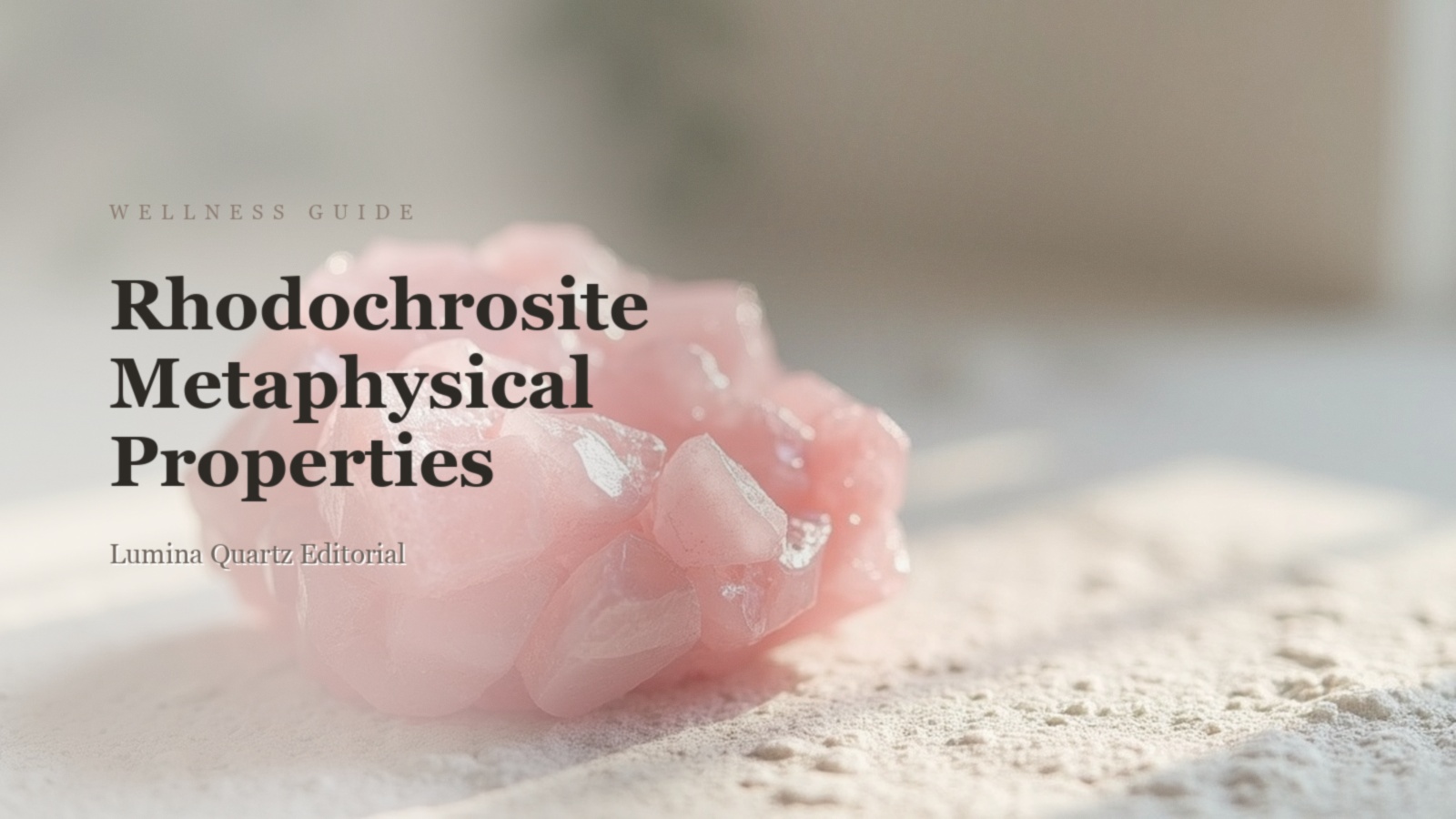
Table of Contents
- Introduction
- What is Rhodochrosite?
- Rhodochrosite Meaning: Name, History, and Symbolism
- The Metaphysical Properties of Rhodochrosite
- Emotional Healing and Release
- Self-Love and Compassion
- Heart Chakra Balance
- Attracting and Strengthening Relationships
- How to Use Rhodochrosite
- Cleansing and Caring for Rhodochrosite
- Choosing How to Work With Rhodochrosite
- Conclusion
- Key Takeaways
- FAQ
- Related Reading
- Sources
Introduction
There are stones that shimmer with a thousand facets, demanding attention from every angle. And then there are stones that whisper — soft, blush-toned, unassuming. Rhodochrosite belongs to the second kind. With its creamy rose bands and quiet presence, it invites you to sit a little closer, breathe a little deeper, and soften the places inside you that have grown hard from holding on.
For those curious about rhodochrosite metaphysical properties, this article explores what this stone is, where it comes from, how it has been honored for its emotional resonance, and how you might welcome its energy into daily life. We will keep things grounded and honest, always remembering that crystals are companions on the journey — not replacements for medical care, professional support, or the honest work of healing. They may support, they may remind, and they may inspire. But the real transformation always begins with you.
What is Rhodochrosite?
Rhodochrosite is a manganese carbonate mineral known for its distinctive pink to deep rose color, often patterned with sweeping white or cream bands. It is a relatively soft stone, ranking just 3.5 to 4 on the Mohs hardness scale, which means it asks for a certain tenderness in how it is handled and worn. The Smithsonian notes that rhodochrosite can form as stalactites, and that when cut, those formations display concentric bands of rose-colored layers — the very banding that makes the stone so recognizable.
Beautiful specimens are found in Argentina, South Africa, Peru, Romania, and in the United States at Colorado's Sweet Home Mine. The mineral database Mindat lists thousands of known localities worldwide, though only a small number produce material lovely enough for jewelry. When we speak of rhodochrosite properties, we are speaking into this history and this visual poetry — a stone that looks the way compassion might, if compassion had a color and a shape. It is often associated with the heart, with nurturing energy, and with the brave act of feeling deeply.
Rhodochrosite Meaning: Name, History, and Symbolism
The rhodochrosite meaning begins with its name. It comes from the Greek words rhodon (rose) and chros (color) — literally "rose-colored." That simple etymology explains why the stone has long been linked to the heart: it is named for the color of tenderness itself.
Its story is older and more layered than many people expect. According to the Smithsonian National Museum of Natural History, rhodochrosite was first discovered in 1813 in the silver mines of present-day Romania. It was not a decorative stone at first — it was a mineral noticed by miners, later prized by collectors for its rarity and color.
In South America, the stone carries a deeper cultural weight. The Gemological Institute of America (GIA) notes that in Argentina, the use of rhodochrosite dates back to the ancient Incas, who are said to have believed it was the solidified blood of their fallen rulers. Treated as folklore rather than fact, this legend gives the stone a symbolic theme that still resonates today: love that costs something, devotion that endures, and the transformation of grief into something beautiful. It is easy to see why modern practitioners pair rhodochrosite with themes of resilience and emotional courage.
More recently, a step-cut rhodochrosite with a documented history emerged from Colorado's Sweet Home Mine. As the GIA describes, its traceable story began in 1888, when a shaft collapse produced a 32.61-carat cleavage fragment. That long, difficult journey from mine to gem is a fitting metaphor for the stone's reputation: beauty that forms slowly, under pressure.
So when we talk about the rhodochrosite crystal meaning, we are talking about more than color. We are talking about a stone whose name, origins, and legends all point in the same direction — toward the heart, toward feeling, and toward patient healing.
The Metaphysical Properties of Rhodochrosite
At its core, rhodochrosite is known as a stone of emotional healing and loving self-awareness. It does not shout its wisdom; it hums a low and steady note, like a lullaby remembered from childhood. Crystals, of course, are not medicines or substances that force change. But rhodochrosite may support a softer relationship with the emotional body and is often associated with feelings of warmth, hope, and forgiveness. Let us explore its most treasured qualities together.
Emotional Healing and Release
One of the most cherished rhodochrosite properties is its association with emotional release. This stone is often used during times of grief, heartbreak, or major life transitions — moments when the heart feels heavy and the mind loops through old stories. Rhodochrosite may support the gentle untangling of these emotional knots, inviting you to honor what you have felt rather than rush past it. It is not a stone of forced positivity; it is a stone of honest presence.
Many crystal practitioners describe rhodochrosite as a "comforting tissue" for the emotional body. It is often associated with creating a safe inner space where tears are welcome and vulnerability is seen as strength. If you have been carrying an old wound for a long time, holding rhodochrosite during quiet reflection may support the slow, steady release of what no longer serves you. The energy is one of patience — a reminder that healing, like the stone's own formation, takes time and pressure and beauty.
Self-Love and Compassion
It can be far easier to extend compassion to others than to ourselves. We offer gentle words to friends, yet scold ourselves for the same mistakes. Rhodochrosite is often called a stone of self-love because it may support the shift toward kindness — inward. Its rosy hue mirrors the tender feeling of loving oneself without conditions, the quiet hush of self-acceptance.
Rhodochrosite properties in this realm center on awakening the kind of love that does not depend on achievement, approval, or perfect behavior. It may encourage you to speak to yourself the way you would speak to someone you cherish. Placing the stone on your heart or carrying it throughout the day could serve as a gentle anchor — a small pink reminder that you are worthy of the same patience you so freely offer others. This is not about vanity; it is about wholeness.
Heart Chakra Balance
In the subtle energy system, rhodochrosite is deeply connected to the heart chakra — the fourth chakra, located at the center of the chest. The heart chakra is the meeting place of spirit and matter, of self and other. When it is balanced, we feel open, generous, and connected. When it is blocked or imbalanced, we may experience defensiveness, fear of intimacy, or a lingering sense of loneliness.
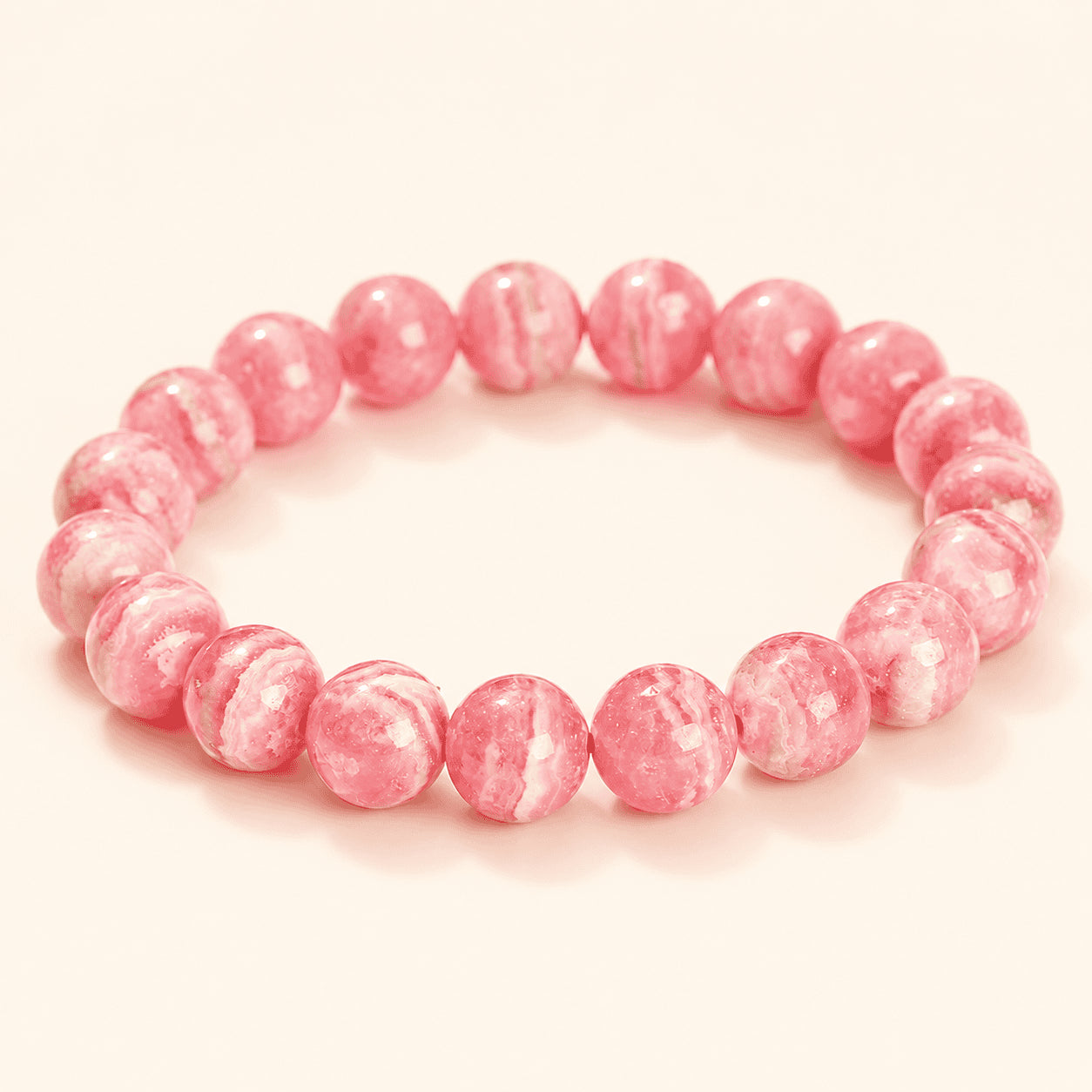
Rhodochrosite Bracelet
A gentle ritual piece for bringing this intention into your daily routine.
Shop This Authentic Piece →Rhodochrosite is often associated with this energy center, gently resonating with its frequency. Working with the stone may support the opening of the heart — not all at once, but gradually, like a flower that knows exactly when to unfurl. Some people place rhodochrosite on their heart chakra during meditation, breathing into the space between the chest and the back, and simply allowing the stone to be a focal point of warmth and receptivity. It may support a greater sense of inner harmony and emotional balance.
Attracting and Strengthening Relationships
When we are kinder to ourselves, the way we love others changes naturally. We choose healthier connections, communicate more honestly, and feel less desperate for approval. Because rhodochrosite is associated with self-love and emotional healing, it is often linked with attracting and strengthening relationships — both romantic and platonic.
Rhodochrosite may support the courage to be seen, to let someone into the vulnerable places we usually guard. It is a stone of intimacy, not in the sense of romance alone, but in the sense of true closeness: the soul-to-soul sharing that makes human connection meaningful. If you are seeking a new relationship or hoping to deepen an existing one, the stone is less a magnet and more a mirror — it asks you to become the kind of person you would like to be loved by.
How to Use Rhodochrosite
There is no single right way to work with this stone. What matters is consistency and intention. A few gentle options:
- Wear it close to the heart. A pendant or bracelet keeps the reminder within reach. Because rhodochrosite is soft, choose pieces set with care and remove them before exercise, dishes, or gardening.
- Keep a tumbled stone in your pocket or bag. Touching it during a stressful moment can act as a small pause button — a cue to breathe before reacting.
- Meditate with it on the chest. Lie down or sit comfortably, rest the stone over the heart center, and follow slow breaths. Even five minutes counts.
- Pair it with journaling. Set the stone beside you and write without editing, then read back what you wrote with the same kindness you would offer a friend.
- Place it in a restful space. A bedside table or a corner used for reading can turn the stone into a quiet part of your wind-down routine.
If you are new to working with crystals, start with one practice rather than five. A single daily ritual tends to do more than a shelf full of good intentions.
Cleansing and Caring for Rhodochrosite
Rhodochrosite's softness matters here. At 3.5 to 4 on the Mohs scale, it scratches and chips more easily than quartz-family stones, and its carbonate composition means it is best kept away from acids, salt, harsh cleaners, and prolonged soaking. A few simple habits will keep it looking its best:
- Wipe gently with a soft, dry cloth to clear dust and skin oils.
- Use a barely damp cloth if needed, then dry immediately. Avoid running water, ultrasonic cleaners, and steam.
- Skip salt and abrasive powders, which can dull the surface and damage the stone.
- Cleanse energetically with sound, moonlight, or smoke rather than water — a singing bowl, a few hours under a full moon, or a pass through incense smoke all work gently.
- Store separately in a soft pouch or a lined box so harder stones in your collection do not scratch it.
None of this requires fussing. Treat the stone the way the stone asks you to treat yourself: with patience, and without force.
Choosing How to Work With Rhodochrosite
Because rhodochrosite is both a soft mineral and an emotionally themed stone, it helps to match the practice to the moment. This simple guide maps a few common intentions to grounded, low-effort ways of working with it.
| What you are moving through | A gentle way to work with it | A grounded reminder |
|---|---|---|
| Grief, heartbreak, or a big transition | Hold a tumbled stone during quiet reflection, or keep it near your bed | Feelings move at their own pace — and human support matters too |
| A harsh inner critic | Wear it or carry it, and pause briefly when you notice the criticism start | Self-kindness is a practice, not a personality trait |
| Wanting closer relationships | Rest it on the heart center before a difficult conversation | Openness grows alongside honest, healthy boundaries |
| Everyday stress and overstimulation | Pair it with a few minutes of slow breathing | Rest is allowed, and so is asking for help |
| Keeping the stone in good condition | Store it in a soft pouch, away from harder stones and moisture | Softness is not fragility — it simply needs different care |
A note on boundaries: rhodochrosite is a beautiful companion for reflection, but it is not a treatment for anxiety, depression, grief, or any physical condition. If you are struggling, please reach out to a qualified healthcare or mental health professional. Crystals can sit alongside that care — they cannot replace it.
Conclusion
Rhodochrosite does not promise to fix anything. It offers something quieter and, in some ways, more useful: a steady presence while you do the work yourself. Its name means "rose-colored." Its history runs from Romanian silver mines to Incan legend to a Colorado mine collapse in 1888. And its reputation rests on a simple idea — that softness, patience, and honesty with yourself are strengths, not weaknesses.
Whether you wear it, hold it during meditation, or simply keep it on your bedside table, let it be a small reminder to speak to yourself the way you would speak to someone you love. That is the heart of rhodochrosite's meaning, and it is entirely yours to practice.
Key Takeaways
- Rhodochrosite is a manganese carbonate mineral, 3.5–4 on the Mohs scale, named from the Greek for "rose-colored."
- It was first discovered in 1813 in the silver mines of present-day Romania, according to the Smithsonian.
- In Argentina, its use dates back to the ancient Incas, who are said to have believed it was the solidified blood of their fallen rulers.
- It is most often associated with the heart chakra, emotional release, self-love, and deeper relationships.
- Its softness means it prefers gentle care: no salt, no soaking, no ultrasonic cleaners.
- Crystals may support reflection and ritual, but they are not a substitute for medical or mental health care.
FAQ
What is rhodochrosite used for?
Rhodochrosite is used in two main ways. Physically, it is cut into cabochons, beads, and collector specimens — though its softness means it is more common in pendants and earrings than in rings worn daily. Metaphysically, it is used as a stone of emotional healing, self-love, and heart-centered reflection. People often carry it during grief, transitions, or periods of self-criticism. It is a comfort stone rather than a problem-solver.
How do you use rhodochrosite for healing?
Most people keep it simple: wear it near the heart, carry a tumbled piece in a pocket, or rest it on the chest during a few minutes of slow breathing or meditation. Some pair it with journaling, letting the stone serve as a cue to write honestly and read back with kindness. Consistency matters more than technique — a small daily ritual tends to be more useful than an elaborate one you do once.
What chakra is rhodochrosite associated with?
Rhodochrosite is most often associated with the heart chakra, the fourth chakra at the center of the chest. It is linked with openness, compassion, and emotional balance. Some practitioners also connect its grounding, manganese-rich composition with the lower chakras, but the heart is its primary home in crystal tradition.
Is rhodochrosite a good stone for self-love?
It is one of the stones most frequently named for that purpose. Its rosy color and its association with the heart make it a natural reminder to treat yourself with the same patience you offer others. That said, no stone creates self-love on its own — it works best as a tangible cue for a practice you are already willing to build.
How do I cleanse rhodochrosite?
Because rhodochrosite is soft and carbonate-based, avoid water, salt, and ultrasonic cleaners. Instead, wipe it with a soft dry cloth and cleanse energetically using sound (a singing bowl or chime), moonlight, or incense smoke. Store it separately in a soft pouch so harder stones do not scratch it.
Related Reading
- Rose Quartz Crystal: A Gentle Guide to Meaning, Benefits, and Uses
- Kyanite Crystal Meaning: A Guide to Benefits, Uses, and Chakra Alignment
- Red Jasper: A Gentle Guide to Meaning, Benefits, and Uses
- Black Tourmaline Meaning: Meaning, Properties, and Everyday Uses