The Complete Everyday Guide to 7 Chakra Stones: Meaning and Uses
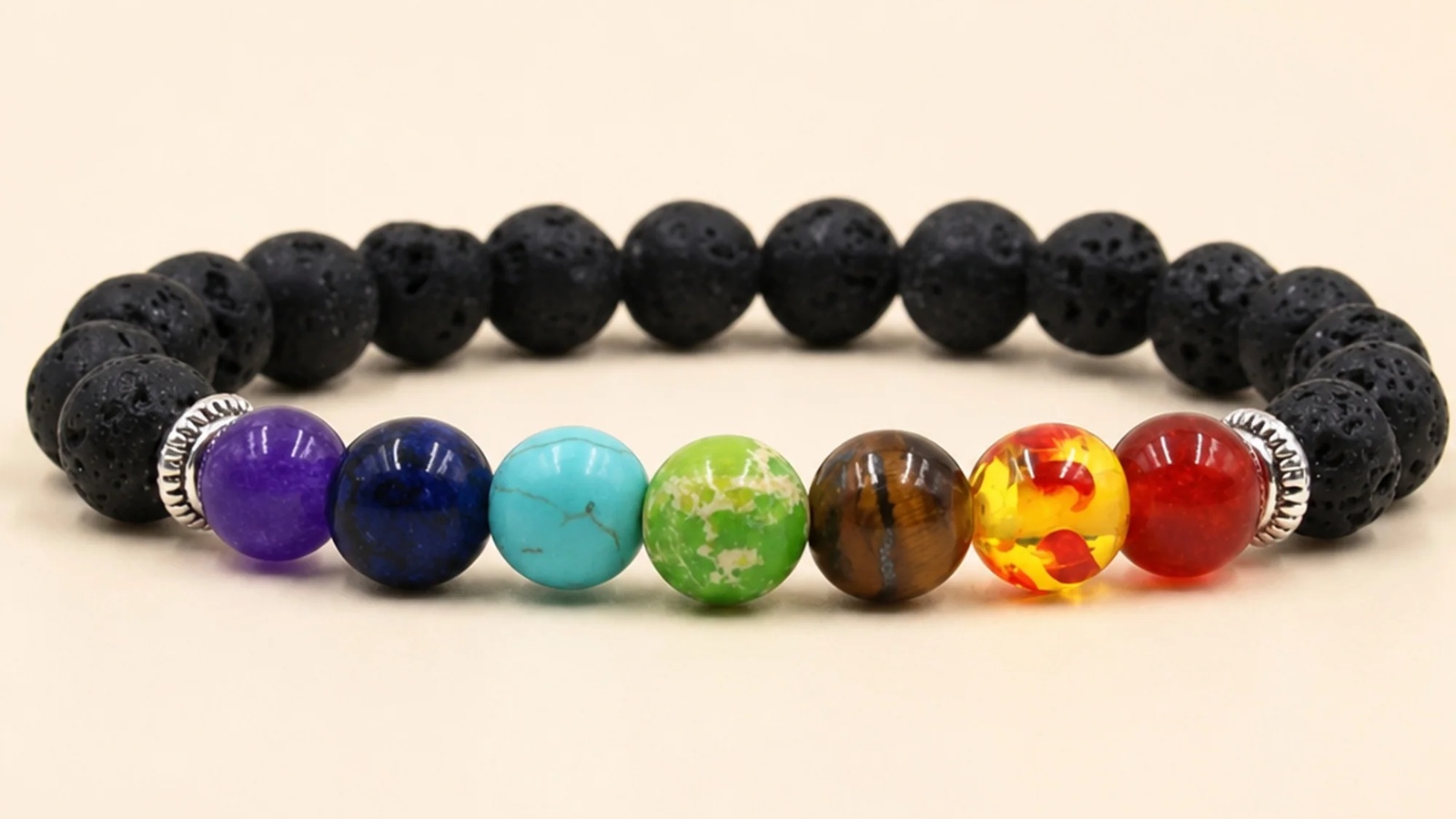
Table of Contents
- 10-Second Executive Summary / The Verdict Box
- What Are the 7 Chakras? A Quick Primer
- The 7 Chakra Stones in Order: Meanings and Uses
- Root Chakra — Red Jasper
- Sacral Chakra — Carnelian
- Solar Plexus Chakra — Citrine
- Heart Chakra — Green Aventurine
- Throat Chakra — Lapis Lazuli
- Third Eye Chakra — Amethyst
- Crown Chakra — Clear Quartz
- How to Use Chakra Stones Every Day (Meditation, Layouts, Jewelry & Home)
- The 7-Stone Selection Checklist (Use This Before You Buy)
- Frequently Asked Questions
- What are the 7 chakra stones and their meanings?
- Which crystal is best for each chakra?
- How do you cleanse and care for chakra stones?
- Choosing a Set Without the Guesswork
- Sources
The seven chakra stones are Red Jasper (Root), Carnelian (Sacral), Citrine (Solar Plexus), Green Aventurine (Heart), Lapis Lazuli (Throat), Amethyst (Third Eye), and Clear Quartz (Crown), each traditionally paired with one of the seven chakras in order from base to crown. These pairings are a modern, widely used system of color and meaning rather than a single historical canon, so treat them as a thoughtful framework for reflection and practice, not a prescribed rule.
10-Second Executive Summary / The Verdict Box
- Direct Verdict: A standard seven-stone set runs Red Jasper, Carnelian, Citrine, Green Aventurine, Lapis Lazuli, Amethyst, and Clear Quartz, mapped from Root to Crown. Buy for the color symbolism, tactile ritual, and gemstone quality you can actually verify — not for guaranteed energetic outcomes.
- Mohs Hardness range: Softest in the standard set is Lapis Lazuli (about 5–6); hardest is Clear Quartz (7). Citrine, Amethyst, and Red Jasper sit around 6.5–7 (Citrine and Amethyst are quartz-family at 7).
- Care flag: Keep Lapis Lazuli, Carnelian, and Green Aventurine away from harsh cleaners, ultrasonic tanks, and long soaking.
- Best for: A beginner who wants one coherent, body-ordered set for meditation, layouts, or everyday jewelry — and who values verified natural stone over dyed or treated shortcuts.
- Quality anchor: Natural, untreated stone with honest disclosure is the standard we call the Lumina Grade AAA Integrity Standard — no chemical resin-filling, no irradiation, no dye.
What Are the 7 Chakras? A Quick Primer
The word chakra means "wheel" in Sanskrit, and in Hindu and Buddhist traditions it refers to a wheel or center of energy. You may recognize the image of the Dharmachakra, the wheel of dharma, flanked by a pair of deer — a deeply established sacred symbol still held in museum collections such as the Smithsonian's National Museum of Asian Art.
In everyday Western wellness use, the system is usually presented as seven energy centers running from the base of the spine to the top of the head, each with an associated color:
- Root — red
- Sacral — orange
- Solar Plexus — yellow
- Heart — green (sometimes pink)
- Throat — blue
- Third Eye — indigo or deep purple
- Crown — violet or clear/white
Please hold this honestly: the chakra framework is a cultural and spiritual tradition. It is not a medical model, and no stone pairing here is a treatment for any condition. The value is in the structure it gives your attention — a way to pause, check in, and name what you want to work on.
The 7 Chakra Stones in Order: Meanings and Uses
The list below moves from the base upward. Each entry separates two things that are easy to blur: the stone's verified mineral facts, and its cultural or personal symbolism. The symbolism is often associated with certain qualities in modern crystal practice — it is meaningful, but it is not a scientific claim.
Root Chakra — Red Jasper
Mineral note: Red Jasper is a microcrystalline quartz (chalcedony) colored by iron oxide, with a Mohs hardness around 6.5–7. It is durable and forgiving for daily wear.
Symbolism and use: Red Jasper is often associated with grounding, steadiness, and a sense of physical footing — the kind of "feet on the floor" feeling. In practice, people often hold it during a slow breathing session or carry it in a pocket as a tactile reminder to slow down. If your goal is a simple morning check-in, Red Jasper is a natural starting stone.
Sacral Chakra — Carnelian
Mineral note: Carnelian is a translucent orange-to-red chalcedony, Mohs hardness around 6.5–7. It can fade with prolonged direct sunlight and is sensitive to heat and strong chemicals.
Symbolism and use: Carnelian is often associated with creativity, warmth, and the flow of ideas. A common everyday use is to keep it near a desk or sketchbook as a cue to begin a creative session rather than wait for the "right" mood. Treat that as a prompt for habit, not a promise of inspiration.
Solar Plexus Chakra — Citrine
Mineral note: Natural Citrine is a yellow-to-honey variety of quartz (Mohs 7). Much of what is sold as citrine today is heat-treated amethyst — that is a legitimate, common trade practice, but it should be disclosed. Pale, cloudy "lemon quartz" is often naturally colored; deeply orange material is frequently treated. Ask directly.
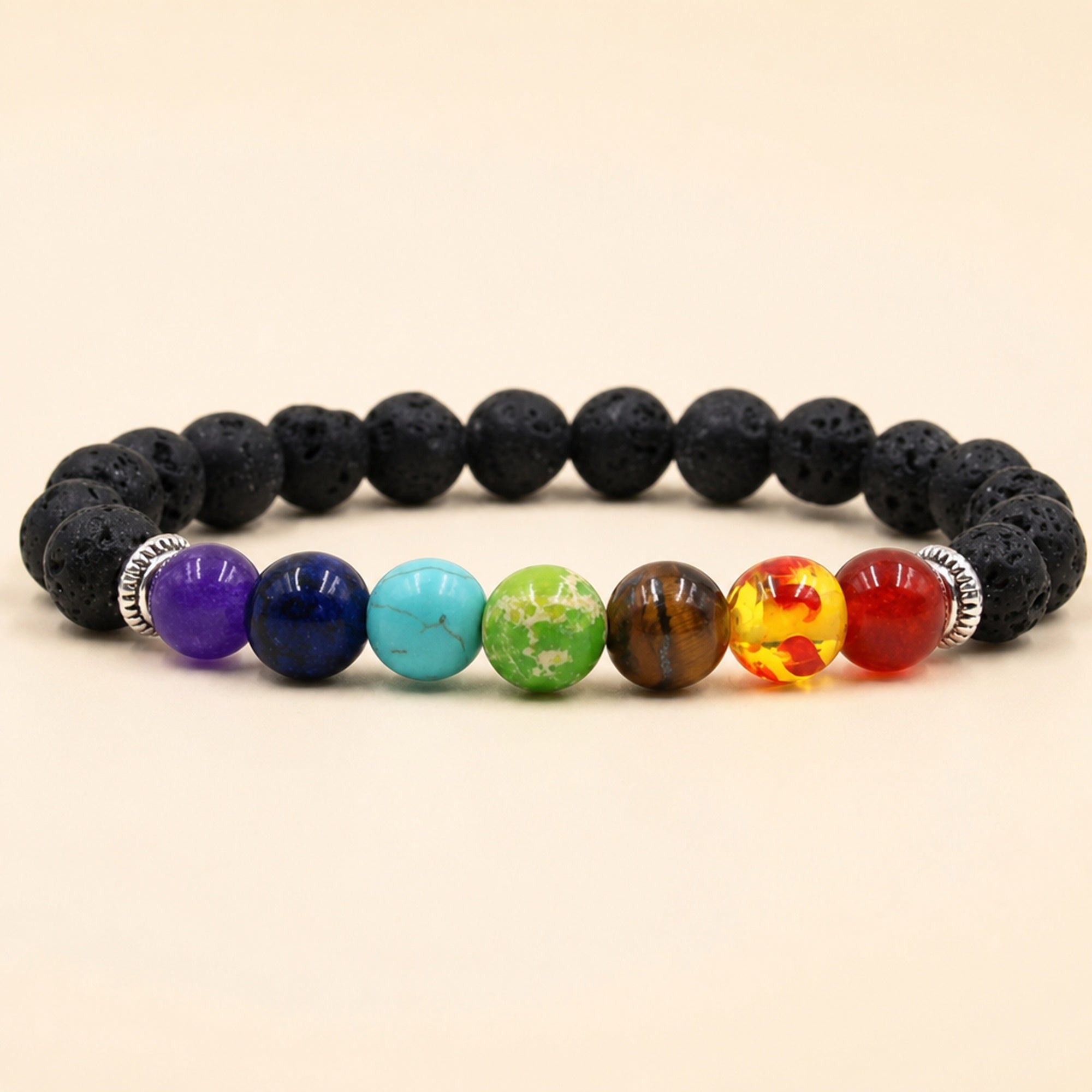
Seven Chakra Bracelet
A quiet bracelet for turning this intention into a small daily ritual.
Shop This Authentic Piece →Symbolism and use: Citrine is often associated with confidence and personal agency. A grounded way to use it: place it where you make decisions — a work desk or journaling spot — and let it be a reminder to name one clear action for the day.
Heart Chakra — Green Aventurine
Mineral note: Green Aventurine is a quartzite with mica inclusions that create a soft shimmer (aventurescence), Mohs hardness around 6.5–7. Its green color can be affected by prolonged sun exposure.
Symbolism and use: Green Aventurine is often associated with openness, compassion, and ease in relationships. It is a gentle choice to keep in a shared space at home or to hold before a difficult conversation — as a reminder of how you want to show up, not as a guarantee about the other person.
Throat Chakra — Lapis Lazuli
Mineral note: Lapis Lazuli is a rock, not a single mineral — typically a mix of lazurite, calcite, and pyrite — with a Mohs hardness of about 5–6. This is the softest and most care-sensitive stone in the standard set. It is porous and should not be soaked, scrubbed, or cleaned with ultrasonic devices or harsh chemicals; keep it away from perfume and household cleaners.
Symbolism and use: Lapis Lazuli is often associated with honest expression and clear communication. Because it is comparatively soft, it works best as a pendant or a stone kept in a dish rather than a ring that takes daily knocks. For quality, look for even, deep blue with visible pyrite flecks and honest disclosure of any treatment — a natural, unfilled stone is what the Lumina Grade AAA Integrity Standard is built around.
Third Eye Chakra — Amethyst
Mineral note: Amethyst is purple quartz (Mohs 7). Its depth of color varies naturally, and it can fade with extended direct sunlight. Deep, even color is prized, but pale natural amethyst is not "worse" — it is simply a different expression.
Symbolism and use: Amethyst is often associated with reflection, intuition, and calm focus. It is a popular choice for a bedside stone or for a short evening wind-down ritual. Note the honest boundary: this is a personal reflective practice, not a sleep treatment or a way to manage anxiety.
Crown Chakra — Clear Quartz
Mineral note: Clear Quartz is the hardest stone in the set at Mohs 7, and it is naturally colorless and transparent. It is famously versatile and used as a "programmer" stone in many practices. Be aware that some sellers market "enhanced" clear quartz with coatings or aura treatments — these are surface modifications, and honest listing should say so.
Symbolism and use: Clear Quartz is often associated with clarity and intention-setting. A practical daily use: hold it while writing one sentence about what you want the day to hold, then set it down. It functions as a quiet anchor for attention.
How to Use Chakra Stones Every Day (Meditation, Layouts, Jewelry & Home)
You do not need a formal practice to make these stones useful. The most sustainable approach is small, repeatable, and tied to something you already do.
- Meditation: Choose one stone that matches what you are working on that week, hold it in your palm, and use it as a tactile focal point for a short breathing session. One stone is enough.
- Layouts: A simple "line" layout arranges the seven stones in order from base to crown while you lie down or sit. Keep sessions short and comfortable; stop if anything feels strained.
- Jewelry: Match the stone to the wear. Lapis Lazuli and Carnelian suit pendants better than rings; Red Jasper, Amethyst, and Clear Quartz handle more handling. Always check metal settings and skin comfort.
- Home: Group stones by color on a tray, a windowsill, or a desk. A small dish on an entry table is a gentle, grounding visual cue.
The 7-Stone Selection Checklist (Use This Before You Buy)
This is a step-by-step buying check; it is the most practical section if you are choosing a set today.
- Check the identification, not the marketing. Ask whether each stone is natural, and whether it has been heat-treated, dyed, resin-filled, or irradiated. Heat-treated citrine is common and acceptable if disclosed; undisclosed dye or resin-filling is the red flag.
- Use hardness to plan care. Anything at Mohs 6 or below — most importantly Lapis Lazuli at 5–6 — should stay away from ultrasonic cleaners, long soaking, and harsh chemicals. Quartz-family stones (Citrine, Amethyst, Clear Quartz, Red Jasper, Green Aventurine) tolerate normal handling better.
- Look for honest color. Natural stone varies. Uniform, neon-bright, or suspiciously perfect color across many stones may indicate dye or treatment. Slight variation is a good sign of natural material.
- Match the stone to the job. For a pendant, favor Lapis Lazuli or Carnelian; for a ring or a stone you will handle daily, favor the harder quartz-family stones.
- Confirm the set is coherent. A well-built seven-stone set should be clearly labeled by chakra and by stone name, so you are not guessing from color alone.
- Apply a quality standard. The Lumina Grade AAA Integrity Standard asks for natural, untreated stone with zero chemical resin-filling and no irradiation or dye — use it as the bar to measure any set against.
- Keep care simple. Wipe with a soft dry or barely damp cloth, dry fully, and store away from direct sun and heat. Skip saltwater soaks, which can damage softer stones and settings.
Frequently Asked Questions
What are the 7 chakra stones and their meanings?
They are Red Jasper (Root), Carnelian (Sacral), Citrine (Solar Plexus), Green Aventurine (Heart), Lapis Lazuli (Throat), Amethyst (Third Eye), and Clear Quartz (Crown), each often associated with grounding, creativity, confidence, compassion, communication, reflection, and clarity respectively.
Which crystal is best for each chakra?
The common pairing runs one stone per chakra in order from base to crown as listed above; these pairings are a modern color-based convention, so a different stone of the matching color may suit you just as well.
How do you cleanse and care for chakra stones?
Wipe with a soft cloth and store away from sun and heat; keep soft stones like Lapis Lazuli (Mohs 5–6) out of water, ultrasonic cleaners, and harsh chemicals, and avoid saltwater soaking altogether.
Choosing a Set Without the Guesswork
If you are buying a ready-made set, the single most useful question is about disclosure: what exactly is in the box, and what has been done to each stone. A set that names the stones, states natural or treated status, and plans care by hardness is doing the honest work. That is what a high-integrity standard looks like in practice — not louder claims, but clearer information.
Choose the set whose stones you can identify, whose care you can follow, and whose symbolism you can use as a gentle reminder in your own day. The stones may support your attention and reflection; the practice is yours to build.
Sources
This article shares cultural and mineral information for general interest. It is not medical advice, and crystal practices are not a substitute for professional care. © 2026 Lumina Quartz.
Product Facts From the Current Catalog
These details come from the active Lumina Quartz catalog record checked on 2026-10-22. They are product-listing facts, not laboratory results or invented wear-test claims.
| Listed product | Seven Chakra Bracelet – Balanced Ritual (8mm Natural Stones) |
|---|---|
| Format | Bracelet |
| Listed price snapshot | 34.99 |
Price, availability, and options may change. Check the live product listing before choosing.