The Complete Everyday Guide to Agate Crystal: Meaning and Uses
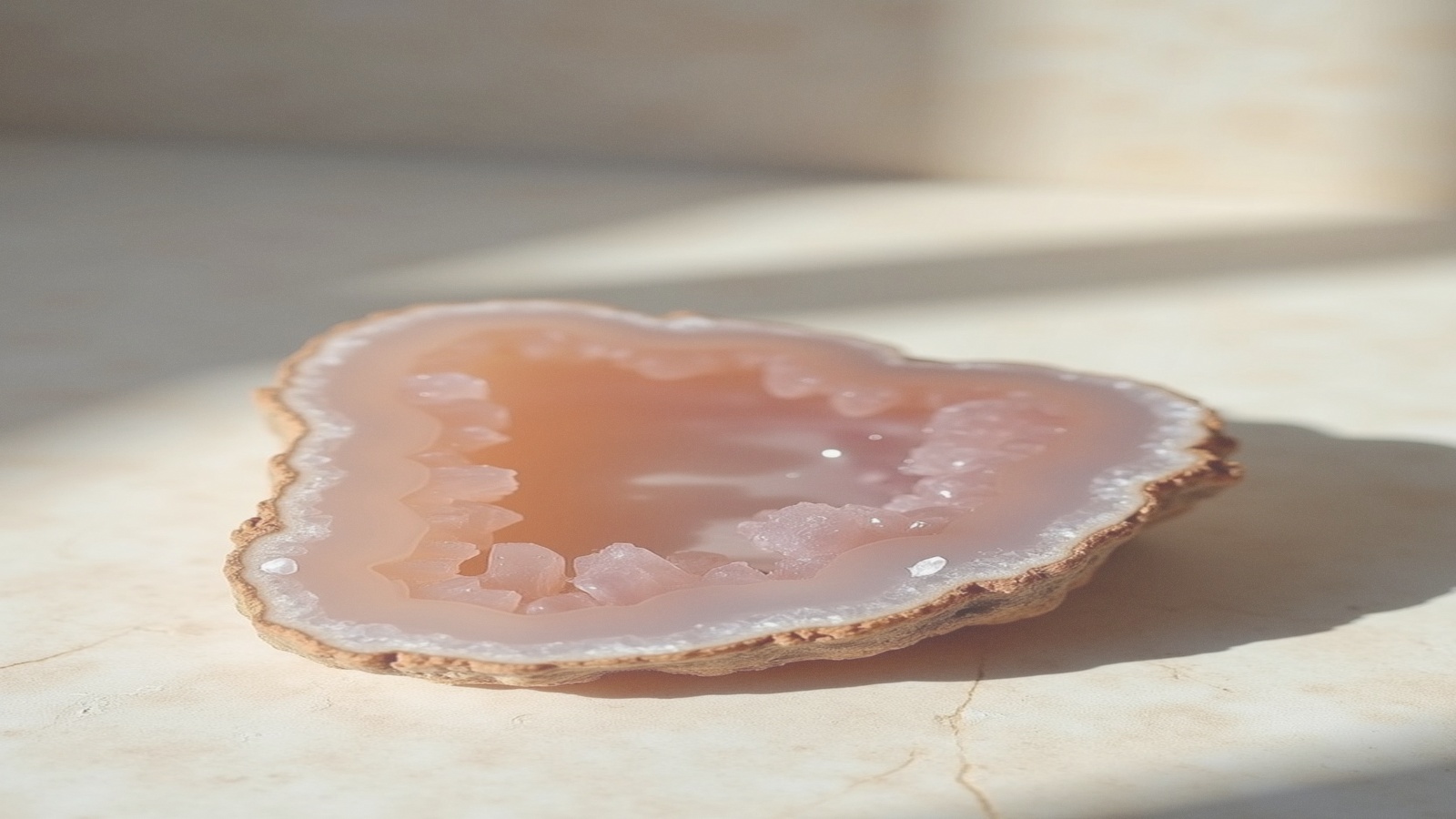
Table of Contents
- 10-Second Executive Summary / The Verdict Box
- What Is Agate Crystal? A Clear, Simple Definition
- Agate Meaning: Stability, Strength, and Protection
- Emotional Balance and Grounding
- Confidence, Self-Acceptance, and Relationships
- Agate Types and Colors: A Quick Field Guide
- Everyday Uses for Agate Crystal
- Wearing Agate Jewelry
- Home and Workspace Placement
- Meditation, Journaling, and Creative Work
- How to Choose Quality Agate and Spot Treated Stones
- Step-by-Step Checklist: Is This Agate Natural, Dyed, or Filled?
- Frequently Asked Questions
- What does an agate crystal mean and what is it good for?
- Is agate a real crystal or just a stone?
- How do I tell real agate from treated or fake agate?
- Sources
Agate crystal is a banded variety of chalcedony, a fine-grained form of quartz, and people most often use it as a grounding, stabilizing stone in everyday life—worn as jewelry, placed on a desk, or held during meditation. Its layered bands form when silica-rich water deposits quartz in the cavities of volcanic rock, and the colors come from microscopic mineral inclusions such as iron oxide. In practical terms, agate is a durable, affordable, and endlessly varied stone that works well for daily wear and simple home rituals.
10-Second Executive Summary / The Verdict Box
- Direct Verdict: Agate is a real, natural mineral (banded chalcedony/quartz), not a synthetic or "fake" crystal. It is best chosen by banding clarity, color honesty, and absence of dye or polymer treatment.
- Mohs Hardness: Approximately 6.5–7 (quartz family), making it suitable for everyday jewelry with reasonable care.
- Composition: Fine-grained quartz (chalcedony) with concentric color banding; colors often caused by iron oxide inclusions.
- Geological Origin: Commonly forms in cavities within volcanic rock where silica-rich water deposits quartz over time.
- Best For: Grounding rituals, desk or home placement, meditation anchors, and durable everyday wear.
- Quality Standard: Look for natural banding, honest color, and stones meeting the Lumina Grade AAA Integrity Standard—natural rough, no polymer filling, no irradiation or dye.
What Is Agate Crystal? A Clear, Simple Definition
Agate is a fine-grained variety of quartz known as chalcedony that shows concentric color banding, according to the Smithsonian National Museum of Natural History. The bands are not paint or decoration—they are structural layers of silica deposited over time, with color often coming from microscopic iron oxide minerals trapped inside the quartz. Most agate forms in cavities in volcanic rock, where silica-rich water slowly deposits quartz layer by layer.
So yes, agate is a real crystal in the mineral sense: it belongs to the quartz family. It is simply the banded, microcrystalline branch of that family rather than a single transparent point.
Agate Meaning: Stability, Strength, and Protection
In crystal traditions, agate is most often associated with stability, steady strength, and gentle protection. These are cultural and symbolic meanings, not medical claims—agate may support a felt sense of calm or focus for some people, but it does not treat or cure anything.
Emotional Balance and Grounding
Agate's layered, grounded appearance is often associated with emotional steadiness. Many people keep a piece nearby during stressful transitions—moving homes, starting a job—as a simple tactile reminder to slow down and breathe. The stone itself does not regulate emotions; the ritual of pausing with it may support a calmer frame of mind.
Confidence, Self-Acceptance, and Relationships
Because agate is common, affordable, and visually varied, it is often associated with self-acceptance and quiet confidence rather than rarity or status. Some wearers use it as a personal anchor for speaking honestly or setting boundaries. These are symbolic uses; treat them as personal reminders rather than guaranteed effects.
Agate Types and Colors: A Quick Field Guide
Agate appears in dozens of trade names, but most fall into a few practical categories:
- Banded agate: The classic concentric or parallel bands in white, gray, brown, or blue-gray. The most recognizable form.
- Blue lace agate: Pale blue with fine white banding; often chosen for a softer, calmer aesthetic.
- Moss and tree agate: Green dendritic inclusions that look like moss or branches; visually distinct from banded agate.
- Fire agate: Iridescent brown-gold layers from iron oxide; prized for color play rather than banding.
- Crazy lace agate: Dense, intricate lace-like patterns; often associated with playful, expressive energy.
Color choice is largely aesthetic and symbolic. Pick the type whose pattern you genuinely enjoy looking at—you will use it more consistently if it feels right to you.
Everyday Uses for Agate Crystal
Wearing Agate Jewelry
At roughly 6.5–7 on the Mohs scale, agate is hard enough for rings, pendants, and bracelets with normal care. Remove it before heavy lifting, harsh cleaning chemicals, or long hot showers, and store it apart from harder stones like diamond or sapphire to avoid surface scratches. For many people, a simple agate pendant is the easiest daily grounding reminder.
Home and Workspace Placement
Place agate where you naturally pause: a desk corner, an entryway tray, or a bedside table. A banded slice works well as a visual anchor in a workspace, while a small tumbled piece fits in a pocket or on a keyboard shelf. Keep it out of direct, prolonged sunlight if the color is dye-sensitive, and dust it with a dry cloth.
Meditation, Journaling, and Creative Work
Hold a smooth tumbled agate during meditation or place it beside your journal as a cue to begin. Some writers use it as a "start stone"—pick it up, write one sentence. Because agate is inexpensive, it is a low-pressure tool for building small rituals rather than a precious object you feel anxious about.
A related stone-family option
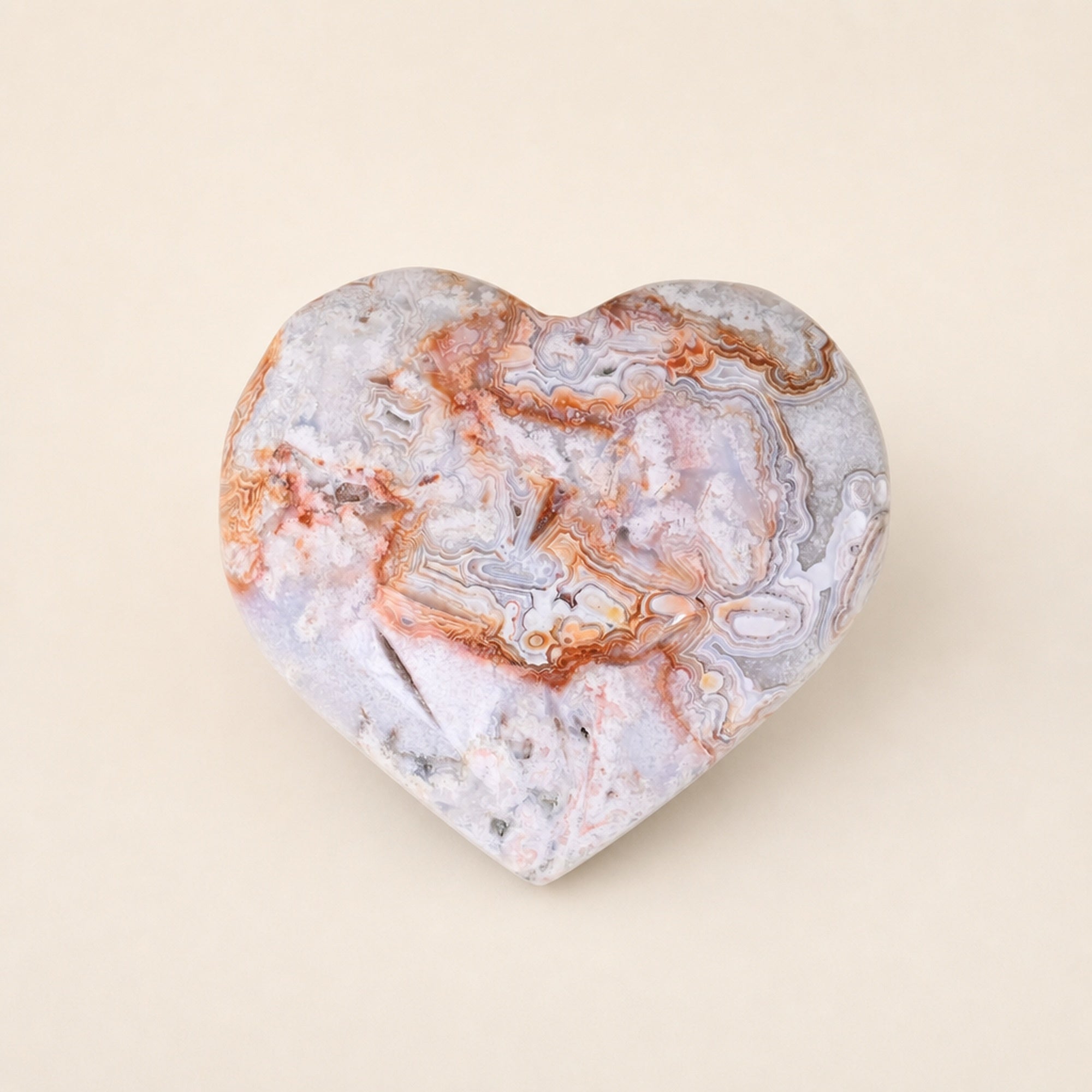
Crazy Lace Agate Heart Stone – Joyful Movement
This is a related variety in the same stone family, not a Agate product. We only identify jewelry as Agate when that exact material is verified.
Explore this related optionHow to Choose Quality Agate and Spot Treated Stones
Agate is porous, and coloring agate with dyes has been a documented practice for centuries—historic sources describe coloring fluids penetrating agate because of its porosity, as recorded in historic methods of artificially coloring agates. That means bright, uniform, or "too perfect" colors are a signal to ask questions, not necessarily to reject the stone—dyed agate is common and legal, but it should be disclosed.
At Lumina Quartz, we apply the Lumina Grade AAA Integrity Standard when selecting agate: natural rough, no polymer or resin filling, and no irradiation or dye enhancement. Use these checks when shopping anywhere:
Step-by-Step Checklist: Is This Agate Natural, Dyed, or Filled?
- Look at the banding first. Natural agate bands are irregular, with slight width and color shifts. Perfectly even bands plus uniform saturated color often indicate dye.
- Check color at the surface vs. inside cracks. Dye tends to concentrate in cracks and pores, appearing darker along fractures than in the body of the stone.
- Ask about treatment directly. A reputable seller will state whether a stone is natural, dyed, heat-treated, or polymer-filled. Silence is not confirmation of "natural."
- Weigh surface feel. Polymer-filled or "stabilized" stones can feel slightly waxy or plastic-like and may show a faint seam. Natural agate feels cool and stone-like.
- Test with a small, hidden spot. A cotton swab with a little acetone on an inconspicuous area may lift dye on some stones—if color transfers, treat it as dyed.
- Compare price to rarity. Vivid, uniform blue or pink agate at a very low price is usually enhanced; natural vivid tones are rarer and priced accordingly.
- Confirm hardness behavior. Real agate (Mohs ~6.5–7) will not scratch with a fingernail; if it scratches easily, question the material.
Boundary note: These checks are practical heuristics, not lab certification. For high-value pieces, request a gemological report.
If you are choosing your first piece, start with a natural banded agate in a color you love, sized for daily wear—then let the ritual, not the rarity, do the work.
Frequently Asked Questions
What does an agate crystal mean and what is it good for?
Agate is traditionally associated with stability, grounding, and gentle protection, and it is often used as a personal anchor for calm focus. It is best understood as a symbolic and decorative stone rather than a treatment for any condition.
Is agate a real crystal or just a stone?
Agate is a real mineral: a banded, fine-grained variety of quartz called chalcedony, with natural concentric bands and colors from mineral inclusions. "Crystal" and "stone" both apply loosely—agate is simply the banded quartz family member.
How do I tell real agate from treated or fake agate?
Check for irregular natural banding, color that does not concentrate in cracks, a cool stone feel, and a seller who discloses dye, heat, or polymer treatment. Under the Lumina Grade AAA Integrity Standard, natural rough with no filling, irradiation, or dye is the benchmark to ask for.
Sources
- Smithsonian National Museum of Natural History — Quartz (var. agate)
- Mindat — Historic Methods of Artificially Coloring Agates (Daniel Russell)
© 2026 Lumina Quartz. This guide shares mineral facts and cultural symbolism; it is not medical advice. Crystal meanings are personal and symbolic, and individual experiences may vary.