The Complete Everyday Guide to Clear Crystal Quartz: Meaning and Uses
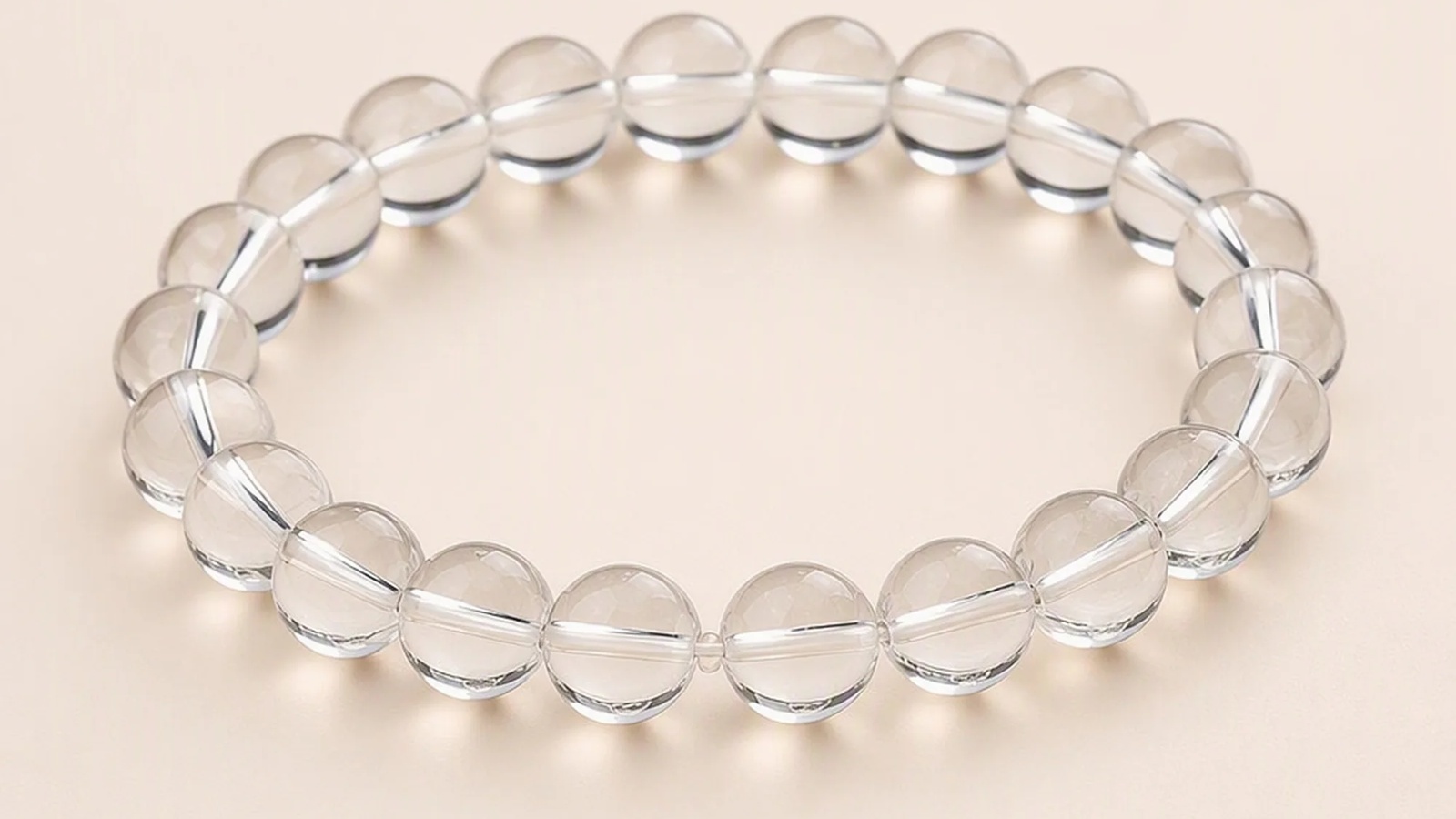
Table of Contents
- What Is Clear Crystal Quartz? Rock Crystal, SiO2, and How It Forms
- What Is Clear Crystal Quartz? Rock Crystal, SiO2, and How It Forms
- Clear Quartz Meaning: The "Master Healer" in Crystal Lore (and What It Isn't)
- Clear Quartz Properties and Identification: Hardness 7, Hexagonal Prisms, and Telling Real From Glass
- The Real-vs.-Lookalike Step-by-Step Checklist
- Everyday Uses: Jewelry, Home Décor, Meditation, and Gifting
- Clear Quartz vs. Other Quartz Varieties: Milky, Smoky, Amethyst, and Rutilated
- Clear Quartz Care: Water, Salt Water, Cleaning, and Storage
- Buying Clear Crystal Quartz: Value Factors, Price Ranges, and What to Look For
- FAQ: Quick Answers on Clear Crystal Quartz
- Is clear crystal quartz the same as rock crystal and crystal quartz?
- How can I tell if clear quartz is real versus glass or synthetic quartz?
- What does clear quartz mean spiritually, and is it safe to use in water or salt water?
- Sources
What Is Clear Crystal Quartz? Rock Crystal, SiO2, and How It Forms
Clear crystal quartz is the colorless, transparent variety of crystalline quartz (silicon dioxide, SiO₂) — and yes, "rock crystal," "crystal quartz," and "clear quartz" all refer to the same material. Pure quartz contains no coloring impurities, so it forms clear, glassy hexagonal prisms; tiny traces of other elements are what create colored quartz varieties like amethyst and smoky quartz, according to the Smithsonian National Museum of Natural History.
10-Second Executive Summary / The Verdict Box
- Direct Verdict: Clear crystal quartz is natural, colorless crystalline quartz — an abundant, affordable gem material that is generally untreated (no color treatments needed, since it is naturally colorless).
- Mohs Hardness: 7
- Specific Gravity: 2.63–2.65 | Refractive Index: 1.544–1.553 | Birefringence: Weak (0.009) | Crystal Structure: Hexagonal
- Best For: Everyday jewelry, faceted gems, home décor, meditation or mindful-ritual use, and gifts — especially where transparency and sparkle matter more than rarity.
- Skip It If: You want a rare collector gem; clear quartz is common and inexpensive in large sizes.
- Buying Standard: Look for natural, un-dyed, un-irradiated, filler-free stones — the benchmark we call the Lumina Grade AAA Integrity Standard.
What Is Clear Crystal Quartz? Rock Crystal, SiO2, and How It Forms
Quartz is one of the most common minerals on Earth — a major component of beach sand and an important mineral in rocks such as granite. In its pure state it is colorless, and clear quartz forms large, often very transparent crystals with a hexagonal structure. Because it grows in such large sizes, colorless quartz frequently serves as an inexpensive alternative to other colorless gemstones, per the International Gem Society.
Doubly terminated rough crystals — points at both ends — are somewhat rare and prized by collectors. Enthusiasts sometimes call them "Herkimer diamonds," though the name properly refers to crystals from Herkimer, New York, where they occur in abundance. The distinction matters when you shop: a doubly terminated crystal from another locality is beautiful, but it is not a Herkimer by origin.
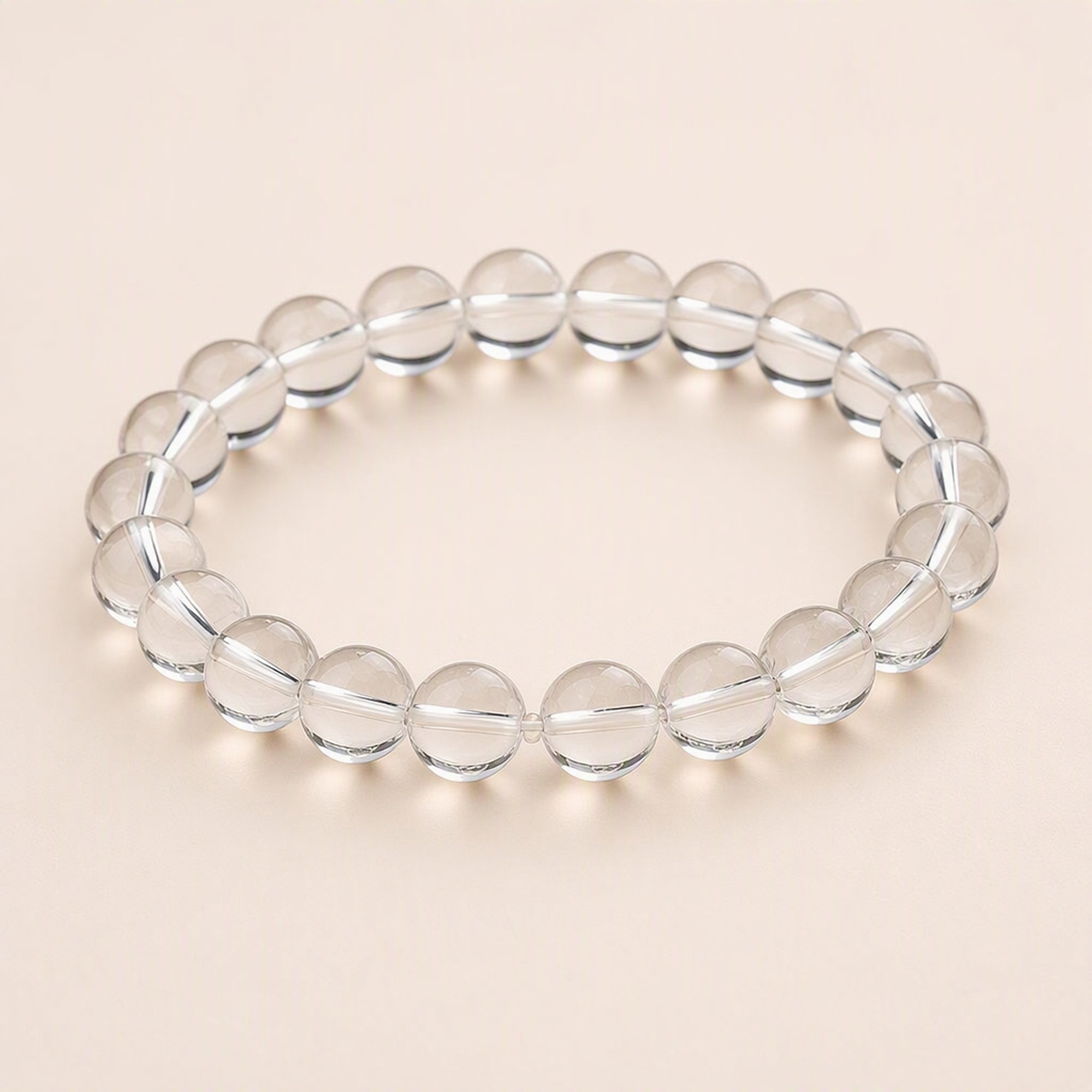
Clear Quartz Bracelet
A quiet bracelet for turning this intention into a small daily ritual.
Shop This Authentic Piece →Clear Quartz Meaning: The "Master Healer" in Crystal Lore (and What It Isn't)
In crystal lore, clear quartz is often called the "master healer" — a nickname rooted in its transparency, its ability to carry and refract light, and its long cultural association with clarity and intention. Quartz is also one of the most widely used gem materials across cultures, with varieties like amethyst, citrine, rose quartz, and smoky quartz appearing throughout jewelry history (Smithsonian).
Here is the honest boundary: these meanings are cultural and symbolic. Clear quartz is often associated with focus and clarity in personal rituals, and people may use a stone as a reminder for meditation or intention-setting — but there is no scientific basis for claims that it heals the body or regulates mood. It is a mineral with a beautiful structure and a rich symbolic life, and it is fine to enjoy both without confusing one for the other.
To separate the layers cleanly:
- Verified mineral facts: SiO₂ composition, Mohs 7 hardness, hexagonal crystals, weak double refraction, no cleavage.
- Cultural symbol: associations with clarity, light, and intention in crystal traditions.
- Not supported: medical, therapeutic, or physiological effects of any kind.
Clear Quartz Properties and Identification: Hardness 7, Hexagonal Prisms, and Telling Real From Glass
Physically, clear quartz is straightforward to identify if you know what to check. Its Mohs hardness of 7 means it will scratch glass (hardness about 5.5) but not scratch a steel file, and it has no cleavage — it breaks with a conchoidal fracture, like glass, but its crystal structure tells a different story. Its refractive index is 1.544–1.553, and it shows weak birefringence (double refraction), which natural quartz can display under the right light and orientation (International Gem Society).
Clear quartz is generally untreated, since it is naturally colorless — which is precisely why "treated or not" matters less here than in colored stones, and why the quality standard should be about integrity: natural rough, no chemical filler (such as resin-filled cracks), and no irradiation or dye processes. That is the core of our Lumina Grade AAA Integrity Standard.
The Real-vs.-Lookalike Step-by-Step Checklist
Use this sequence when evaluating a clear quartz specimen or stone. Start at the top; a failure at any step warrants a closer look.
- Check temperature and weight. Natural quartz feels noticeably cool to the touch and has a specific gravity of 2.63–2.65 — it feels denser and "heavier" in hand than glass of the same size.
- Look for natural inclusions. Internal veils, tiny bubbles in lines, and growth lines are often present in natural quartz. Perfectly flawless, fully uniform material at a very low price is a warning sign — flawless natural quartz exists but commands higher value.
- Test the scratch response carefully. Quartz (Mohs 7) can scratch glass; glass cannot scratch quartz. Do not do this on a finished gemstone face — test on an inconspicuous area or ask a jeweler.
- Examine the termination. Natural crystal points show asymmetrical, uneven terminations and growth striations on the prism faces. Molded glass or synthetic rough tends to look too regular.
- Confirm transparency and sparkle. High-transparency rough should sparkle with clean light return; hazy, dull stones may be lower grade or resin-filled — a common shortcut that falls outside the Lumina Grade AAA Integrity Standard.
Boundary note: This checklist supports everyday confidence, not lab certification. For high-value purchases, a gemologist's report is the appropriate next step.
Everyday Uses: Jewelry, Home Décor, Meditation, and Gifting
Clear quartz's affordability and hardness make it unusually practical. It cuts and polishes easily, tolerates everyday wear better than softer stones, and faceted large clear quartz "is actually pretty impressive," per the International Gem Society's faceting notes. Practical uses include:
- Jewelry: faceted stones, pendants, and beads — durable for daily wear with care.
- Home décor: crystal points, spheres, and clusters as light-catching objects; a transparent crystal in a sunlit room is a visual anchor, not a wellness device.
- Meditation and mindful ritual: holding or placing a crystal as a symbolic reminder of an intention you set for yourself is a common cultural practice; no physiological effect is claimed.
- Gifting: a clean, transparent, well-cut piece is a thoughtful, affordable gift — transparency reads as simplicity and sincerity.
Clear Quartz vs. Other Quartz Varieties: Milky, Smoky, Amethyst, and Rutilated
All of these are quartz; the difference is impurity and inclusion, as the Smithsonian collection explains. Small amounts of impurities yield vivid colors and patterns: milky white comes from tiny gas or liquid bubbles; pink tones from titanium, iron, or manganese; and clear quartz is the impurity-free baseline.
| Variety | What Makes It Different | Practical Note |
|---|---|---|
| Clear quartz (rock crystal) | No coloring impurities; colorless and transparent | Most affordable, most versatile; best light return |
| Milky quartz | Microscopic gas or liquid bubbles create opacity | Softer visual read; often used in décor |
| Smoky quartz | Gray-brown color from natural irradiation or impurities | Color is the value driver; confirm whether it is natural |
| Amethyst | Purple from trace iron and natural irradiation | Untreated natural color commands premium |
| Rutilated quartz | Needle-like rutile inclusions inside clear quartz | Inclusions are the feature — clarity of the host adds value |
If you want a stone for pure transparency and faceting, clear quartz wins on cost and clarity. If you want color or inclusion character, choose the variety deliberately and ask about treatment — a standard consistent with the Lumina Grade AAA Integrity Standard.
Clear Quartz Care: Water, Salt Water, Cleaning, and Storage
Quartz is generally safe around water — it is not water-soluble — but "safe" has limits. For jewelry, remove pieces before swimming in chlorinated pools or soaking in salt water for long periods; metals and fittings suffer far more than the stone. For clearing a crystal, plain water and a soft cloth are enough.
Care steps that actually matter:
- Clean with lukewarm water and a drop of mild soap if needed, then dry with a soft cloth.
- Avoid harsh chemicals and ultrasonic cleaners unless a jeweler confirms your setting can handle them.
- Store separately from softer stones — Mohs 7 quartz can scratch opals, pearls, and softer gems.
- Avoid prolonged salt-water soaks for pieces with metal settings.
- Skip salt-water rituals on high-clarity stones if you want to preserve surface polish; repeated abrasion dulls edges.
Buying Clear Crystal Quartz: Value Factors, Price Ranges, and What to Look For
Clear quartz is common and can be cut and polished easily, and the International Gem Society notes that faceting material costs almost nothing relative to most colored gems. That means value depends less on the stone's rarity and more on quality of the individual piece. The price ranges below are reference points that vary widely by market, size, and retailer — treat them as a shopping compass, not a quote.
| Category | Key Value Factor | What to Look For | Typical Range (Reference) |
|---|---|---|---|
| Tumbled / raw pieces | Transparency and size | Clean surfaces, no resin-filled cracks | Low, entry-level |
| Faceted stones | Cut precision and clarity | Even facets, strong sparkle, no visible inclusions to the eye | Low to moderate |
| Display points / clusters | Natural form and termination | Symmetric prism faces, clear growth lines, undamaged tip | Moderate, size-dependent |
| Doubly terminated crystals | Rarity of form | Both ends pointed; verify locality claims (e.g., "Herkimer") | Premium over single points |
Ask directly about treatment: dye, irradiation, and resin filling are the three shortcuts to avoid. "Generally untreated" is the default for clear quartz, but a seller who confirms natural rough and zero filler meets the Lumina Grade AAA Integrity Standard. Buy from sellers who answer these questions plainly.
FAQ: Quick Answers on Clear Crystal Quartz
Is clear crystal quartz the same as rock crystal and crystal quartz?
Yes — rock crystal, crystal quartz, and clear quartz all describe the same colorless, impurity-free form of crystalline quartz.
How can I tell if clear quartz is real versus glass or synthetic quartz?
Real quartz feels cool and dense (specific gravity 2.63–2.65), often shows growth lines or natural inclusions, and can scratch glass thanks to Mohs hardness 7; perfectly uniform, flawlessly clear stones at a very low price deserve extra scrutiny.
What does clear quartz mean spiritually, and is it safe to use in water or salt water?
Its "master healer" meaning is cultural and symbolic — often associated with clarity and intention, with no proven physiological effects; plain water is safe for the stone, but avoid prolonged salt-water soaks, especially on metal settings.
Sources
- Crystalline Quartz Buying Guide — International Gem Society
- Clear Quartz Facet / Faceting Information — International Gem Society
- Collection – All Sorts of Quartz — Smithsonian National Museum of Natural History
© 2026 Lumina Quartz. Mineral properties are described from the sources above; crystal meanings are presented as cultural symbolism, not medical or scientific claims.
Product Facts From the Current Catalog
These details come from the active Lumina Quartz catalog record checked on 2026-11-19. They are product-listing facts, not laboratory results or invented wear-test claims.
| Listed product | Clear Quartz Bracelet – Focused Intention |
|---|---|
| Format | Bracelet |
| Listed price snapshot | 34.99 |
Price, availability, and options may change. Check the live product listing before choosing.