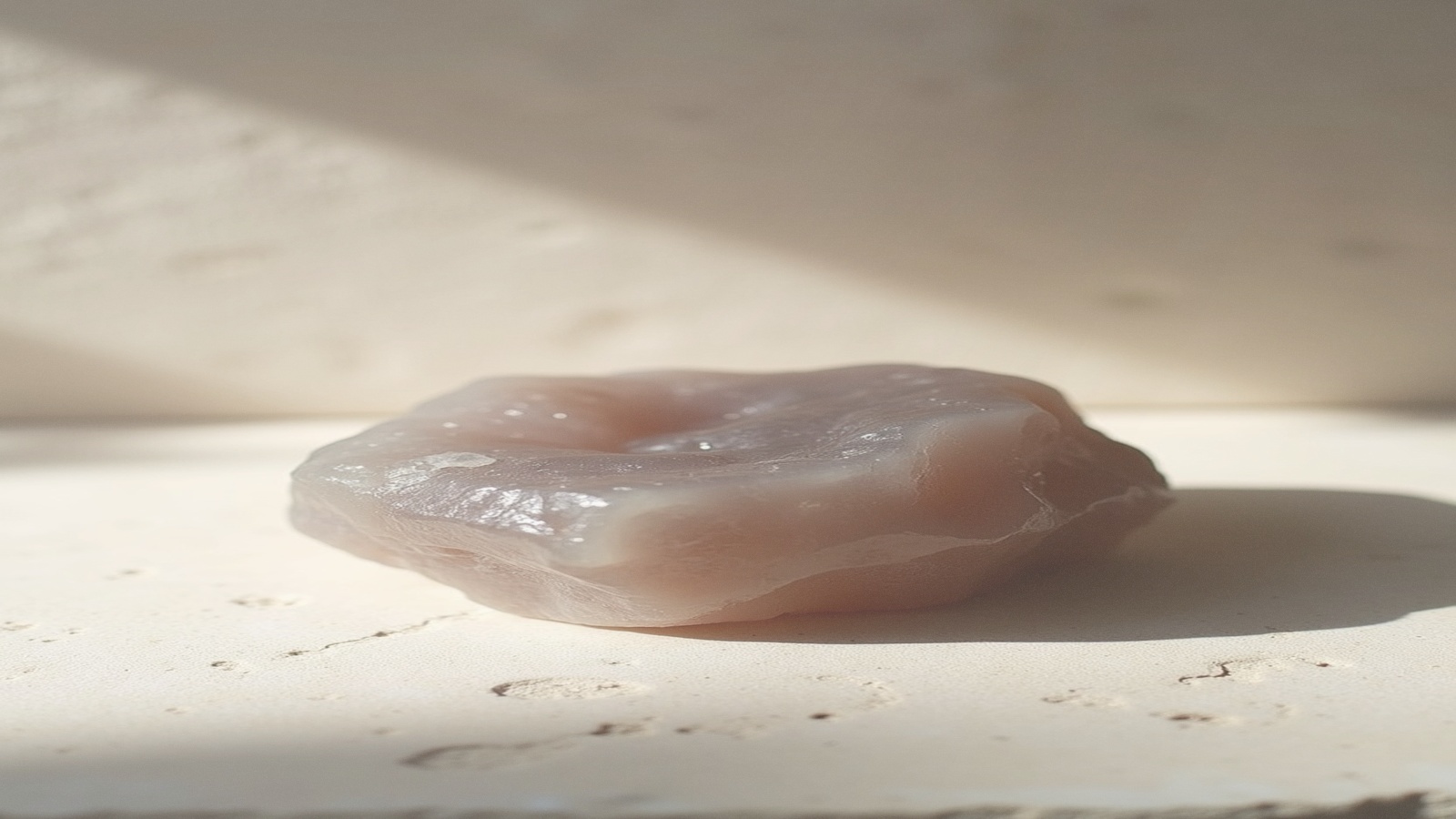
Onyx stone is a banded variety of chalcedony—the cryptocrystalline form of quartz—recognized by its parallel, straight layers and waxy-to-glossy luster. It is not the same material as most modern carved "onyx marble," which is banded calcite; true onyx is quartz-family silica (SiO₂) with a hardness that makes it suitable for jewelry and durable objects, while calcite onyx is softer carbonate rock used mainly for decorative carving.
10-Second Executive Summary / The Verdict Box
- Direct Verdict: True onyx is banded chalcedony (quartz family); banded calcite sold as "onyx marble" is a different, softer material. Know which one you are buying.
- Mohs Hardness: True onyx (chalcedony) ≈ 6.5–7; banded calcite ("onyx marble") ≈ 3. Confirm against a mineral reference before purchase.
- Composition: Silicon dioxide (SiO₂), cryptocrystalline; banding runs in straight, parallel layers.
- Best For: Statement and signet-style jewelry, cabochons, small carvings, and décor where hardness matters.
- Buying Standard: Look for natural layering and honest disclosure—our Lumina Grade AAA Integrity Standard means natural origin, zero polymer/resin stabilization, and no irradiation or dye enhancement.
What Is Onyx Stone? Definition, Composition, and the Quartz Connection
Onyx is defined by its banding: thin, straight, parallel layers of chalcedony in contrasting tones—classically black and white, but also brown, red, and grey. Because chalcedony is microcrystalline quartz, true onyx belongs to the same mineral family as agate and carnelian. Historical references describe a traditional treatment in which layered stone was soaked in sugar solution and then acid to darken the bands—a reminder that enhanced black onyx has a long commercial history, not just a modern one (see Mindat: Onyx mineral information).
Onyx vs. Banded Calcite ("Onyx Marble") and Agate
This is the single most useful distinction a buyer can learn. The name "onyx" has become confused with other banded materials—particularly banded calcite formed in cave systems, such as material from Mexico and Pakistan. Much of the carved material sold today (bookends, chess sets, and similar décor) is actually this carbonate rock, not quartz onyx (per Mindat). The Smithsonian has documented "onyx marble" as a distinct commercial stone with its own origins and uses (Smithsonian repository).
Compare that with agate: both are chalcedony, but agate banding is typically curved and irregular, while onyx banding is straight and parallel. Practically: onyx points to straight-line layering; agate points to curved banding.
Decision Table: Which Banded Stone Am I Actually Holding?
| Material | Visual Banding | Hardness (Mohs) | Typical Use | Care Implication |
|---|---|---|---|---|
| True onyx (chalcedony/quartz) | Straight, parallel, often sharp contrast | ≈ 6.5–7 | Jewelry, cabochons, small hardstone objects | Resists scratches; avoid harsh acids and thermal shock |
| Banded calcite ("onyx marble") | Straight to wavy; often softer translucency | ≈ 3 | Carved décor: bookends, chess sets, bowls | Scratches easily; keep away from acidic cleaners |
| Agate (also chalcedony) | Curved, concentric, irregular | ≈ 6.5–7 | Beads, slices, decorative objects | Durable; standard gentle care |
How to use it: If the piece is heavily carved décor and the price seems low for quartz, test hardness on an inconspicuous spot—calcite can be scratched by a copper coin, chalcedony cannot. When disclosure is unclear, apply the Lumina Grade AAA Integrity Standard: natural origin, no polymer stabilization, no irradiation or dye.
Onyx Stone Meaning and Symbolism Through History
Culturally, onyx is often associated with protection, grounding, and boundaries—themes that belong to symbol and personal ritual, not to mineral function. Historically, sardonyx (sard and onyx layered together) was a favored stone for Roman seals and signet rings because hot wax would not stick to it, as noted by the Gemological Institute of America. That practical story—a stone for sealing and marking—is a beautiful root for the modern habit of carrying onyx as a reminder of commitments and clear edges.
Colors and Varieties of Onyx
Natural onyx appears in black, white, brown, red, and grey banding combinations. Black onyx in the market is frequently dyed or heat-treated for uniform color; brownish-red sardonyx reflects the natural sard layers described by GIA. The Smithsonian's historical survey of onyx marbles also documents how varied the commercial "onyx" trade has been, which is why transparent color disclosure matters (Smithsonian).
Everyday Uses of Onyx Stone
Jewelry and Wearables
Onyx is valued for its bold, elegant look and has often been used in vintage or statement jewelry as an affordable, stylish substitute in black-stone designs (GIA notes this context in its black diamond guide). In practice, onyx works well in signet-style rings, cabochon pendants, and beaded pieces—forms that suit its hardness and its straight-line banding.
Home Decor and Décor Pieces
For décor, the material question is decisive: carved bookends, chess sets, and bowls are often banded calcite rather than true onyx (Mindat). If you want the look with quartz durability, ask for the mineral name in writing before you buy.
How to Identify and Care for Onyx
Identification steps: (1) Look for straight, parallel bands—curved bands suggest agate. (2) Ask whether the color is natural, dyed, or irradiated; uniform jet-black is commonly enhanced. (3) Check hardness on an inconspicuous area if possible—calcite scratches where chalcedony does not. (4) Request mineral disclosure rather than a trade name. At Lumina, the Lumina Grade AAA Integrity Standard is our shorthand for the first two questions answered with a firm yes: natural, and untreated.
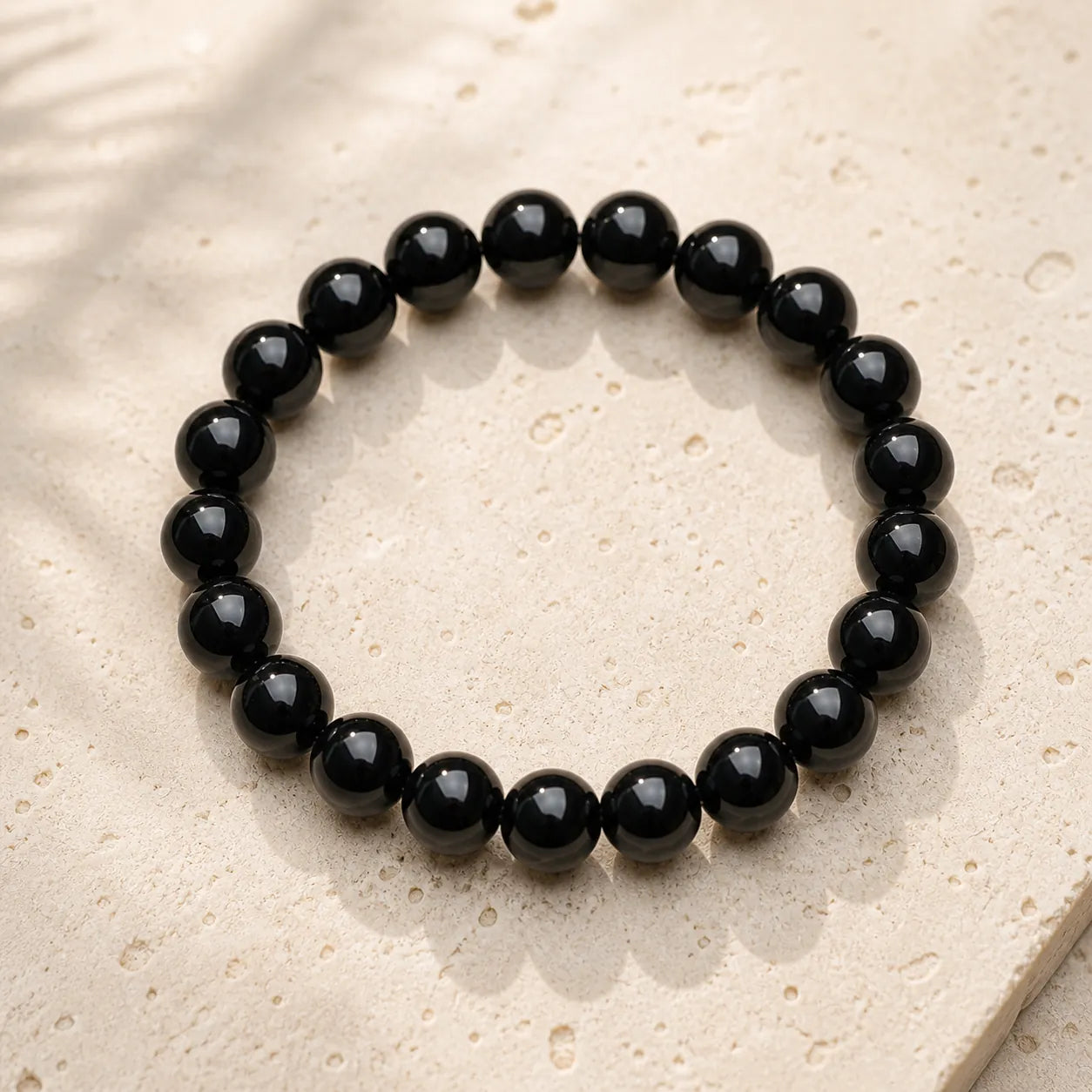
A related intention option
Black Obsidian Protection Bracelet
This is a related grounding, protection option, not a Onyx product. We only identify jewelry as Onyx when that exact material is verified.
Explore this related optionCare: Clean with lukewarm water and a soft cloth; avoid prolonged soaking, ultrasonic cleaners for treated stones, and household acids. Store onyx jewelry separately to prevent surface scuffs, and keep calcite "onyx marble" pieces away from acidic cleaners entirely. These are care practices, not treatment claims.
Buying Onyx: What to Look For and How to Style It
Buy the banding first: a true onyx piece shows crisp, straight layers that read clearly even in low light. Ask for the mineral identity—chalcedony or calcite—on the receipt. For styling, black onyx pairs naturally with silver and matte textures for a grounded, architectural look; brown-and-white sardonyx suits warm metals. If color matters to you as a symbol, a natural banding pattern often feels more personal than a uniform dye—though neither is wrong, only differently honest.
FAQ: Common Questions About Onyx Stone
What is onyx stone, and is it a true quartz?
True onyx is banded chalcedony, a cryptocrystalline form of quartz (SiO₂). Most carved "onyx marble" décor is banded calcite, a softer carbonate—so the label alone does not confirm quartz.
What does onyx stone mean or symbolize?
It is often associated with protection, grounding, and boundaries, with sardonyx historically used for Roman seals and signet rings. These are cultural and personal associations, not physical effects.
How can I tell real onyx from dyed or imitation onyx?
Look for straight, parallel natural banding and ask for explicit treatment disclosure; uniform black is often dyed or irradiated. Under the Lumina Grade AAA Integrity Standard, natural origin with zero chemical stabilization or irradiation is the benchmark.
How do I care for and clean onyx stone?
Use lukewarm water and a soft cloth, avoid acidic cleaners and ultrasonic cleaning for treated pieces, and store jewelry separately. Banded calcite décor needs extra gentleness because of its lower hardness.
Sources
- Mindat — Onyx: Mineral information, data and localities
- GIA — August Birthstones: Peridot & Spinel Birthstone Information
- GIA 4Cs — Black Diamond Buying Guide
- Smithsonian Institution — The Onyx Marbles: Their Origin, Composition, and Uses
© 2026 Lumina Quartz. Cultural and symbolic associations are offered for personal reflection and are not medical or therapeutic claims. Mineral properties are cited from the referenced sources.