The Complete Everyday Guide to Pyrite Crystal: Meaning and Uses
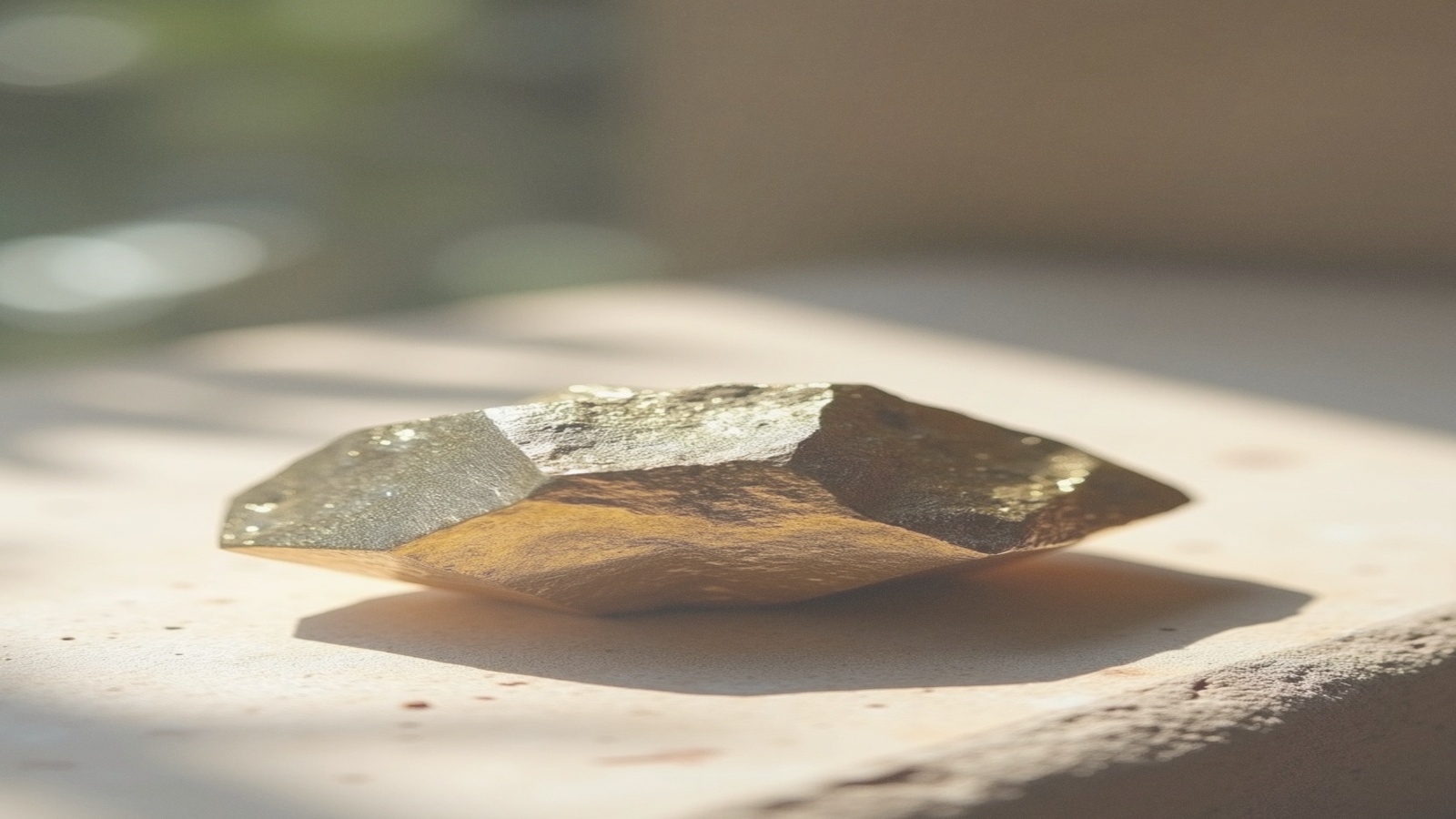
Table of Contents
- What Is Pyrite Crystal? Fool's Gold Explained
- 10-Second Executive Summary / The Verdict Box
- Pyrite Meaning and Metaphysical Properties
- Healing Benefits of Pyrite Crystal for Body, Mind, and Spirit
- Pyrite and the Chakras: Solar Plexus and Abundance Energy
- Everyday Uses: How to Wear, Display, and Work With Pyrite
- How to Cleanse, Charge, and Care for Pyrite (Water Caution)
- How to Choose Quality Pyrite Crystals: Shapes, Cuts, and Buying Tips
- Pyrite vs. Gold and Other Lookalikes
- Decision Table: Is Pyrite Right for Your Intention?
- FAQ
- What does pyrite crystal mean and what is it good for?
- How do you use or cleanse pyrite crystal in everyday life?
- Is pyrite the same as fool's gold and is it worth anything?
- Sources
What Is Pyrite Crystal? Fool's Gold Explained
Pyrite is an iron sulfide mineral with a metallic luster and a brassy yellow color that is very often mistaken for gold — which is exactly why it is commonly called "fool's gold." It is a very common mineral associated with other ore minerals, and it is easy to tell apart from real gold: pyrite is harder and resists scratching, and it feels lighter in heft than gold of the same size.
On the mineralogical side, pyrite is the isometric (cubic) polymorph of orthorhombic marcasite, though some material may appear pseudo-cubic or trigonal. In everyday terms, that means pyrite forms in clean, sharp cubic crystals and granular masses — a favorite among collectors because the geometry is so easy to read in the hand.
Because pyrite is so often the "almost" stone — almost gold, almost precious — it carries a useful symbolic teaching: value is not only in rarity. It is in clarity, honesty, and the willingness to look closely. That is the spirit in which we approach it here: mineral facts first, meaning second, and no inflated promises.
10-Second Executive Summary / The Verdict Box
- Direct Verdict: Pyrite crystal is a natural iron sulfide ("fool's gold") valued for its metallic golden luster and its long association with confidence, willpower, and abundance thinking — a symbolic companion, not a medical or financial tool.
- Mohs Hardness: Approximately 6–6.5 (harder than gold, which is about 2.5–3), so it resists scratching but can still be chipped by harder stones.
- Composition: Iron sulfide (FeS₂), isometric/cubic crystal system.
- Water Safety: Do not soak or cleanse in water — iron sulfide can oxidize, tarnish, or degrade with prolonged moisture.
- Best For: Desk and altar display, solar plexus–focused reflection, daily pocket or pendant wear (dry conditions), and abundance journaling rituals.
- Buying Standard: Look for natural, untreated specimens that meet the Lumina Grade AAA Integrity Standard — natural rough or polished material, no chemical resin filling, no irradiation, no dye.
Pyrite Meaning and Metaphysical Properties
In crystal tradition, pyrite is most often associated with the energy of "yes" — the spark of personal will, the courage to be seen, and a grounded confidence that does not need to shout. Its golden metallic surface has led many cultures to link it with prosperity symbolism, but it is worth being honest: this is cultural and symbolic meaning, not a guarantee of wealth or luck.
The name itself comes from the Greek pyr, meaning fire, because striking pyrite against metal can produce sparks. Historically, pyrite has been used in fire-starting and in decorative and metalwork contexts — a social and practical story that runs alongside its scientific story. That duality is part of its charm: pyrite is a working mineral, not a fragile ornament.
Many people keep pyrite nearby during goal-setting, presentations, or periods when they need to feel more decisive. We describe these as may support experiences of focus and self-trust — personal reminders, not clinical outcomes. If you are drawn to it, let the stone be a small anchor for intention rather than a promise of transformation.
Healing Benefits of Pyrite Crystal for Body, Mind, and Spirit
Let us be clear and kind at once: pyrite is not a treatment for any condition, and no crystal can regulate your nervous system or replace care from a qualified professional. What pyrite can do is serve as a tactile, visual cue — a reminder you choose to place in your environment.
- Body: Pyrite is often associated with vitality symbolism and physical momentum. In practice, people keep it near a workout area or desk as a visual prompt to move and begin.
- Mind: Its association with clarity and decisiveness may support a habit of pausing before a decision — the stone becomes a cue to think, not a decision-maker.
- Spirit: Pyrite is frequently used in intention-setting and gratitude practices. The reflective metallic surface invites a simple ritual: hold it, name one thing you are building toward, and set it down.
These are symbolic and personal uses. They are often associated with confidence and abundance themes in crystal literature, and they remain exactly that — meaningful rituals, honestly framed.
Pyrite and the Chakras: Solar Plexus and Abundance Energy
Pyrite is most commonly linked with the solar plexus chakra, the energy center traditionally associated with personal power, will, and self-esteem. Its golden color and steady weight make it a natural visual match for that theme — bright, central, and grounded rather than airy.
In practice, people place pyrite on or near the upper abdomen during quiet reflection, or simply hold it while journaling about confidence and boundaries. If abundance is your theme, pyrite is often paired with clear intention work: naming what "enough" means to you before asking for more.
A gentle note on tradition: chakra associations are cultural and symbolic frameworks, not measurable physiology. Use them if they help you focus; set them aside if they do not. Pyrite will not mind either way.
Everyday Uses: How to Wear, Display, and Work With Pyrite
Pyrite is unusually easy to live with because it is hard and visually striking, but its iron content means it prefers dry, stable conditions. Here is how to work with it without shortening its life:
- Wear it: A pyrite pendant or a tumbled stone in a closed pocket is fine for daily wear, but remove it before showering, swimming, or washing hands. Avoid prolonged skin contact with water and keep it away from perfume and household cleaners.
- Display it: A cubic cluster on a desk or shelf is where pyrite shines — literally. Keep it out of direct, long-term sunlight and away from humid rooms like bathrooms, since moisture encourages oxidation and tarnish.
- Work with it: Use pyrite as a "beginning" stone. Place it beside your laptop or notebook when you start a task, hold it for three slow breaths, and state one concrete next step. That is the whole ritual — simple, repeatable, honest.
- Pair it thoughtfully: For a grounding desk arrangement, pyrite pairs well with matte stones like hematite or smoky quartz; keep harder and softer stones from rubbing against each other in storage.
How to Cleanse, Charge, and Care for Pyrite (Water Caution)
This is the section where most pyrite advice goes wrong, so we will be direct: do not cleanse pyrite with water. Pyrite is iron sulfide, and moisture can promote oxidation — dulling the surface, creating tarnish, or in some conditions contributing to surface breakdown. Skip the soak, the saltwater bath, and the running-tap rinse.
Instead, use dry methods:
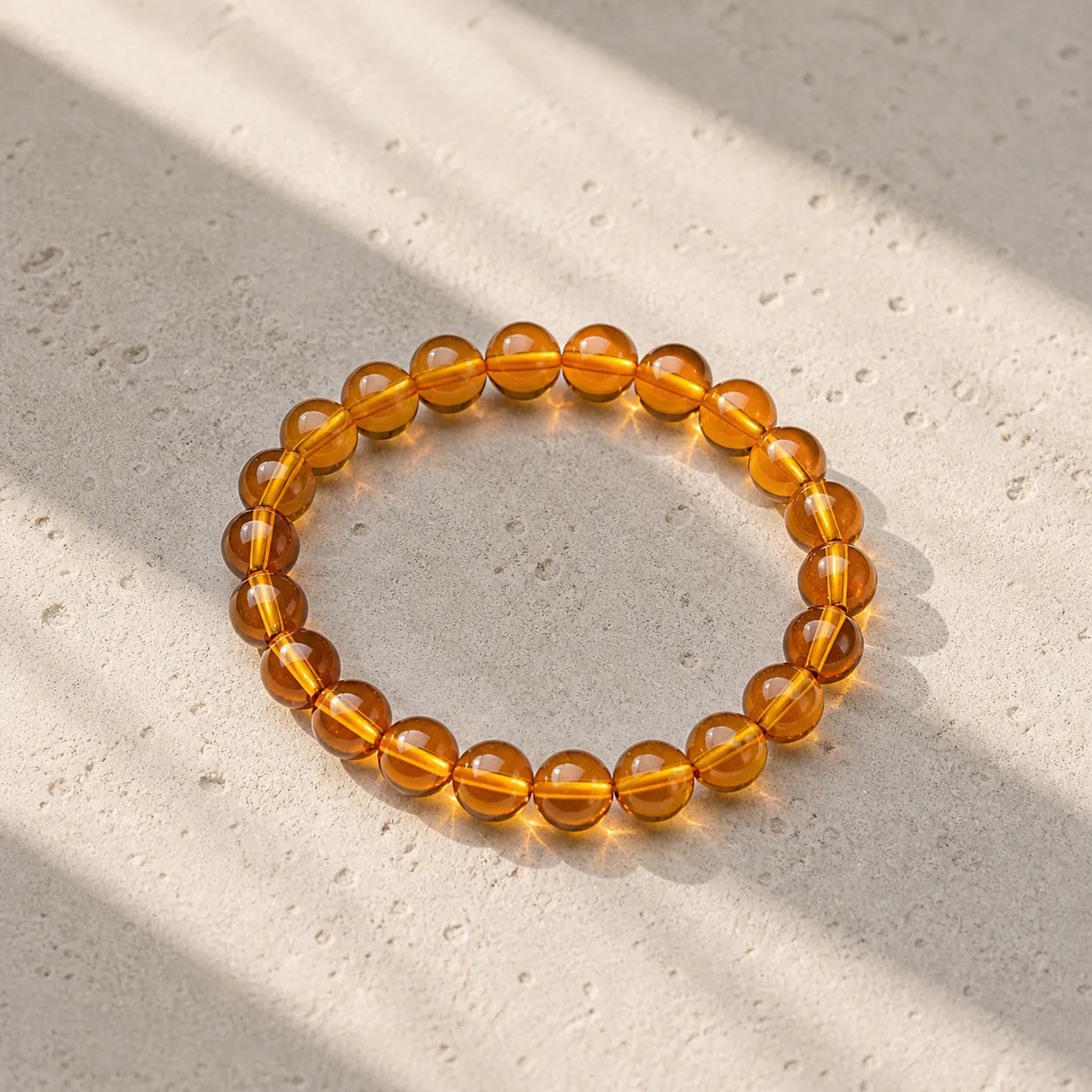
A related color-family option
Citrine Abundance Bracelet
This broader color-family option is not presented as Pyrite. We only identify jewelry as Pyrite when that exact material is verified.
Explore this related option- Dust and polish: Wipe with a soft, dry microfiber cloth. For fingerprints, a barely damp cloth is acceptable if you dry the stone immediately and thoroughly.
- Sound cleansing: A chime, bell, or singing bowl near the stone is a traditional, moisture-free option.
- Smoke or incense: A brief pass through incense smoke is a common dry ritual — keep the stone out of direct flame and ash.
- Moonlight or indirect light: A short rest near a window is fine; avoid prolonged direct sun, which can affect appearance over time.
- Storage: Keep pyrite in a dry box or pouch, ideally with a small silica packet in humid climates. Store it away from silver jewelry, since sulfur compounds can contribute to tarnish on nearby metals.
If a piece develops a white or powdery bloom, that is a sign of surface oxidation, not "energy buildup." Remove it from humid conditions, dry it gently, and consider a conservator's advice for valuable specimens.
How to Choose Quality Pyrite Crystals: Shapes, Cuts, and Buying Tips
Pyrite appears in several recognizable forms, and knowing them helps you buy with confidence:
- Natural cubic clusters: Sharp, striated cubes on matrix — the most collectible form and the easiest to verify as natural.
- Tumbled stones: Smooth, rounded pieces for pockets and grids; check for cracks filled with resin or dye.
- Polished specimens and spheres: Beautiful for display, but polish can mask treatments — ask questions.
- Jewelry settings: Look for closed or well-sealed settings to protect the stone from moisture.
At Lumina Quartz, we apply the Lumina Grade AAA Integrity Standard: natural, untreated pyrite — no chemical resin filling, no irradiation, and no dye. When buying, use this quick checklist:
- Does the seller state the material is natural and untreated, in writing?
- Are natural surface features (striations, small pits, matrix) visible, or does everything look suspiciously uniform?
- Is the color a believable brassy yellow, or an unnaturally bright, painted-looking gold?
- Can the seller explain how the piece should be stored and cleaned?
Quality is not about perfection. Real pyrite has character — and that character is exactly what a treatment tries to hide.
Pyrite vs. Gold and Other Lookalikes
The classic comparison is pyrite versus gold. Gold is much softer (roughly 2.5–3 on the Mohs scale) and noticeably heavier in the hand; pyrite is harder, resists scratching, and feels lighter. A simple field test is the streak and scratch test: pyrite is harder and will resist a scratch that would mark gold. Marcasite is the other common lookalike — it is the orthorhombic polymorph of the same iron sulfide, often forming paler, more brittle, spear-shaped crystals.
One honest answer to a common question: pyrite is not the same as gold and is not a precious metal — it is a common mineral with modest monetary value and high collector appeal. Its worth is aesthetic, educational, and personal.
Decision Table: Is Pyrite Right for Your Intention?
| Your Goal | Pyrite Fit | Why | Better Boundary |
|---|---|---|---|
| Daily confidence reminder | Strong fit | Hard, wearable, visually grounding; often associated with willpower themes | Remove before water exposure; choose a sealed setting |
| Desk or altar display | Excellent fit | Cubic clusters read clearly and need no upkeep beyond dry dusting | Keep away from humid rooms and direct sun |
| Water-based cleansing rituals | Poor fit | Iron sulfide can oxidize and degrade with moisture | Use sound, smoke, or dry cloth instead |
| Metal-value investment | Not a fit | Pyrite is a common mineral, not a precious metal | Buy for beauty and collection, not resale |
| Bathroom or spa display | Risky fit | Persistent humidity encourages tarnish and surface change | Choose a dry, ventilated spot |
FAQ
What does pyrite crystal mean and what is it good for?
Pyrite is often associated with confidence, personal will, and abundance symbolism. In daily practice, it works well as a visual reminder for goal-setting and decisive moments — a personal cue, not a medical or financial tool.
How do you use or cleanse pyrite crystal in everyday life?
Wear it dry, display it on a desk or shelf, and cleanse it with sound, smoke, or a dry cloth. Avoid water entirely, since iron sulfide can oxidize and dull with moisture.
Is pyrite the same as fool's gold and is it worth anything?
Yes — "fool's gold" is the common name for pyrite, which is easy to distinguish from gold because it is harder, resists scratching, and feels lighter. It is a common mineral with modest monetary value and strong collector appeal.
Sources
- Mindat: Pyrite — Mineral information, data and localities
- Smithsonian National Museum of Natural History: Pyrite
- Smithsonian Libraries: Pyrite [Fool's Gold]
This guide shares mineral facts and cultural symbolism for personal reflection. It is not medical, financial, or gemological advice. © 2026 Lumina Quartz.