The Complete Everyday Guide to Red Garnet Crystal: Meaning and Uses
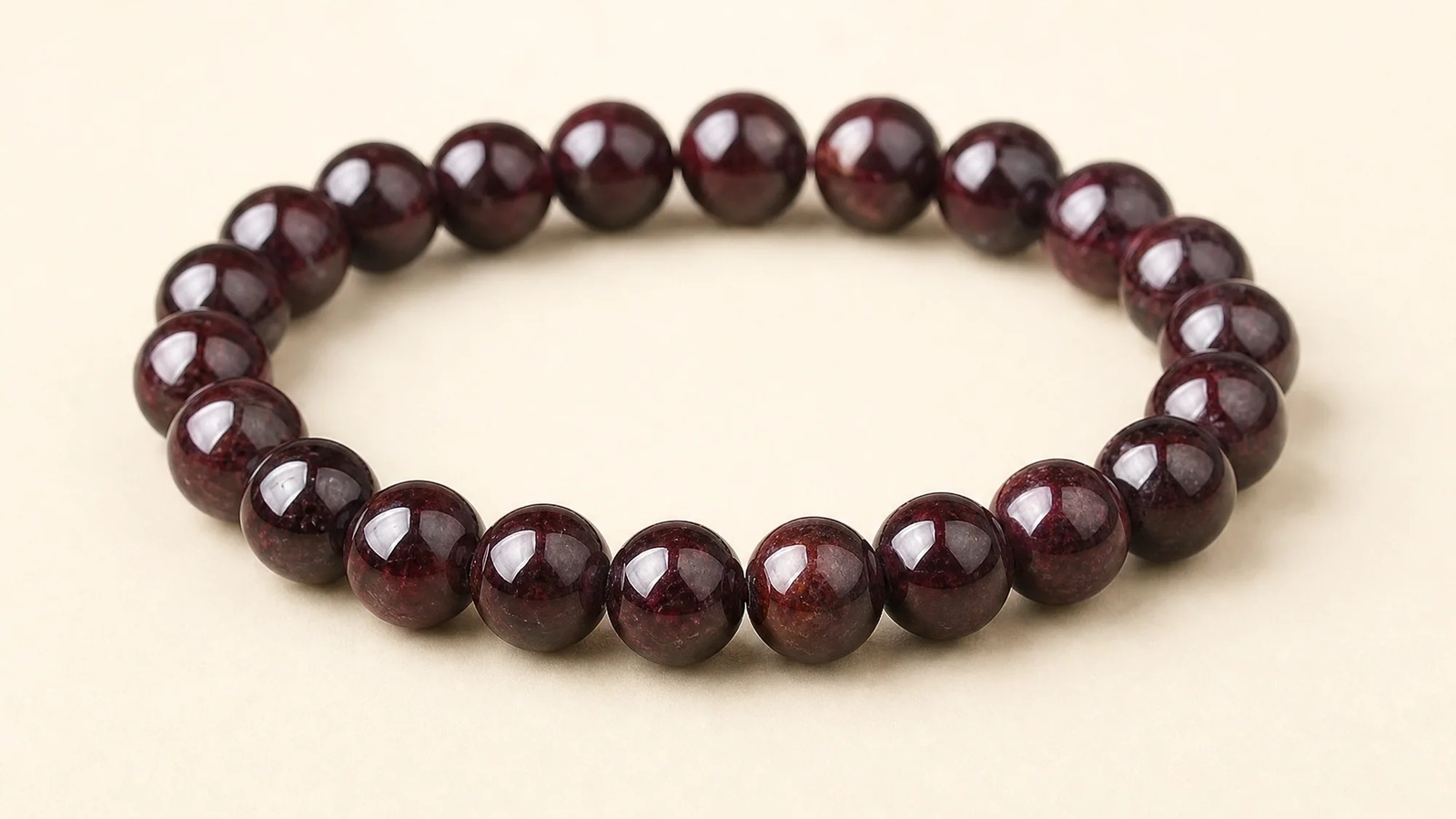
Table of Contents
- The Verdict Box: 10-Second Executive Summary
- What Is Red Garnet Crystal? (Meaning and Origins)
- The Science Behind Red Garnet: Types and Properties
- Almandine vs. Pyrope vs. Rhodolite: Which Red Garnet Do You Have?
- Metaphysical Meaning and Healing Uses of Red Garnet
- How to Wear and Style Red Garnet Every Day
- Red Garnet vs. Ruby: How to Spot the Difference
- Caring for Your Red Garnet Crystal (Cleansing and Care)
- How to Choose Quality Red Garnet: A Simple Buying Guide
- Red Garnet Buying Decision Table
- Frequently Asked Questions
- What does red garnet crystal symbolize and what are its properties?
- How can you tell if a red garnet crystal is real?
- Can you wear red garnet crystal every day?
- Sources
Red garnet crystal is a group of closely related silicate minerals whose deep red varieties—most often almandine and pyrope—have been worn and traded for centuries as gems and talismans. It is not one single mineral but a family, which is why "red garnet" can mean several different stones with slightly different chemistry, hardness, and price. For everyday wear, red garnet is a practical, relatively durable choice (Mohs 6.5–7.5) as long as you respect its limits; for metaphysical use, it is most often associated with vitality, grounding, and steady courage rather than dramatic transformation.
The Verdict Box: 10-Second Executive Summary
- Direct Verdict: Red garnet is a genuine, everyday-wearable gemstone family (not a single mineral). It suits rings, pendants, and bracelets if you accept moderate hardness and avoid harsh chemicals and steam.
- Mohs Hardness: 6.5–7.5 (GIA) — harder than opal or pearl, softer than quartz or ruby.
- Refractive Index: 1.714–1.888; Specific Gravity: 3.47–4.15; Birefringence: None (GIA).
- Key Red Types: Almandine (Fe₃Al₂(SiO₄)₃), Pyrope (Mg₃Al₂(SiO₄)₃), Rhodolite ((Mg, Fe)₃Al₂(SiO₄)₃).
- Best For: Daily pendants and earrings; protected ring settings; intentional, grounded metaphysical practice.
- Not Ideal For: High-impact sports, ultrasonic/steam cleaning, or anyone expecting ruby-level scratch resistance.
- Quality Standard: Look for natural, untreated stones — the baseline of the Lumina Grade AAA Integrity Standard.
What Is Red Garnet Crystal? (Meaning and Origins)
Red garnet is the deep red member of the garnet mineral group, a family of related silicates that share similar crystal structures but differ in chemistry. According to the USGS, the name comes from the Latin granatus, meaning "like a grain," because garnet crystals often appear as small seed-like grains embedded in rock. Red garnet is also the traditional January birthstone.
The Gemological Institute of America (GIA) notes that garnets form a group with gemstones in almost every color, yet red remains the most common and widespread. That abundance is part of its charm: red garnet is accessible, historically significant, and easy to find in honest, natural form. In cultural symbolism, red garnet is often associated with warmth, endurance, and the steady fire of perseverance — a meaning carried by tradition rather than by any proven physical effect.
The Science Behind Red Garnet: Types and Properties
Understanding the chemistry helps you buy well. The garnet group shares a general formula in which different elements substitute for one another, producing distinct species. The GIA lists the main red-relevant species as almandine, pyrope, and rhodolite (a natural pyrope-almandine mix), alongside andradite, grossular, and spessartine.
Physically, garnet is moderately hard and notably dense. GIA records a Mohs hardness of 6.5–7.5, a refractive index of 1.714–1.888, a specific gravity of 3.47–4.15, and no birefringence. In plain terms: garnet takes a good polish, feels weighty in the hand, and will resist daily knocks better than softer stones — but it can still be scratched by quartz dust and will not survive careless cleaning.
Almandine vs. Pyrope vs. Rhodolite: Which Red Garnet Do You Have?
Most "red garnet" jewelry falls into one of three types. Almandine is iron-rich and typically a darker, brownish or violet-tinged red; it is the most common red garnet on the market. Pyrope is magnesium-rich and tends toward a brighter, more saturated red, and fine pyrope from historic Czech sources is often prized. Rhodolite, a natural pyrope-almandine solid solution, shows a distinct purplish-red tone and is frequently the most visually striking of the three. A jeweler's loupe and a refractometer identify species precisely; for buyers, color and clarity are the practical guide, and GIA advises evaluating garnet primarily by color because clarity expectations vary by type.
Metaphysical Meaning and Healing Uses of Red Garnet
In crystal traditions, red garnet is often associated with vitality, grounding, and the courage to keep going. These are cultural and symbolic meanings, not medical claims — garnet does not treat, cure, or prevent any condition, and wearing it cannot regulate mood or the nervous system. What it may support is a personal ritual of intention: a physical reminder of a quality you want to practice.
Common traditional uses include:
- Grounding practice: holding a garnet during quiet reflection or breath work as a tactile anchor.
- Intention-setting: choosing garnet to represent steady effort, warmth, or perseverance in a journaling or meditation routine.
- Seasonal symbolism: wearing garnet in winter or at the start of a new project, echoing its long association with embers and renewal.
Treat these as reflective tools. If you are navigating a health concern, a qualified professional — not a stone — is the right support.
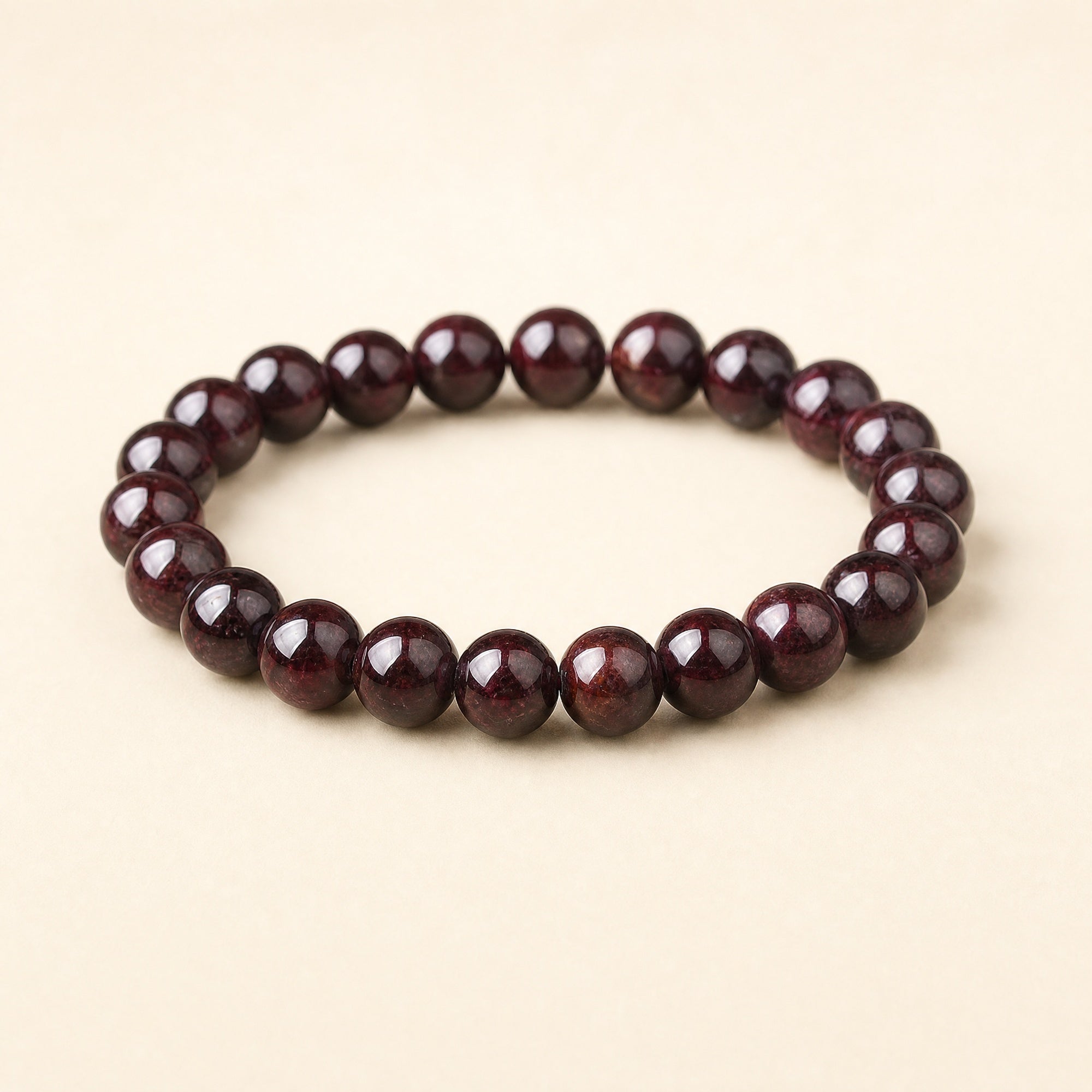
Garnet Bracelet
A quiet bracelet for turning this intention into a small daily ritual.
Shop This Authentic Piece →How to Wear and Style Red Garnet Every Day
Yes, you can wear red garnet every day, and it is one of the better everyday gemstones for the purpose. Its 6.5–7.5 hardness sits comfortably between fragile stones and hard ones, so it tolerates normal desk and city life. The practical rule is exposure management: the more a piece is bumped against hard surfaces, the faster it shows wear.
Style guidance that also protects the stone:
- Pendants and earrings are the safest daily formats — they rarely strike hard objects.
- Rings work well in a bezel or protected setting; avoid thin prongs that leave the girdle exposed.
- Bracelets are best kept slightly loose so the stones do not grind against each other or a watch.
- Pairing: garnet's deep red reads beautifully against silver, warm gold, and matte earth tones, which keeps a "poetic, grounding" look without feeling formal.
Red Garnet vs. Ruby: How to Spot the Difference
Red garnet and ruby can look similar to the eye, but they are different minerals with different optical behavior. Ruby is corundum (Mohs 9), while garnet sits at 6.5–7.5 — a meaningful gap in durability and value. Garnet also lacks birefringence, whereas ruby shows distinct optical properties under a polariscope; refractive index and specific gravity differ as well, which is why a jeweler can separate them in minutes with standard instruments.
For buyers without tools, the strongest signal is context and consistency: a large, flawless, vivid red stone offered at a garnet-level price is almost certainly not a ruby. Garnet is also more likely to show a brownish or violet undertone, while fine ruby tends toward a purer red with strong fluorescence. When in doubt, ask for a lab report or a reputable seller's identification and treat any ambiguous "ruby-red" listing with caution.
Caring for Your Red Garnet Crystal (Cleansing and Care)
Care is where most garnet damage happens, and it is easy to prevent. Wash garnet with lukewarm water and a drop of mild soap, scrub gently with a soft brush, rinse, and pat dry. Avoid ultrasonic and steam cleaners, which a jeweler may decline for stones with fractures or treatments, and keep garnet away from household chemicals, hairspray, and sudden temperature changes.
For store: keep garnet in its own soft pouch or compartment so it is not scratched by harder stones like quartz or diamond. For energetic or symbolic cleansing traditions, many people use moonlight, sound, or a brief rest on dry salt — but never soak garnet in salt water, which can dull polish and damage metal settings. Store it dry, clean, and separate, and it will keep its luster for years.
How to Choose Quality Red Garnet: A Simple Buying Guide
Quality garnet is judged mainly by color, clarity, cut, and treatment status. GIA's guidance treats color as the leading factor for garnet, with clarity expectations varying by type. Rather than chase a single "best" stone, decide what you want it to do.
Use this decision table to match the stone to your purpose:
Red Garnet Buying Decision Table
| Your Priority | Best Red Garnet Type | What to Check | Trade-off |
|---|---|---|---|
| Brightest everyday color | Pyrope or rhodolite | Even saturation, no brownish cast, clean face-up | Fine pyrope can carry a premium; rhodolite skews purplish |
| Budget-friendly durability | Almandine | Eye-clean clarity, secure setting, natural color | Often darker with a violet or brown undertone |
| Distinctive look | Rhodolite | Purplish-red hue, good cut symmetry | Less "classic red" than pyrope; smaller market |
| Metaphysical practice | Any natural red garnet | Comfortable size, tactile surface, honest untreated stone | Symbolic value, not a health effect — set expectations accordingly |
| Integrity and peace of mind | Lumina Grade AAA Integrity Standard stones | Natural rough, zero chemical filling, no irradiation or dye | May cost more than heavily treated or synthetic alternatives |
Boundaries: This table does not replace gemological testing. If a seller cannot explain treatment status or refuses a return policy, walk away — no color grade compensates for unclear provenance.
Before any purchase, run this short checklist: confirm the seller discloses treatment and origin; inspect the stone in daylight rather than only under store lighting; check the setting for exposed girdles on rings; and ask whether the stone meets a documented natural-stone standard. At Lumina Quartz, the Lumina Grade AAA Integrity Standard is our baseline: natural rough, zero chemical filling, and no irradiation or dye — the criteria we apply whenever we assess a red garnet's fitness for everyday wear and intentional use.
Frequently Asked Questions
What does red garnet crystal symbolize and what are its properties?
Red garnet is traditionally associated with vitality, grounding, and steady courage, and it is the January birthstone. Physically it is a silicate mineral group with Mohs hardness 6.5–7.5 — meanings are cultural, while hardness and optics are measured facts.
How can you tell if a red garnet crystal is real?
Real garnet has no birefringence, a refractive index of 1.714–1.888, and a specific gravity of 3.47–4.15, which a jeweler can verify with standard instruments. For buyers, insist on disclosed treatment status and compare the stone's price and color against ruby-like claims.
Can you wear red garnet crystal every day?
Yes — at Mohs 6.5–7.5 it handles daily wear well, especially as pendants and earrings or in protected ring settings. Avoid high-impact activity and harsh chemicals to keep the surface bright.
Sources
This guide shares cultural and gemological information only and is not medical advice. Crystal traditions are symbolic and personal; they do not replace professional care.
© 2026 Lumina Quartz
Product Facts From the Current Catalog
These details come from the active Lumina Quartz catalog record checked on 2026-11-07. They are product-listing facts, not laboratory results or invented wear-test claims.
| Listed product | Garnet Bracelet – Enduring Drive |
|---|---|
| Format | Bracelet |
| Listed price snapshot | 42.00 |
Price, availability, and options may change. Check the live product listing before choosing.