The Complete Everyday Guide to Rhodochrosite Crystal: Meaning and Uses
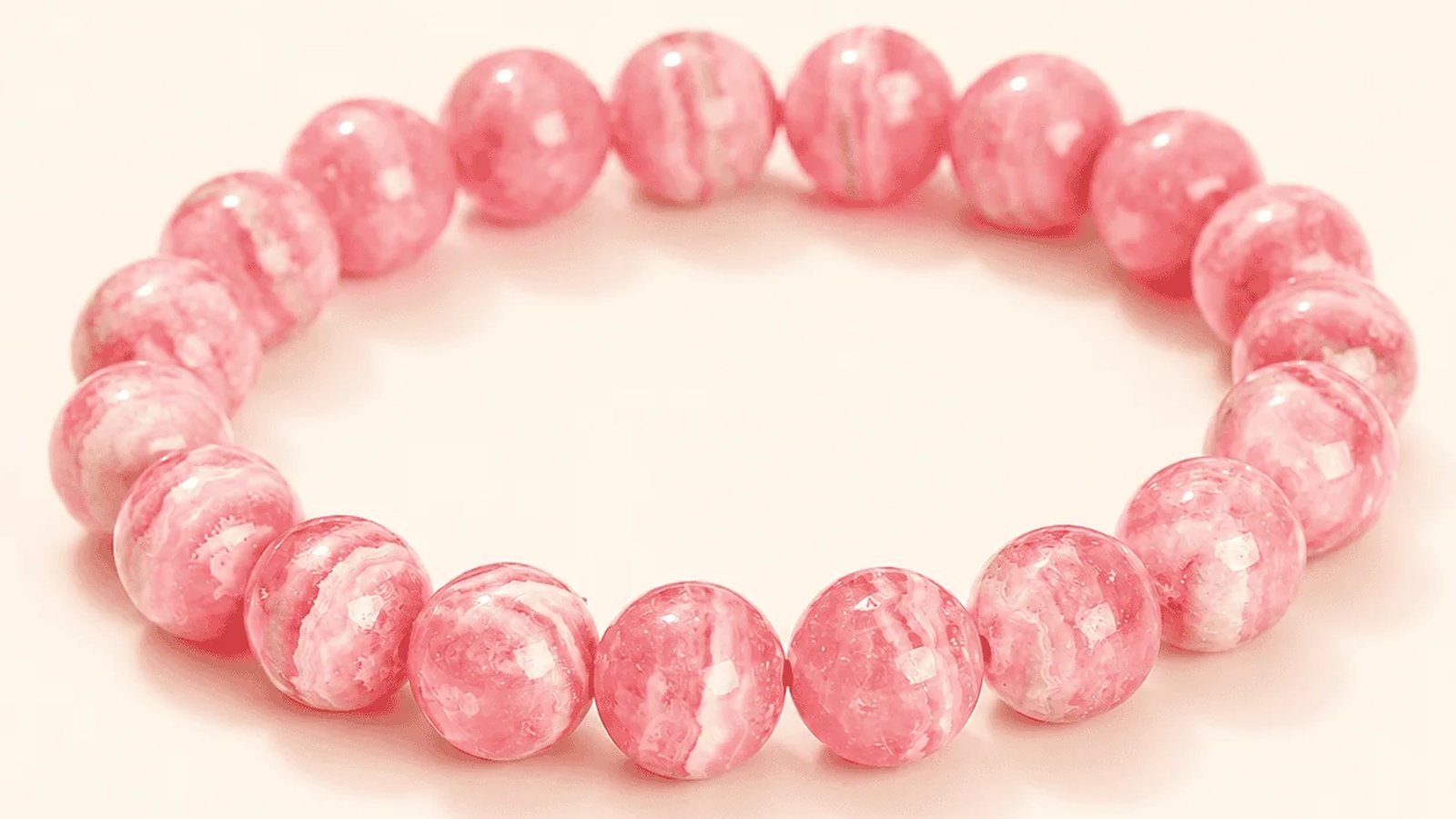
Table of Contents
- What Is Rhodochrosite Crystal? A Quick Mineral Primer
- 10-Second Executive Summary / The Verdict Box
- The Meaning and Folklore of Rhodochrosite: Inca Legend to Modern Symbolism
- Rhodochrosite Healing Properties and Everyday Uses
- Emotional and Heart-Centered Uses
- Practical Ways to Wear and Work With It Daily
- Colors, Patterns, and Forms: Banded Stalactite, Gem Rough, and Cabochons
- How to Spot Real Rhodochrosite vs. Dyed or Imitation Stone
- Rhodochrosite Buying Decision Table
- Care, Cleansing, and Charging for Long-Lasting Beauty
- Buying Guide: Grades, Value Factors, and What to Look For
- FAQ: Rhodochrosite Crystal Questions Answered
- What does rhodochrosite crystal mean and what is it good for?
- Is rhodochrosite a rare or valuable crystal?
- How do I tell real rhodochrosite from fake or dyed stone?
- Sources
What Is Rhodochrosite Crystal? A Quick Mineral Primer
Rhodochrosite is a manganese carbonate mineral (MnCO₃) that was first described in 1813 from silver mines in what is now Romania, and it is prized both as a collector specimen and as a gem material because of its rose-pink to raspberry-red color. It commonly forms in hydrothermal veins, and in some deposits it grows as stalactites that reveal concentric banded layers when cut. On the Mohs hardness scale it sits at roughly 3.5 to 4, which makes it a soft stone that scratches easily and needs thoughtful handling in jewelry.
10-Second Executive Summary / The Verdict Box
- Direct Verdict: Rhodochrosite is a genuine manganese carbonate mineral, not a quartz despite the informal "crystal" label many sellers use; it is best suited to pendants, earrings, cabochons, and collector specimens rather than everyday rings.
- Mohs Hardness: Approximately 3.5–4 — soft enough that it can be scratched by a steel knife or ordinary wear.
- Chemical Identity: Manganese carbonate (MnCO₃), often forming in banded stalactitic masses or as translucent gem rough.
- Best Use Cases: Statement pendants, beaded bracelets, display specimens, and heart-centered symbolic practice.
- Buying Signal: Look for natural banding, cool-to-the-touch surface, and consistent color that follows the stone's growth pattern — hallmarks of the Lumina Grade AAA Integrity Standard (natural rough, no chemical resin filling, no irradiation or dye treatment).
The Meaning and Folklore of Rhodochrosite: Inca Legend to Modern Symbolism
Rhodochrosite's cultural story is layered. In Argentina, use of the stone dates back to the ancient Incas, who are said to have believed it was the solidified blood of their fallen rulers — a legend that gives the pink-red stone its association with remembrance and enduring love. In modern crystal practice, rhodochrosite is often associated with the heart, with self-worth, and with gentle emotional honesty. These are cultural and symbolic associations rather than medical claims: the stone may support a personal ritual of reflection, but it is not a treatment for any condition. Treat the folklore as meaning-making, and the mineralogy as fact — keeping the two distinct keeps your relationship with the stone honest.
Rhodochrosite Healing Properties and Everyday Uses
Emotional and Heart-Centered Uses
In contemporary crystal lore, rhodochrosite is often associated with the heart chakra and with themes of self-love, playfulness, and releasing old grief. People who work with it tend to use it as a touchstone during journaling or meditation — holding it, breathing slowly, and naming one feeling honestly. It may support a grounding pause in a busy day. It does not replace therapy, and it should never be presented as a way to stabilize mood or calm the nervous system; those are clinical matters, not stone properties.
Practical Ways to Wear and Work With It Daily
Because rhodochrosite is soft, the most practical daily uses protect it from knocks and scratches:
- Pendant or necklace: Sits away from hard surfaces and keeps the stone close to the body.
- Drop earrings: Low contact with keys, desks, and doorframes.
- Beaded bracelet on the non-dominant wrist: Reduces bumping against tools and countertops.
- Desk or altar stone: Keep a cabochon or small specimen where you write or plan, and pick it up as a ritual cue.
- Pocket stone in a soft pouch: Prevents grit from abrading the polished face.
If you want a ring, choose a bezel setting with a protective rim and reserve it for occasional wear.
Colors, Patterns, and Forms: Banded Stalactite, Gem Rough, and Cabochons
Rhodochrosite appears in several distinct forms, and knowing them helps you judge value and use:
- Banded stalactite material: Concentric rose-and-cream layers, as the Smithsonian notes for stalactitic rhodochrosite. This is the classic "bacon strip" look and is often cut into cabochons or slices.
- Gem rough and faceted stones: Translucent raspberry-red material, rare and expensive; faceted pieces are collector-grade.
- Cabochons: The everyday wearable form — polished domes that show banding or color without facets.
- Specimens: Rhodochrosite also occurs as rhombohedral crystals and crusts on matrix, which collectors value for form and locality rather than for jewelry.
Color ranges from pale pink to deep raspberry, and the most sought-after tones are saturated, slightly translucent reds. Banding should look organic — irregular, following the stone's growth — not printed or perfectly uniform.
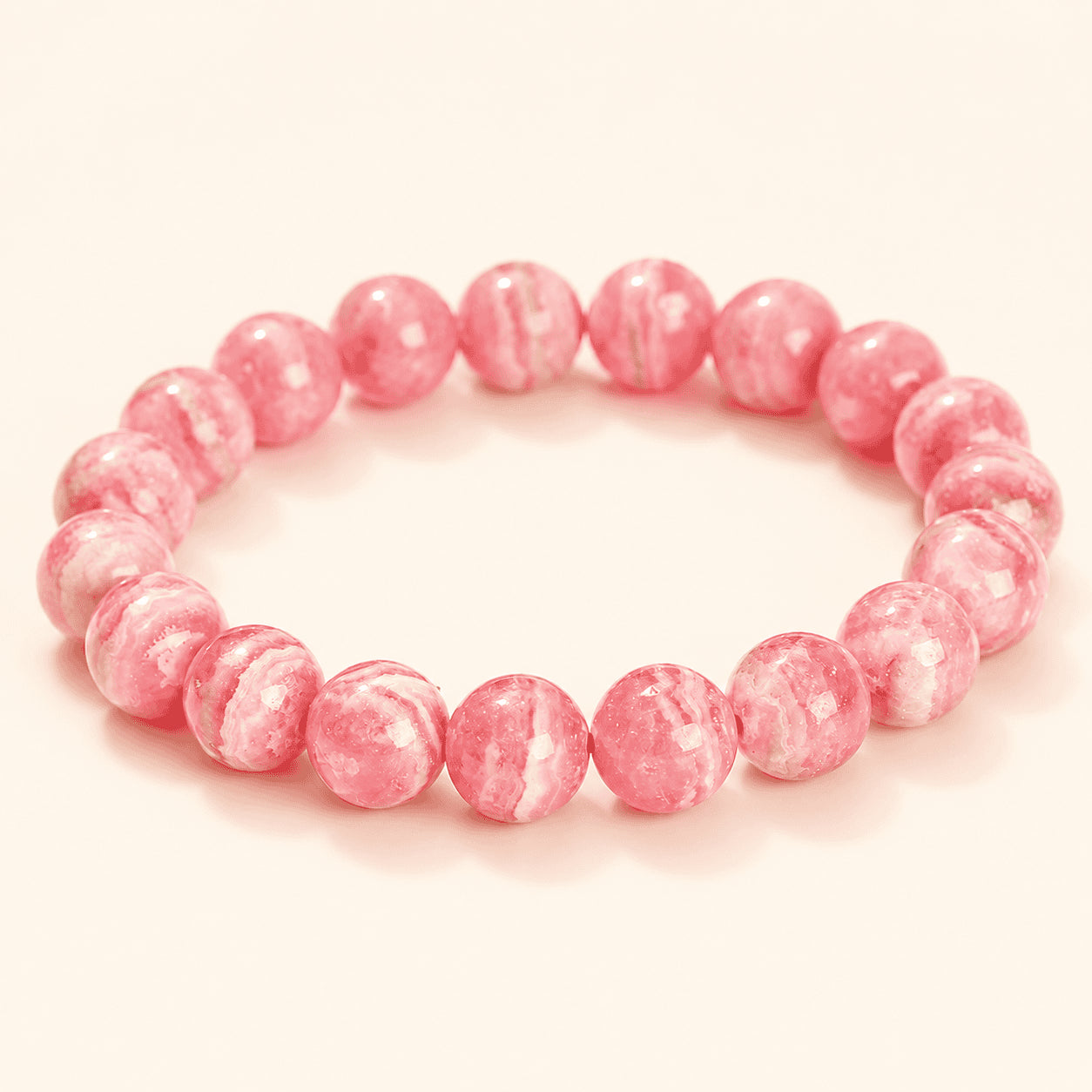
Rhodochrosite Bracelet
A quiet bracelet for turning this intention into a small daily ritual.
Shop This Authentic Piece →How to Spot Real Rhodochrosite vs. Dyed or Imitation Stone
Real rhodochrosite has a few reliable tells. Use this step-by-step checklist when you shop:
- Check the banding: Natural layers are irregular in width and follow the stone's contours; dye often pools in cracks and looks too even.
- Look at the surface: Genuine polished rhodochrosite feels cool and smooth; resin-filled or imitation material can feel slightly warm or plastic.
- Inspect cracks: Dye collects in fractures as darker lines. Under a loupe, this "color concentration" is a red flag.
- Ask about treatment: Reputable sellers disclose resin filling, dye, or irradiation. Under the Lumina Grade AAA Integrity Standard, stones are natural rough with no chemical resin filling and no irradiation or dye treatment.
- Compare weight and hardness expectations: Rhodochrosite is soft (Mohs ~3.5–4); a stone that resists a light scratch test from a copper coin more than expected may not be rhodochrosite.
- Request natural-light photos: Over-saturated images hide pale or treated color. Ask for a video in daylight.
No single test is definitive; combine several and buy from sellers who answer treatment questions plainly.
Rhodochrosite Buying Decision Table
| Form | Typical Color/Pattern | Durability Concern | Best For | What to Verify |
|---|---|---|---|---|
| Banded stalactite cabochon | Pink, cream, and rose concentric bands | Soft; prone to scratching | Pendants, beaded jewelry, display slices | Banding irregularity; no dye pooling in cracks |
| Gem rough / faceted | Translucent raspberry red | Rare and fragile; avoid daily wear | Collectors, occasional jewelry | Disclosure of any treatment; provenance |
| Specimen on matrix | Rhombohedral crystals, crusts | Fragile crystal edges | Display, study | Locality and natural form |
| Beaded bracelet | Mixed pink tones | String wear; stone chipping | Daily symbolic wear on non-dominant wrist | Consistent natural color; cool feel |
Care, Cleansing, and Charging for Long-Lasting Beauty
Because rhodochrosite is soft and can be sensitive to acids and harsh chemicals, care is straightforward but non-negotiable:
- Cleanse with a soft, dry or barely damp cloth. Avoid ultrasonic cleaners, steam, and acidic solutions, which can damage the surface.
- Keep it away from perfumes, hairspray, and household cleaners. Put jewelry on last and take it off first.
- Store separately in a soft pouch. Prevent contact with harder stones and metal edges.
- Charge by intention, not by force. Many people place rhodochrosite on a windowsill in gentle morning light or beside a written intention; avoid prolonged direct sun, which can fade color over time.
- Check settings monthly. A loose bezel is a fast route to a chipped stone.
Buying Guide: Grades, Value Factors, and What to Look For
Rhodochrosite is not a rare mineral in general — localities are numerous worldwide — but gem-grade translucent red material is genuinely scarce, and that scarcity drives price. The famous Sweet Home Mine in Colorado is celebrated among collectors for producing exceptional red rhodochrosite specimens; a step-cut stone with traceable history dates to 1888, when a shaft collapse yielded a 32.61 ct cleavage fragment. Value generally rises with color saturation, translucency, pattern appeal, size, and freedom from cracks, while matrix specimens are judged on crystal form and locality.
When buying, prioritize:
- Color: Saturated raspberry-red with slight translucency commands a premium.
- Pattern: Balanced, organic banding is more desirable than muddy or chaotic layering.
- Clarity: Fewer fractures means better durability and beauty.
- Disclosure: Ask directly about dye, resin filling, and irradiation. Under the Lumina Grade AAA Integrity Standard, natural, untreated stones are the baseline, not an upgrade.
Treat the phrase "healing grade" as marketing language, not a measurable standard — insist on natural origin and honest treatment disclosure instead.
FAQ: Rhodochrosite Crystal Questions Answered
What does rhodochrosite crystal mean and what is it good for?
It is often associated with the heart, self-worth, and remembrance, drawing on Inca legend and modern crystal symbolism; practically, it is best used as a personal touchstone or a beautiful collectible stone.
Is rhodochrosite a rare or valuable crystal?
The mineral itself is found at many localities worldwide, but translucent gem-grade red rhodochrosite is scarce and valuable, while banded stalactite material is more accessible in price.
How do I tell real rhodochrosite from fake or dyed stone?
Look for irregular natural banding, a cool smooth surface, no dye pooling in cracks, and a seller who discloses treatments; combine several checks rather than relying on one test.
Sources
- Smithsonian National Museum of Natural History — Rhodochrosite
- Mindat — Rhodochrosite: Mineral information, data and localities
- Smithsonian GeoGallery — Rhodochrosite
- GIA — Sweet Home Mine Rhodochrosite from 1888
© 2026 Lumina Quartz. This article shares mineral information and cultural symbolism only; it is not medical advice, and crystal use is a personal practice rather than a treatment for any condition.
Product Facts From the Current Catalog
These details come from the active Lumina Quartz catalog record checked on 2026-10-31. They are product-listing facts, not laboratory results or invented wear-test claims.
| Listed product | Rhodochrosite Bracelet – Compassionate Courage |
|---|---|
| Format | Bracelet |
| Listed price snapshot | 65.99 |
Price, availability, and options may change. Check the live product listing before choosing.