The Complete Everyday Guide to Sugilite Stone: Meaning and Uses
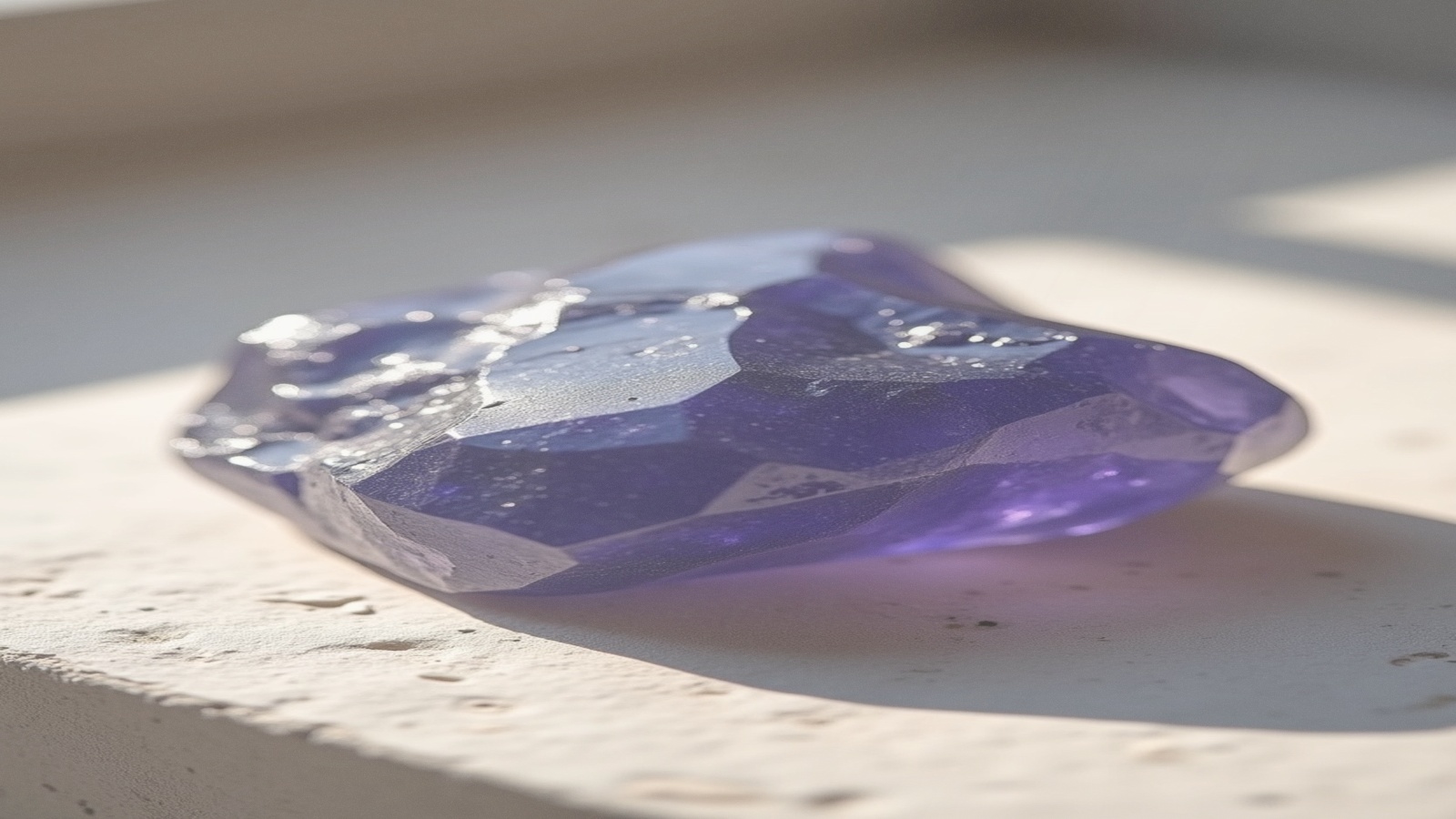
Table of Contents
- What Is Sugilite Stone? Pronunciation, Origin, and Composition
- 10-Second Executive Summary / The Verdict Box
- Sugilite Meaning and Metaphysical Properties
- Emotional Healing and Stress Relief
- Spiritual Protection and the "Love Stone of This Age"
- Colors, Patterns, and Types of Sugilite
- How to Tell Real Sugilite from Fakes and Lookalikes
- Sugilite Uses: Everyday Jewelry, Meditation, and Home Décor
- Sugilite Care: Cleansing, Charging, and Storage
- Sugilite Value and Buying Guide: What to Look For
- Step-by-Step Buying Checklist for Sugilite
- FAQ: Common Questions About Sugilite Stone
- What is sugilite stone good for?
- How do you identify real sugilite?
- Is sugilite safe to wear every day?
- How much is sugilite worth?
- How do you cleanse and care for sugilite?
- Sources
What Is Sugilite Stone? Pronunciation, Origin, and Composition
Sugilite stone is a rare cyclosilicate mineral, usually pronounced SOO-guh-lite, first identified in 1944 as tiny yellow crystals on Iwagi Islet in southwestern Japan; those early crystals had no gem value, and gem-quality purple material became known only later. It is composed mainly of potassium, sodium, iron, lithium, and aluminum silicates, and its purple color is generally associated with manganese. In the jewelry trade, most sugilite is opaque to translucent and is often cut as cabochons or beads rather than faceted stones.
Understanding what sugilite is physically helps separate verified mineral facts from the cultural and metaphysical meanings often attached to it. The sections below cover composition, meaning, color varieties, identification, everyday uses, care, and buying considerations.
10-Second Executive Summary / The Verdict Box
- Direct Verdict: Sugilite is a rare purple silicate mineral best known for opaque gem material used in cabochons, beads, and carved pieces. It is a collector's stone, not a mainstream everyday gem, and quality depends heavily on color saturation and freedom from dyes or fillers.
- Mohs Hardness: Approximately 5.5–6.5, so it is softer than quartz and should be worn with care.
- Key Physical Parameters: Cyclosilicate composition dominated by potassium, sodium, iron, lithium, and aluminum silicates; purple color generally linked to manganese; typically opaque to translucent.
- Best Use Scenarios: Pendant or earring jewelry, beaded bracelets worn with care, meditation handling, and display pieces. Less suitable for rings exposed to daily abrasion.
- Buying Standard: Look for natural, untreated material under the Lumina Grade AAA Integrity Standard: natural rough, zero chemical resin filling, and no irradiation or dye treatment.
Sugilite Meaning and Metaphysical Properties
In crystal culture, sugilite is often associated with emotional soothing, spiritual protection, and heart-centered love, which is why it is sometimes called the "Love Stone of This Age." These are cultural and symbolic associations, not medical claims, and they should be understood as personal meaning rather than proven physiological effects. The mineral's rarity and intense purple color have helped sustain this reputation among collectors and crystal practitioners.
Emotional Healing and Stress Relief
Sugilite may support a sense of calm during quiet reflection and is often used in meditation as a focal object. Many people keep a small piece nearby during journaling or breathwork, using it as a tactile reminder to slow down. It is not a treatment for anxiety, low mood, or any health condition, and anyone experiencing persistent distress should seek qualified professional support.
Spiritual Protection and the "Love Stone of This Age"
The "Love Stone of This Age" nickname reflects a cultural belief that sugilite encourages compassion and emotional openness. In practice, this often means using the stone as a symbolic anchor for gratitude or loving-kindness practice. These meanings vary widely between traditions; they are personal and cultural, not geological properties of the mineral.
Colors, Patterns, and Types of Sugilite
Sugilite ranges from pale lavender to deep violet, and the most valued pieces show saturated, even purple with minimal visible matrix. Many specimens include black or brown vein patterns from associated manganese minerals, and these patterns are normal in natural material. Opaque purple sugilite is the most common jewelry grade, while translucent gem-grade rough is rare and usually reserved for collectors. Yellow sugilite, the original 1944 discovery material, exists but has no significant gem value. Some sellers market dyed or resin-stabilized material as "sugilite," so color alone is not a reliable sign of authenticity.
How to Tell Real Sugilite from Fakes and Lookalikes
Real sugilite is heavy for its size, usually opaque to slightly translucent, and shows natural color variation and matrix rather than a perfectly uniform surface. Common lookalikes include dyed jasper, dyed magnesite, charoite, and resin composites. A simple visual check is to look for unnatural dye pooling in cracks, suspiciously uniform violet color, or a plastic-like luster. Under the Lumina Grade AAA Integrity Standard, authentic pieces are natural rough with zero chemical resin filling and no irradiation or dye treatment, and sellers should disclose any stabilization. Because sugilite can be confused with treated material, buy from sellers who provide clear treatment disclosure and, for higher-value pieces, consider professional gemological testing.
Sugilite Uses: Everyday Jewelry, Meditation, and Home Décor
Because sugilite has a Mohs hardness of roughly 5.5–6.5, it works best in protected settings such as pendants, earrings, and beaded bracelets rather than rings worn during heavy activity. For meditation, a smooth cabochon or tumbled piece can serve as a tactile focus. At home, a small display specimen or carved object can anchor a quiet corner, though it should be kept away from direct sun and harsh cleaners. Each use is practical and cultural rather than therapeutic; the stone does not replace medical or mental health care.
Sugilite Care: Cleansing, Charging, and Storage
Sugilite is softer than quartz and can be scratched by harder stones, so store it separately in a soft pouch. Clean it with lukewarm water and a mild soap, then dry gently; avoid steam cleaners, ultrasonic cleaners, and harsh chemicals, which can damage filled or dyed material. For energetic cleansing, many people use moonlight, sound, or a dry salt-free method, since salt and prolonged water exposure may affect some treated stones. Keep pieces out of direct sunlight to limit color fading, and handle beaded strands gently to protect the string.
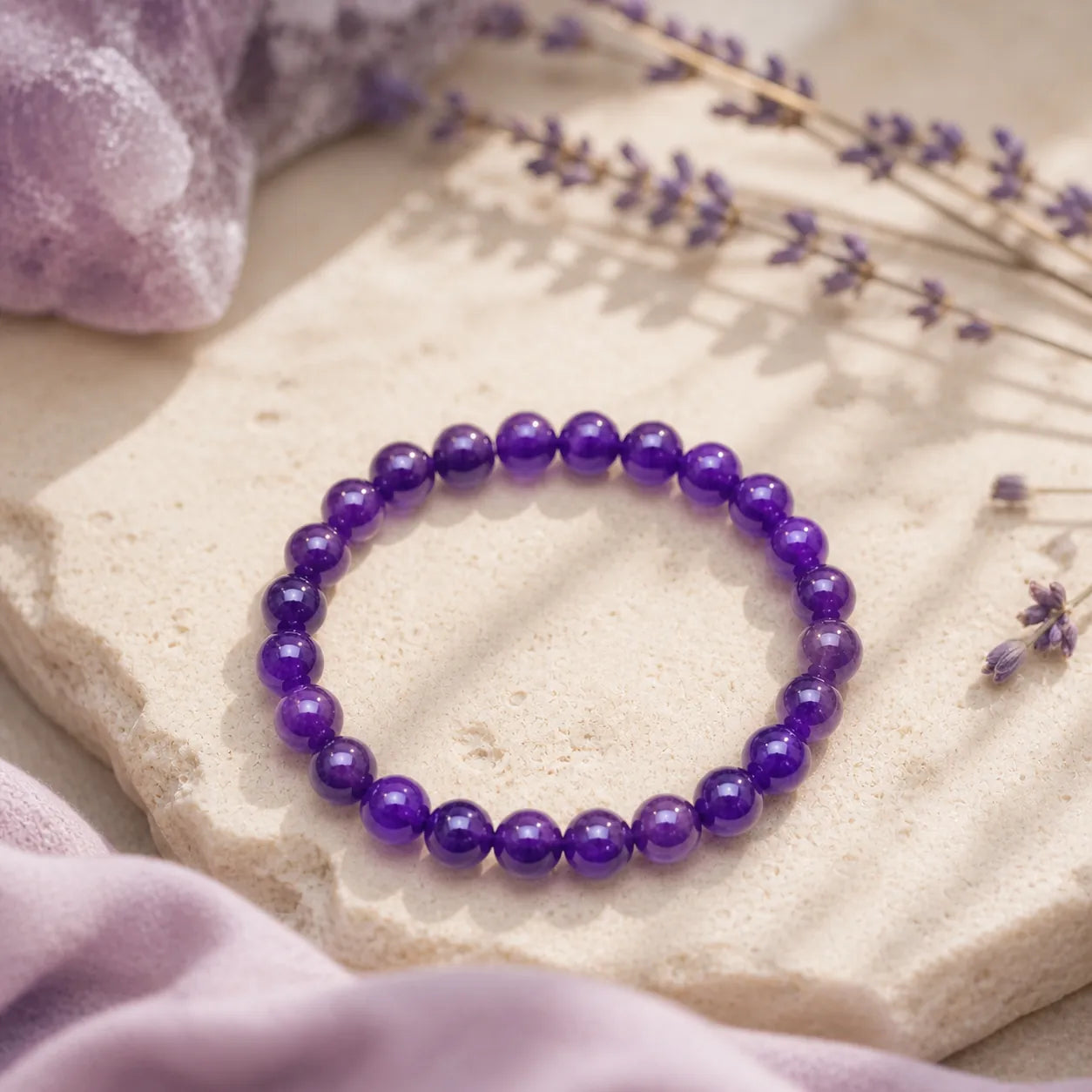
A related color-family option
Amethyst Calm Bracelet
This broader color-family option is not presented as Sugilite. We only identify jewelry as Sugilite when that exact material is verified.
Explore this related optionSugilite Value and Buying Guide: What to Look For
Sugilite value rises with color saturation, evenness, translucency, and size, while heavy matrix or visible treatments lower it. According to the Gem Society, sugilite was first discovered in 1944 on Iwagi Islet in southwestern Japan as tiny yellow crystals with no gem value, and dark pink prismatic crystals were later found in central India in 1955; this history explains why fine purple material remains uncommon and collector-driven. When buying, ask for treatment disclosure, compare color under neutral light, and check that matrix patterns look natural rather than painted. Prioritize natural, untreated pieces under the Lumina Grade AAA Integrity Standard: natural rough, zero chemical resin filling, and no irradiation or dye treatment. For expensive stones, request a gemological report rather than relying on seller descriptions alone.
Step-by-Step Buying Checklist for Sugilite
- Check the color story: Natural purple sugilite usually shows slight tonal variation; perfectly uniform violet is a warning sign of dye.
- Inspect the matrix: Black or brown veining is common and should look embedded, not painted on the surface.
- Ask about treatment: Confirm whether the piece is natural, resin-filled, dyed, or irradiated; untreated material aligns with the Lumina Grade AAA Integrity Standard.
- Match hardness to use: With Mohs 5.5–6.5, choose pendants or earrings over everyday rings.
- Weigh the price against rarity: Opaque purple sugilite is uncommon; unusually low prices for vivid, large stones deserve scrutiny.
- Request documentation for high-value pieces: A gemological report is the most reliable way to confirm identity and treatment.
FAQ: Common Questions About Sugilite Stone
What is sugilite stone good for?
It is mainly used in jewelry, meditation, and display, and is often associated with calm reflection and emotional openness in crystal culture. These are symbolic uses, not medical benefits.
How do you identify real sugilite?
Look for opaque to slightly translucent purple with natural matrix variation, avoid perfectly uniform dyed-looking color, and ask for treatment disclosure. For valuable pieces, confirm authenticity with a gemological report.
Is sugilite safe to wear every day?
Sugilite is generally safe to wear, but with Mohs hardness around 5.5–6.5 it scratches more easily than quartz. Pendants and earrings are safer for daily wear than rings, and treated or dyed pieces should be kept away from harsh chemicals.
How much is sugilite worth?
Value depends on color saturation, translucency, size, and treatment status; fine purple material is rare and collector-driven. Untreated, richly colored pieces under the Lumina Grade AAA Integrity Standard command higher prices than dyed or resin-filled stones.
How do you cleanse and care for sugilite?
Clean with lukewarm water and mild soap, dry gently, and store separately in a soft pouch. Avoid ultrasonic or steam cleaners, harsh chemicals, and prolonged sun exposure.
Sources
© 2026 Lumina Quartz. This article shares mineral information and cultural associations; it is not medical advice. Crystal meanings are personal and symbolic, and sugilite is not a substitute for professional health care.