Healing Powers Of Citrine: Meaning, Healing Properties, and Daily Benefits
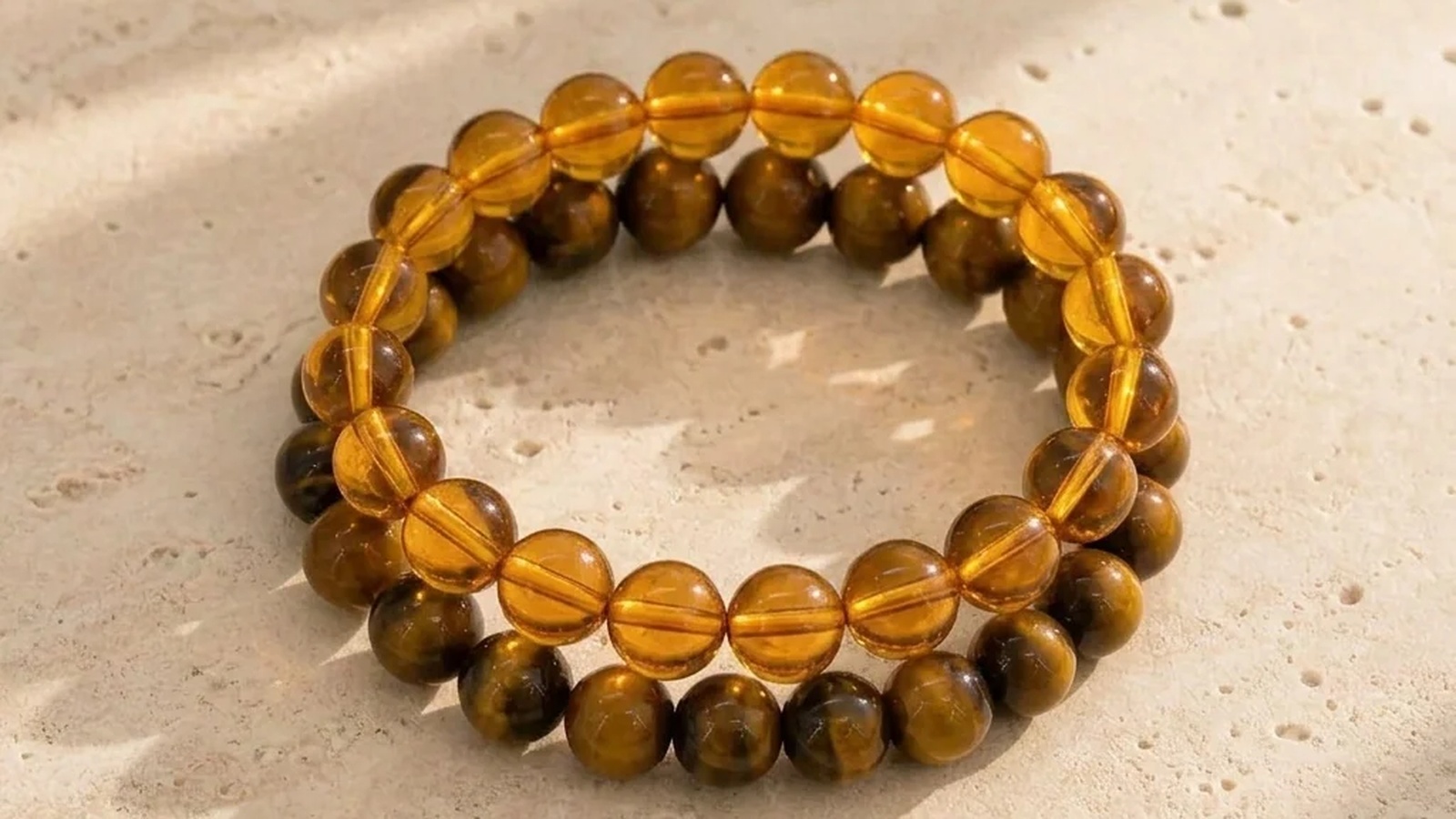
Table of Contents
- 10-Second Executive Summary
- Citrine Meaning: What Is the Stone of the Sun?
- Citrine Healing Properties: Confidence, Clarity & Abundance
- Emotional and Mental Benefits
- Traditional Physical Associations (With Honest Caveats)
- Citrine and the Solar Plexus Chakra
- Natural vs. Heat-Treated Citrine: How to Tell the Difference
- Natural vs. Heat-Treated Citrine: Decision Checklist
- Daily Benefits: 7 Practical Ways to Work With Citrine
- How to Cleanse, Charge, and Care for Citrine
- Choosing Your Citrine: Jewelry, Tumbled Stones, and Clusters
- FAQ: Common Questions About Citrine Healing Powers
- What is citrine and what does it mean spiritually?
- What are the healing properties of citrine?
- How do I use citrine in daily life, cleanse it, and is it safe to sleep with?
- Sources
Citrine is most widely associated with confidence, clarity, and abundance — but the honest answer is that most of those "healing powers" describe how the stone is used in meditation and intention-setting, not clinically proven effects. What is verifiable is its geology: citrine is a yellow-to-golden variety of quartz (Mohs hardness 7.0), and the vast majority sold today is heat-treated amethyst rather than natural earth-mined citrine. Understanding that distinction is the single most useful step before you buy or work with one.
10-Second Executive Summary
- Direct Verdict: Citrine may support feelings of confidence and clarity when used as a mindfulness or intention anchor; it is not a medical treatment. Choose natural, unheated citrine if authenticity matters to you.
- Mineral: Yellow-to-golden quartz (SiO₂)
- Mohs Hardness: 7.0
- Chakra Association: Solar Plexus (Manipura) — traditional, not scientific
- Key Buying Fact: Over 90% of commercial "citrine" is heat-treated amethyst (HTA)
- Quality Standard to Look For: Lumina Grade AAA Earth-Mined Integrity Standard
- Best For: Desk and workspace stones, intention-setting, solar plexus meditation, everyday jewelry
- Care: Warm water, mild soap, soft cloth; avoid prolonged direct sun and harsh chemicals
Citrine Meaning: What Is the Stone of the Sun?
Citrine is quartz colored by trace iron, ranging from pale champagne to deep golden honey. Historically it has been called the "stone of the sun" and the "merchant's stone" — associations rooted in its warm color and in folk traditions rather than in mineralogy. Spiritually, it is most often linked to personal power, optimism, and the willingness to act on what you already know. Those meanings are cultural and personal; they are worth holding gently, as reminders rather than guarantees.
Citrine Healing Properties: Confidence, Clarity & Abundance
In crystal practices, "healing properties" usually describe qualities people intend to cultivate while holding or wearing a stone. With citrine, three themes recur: confidence, mental clarity, and a sense of abundance or openness to opportunity. Think of the stone as a tactile cue for a mindset you are already choosing.
Emotional and Mental Benefits
Citrine is often associated with self-assurance and the courage to speak plainly. Practitioners use it as a focus object during journaling or before difficult conversations. It may support a calmer, more grounded frame of mind in the same way any deliberate pause or ritual can — the benefit comes from the practice, not from a chemical effect. It is not a substitute for mental health care.
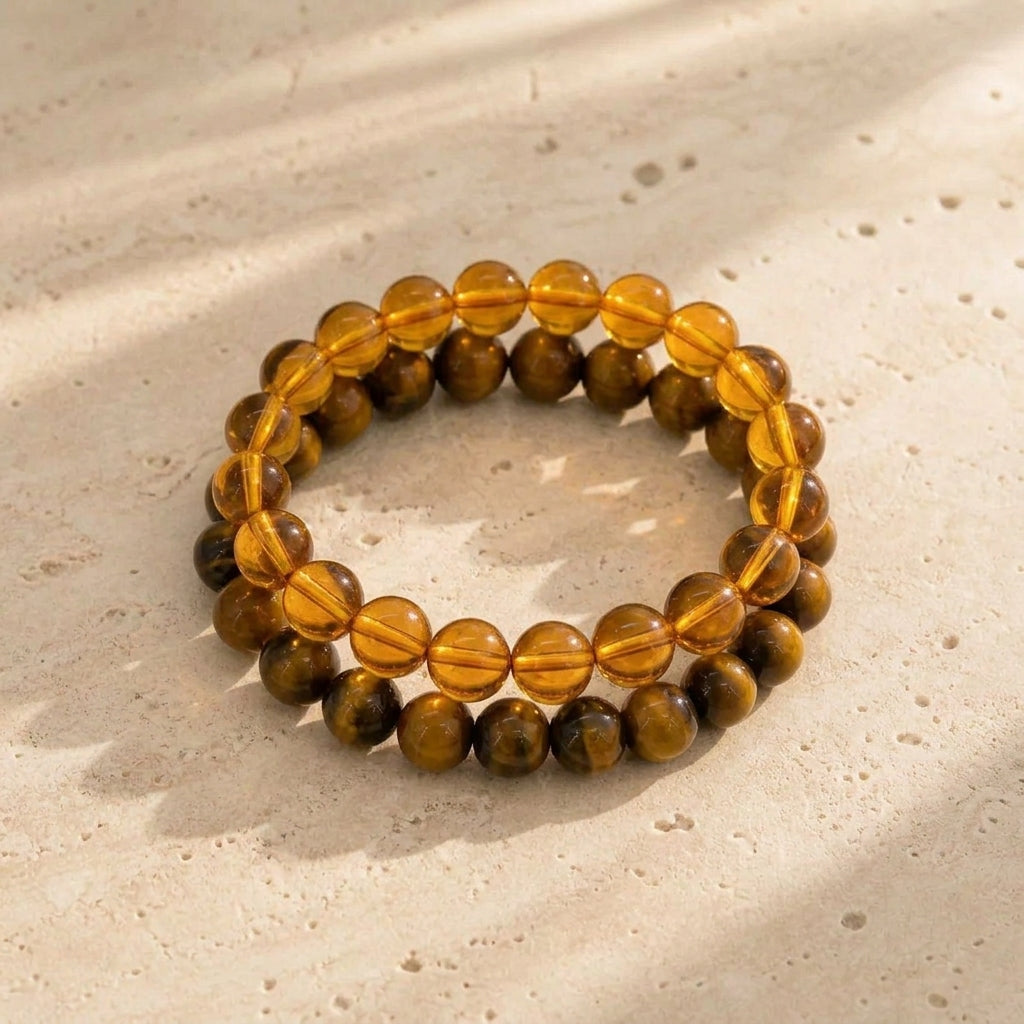
The Abundance & Prosperity Ritual Duo (Natural Citrine + Golden Tiger Eye)
Tiger eye is often worn as a quiet focus ritual for grounded confidence and steady attention.
Shop This Authentic Piece →Traditional Physical Associations (With Honest Caveats)
Older crystal traditions link citrine to digestion, energy, and vitality. These are traditional associations only. There is no evidence that a quartz crystal affects the body physiologically, and citrine should never replace medical advice or treatment. What you can honestly claim is this: it is a beautiful, durable stone that many people find pleasant and grounding to hold.
Citrine and the Solar Plexus Chakra
In chakra frameworks, citrine corresponds to the solar plexus (Manipura), traditionally associated with willpower, self-worth, and personal agency. A simple practice: place the stone just below the ribs while seated, breathe slowly for a few minutes, and name one decision you are ready to make. This is a contemplative exercise — the chakra system is a spiritual map, not an anatomical one.
Natural vs. Heat-Treated Citrine: How to Tell the Difference
This is where honest buying begins. More than 90% of the "citrine" on the market is actually common purple amethyst heated in industrial kilns to roughly 450°C–550°C until it turns yellow-orange. That material is usually called heat-treated amethyst (HTA). It is real quartz, but it is not natural citrine.
On the geological side, natural earth-mined citrine keeps a gentle champagne or golden honey tone evenly through the crystal and does not form on an opaque, chalky white quartz base. Burnt-orange or brownish-amber clusters or geodes with white quartz bottoms are, geologically speaking, effectively guaranteed to be baked amethyst. Natural citrine may also show subtle dichroism (pleochroism) under polarized light and evenly oxidized iron states, whereas baked quartz tends to show thermal stress fracture lines. In gemological classification, genuine top-grade natural citrine reflects un-irradiated, un-baked raw silica with natural micro-veil inclusions — a baseline we describe as the Lumina Grade AAA Earth-Mined Integrity Standard: natural rough, no chemical resin filling, no irradiation or dyeing.
For formal identification, note that gemological laboratories such as GIA offer a Colored Stone Identification Report for citrine, though it is not commonly requested because the cost usually outweighs the value of most citrine — which is exactly why learning the visual cues yourself matters.
Natural vs. Heat-Treated Citrine: Decision Checklist
Use this checklist before you buy. Each item reflects verifiable color and structure cues, not brand claims.
- Check the base color: Natural citrine stays gentle champagne or honey-gold throughout. An opaque chalky white quartz base is a red flag for HTA.
- Look at the overall hue: Burnt orange or brownish-amber clusters and geodes with white bottoms are geologically almost certainly baked amethyst.
- Inspect the fractures: Fine thermal stress lines suggest kiln heating; natural citrine tends to show natural micro-veil inclusions instead.
- Rotate under strong light: Natural citrine may show subtle dichroism — slight shifts in tone as the stone turns. Uniform flat color is more typical of baked quartz.
- Ask for provenance: A seller following the Lumina Grade AAA Earth-Mined Integrity Standard should tell you plainly whether a stone is natural or heat-treated and disclose chemical treatments.
- Decide on purpose: For meditation and meaning, natural citrine is the honest choice. For a decorative cluster, HTA is real quartz and can be beautiful — as long as it is sold honestly as heat-treated.
Daily Benefits: 7 Practical Ways to Work With Citrine
- Desk anchor: Keep a tumbled stone beside your keyboard. Pick it up when you need to pause before a decision.
- Morning intention: Hold the stone for one minute and name the quality you want to carry into the day — focus, courage, patience.
- Journaling cue: Set citrine on your notebook as a signal to write one honest paragraph about what you want.
- Conversation support: Carry it in your pocket before a meeting and use it as a reminder to speak clearly and kindly.
- Solar plexus meditation: Rest the stone below the ribs during a slow breathing practice, as described above.
- Gratitude practice: At day's end, hold it and list one thing that went well — a simple ritual that may support a more optimistic outlook.
- Wearing it: A citrine pendant or ring keeps the reminder close; gold tones pair well with its warm color and daily wear suits its hardness.
How to Cleanse, Charge, and Care for Citrine
Cleansing is a personal or spiritual practice. Common approaches include rinsing in warm water with mild soap, resting the stone on a windowsill at sunrise, or smudging with smoke. Structurally, quartz is durable (Mohs 7.0) but not indestructible.
- Cleanse: Gentle water and a soft cloth are safe and effective at cleaning physically; any energetic "reset" is a matter of preference.
- Charge: Brief gentle sunlight is traditional; avoid long exposure, which can fade color over time.
- Avoid: Harsh household chemicals, ultrasonic cleaners, sudden temperature changes, and knocks against harder stones.
- Sleeping with it: Many people find this comfortable; whether to do it is personal. There is no sleep-related property to rely on either way.
Choosing Your Citrine: Jewelry, Tumbled Stones, and Clusters
Jewelry suits citrine's hardness — a pendant or ring can be worn daily and kept as a visible reminder. Tumbled stones are the most versatile option for pockets, desks, and meditation. Clusters and geodes are attractive display pieces, but treat burnt-orange clusters with white bases for what they are: heat-treated amethyst. Whichever form you choose, buy from sellers who state treatment openly and meet a standard like Lumina Grade AAA Earth-Mined Integrity Standard when they claim natural origin.
FAQ: Common Questions About Citrine Healing Powers
What is citrine and what does it mean spiritually?
Citrine is yellow-to-golden quartz, traditionally called the "stone of the sun." Spiritually it is most often linked to confidence, clarity, and personal will — cultural associations rather than scientific facts.
What are the healing properties of citrine?
In crystal practice, citrine is associated with self-assurance, mental clarity, and openness to opportunity. These are mindfulness associations; there is no evidence of physiological healing effects.
How do I use citrine in daily life, cleanse it, and is it safe to sleep with?
Use it as a desk anchor, journaling cue, or meditation focus. Clean it with warm water and mild soap and charge it in brief gentle sunlight. Sleeping with it is generally a matter of personal comfort, with no property to rely on.
Sources
© 2026 Lumina Quartz. This article shares cultural and geological information for educational purposes. Crystal practices are personal and spiritual in nature and are not medical advice; consult a qualified professional for any health concern.
Product Facts From the Current Catalog
These details come from the active Lumina Quartz catalog record checked on 2026-11-21. They are product-listing facts, not laboratory results or invented wear-test claims.
| Listed product | The Abundance & Prosperity Ritual Duo (Natural Citrine + Golden Tiger Eye) |
|---|---|
| Format | Ritual Crystal Duo |
| Listed price snapshot | 79.90 |
Price, availability, and options may change. Check the live product listing before choosing.