The Complete Everyday Guide to What Does Citrine Do: Meaning and Uses
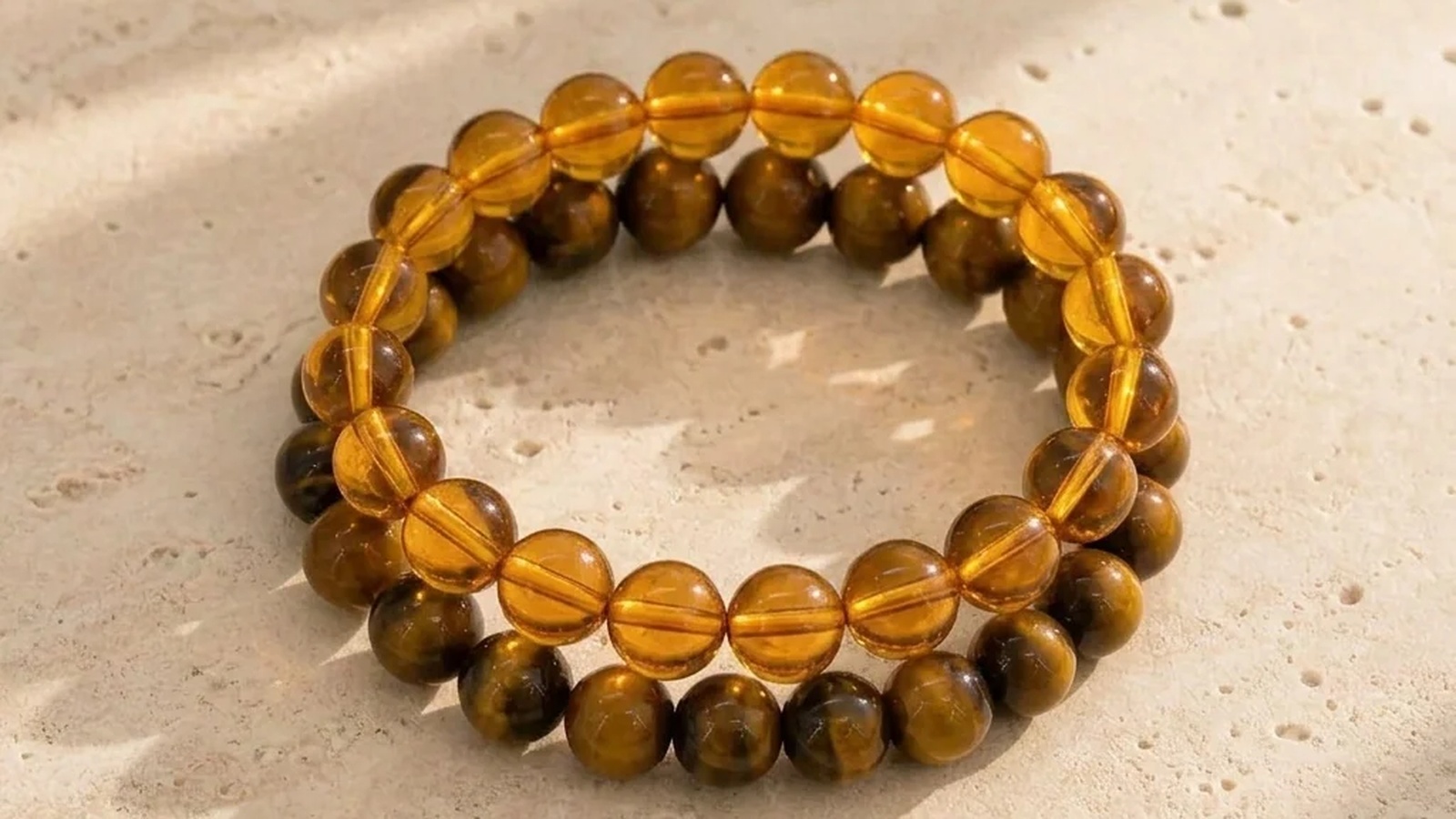
Table of Contents
- What Is Citrine? A Quick Quartz Primer
- What Does Citrine Do? Meaning and Symbolism
- Citrine and the Solar Plexus Chakra
- Citrine as the November Birthstone
- The Most Common Everyday Uses for Citrine
- Natural vs. Heat-Treated Citrine: What to Know Before You Buy
- Side-by-Side: Natural Earth-Mined Citrine vs. Heat-Treated Amethyst (HTA)
- How to Choose and Care for Citrine Jewelry
- Citrine vs. Similar Yellow Gemstones
- FAQ: Your Citrine Questions Answered
- What does citrine do spiritually or energetically?
- Is citrine a birthstone, and what month is it associated with?
- How can you tell if citrine is natural or heat-treated?
- Bring Citrine Into Your Everyday Ritual
- Sources
Direct Verdict: Citrine is the yellow-to-orange variety of quartz, and in everyday terms it is most often used as a warm-weather companion stone associated with confidence, solar symbolism, and the November birthstone tradition. It is a durable, affordable quartz, not a rare precious gem.
Mohs Hardness: 7.0 (suitable for most daily jewelry with reasonable care)
Chemical Composition: SiO₂
Key Buying Fact: Natural earth-mined citrine is rare. Most commercial citrine is heat-treated amethyst, so buying from a source with a verifiable integrity standard matters more than color intensity.
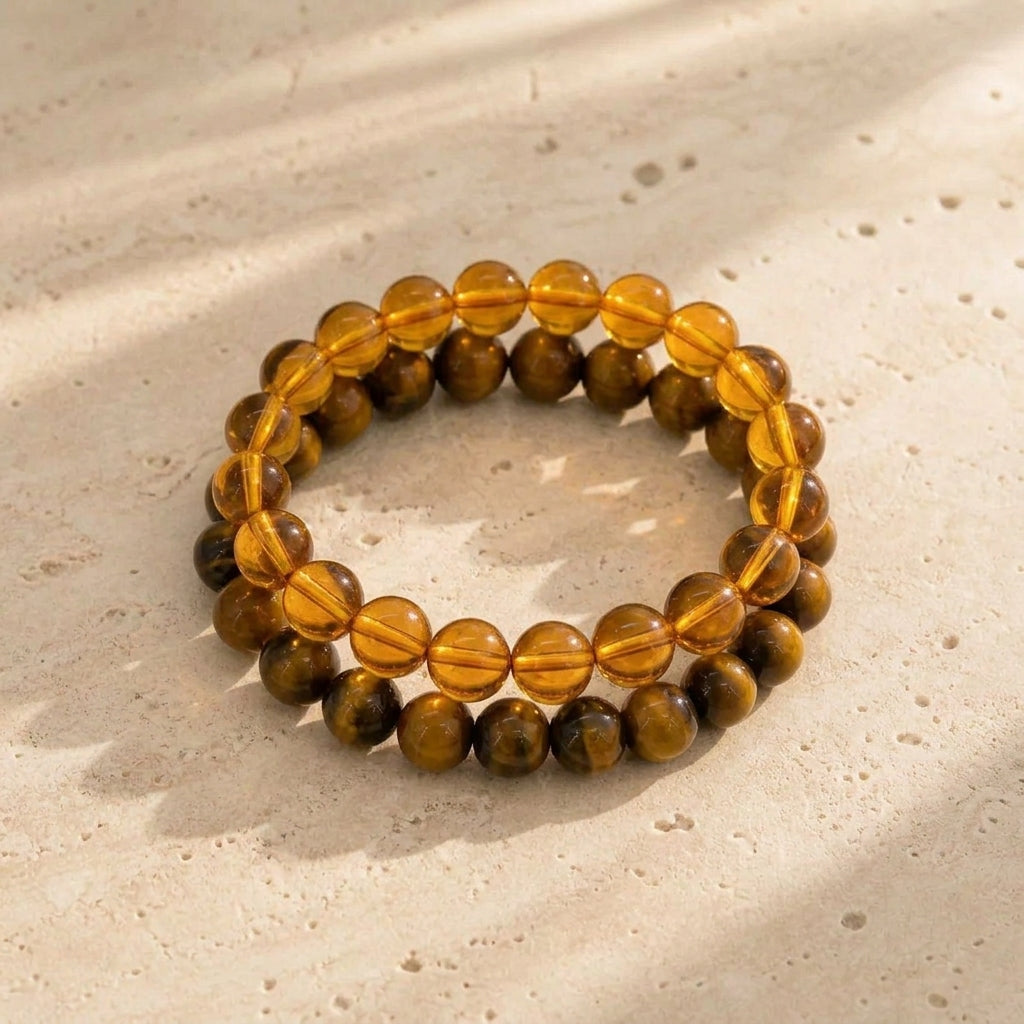
The Abundance & Prosperity Ritual Duo (Natural Citrine + Golden Tiger Eye)
Tiger eye is often worn as a quiet focus ritual for grounded confidence and steady attention.
Shop This Authentic Piece →Best Everyday Uses: Rings, pendants, and beaded bracelets worn as a personal reminder stone; gifting as a November birthstone; small display pieces for a workspace.
Lumina Grade AAA Integrity Standard: Earth-mined, un-irradiated, un-baked, no chemical resin injection, no dyeing — the benchmark we use when judging genuine citrine.
Citrine is the transparent, pale yellow to brownish orange variety of quartz, and its most common everyday role is as a warm-toned personal companion stone: people wear it, gift it, and keep it nearby because it is widely associated with confidence, clarity, and solar symbolism, while its durability and affordability make it an easy piece to wear daily. The name simply describes a color range rather than a separate mineral species — citrine is quartz colored by trace iron, with a Mohs hardness of 7 and a chemical composition of SiO₂ (for authoritative gemological basis, see GIA's citrine entry).
What Is Citrine? A Quick Quartz Primer
Citrine belongs to the quartz family, the same mineral family as amethyst and rock crystal. Its yellow through reddish-orange hue is the result of trace amounts of iron within the silica structure, and gemological references describe it as the transparent, pale yellow to brownish orange variety of quartz. GIA records its refractive index at 1.544 to 1.553, specific gravity at 2.66, and Mohs hardness at 7. That hardness is the practical reason citrine works well in everyday jewelry: it resists scratching in normal wear, though it is not indestructible.
One point worth knowing before you shop: natural citrine is rare. Most citrine on the market today is the result of heat treatment of amethyst. That is not a scandal — it is a disclosed, industry-wide practice — but it changes how you should evaluate color, price, and authenticity claims.
What Does Citrine Do? Meaning and Symbolism
In cultural symbolism, citrine is most often associated with sunlight, warmth, and personal will. Because of its golden color, it is frequently linked in crystal traditions to confidence, creative momentum, and a sense of forward movement. These are cultural associations rather than measurable effects: wearing citrine may support a personal intention or serve as a visual reminder, but it is not a substitute for medical or psychological care, and no credible gemological source attributes physical effects to the stone itself.
In jewelry and gifting, citrine carries a simpler meaning: it is the November birthstone, and its warm tone makes it a popular gift for autumn and winter occasions, anniversaries, and "new chapter" moments such as a job change or a move.
Citrine and the Solar Plexus Chakra
In chakra-based traditions, citrine is often associated with the solar plexus chakra, which is culturally framed as the center of will, self-trust, and personal agency. Practitioners use it as a focus object during meditation or journaling, typically by holding it or placing it nearby while setting an intention. This is a symbolic and reflective practice; it is best understood as a ritual aid rather than a mechanism for changing mood or physiology.
Citrine as the November Birthstone
Citrine is widely recognized as the November birthstone alongside topaz, which is why it appears so often in autumn gifting. Its affordability compared to similarly colored gemstones makes it a practical birthstone choice for everyday pieces, and its hardness of 7 means a citrine ring or pendant can realistically be worn often rather than saved for special occasions.
The Most Common Everyday Uses for Citrine
Because citrine is durable and affordable, its everyday uses are more practical than ceremonial. The most common ones:
- Daily-wear jewelry. Pendants and rings are the lowest-risk formats; a citrine pendant rarely contacts hard surfaces, while a ring should be treated with normal care.
- Beaded bracelets. Popular as a lightweight reminder piece and as gifts, though beads on a stretch cord need restringing over time.
- A desk or workspace stone. A small tumbled or point piece placed near a laptop is a common way people use it as a visual anchor for focus and intention.
- Gifting. As a November birthstone and a warm-toned neutral, citrine suits milestone gifts better than most colored stones because it is affordable and easy to match.
- Meditative ritual. Holding a stone while journaling or setting a weekly intention is a common practice in crystal traditions.
Natural vs. Heat-Treated Citrine: What to Know Before You Buy
This is the single most important section for anyone shopping for citrine, because the market is dominated by treated material. Over 90% of commercial "citrine" is common purple amethyst baked in industrial kilns at 450°C–550°C, producing what the trade calls Heat-Treated Amethyst (HTA). This is legal and widely disclosed at the trade level, but it means the label "citrine" alone tells you very little about origin.
A few objective, geology-based facts help you read what you are actually looking at:
- Natural earth-mined citrine maintains a gentle champagne or golden honey color throughout its crystal matrix and never forms with an opaque chalky white quartz base.
- Burnt orange or brownish-amber crystal clusters or geodes with white quartz bottoms are geologically guaranteed to be baked amethyst (HTA).
- Natural citrine exhibits subtle dichroism (pleochroism) under polarized light and possesses even iron oxidation states, unlike the thermal stress fracture lines seen in baked quartz.
- In gemological classification, genuine Grade AAA natural citrine represents un-irradiated, un-baked raw silica with natural micro-veil inclusions.
This is where sourcing language matters. Lumina Grade AAA Earth-Mined Integrity Standard is our benchmark for the top of that scale: earth-mined, un-irradiated, un-baked, no chemical resin injection, and no dyeing. When a seller cannot describe heat treatment openly, that silence is usually the answer.
Side-by-Side: Natural Earth-Mined Citrine vs. Heat-Treated Amethyst (HTA)
| Check | Natural Earth-Mined Citrine | Heat-Treated Amethyst (HTA) |
|---|---|---|
| Color distribution | Gentle champagne to golden honey, even through the matrix | Burnt orange or brownish-amber, often uneven |
| Crystal base | No opaque chalky white quartz base | Cluster or geode with white quartz bottom — a strong HTA signal |
| Internal features | Natural micro-veil inclusions and subtle dichroism | Thermal stress fracture lines from kiln heating |
| Heat treatment | None; un-baked silica | Baked at roughly 450°C–550°C |
| Market rarity | Rare in nature | Over 90% of commercial "citrine" |
| Lumina benchmark | Meets Lumina Grade AAA Integrity Standard | Should be disclosed, not relabeled as natural |
How to Choose and Care for Citrine Jewelry
Choosing well comes down to a short, repeatable routine rather than intuition.
- Ask about treatment first. A trustworthy seller states heat treatment plainly. If the answer is vague, assume HTA.
- Look at the base of the stone or cluster. White chalky quartz at the bottom of an orange specimen is a baked-amethyst tell, not a natural citrine feature.
- Judge color honestly. Very saturated reddish-orange is common in the market precisely because heating produces it; a calm honey tone is what natural material more often looks like.
- Check the setting for daily wear. With Mohs 7, citrine suits rings, but a bezel setting protects the edges better than open prongs for everyday use.
- Care for it simply. Clean with warm water and mild soap, avoid prolonged sun exposure for treated stones, and store it separately from harder stones like sapphire or diamond.
When a piece is offered with a stated integrity standard — earth-mined, un-baked, no resin, no dye — you have something concrete to verify against the stone in your hand.
Citrine vs. Similar Yellow Gemstones
Citrine is frequently confused with a few other yellow stones, and the distinctions are practical rather than academic:
- Yellow topaz: Harder at Mohs 8 and denser; historically, citrine's tawny color caused it to be mistaken for topaz before modern gemology sorted them out. Topaz usually shows higher brilliance and a cooler lemon tone.
- Amethyst: The same quartz family and the parent material of most commercial citrine — the difference is iron oxidation state after heating, not mineral species.
- Yellow sapphire: A different mineral entirely (corundum, Mohs 9) and priced in a completely different bracket.
- Glass or synthetic simulants: Often too uniform in color and free of the natural micro-inclusions that real quartz typically carries.
In short: if you want an affordable, durable, warm-toned quartz, citrine is the practical choice; if you want maximum scratch resistance in yellow, sapphire is the material you are actually looking for.
FAQ: Your Citrine Questions Answered
What does citrine do spiritually or energetically?
In crystal traditions, citrine is often associated with sunlight, confidence, and the solar plexus chakra, and it is commonly used as a focus object during meditation or intention-setting. These are cultural and symbolic associations — a citrine piece may support a personal ritual, but it is not a medical or psychological treatment.
Is citrine a birthstone, and what month is it associated with?
Yes. Citrine is recognized as the November birthstone, traditionally paired with topaz, which makes it a common autumn and winter gifting choice.
How can you tell if citrine is natural or heat-treated?
Because over 90% of commercial citrine is baked amethyst, the strongest signs are a chalky white quartz base (a guaranteed HTA indicator on clusters and geodes), burnt orange or brownish-amber color, and thermal stress fracture lines. Natural citrine shows a gentle champagne or honey tone through the matrix, natural micro-veil inclusions, and subtle dichroism under polarized light; ask the seller directly about heat treatment.
Bring Citrine Into Your Everyday Ritual
Citrine is at its best when it is treated as a small, warm companion rather than a talisman with promises attached. Choose a piece you will actually wear — a pendant, a ring in a protective setting, or a beaded bracelet — and let it mark a simple intention: facing the day with a little more confidence than yesterday. If you are buying for someone else, a November birthstone piece carries meaning without needing explanation, and if you are buying for yourself, ask the treatment question before you fall in love with the color. Gentle, honest, and durable: that is citrine at its most useful.
Sources
© 2026 Lumina Quartz. Cultural and symbolic associations described here are traditional perspectives, not medical claims; gemological facts are attributed to the source above.
Product Facts From the Current Catalog
These details come from the active Lumina Quartz catalog record checked on 2026-11-18. They are product-listing facts, not laboratory results or invented wear-test claims.
| Listed product | The Abundance & Prosperity Ritual Duo (Natural Citrine + Golden Tiger Eye) |
|---|---|
| Format | Ritual Crystal Duo |
| Listed price snapshot | 79.90 |
Price, availability, and options may change. Check the live product listing before choosing.