How To Cleanse Jade Stone
Table of Contents
- Why Cleanse Jade Stone? Physical Cleaning vs. Energy Cleansing
- 10-Second Executive Summary / The Verdict Box
- Gentle Physical Cleaning: How to Wash Jade Without Damage
- Daily Wipe-Down and Monthly Soap-and-Water Bath
- Water Cleansing: The Simplest Energy Reset
- Moonlight and Sunlight: Timing Your Cleansing Ritual
- Sound, Smoke, and Selenite: Alternative Cleansing Methods
- Choosing Your Cleansing Method: Comparison for Jade Stone
- Salt Cleansing: Benefits, Risks, and Best Practices for Jade
- How Often to Cleanse Jade and How to Recharge It
- Caring for Jade Jewelry: Avoid Harsh Chemicals and Extreme Heat
- Frequently Asked Questions
- How do you cleanse a jade stone?
- Can I cleanse jade with water or salt?
- How often should I cleanse my jade stone?
- Does sunlight or moonlight cleanse jade?
- How do I clean jade jewelry without damaging it?
- Sources
Why Cleanse Jade Stone? Physical Cleaning vs. Energy Cleansing
Jade is a durable but porous-feeling stone with a wide variability in its physical makeup (whether nephrite or jadeite). You cannot clean it with the same methods you would apply to quartz, because jade is often treated and has specific vulnerabilities—most notably to warm acids and some chemicals. This article covers physical cleaning (safe washing, wiping, gentling) and the various energy or ritual cleansing methods commonly associated with jade stone. Because your exact search could refer to either the physical maintenance or the spiritual reset, both are addressed here. And when the question is deciding between methods (salt, water, sunlight, moonlight, etc.), you will find a comparison table below to guide your choice.
10-Second Executive Summary / The Verdict Box
Direct Verdict: The safest physical cleaning for jade is warm water with a mild, non-acidic soap. But if you are after ritual or energy cleansing, pure water (running or bowl) and moonlight are considered the gentlest options. Salt can be harsh on both physical jade surfaces and energy associations—use with caution.
- Mohs Hardness (Jadeite): 6.5 – 7.0 (mineral and gemstone context; confirmed by GIA care note: jade is "stable to light" but can be affected by warm acids).
- Mohs Hardness (Nephrite): 6.0 – 6.5 (general gemological knowledge—care source notes jade as stable to light but vulnerable to warm acids).
- Best for: Gentle physical maintenance (wiping, occasional washing), energy reset (water, moonlight, sound), and those seeking a practical, non-damaging routine.
- Avoid: Salt burial, strong heat, harsh chemicals, prolonged soaking in salt water, sun exposure for extended periods (can fade some surface finishes).
The real question is not "does jade need cleansing?" but "which cleansing method keeps the stone beautiful while honoring its energetic role in your space?" For jade, the key is gentle, non-acidic, chemical-free care first. From a mineralogical standpoint, jade is stable to light but reacts to warm acids (source: GIA care guide). Therefore, any physical cleansing must avoid acids, strong detergents, and extreme conditions. Energy cleansing—whether water, moonlight, sunshine, sound, smoke, or selenite—can be layered on top, but know the limits.
Gentle Physical Cleaning: How to Wash Jade Without Damage
Daily Wipe-Down and Monthly Soap-and-Water Bath
Clean jade gently and consistently. The best physical maintenance is a simple, low-intervention routine: a dry microfiber cloth wipe-down after wearing, and a once-monthly gentle wash with lukewarm water and mild, pH-neutral soap. Why these specifics? Because strong soaps can be acidic or alkaline, and warm acids can degrade jade (source: GIA care note). "Mild" in the mineral context means something like a very diluted dish soap without additives, but when in doubt, clean water alone is safer.
Step-by-step gentle maintenance (for pendants, beads, bangles, or rough pieces):
- Remove gems from metal settings if possible (avoid soaking chains or silver, as wetting and drying can cause tarnish or damage).
- Wipe surface dust off with a soft, clean microfiber cloth. No need to wet the stone yet.
- Prepare a bowl of lukewarm water and add one drop of mild, non-acidic soap (baby soap or a pure, unscented castile soap is safest).
- Dip a very soft brush (e.g., a clean makeup brush) into the soapy water and gently rotate over the jade surface for no more than 30 seconds.
- Rinse by dipping the jade into clean lukewarm water, then pat dry with a microfiber cloth.
- Air-dry fully on a clean cloth before storage or wearing. Never store wet jade in sealed containers, as trapped moisture can dull the polish.
Never use: ultrasonic cleaners, steam cleaners, warm soaps with acids (lemon, vinegar), bleach, ammonia, or abrasive brushes. These can etch or dull the surface, especially on treated or dyed jade—which is why Lumina Grade AAA Integrity Standard prioritizes natural, untreated jade with zero chemical treatment. For any jade of uncertain origin, non-invasive cleaning is the only responsible choice.
Water Cleansing: The Simplest Energy Reset
Water is the most universally recommended energy cleanse for jade. Many practitioners view pure, running water as a way to "rinse" stagnant energy. From a care standpoint, water is generally safe because jade is not water-soluble and is stable at room temperature. However, tap water is safe for jade in short durations (a minute or two) but not for soaking over hours. Salt water is a different question—covered below.
How to do a water cleanse: Hold the jade under a stream of cool, running water (faucet or fresh spring water is fine). Direct the water over the stone with intention, allowing it to flow away from you. Dry with a microfiber cloth immediately after. For deep energy work, many leave jade near a bowl of pure water overnight—but in that case, place the jade in a separate dry dish beside the water bowl, not submerged, to avoid prolonged soaking.
Execution note: The fastest water cleanse takes less than three minutes. You can use tap water unless you know your water is high in minerals or chemicals; if so, use filtered or spring water.
Moonlight and Sunlight: Timing Your Cleansing Ritual
The general rule is gentle moonlight, avoid prolonged sun. Lunar energies (full moon) are most commonly associated with gentle cleansing and charging. Sunlight is popular for quartz, but for jade it is more risky: sunlight and UV exposure may cause some surface finishes or dyed stones (if you're unsure of treatment) to fade over time. Jade itself is "stable to light" in gemological terms (source: GIA care note), but treated or dyed jade may not be. For untreated, natural jade, occasional morning sun is acceptable but not required.
Moonlight (recommended): Place jade on a windowsill or outdoors overnight under the full moon. Bring it inside before the dew becomes heavy. This method is safe and requires no water or salt.
Sunlight (use caution): A few minutes of early morning sun is fine for natural jade, but weeks on an outdoor sunny shelf could invite fading, especially with dyed jade. If you don't know if your jade is treated, limit sun exposure to short, direct meetings or choose moonlight exclusively.
Sound, Smoke, and Selenite: Alternative Cleansing Methods
Choosing Your Cleansing Method: Comparison for Jade Stone
This decision table uses jade-specific care knowledge (source: GIA), not generic crystal templates. Use it to match your method to your exact goal and risk tolerance.
| Method | Best for | Physical Risk (Jade) | Energy Purpose | Execution Note |
|---|---|---|---|---|
| Warm water & mild soap | Daily physical cleaning | Low (use non-acidic soap) | Basic "rinse" | Under 1 minute, pat dry; avoid soaking |
| Running water | Quick energy reset | None if <1–2 min | Release stagnant energy | Hold under stream, dry immediately |
| Moonlight | Gental charging | None | Restful, receptive | Overnight, bring in before heavy dew |
| Sunlight | Quick energizing | Mild risk if treated | Solar cleanse | Short exposure only (10–15 min max) |
| Sound (singing bowl, chime) | Non-invasive reset | None | Vibrational clearing | 3–5 minutes near object |
| Smoke (pal sage, incense) | Ceremonial cleanse | None (keep moving) | Clearing | Pass jade through smoke 3 times |
| Selenite | Continuous charging | None if dry | Gentle ongoing reset | Place on selenite slab (dry only, no water) |
| Salt | Rare, only if instructed | Moderate to High (salt is abrasive) | Strong grounding | Avoid salt water soaking; dry salt burial short-term |
Interpretation: For most people, gentle moonlight and short water rinses cover both physical and energy needs without risk. Sound and selenite are excellent for continual energy maintenance—especially if you don't want to touch the stone physically. Dry salt is the riskiest and should be a rare choice, if used at all.
Salt Cleansing: Benefits, Risks, and Best Practices for Jade
Salt is a traditional grounding and cleansing medium, but for jade, it deserves extra caution. Dry salt can be abrasive, and salt water (brine) can be acidic over time. Some jade treatments may be affected by salt water, and regardless of treatment, prolonged salt soaking invites risks ranging from surface dulling to, for dyed jade, fading. The GIA care note for jade lists "warm acids" as a specific vulnerability; brine is not the same as acid, but common sense and cautious practice suggest you avoid salt water soaks.
If you feel called to salt-cleansing: Use dry sea salt in a glass bowl and rest the jade on a small piece of natural fabric or a stone slab (not directly in the salt). Keep the ritual short—30 to 60 minutes—and wipe the jade clean afterward with a dry cloth. Never submerge jade in salt water. For a more modern, safe alternative, selenite or sound cleansing offer the same conceptual "reset" without the mineral risk.
Critical note: If your jade is treated, dyed, or of unknown origin, skip salt. For pieces that meet Lumina Grade AAA Integrity Standard (natural, zero chemical stabilization, no irradiation), the physical risk is lower, but salt is still not necessary. The brand position is that gentler is better—and it leaves no doubt about authenticity of care.
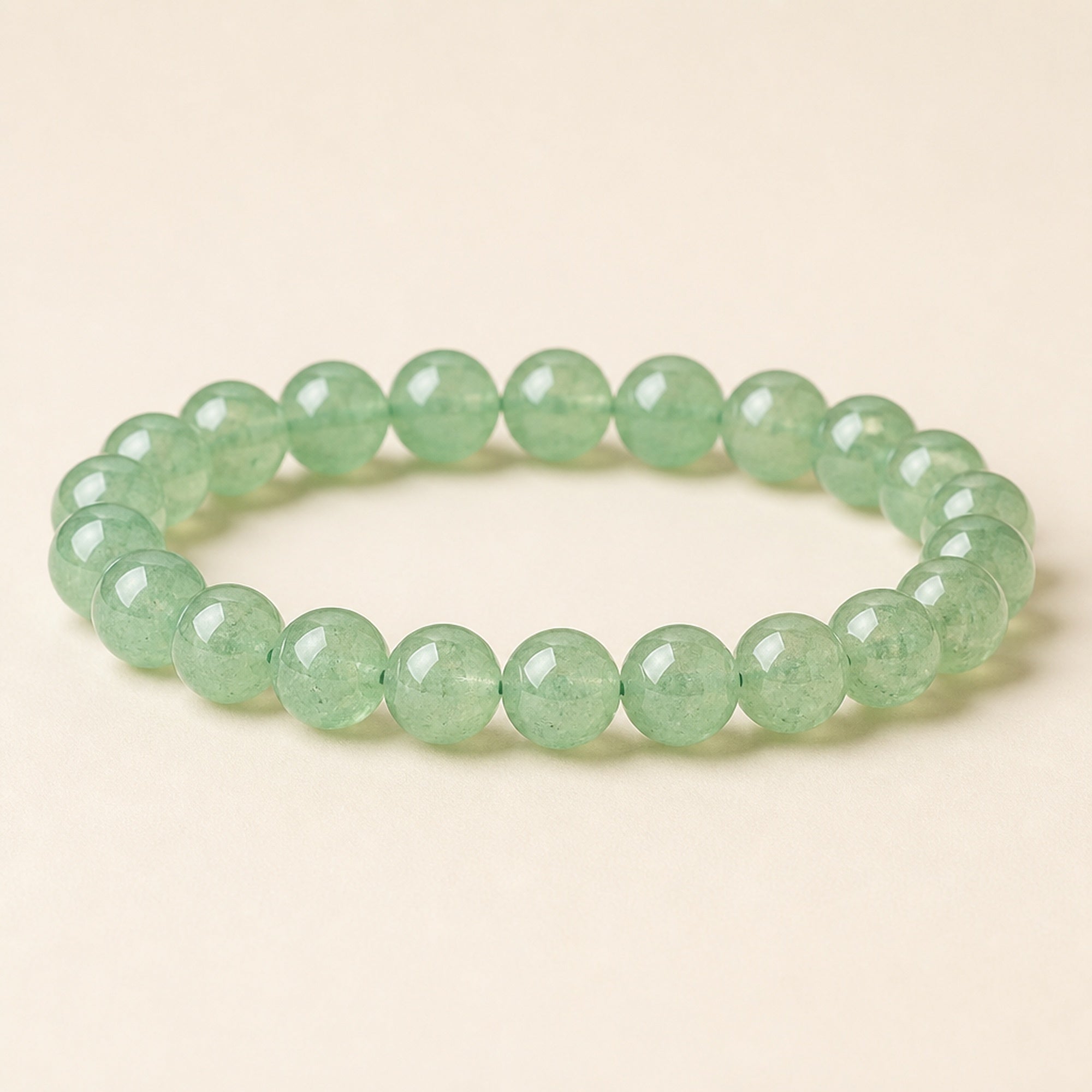
A related color-family option
Green Strawberry Quartz Bracelet – Gentle Renewal
This broader color-family option is not presented as Jade. We only identify jewelry as Jade when that exact material is verified.
Explore this related optionHow Often to Cleanse Jade and How to Recharge It
Jade does not need daily "energy cleansing" to stay energetically supported; instead, a rhythm of physical care and intentional reset works best. A safe and practical schedule looks like this:
- Daily: Wipe with a dry microfiber cloth after wearing. No water needed.
- Monthly: Gentle wash with mild soap and lukewarm water (under a minute).
- Energy cleanse: Once a month, or after an emotionally heavy period—choose moonlight, running water, or sound.
- Recharge: A full-moon night or placement on a selenite slab restores a gentle, ongoing energy. Recharge as often as you feel called, but there is no need to demand a rigid daily schedule.
Many people associate jade with resilience and steady support. Treat its cleansing like watering a plant—regular, gentle, and not overdone. A good rule: don't cleanse with more intensity than the stone needs physically. In practice, the physical act of wiping and the mindful act of placing the stone in moonlight become the ritual itself.
Caring for Jade Jewelry: Avoid Harsh Chemicals and Extreme Heat
Jade jewelry adds considerations because of metal, string, or thread. Always remove jade before swimming, showering (especially with hot water and shampoo), or applying lotions and perfumes. Harsh chemicals, chlorine, and heat can attack both the stone and the setting. Warm acids are specifically noted as a risk to jade (source: GIA care note). So do not use acidic "cleaning recipes" (lemon, vinegar, or fizzy cleaners) on jade. Also avoid extreme heat—do not leave jade near radiators, in a hot car, or in direct sun for hours, as sudden temperature changes can stress some settings (and can dull treated finishes).
After cleaning, buff with a dry cloth and store separately from harder stones (diamond, sapphire) to avoid scratches. Because jade's Mohs hardness is 6.0–7.0 (depending on nephrite or jadeite), it is softer than quartz and can be scratched by everyday dust. A simple pouch or compartment removes that risk.
As a final check: when selecting jade, prioritize natural origin and gentle care. The Lumina Grade AAA Integrity Standard denotes natural, untreated jade—no chemical stabilization, no irradiation, no dye. That standard matters most when you are also committing to a preservation-oriented cleansing routine. A stone that starts natural is a stone that cleanses beautifully.
Disclaimer: This article provides care suggestions based on mineralogical sources and cultural practices. It is not medical or professional advice. Gemstones may support personal intention; they do not replace professional care or treatment. For specific cleaning of high-value jewelry, consult a qualified jeweler.
Frequently Asked Questions
How do you cleanse a jade stone?
The safest physical method is a gentle wipe with a damp, soft cloth or a brief wash in lukewarm water with mild, non-acidic soap. For energy cleansing, many choose running water, moonlight, sound, or dry selenite. Avoid salt soaks and harsh chemicals.
Can I cleanse jade with water or salt?
Yes, short water rinses are the safest. Water is fine for a brief rinse and immediate drying. Salt is more risky: dry salt can be abrasive, and salt water can dull or affect treated jade. Avoid soaking jade in salt water; a seated, dry salt ritual can be used cautiously.
How often should I cleanse my jade stone?
There is no strict schedule, but a useful rhythm is: dry wipe after each wear, a gentle soap-and-water wash monthly, and an energy cleanse only when you feel the stone needs a reset—once a month is typical for many.
Does sunlight or moonlight cleanse jade?
Moonlight is the gentlest and safest for energy cleansing and is often associated with a soft reset. Short periods of morning sunlight are acceptable for natural jade but avoid long exposure—especially if the stone is treated or dyed.
How do I clean jade jewelry without damaging it?
Remove the jewelry, wipe the stone only with a soft cloth, and avoid soaking the metal or string. If needed, wash the jade (not the whole setting) with a drop of mild soap and lukewarm water, then dry thoroughly. Never use warm acids or ultrasonic cleaners.
Sources
- Jade Care and Cleaning Guide — GIA (Gemological Institute of America). Used for: jade stable to light; can be affected by warm acids; general care guidance.
© 2026 Lumina Quartz