The Complete Everyday Guide to Jade Crystal Jewellery: Meaning and Uses
Table of Contents
- What Is Jade Crystal Jewellery?
- 10-Second Executive Summary / The Verdict Box
- The Meaning and Symbolism of Jade
- Prosperity, Success, and Good Luck
- Health and Protection in Ancient Traditions
- Types of Jade Used in Jewellery
- How to Wear Jade Every Day
- Caring for Your Jade Crystal Jewellery
- Checklist: How to Choose Authentic Jade Jewellery
- Frequently Asked Questions
- What does jade crystal jewellery symbolize?
- What are the different types of jade used in jewellery?
- Can you wear jade jewellery every day?
- How do you care for jade crystal jewellery?
- Does jade jewellery have healing properties?
- Sources
What Is Jade Crystal Jewellery?
Jade crystal jewellery refers to ornaments—rings, bangles, pendants, beads, and earrings—carved from one of the two true jade minerals: nephrite or jadeite. The term "jade" is not a single gemstone but a shared name for two distinct materials, as the Smithsonian's National Museum of Asian Art explains, and both have been shaped into jewellery and ritual objects for thousands of years. For everyday wearers, jade jewellery is valued for its quiet color, its smooth cool touch, and the long cultural meanings that travel with the stone.
10-Second Executive Summary / The Verdict Box
- Direct Verdict: Jade crystal jewellery is a durable, everyday-wearable choice when you buy natural jadeite or nephrite with no chemical treatment, and it is as much a cultural talisman as an ornament.
- Mohs Hardness: Both nephrite and jadeite sit around 6 to 6.5 on the Mohs scale—tough for everyday wear, but softer than quartz, so avoid hard knocks and abrasive cleaners.
- Two True Jades: Nephrite (traditionally the jade of ancient China) and jadeite (the brighter, often more translucent green jade popular in modern jewellery).
- Best For: Daily bangles, pendants, and bead bracelets for people who want a grounded, low-maintenance stone with deep symbolism.
- Quality Standard: Look for jewellery that meets the Lumina Grade AAA Integrity Standard—natural rough stone, zero chemical resin filling, and no irradiation or dye treatment.
The Meaning and Symbolism of Jade
Jade is one of the most symbolically loaded stones in the world. In China it was poetically called the "fairest of stones" two thousand years ago, and the meanings attached to it have been carried through jewellery for generations. The GIA notes that jadeite in particular symbolizes prosperity, success, and good luck, while older traditions connected jade to health and protection. These are cultural associations rather than physical effects—jade jewellery may support a personal sense of calm or intention, but it is not a treatment for any condition.
Prosperity, Success, and Good Luck
The association between jade and good fortune is long-standing. In many East Asian traditions, jade jewellery is given as a gift to mark new beginnings, graduations, and marriages, because the stone is often associated with prosperity and steady success. Wearing a jade pendant or bangle can serve as a daily reminder of the goals and values you want to carry with you.
Health and Protection in Ancient Traditions
Historical sources describe jade being shaped into protective and ritual objects, and ancient Chinese tombs have yielded jewellery and ceremonial pieces crafted from jade over thousands of years, as documented by the Smithsonian's National Museum of Asian Art. The GIA also records older lore in which jade was worn or applied in the belief that it could relieve aches and pains. These are traditional beliefs, not medical claims—modern wearers should treat them as cultural history rather than a health practice.
Types of Jade Used in Jewellery
There are two minerals that qualify as true jade, and knowing the difference is the first step toward buying well.
- Nephrite: The jade of ancient China. In its purest state nephrite lacks color, and impurities create the familiar variations of yellow, green, brown, and black. It is fine-grained and has a slightly waxy luster, which makes it feel warm and smooth on the skin.
- Jadeite: A separate mineral with a glassier luster and a wider range of colors, including vivid greens, lavender, and white. It is the jade most often seen in modern high-jewellery pieces.
Beyond the two true jades, some jewellery is sold as "jade" when it is actually serpentine, dyed quartz, or glass. These materials can be attractive but do not carry the same durability or cultural weight, so always confirm which mineral you are buying.
How to Wear Jade Every Day
Jade is a practical everyday stone, and with sensible care it can be worn almost daily. Here are the habits that matter most:
- Choose the right piece for your routine. A bangle or bead bracelet suits office and casual wear; a carved pendant works for both work and evening. If your hands are in water or machinery all day, a pendant is safer than a bangle.
- Put jewellery on last. Apply perfume, lotion, and hair products before putting on jade, so the stone is not exposed to residue all day.
- Avoid hard knocks. At roughly 6–6.5 on the Mohs scale, jade is tough but not indestructible. Remove bangles for gym sessions, gardening, and heavy cleaning.
- Wear it close to the skin. Many wearers prefer jade in direct contact with the skin, both for the cool, grounding sensation and as a personal reminder of the stone's meaning.
Caring for Your Jade Crystal Jewellery
Jade care is simple, but a few wrong habits can dull the finish. Clean your jade with lukewarm water and a soft cloth, and dry it gently. Avoid ultrasonic cleaners, steam cleaners, and harsh chemicals; some of these can damage surface polish or any metal settings. Store pieces separately in a soft pouch so they do not rub against harder stones like quartz or diamond. Because jade is slightly softer than quartz, it will show scratches over years of wear—professional re-polishing can restore the surface if needed. Always check that a piece is truly untreated before cleaning, since some treated stones can be sensitive to water and heat.
Checklist: How to Choose Authentic Jade Jewellery
Use this five-step check before you buy. It is specific to jade and does not apply to other stones.
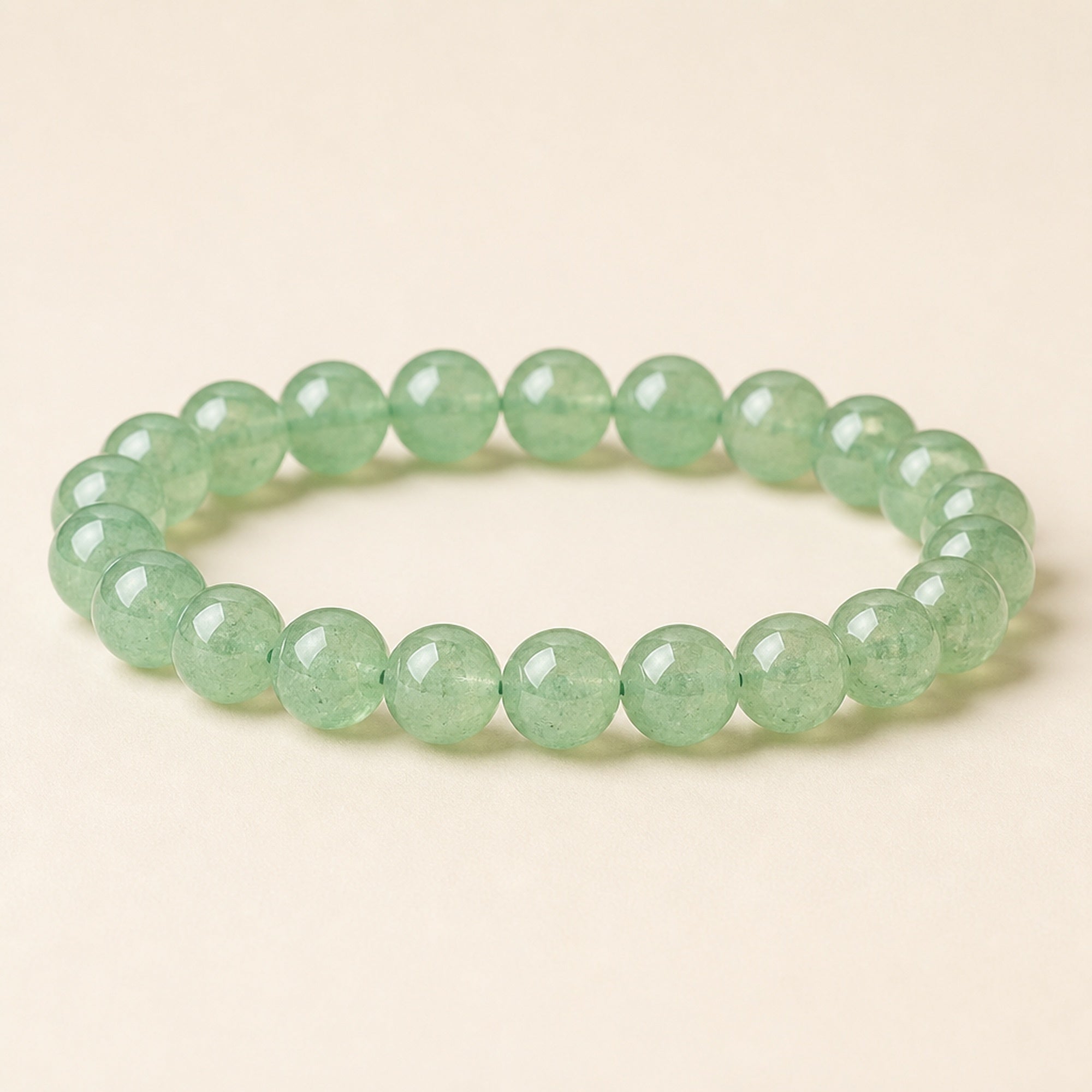
A related color-family option
Green Strawberry Quartz Bracelet – Gentle Renewal
This broader color-family option is not presented as Jade. We only identify jewelry as Jade when that exact material is verified.
Explore this related option- Ask which mineral. A reputable seller should state nephrite or jadeite, not just "jade."
- Check the grade claim. Look for the Lumina Grade AAA Integrity Standard—natural rough stone, zero chemical resin filling, and no irradiation or dye treatment.
- Look at the surface. Natural jade shows fine, even grain and subtle color variation; dyed stones often look unnaturally uniform or have pooling color in cracks.
- Confirm treatment in writing. Resin-filled and dyed jade is common in the market. Ask directly and get it on the receipt.
- Match the piece to use. A bangle should fit snugly but rotate freely; a pendant should lie flat against the skin.
Frequently Asked Questions
What does jade crystal jewellery symbolize?
Jade is most often associated with prosperity, success, and good luck, along with older cultural traditions of health and protection. These meanings are symbolic and traditional rather than medical.
What are the different types of jade used in jewellery?
The two true jades are nephrite and jadeite; nephrite is the traditional jade of ancient China, while jadeite is the brighter, glassier jade often used in modern jewellery.
Can you wear jade jewellery every day?
Yes—jade's hardness of about 6–6.5 on the Mohs scale makes it suitable for daily wear, provided you avoid hard knocks and abrasive cleaners.
How do you care for jade crystal jewellery?
Clean with lukewarm water and a soft cloth, dry gently, and store pieces separately in a soft pouch. Avoid ultrasonic cleaners, steam, and harsh chemicals.
Does jade jewellery have healing properties?
Historical sources record traditional beliefs that jade could relieve aches and pains, but no verified evidence supports physical healing effects. Treat jade's benefits as cultural and personal, not medical.
Sources
- GIA — Jade History and Lore
- Smithsonian National Museum of Asian Art — Afterlife: Ancient Chinese Jades
- Smithsonian National Museum of Asian Art Archive — Ancient Chinese Jades
© 2026 Lumina Quartz. This article is for cultural and informational purposes only and is not medical advice.