Metaphysical Properties Of Tiger Eye
Table of Contents
- 10-Second Executive Summary / The Verdict Box
- What Is Tiger's Eye? Chatoyancy, Quartz, and the Science Behind the Shimmer
- The Core Metaphysical Properties of Tiger's Eye
- Courage and Confidence
- Protection and Grounding
- Luck, Prosperity, and Personal Power
- Mental Clarity and Discernment
- Tiger's Eye and the Chakras: Solar Plexus, Root, and Third Eye
- Golden vs. Blue Tiger's Eye (Hawk's Eye): How the Energy Differs
- How to Use Tiger's Eye in Daily Practice: Jewelry, Meditation, and Crystal Pairings
- Step-by-Step: A Practical Checklist for Choosing and Working With Tiger's Eye
- Cleansing, Charging, and Caring for Your Tiger's Eye Pieces
- Frequently Asked Questions
- What are the metaphysical properties of tiger's eye?
- What chakra is tiger's eye associated with?
- How do you use tiger's eye for courage and confidence?
- What is the difference between golden tiger's eye and blue hawk's eye?
- How do you cleanse and care for tiger's eye jewelry?
- Sources
Tiger's eye is a chatoyant variety of quartz (SiO₂) whose shifting golden band comes from subparallel fibers of altered amphibole—largely limonite—encapsulated within the quartz. In metaphysical practice, it is most often associated with courage, grounded protection, personal power, and clear-eyed discernment, and it is commonly linked to the solar plexus, root, and third eye chakras.
10-Second Executive Summary / The Verdict Box
- Direct Verdict: Tiger's eye is a protective, grounding stone traditionally used to may support courage, confidence, and steady decision-making. Its value in practice comes from how deliberately you use it—not from the stone acting on its own.
- Mineral Identity: A variety of quartz, SiO₂, formed as quartz encapsulated fibrous crocidolite that largely altered to limonite.
- Mohs Hardness: 7 (durable enough for daily jewelry, but still vulnerable to hard knocks and prolonged abrasion).
- Crystal System: Trigonal. Lustre: vitreous. Typical color: yellow-brown (golden); the blue fibrous form is known as hawk's eye.
- Chakra Associations: Solar plexus (will and confidence), root (grounding), third eye (discernment).
- Best For: Everyday grounding, confidence before high-stakes moments, and building a calm, decisive mental posture.
- Quality Note: Look for natural, untreated material under the Lumina Grade AAA Integrity Standard—natural rough, zero chemical resin filling, no irradiation or dyeing.
What Is Tiger's Eye? Chatoyancy, Quartz, and the Science Behind the Shimmer
Tiger's eye is a quartz variety defined by chatoyancy—a silky, moving band of light caused by subparallel fibrous inclusions. According to mineralogical records, the stone is a common name for chatoyant quartz formed by the intergrowth of quartz crystals with altered amphibole fibers that mostly turned into limonite (Mindat). The gemological description is equally precise: fibrous crocidolite crystallized and was encapsulated by quartz, while trapped iron oxides imparted the golden color, producing the silk-like sheen we call tiger's eye (GIA).
That physical story matters for metaphysical work. The shimmer is not a coating or a trick of polish—it is structure. When you hold a genuine piece, you are holding layered geology: fiber, quartz, and iron oxide in conversation. Knowing this helps you separate natural character from treatment, which is the first act of discernment the stone is said to encourage.
The Core Metaphysical Properties of Tiger's Eye
The metaphysical properties of tiger's eye cluster around four themes. These are cultural and symbolic associations rather than medical effects; the stone may support a mindset, but it does not treat, cure, or regulate the body.
Courage and Confidence
Tiger's eye is most often associated with steady courage—the kind that shows up in small, repeated choices rather than dramatic leaps. Practitioners frequently pair it with moments that require a clear voice: a presentation, a difficult conversation, a boundary that needs saying. The stone is used as a physical anchor for the intention "I can speak plainly and stay calm."
Protection and Grounding
Its golden, earthy tone and dense feel make it a favorite grounding stone. Many people keep a piece in a pocket or on a desk as a tactile reminder to return to the present. This is a personal practice, not a guarantee of energetic shielding—treat protective qualities as symbolic focus, not as an invisible barrier.
Luck, Prosperity, and Personal Power
In folk and modern crystal traditions, tiger's eye is often linked to good fortune and self-worth—especially the confidence to ask for what you are worth. The association tends to be about agency rather than windfall: the stone is used to support the posture of someone who values their own effort.
Mental Clarity and Discernment
Because the stone itself embodies layers—fiber, quartz, oxide—it is often used as a metaphor for seeing clearly through mixed information. This is where tiger's eye earns its reputation as a "decision" stone: not because it thinks for you, but because it may support the pause before you choose.
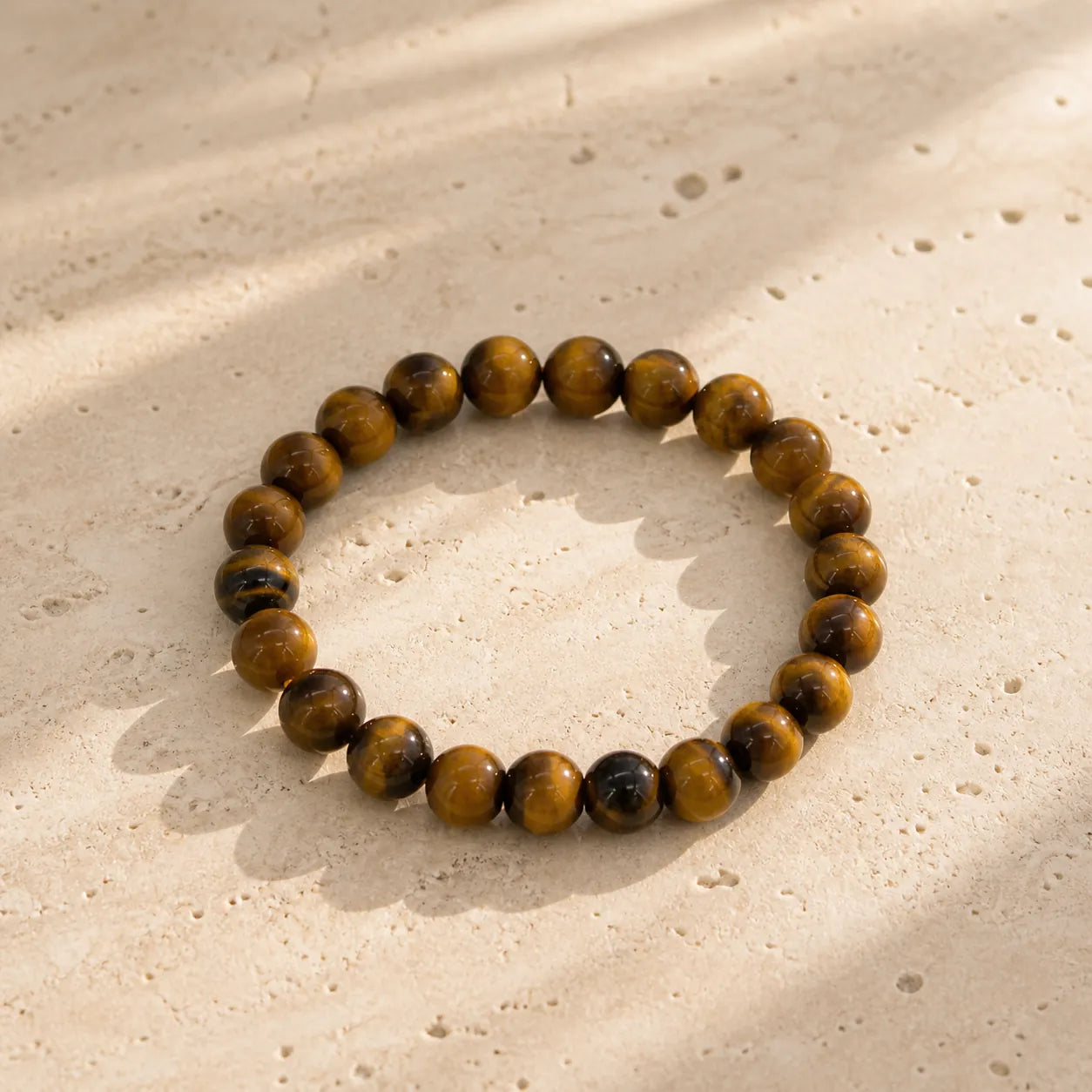
Tiger Eye Bracelet
Tiger eye is often worn as a quiet focus ritual for grounded confidence and steady attention.
Shop This Authentic Piece →Tiger's Eye and the Chakras: Solar Plexus, Root, and Third Eye
Tiger's eye is most commonly associated with the solar plexus chakra, the center traditionally linked to will, confidence, and personal power. Its grounding weight and earthy color also connect it with the root chakra, and its reputation for clear sight places it loosely with the third eye chakra. In practice, this means one stone can serve different intentions depending on how you work with it: wear it low for grounding, hold it at the solar plexus for confidence, or rest it near the brow during quiet reflection for discernment.
There is no single "correct" chakra assignment. Treat these associations as a map for intention-setting, not as fixed physiology.
Golden vs. Blue Tiger's Eye (Hawk's Eye): How the Energy Differs
The two main forms are visually and symbolically distinct. Golden tiger's eye is the yellow-brown form most people picture, with its warm, high-contrast shimmer. Blue tiger's eye—often called hawk's eye—retains more of the blue fibrous character of the original crocidolite before alteration, giving it a cooler, steel-blue sheen.
In metaphysical terms, golden tiger's eye is typically chosen for warmth, confidence, and forward momentum, while hawk's eye is often associated with cooler discernment, calm observation, and self-possession. Neither is stronger; the choice is a matter of which tone matches the work you are doing. If you want a stone for a bright, outward-facing challenge, golden is the natural pick. If you want a quiet, inward-facing pause, hawk's eye may feel more aligned.
How to Use Tiger's Eye in Daily Practice: Jewelry, Meditation, and Crystal Pairings
Tiger's eye is easy to integrate because it is durable enough for everyday wear and visually grounding. Consider these practical approaches:
- Jewelry: A bracelet or pendant keeps the stone in gentle contact with the body. Choose a setting that protects the polished face, since the sheen is the stone's most distinctive feature.
- Pocket or desk stone: A tumbled piece works as a tactile anchor—hold it before a meeting or a hard conversation and state your intention once, clearly.
- Meditation: Rest the stone in your palm or near the solar plexus, breathe slowly, and use the chatoyant band as a visual focus. Follow the light as it shifts; let that movement be the object of attention.
- Pairings: For grounding, pair with smoky quartz or hematite. For clarity, pair with clear quartz. For calm confidence, pair with amethyst. Keep pairings intentional rather than collecting many stones at once.
When selecting a piece, apply a real quality standard: look for natural, untreated material with a clean, continuous chatoyant band. The Lumina Grade AAA Integrity Standard is a useful benchmark—natural rough, zero chemical resin filling, and no irradiation or dyeing—so the stone you work with is the stone geology made.
Step-by-Step: A Practical Checklist for Choosing and Working With Tiger's Eye
- Confirm the shimmer is structural. Rotate the stone under light. A genuine chatoyant band should move smoothly across the surface, consistent with the fibrous quartz structure described by mineralogical sources—not sit flat like a printed or coated layer.
- Check for treatment clues. Look for resin-filled fractures, unnaturally uniform color, or a dyed tone that pools in cracks. Under the Lumina Grade AAA Integrity Standard, natural rough with no chemical filling and no irradiation or dyeing is the baseline.
- Match the form to the intention. Golden tiger's eye for confidence and momentum; hawk's eye for calm discernment. Choose one, not both, when you are starting a focused practice.
- Set a single, specific intention. "I will speak clearly in Thursday's meeting" works better than "give me courage."
- Use it at the moment of need. Hold the stone, breathe once slowly, and act. The stone is a cue, not a substitute for preparation.
- Store it separately. At Mohs 7 it is durable, but it can still be scratched by harder materials and should not knock against other jewelry in a loose drawer.
Cleansing, Charging, and Caring for Your Tiger's Eye Pieces
Because tiger's eye is quartz with a hardness of 7, it tolerates gentle cleansing well but dislikes harsh chemicals, prolonged soaking, and ultrasonic cleaning—especially if the piece has any filling or setting. A simple routine:
- Cleanse: Wipe with a soft, slightly damp cloth, or pass the stone briefly through cool running water and dry it fully.
- Charge: Place it in indirect morning sunlight or moonlight for a few hours. Avoid long direct sun exposure, which can dull some dyed or treated materials.
- Reset intention: After a significant event, hold the stone, breathe, and restate—or release—the intention you set. This is a symbolic reset, not a physical requirement.
- Store: Keep it in a soft pouch away from harder stones to protect the polished chatoyant surface.
Frequently Asked Questions
What are the metaphysical properties of tiger's eye?
Tiger's eye is most often associated with courage, grounded protection, personal power, and clear discernment. These are symbolic and cultural associations used to support intention—not medical effects.
What chakra is tiger's eye associated with?
It is most commonly linked to the solar plexus chakra, with secondary associations to the root and third eye chakras. Treat these as a map for intention-setting rather than fixed physiology.
How do you use tiger's eye for courage and confidence?
Hold a piece before a high-stakes moment, state one specific intention, breathe slowly once, and act. Wearing it as jewelry or keeping it in a pocket works as a tactile cue—preparation and practice remain the real source of confidence.
What is the difference between golden tiger's eye and blue hawk's eye?
Golden tiger's eye is the warm yellow-brown form, typically chosen for confidence and forward momentum; hawk's eye retains more blue fibrous character and is often associated with calm discernment and quiet self-possession.
How do you cleanse and care for tiger's eye jewelry?
Wipe with a soft damp cloth or rinse briefly in cool water, dry fully, and charge in indirect sunlight or moonlight. Avoid harsh chemicals and ultrasonic cleaning, and store it in a soft pouch away from harder stones.
Sources
Disclaimer: This article describes mineralogical facts and cultural/metaphysical associations. It is not medical advice. Crystal practices are personal and symbolic; they do not replace professional care.
© 2026 Lumina Quartz
Product Facts From the Current Catalog
These details come from the active Lumina Quartz catalog record checked on 2026-11-15. They are product-listing facts, not laboratory results or invented wear-test claims.
| Listed product | Tiger Eye Bracelet – Decisive Focus |
|---|---|
| Format | Bracelet |
| Listed price snapshot | 39.00 |
Price, availability, and options may change. Check the live product listing before choosing.