Tiger Eye Stone: Spiritual Meaning, Symbolism, and Daily Use
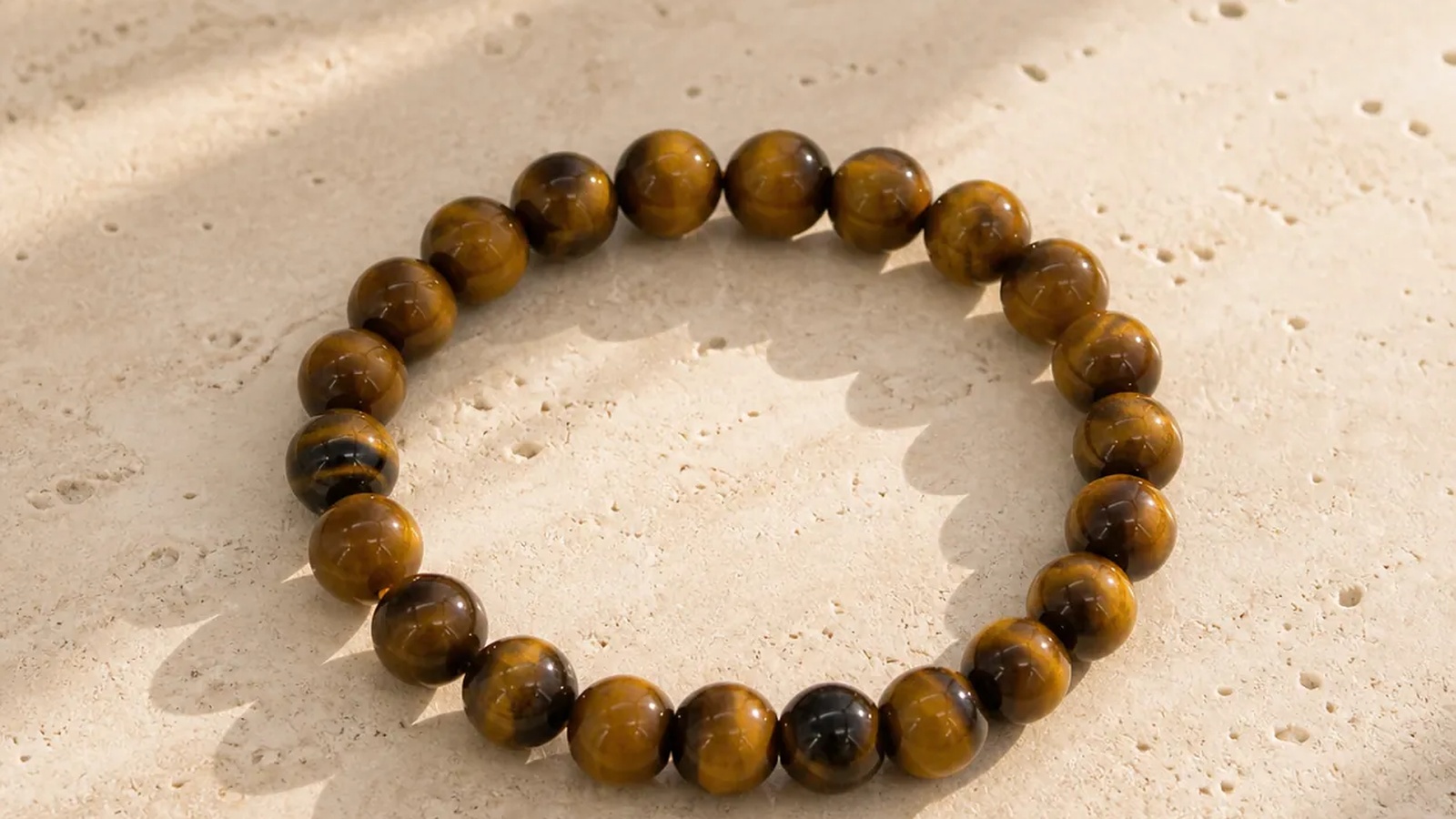
Table of Contents
- 10-Second Executive Summary / The Verdict Box
- What Is Tiger Eye Stone? Formation and the Chatoyant Effect
- The Spiritual Meaning of Tiger Eye: Courage, Protection, and Clear-Sighted Confidence
- Symbolism Through History: Amulets, the Sun God, and the Tiger's Gaze
- Tiger Eye Properties and Benefits: Inner Strength, Focus, and Balance
- Tiger Eye vs. Hawk's Eye vs. Cat's Eye: Color Types and How to Tell Them Apart
- Authenticity Check: A Step-by-Step Comparison Checklist
- Everyday Uses: Jewelry, Meditation, Workspace, and Gifting
- How to Cleanse and Care for Your Tiger Eye Stone
- How to Choose an Authentic Tiger Eye Piece
- Frequently Asked Questions
- What does tiger eye stone mean spiritually?
- What is tiger eye stone good for in daily life?
- Is tiger eye stone a real quartz, and how does it form?
- Sources
10-Second Executive Summary / The Verdict Box
- Direct Verdict: Tiger eye stone is a chatoyant, silica-based gemstone (a variety of quartz) whose golden bands and shifting "cat's eye" light are often associated with courage, grounding, and clear-sighted confidence in crystal traditions.
- Mohs Hardness: Approximately 6.5–7, making it durable enough for daily rings, bracelets, and pendants with modest care.
- Mineral Family: A fibrous form of quartz (silica, SiO₂), technically a pseudomorph after crocidolite or similar amphibole fibers.
- Key Physical Feature: Chatoyancy — the silky, moving band of light caused by parallel mineral fibers.
- Best For: Everyday jewelry, personal intention-setting, desk or workspace grounding, and meaningful gifting.
- Lumina Grade AAA Integrity Standard: Look for natural, un-dyed, non-irradiated, resin-free pieces with visible, natural banding — our benchmark for integrity.
Tiger eye stone is a quartz-family gemstone defined by its golden-brown banding and a shifting, silky band of light called chatoyancy; in crystal traditions its meaning centers on courage, protection, and clear-sighted confidence, and in daily life it is most often worn as jewelry or kept nearby as a grounding reminder. It is a real quartz variety, scoring roughly 6.5–7 on the Mohs hardness scale, and it forms as fibrous mineral matter is replaced by silica over time.
What Is Tiger Eye Stone? Formation and the Chatoyant Effect
Tiger eye is a variety of quartz (silica, SiO₂). Its classic formation began as parallel fibers of an amphibole mineral such as crocidolite, which were later replaced by silica while the fibrous structure was preserved — a pseudomorphic replacement. Geological observations describe this as a crack-seal, vein-filling process in which mineral fibers grow in repeated cycles, producing the aligned structure that makes tiger eye so distinctive. For a closer look at related fibrous minerals, see the Falcon's Eye mineral record on Mindat.
That parallel fiber structure is what creates chatoyancy: light reflects off the aligned fibers as a bright, moving band that seems to glide across the stone as it turns. The warmer golden-brown color comes from iron oxides and related weathering within the fibrous structure, while the deeper blue variety — hawk's eye — retains more of the original blue-gray tone.
The Spiritual Meaning of Tiger Eye: Courage, Protection, and Clear-Sighted Confidence
In crystal and metaphysical traditions, tiger eye is most commonly associated with courage, protection, and clear-sighted confidence. These meanings are cultural and symbolic rather than medical or scientific. Practitioners often describe the stone as a companion for moments that require steadiness — a reminder to stay grounded while seeing a situation plainly.
It is helpful to separate three things: the verified mineral properties (hardness, chatoyancy, composition), the cultural symbolism (courage, the sun, the "tiger's gaze"), and personal meaning (a private reminder or intention). Tiger eye's traditions may support a sense of inner resolve, and it is often associated with focus and self-trust — but it is a symbolic aid, not a treatment.
Symbolism Through History: Amulets, the Sun God, and the Tiger's Gaze
Tiger eye has long been used in amulets and talismans across several cultures, where its golden bands were linked to sunlight and its shifting light to watchfulness. The name itself evokes the tiger's gaze — a steady, alert presence — and much of its symbolism draws on that image of calm vigilance.
Because historical claims about the stone vary and are difficult to verify precisely, it is most honest to treat this history as living tradition rather than fixed record. What endures is the core symbolic idea: a stone that seems to look back at you, often associated with courage, protection, and the confidence to see clearly.
Tiger Eye Properties and Benefits: Inner Strength, Focus, and Balance
In everyday terms, tiger eye's "benefits" are best understood through tradition and practical use rather than clinical claims. It may support a personal sense of grounding when held or worn with intention, and it is often associated with focus and balance during busy or demanding days.
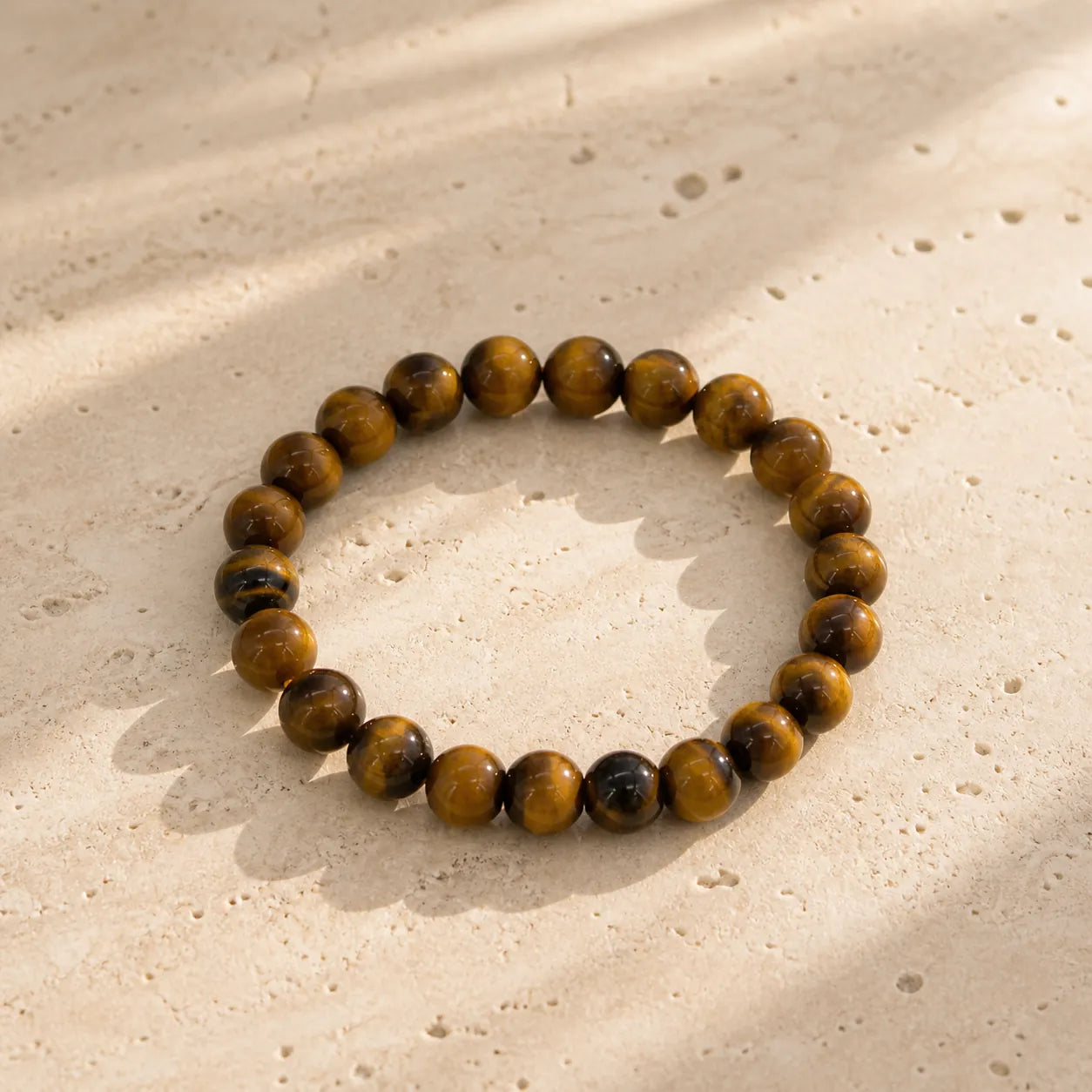
Tiger Eye Bracelet
Tiger eye is often worn as a quiet focus ritual for grounded confidence and steady attention.
Shop This Authentic Piece →Physically, its durability matters: at Mohs 6.5–7 it resists everyday wear better than softer stones, though it can still scratch against harder materials and should avoid harsh abrasion. Keep the distinction clear — a sturdy stone for daily wear, a symbolic companion for personal intention, and never a substitute for professional care or advice.
Tiger Eye vs. Hawk's Eye vs. Cat's Eye: Color Types and How to Tell Them Apart
These names describe related but distinct appearances. Tiger eye is the warm golden-brown, iron-rich form; hawk's eye is the blue-gray, less-weathered form with a cooler, more metallic sheen; and "cat's eye" is a general chatoyancy term that can describe tiger eye, hawk's eye, or other stones entirely, depending on the fiber alignment that produces the effect.
To tell them apart, turn the stone slowly in good light: tiger eye shows warm brown-gold bands, hawk's eye shows cool blue-gray bands, and both should display a clean, continuous line of reflected light. A blurred or patchy light band can suggest a heavily treated or imitation piece.
Authenticity Check: A Step-by-Step Comparison Checklist
Use this ordered check to separate natural tiger eye from dyed, glued, or imitation pieces. It is specific to tiger eye's fibrous structure and chatoyancy.
- Look at the light band: Natural tiger eye shows a single sharp, silky chatoyant band that moves as you turn the stone; a dull or scrambled band is a caution sign.
- Check the banding direction: The fibers and the color banding should align, and the effect usually fades into deeper color at the edges; dyed stones often show color that sits in cracks rather than in bands.
- Inspect the surface: Natural pieces may show fine fibrous texture under a loupe; a glassy, perfectly uniform surface with no fiber detail may be synthetic or heavily resin-treated.
- Test for fillers: Resin or glue filling can make a stone feel lighter and look smoky at cracks; natural, uncompromised pieces should look clean between the bands.
- Ask about treatment: Under the Lumina Grade AAA Integrity Standard, a piece should be natural, un-dyed, non-irradiated, and free of chemical filling — and the seller should say so plainly.
- Weigh the price against the look: Perfectly even color at a low price is a reason to double-check, not a bargain to trust blindly.
Boundary note: Many standard tests cannot prove absence of treatment; when in doubt, request a written treatment disclosure or a gemological report, and never rely on unverified marketing claims.
Everyday Uses: Jewelry, Meditation, Workspace, and Gifting
Tiger eye is well suited to daily wear because of its hardness. Rings, bracelets, and pendants are common, and a beaded bracelet or cabochon pendant is a practical way to keep the stone close without exposing a prized piece to heavy wear. In meditation, holding the stone or placing it nearby is a simple way to anchor a personal intention — often used as a cue for steadiness or focus.
At a desk, a small carved stone or cabochon can serve as a grounding reminder during long work sessions. As a gift, tiger eye carries a warm, encouraging symbolism — courage and clear sight — which makes it a thoughtful choice for a new job, a move, or a fresh start.
How to Cleanse and Care for Your Tiger Eye Stone
Cleanse gently with lukewarm water and a soft cloth, avoiding harsh chemicals, salt baths, or prolonged soaking that could stress any setting or resin. Dry fully, and store it separately from harder stones to prevent scratching. For symbolic cleansing, many people simply rest the stone in sunlight or set a quiet intention, though these are personal practices rather than proven methods.
How to Choose an Authentic Tiger Eye Piece
Prioritize visible, natural chatoyancy, honest treatment disclosure, and clean banding over perfect uniformity. Confirm whether the stone is natural and untreated, check the Lumina Grade AAA Integrity Standard as a benchmark, and inspect the fiber texture and light band before buying. If a seller cannot describe the material plainly, take that as your answer.
Frequently Asked Questions
What does tiger eye stone mean spiritually?
In crystal traditions, tiger eye is most often associated with courage, protection, and clear-sighted confidence. These are cultural and symbolic meanings, not medical claims.
What is tiger eye stone good for in daily life?
It is widely used in everyday jewelry, as a grounding reminder on a desk, and as a meaningful gift. Many people carry it as a personal cue for steadiness and focus.
Is tiger eye stone a real quartz, and how does it form?
Yes — tiger eye is a variety of quartz, roughly 6.5–7 on the Mohs scale. It formed when fibrous minerals such as crocidolite were replaced by silica while preserving the parallel fiber structure.
Sources
© 2026 Lumina Quartz. The symbolic meanings and personal uses described here are cultural traditions, not medical advice or guaranteed effects.
Product Facts From the Current Catalog
These details come from the active Lumina Quartz catalog record checked on 2026-10-25. They are product-listing facts, not laboratory results or invented wear-test claims.
| Listed product | Tiger Eye Bracelet – Decisive Focus |
|---|---|
| Format | Bracelet |
| Listed price snapshot | 39.00 |
Price, availability, and options may change. Check the live product listing before choosing.