Silver Moonstone Bracelet Meaning and Benefits for Calm & Intuition
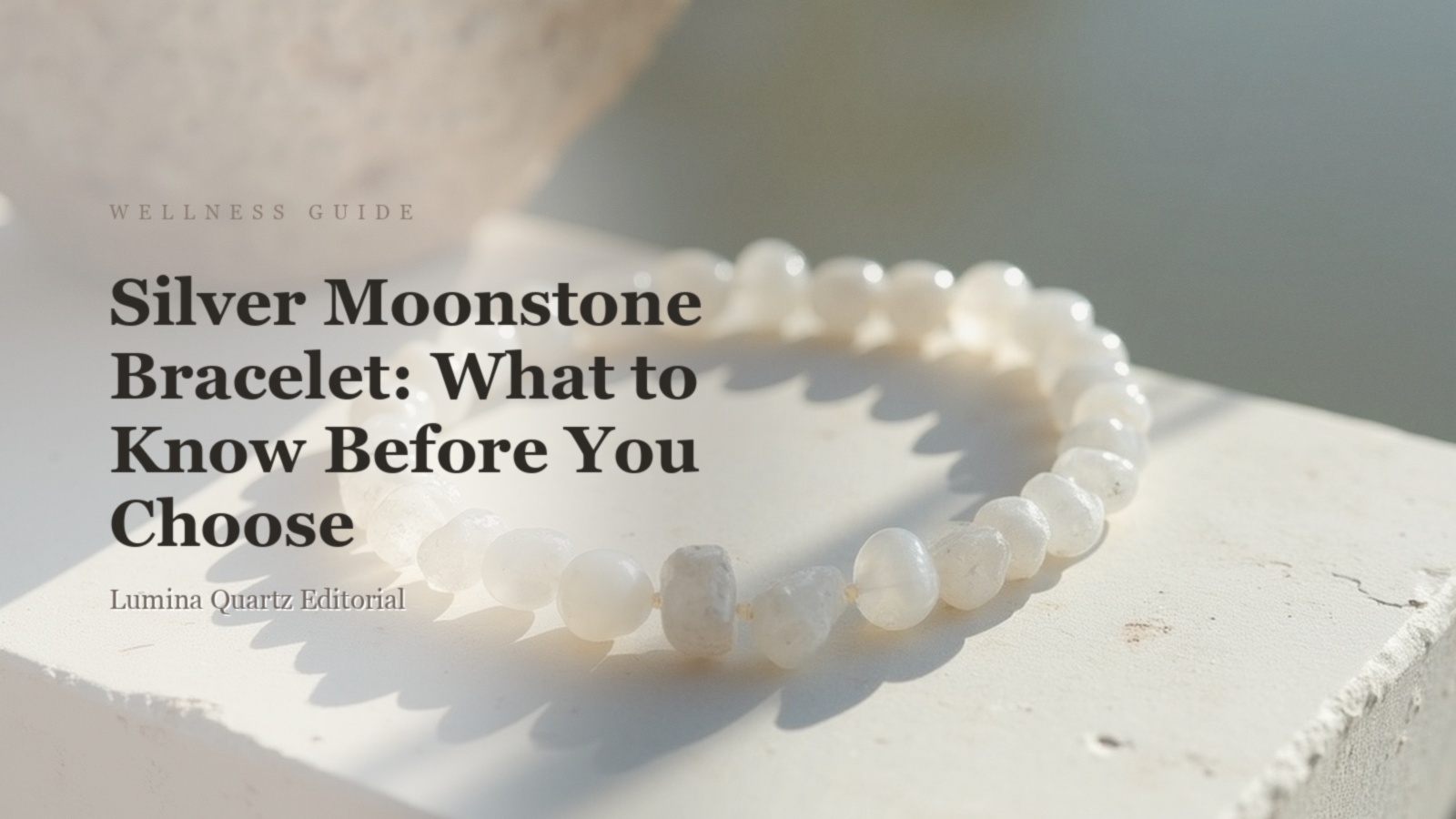
There is a quiet magic in the way light catches a moonstone — how it seems to hold a whisper of the moon's own glow. Set in silver, that gentle luminescence becomes something more: a wearable reminder of cycles, intention, and the calm that lives beneath a busy day. A silver moonstone bracelet is often chosen not only for its beauty, but for the softness it seems to bring to ordinary moments. Before you welcome one into your life, though, understanding the materials, craftsmanship, and subtle differences among stones can help you find a piece that truly resonates.
Table of Contents
- Key Takeaways
- Silver Moonstone Bracelet Meaning: Calm, Intuition, and Lunar Light
- Understanding Silver and Silver Alternatives in Moonstone Bracelets
- Evaluating Gemstone Quality: Moonstone vs Rainbow Moonstone
- Silver Moonstone Bracelet Buying Guide: Match the Piece to the Purpose
- Assessing Craftsmanship and Durability
- Verifying Authenticity and Certifications
- Considering Adjustability and Sizing Options
- Frequently Asked Questions
- Sources
Key Takeaways
- A silver moonstone bracelet may support a personal sense of emotional calm and inner clarity, though these effects are individual and not medically proven.
- Silver quality — sterling, recycled, or plated — significantly affects durability, tarnish resistance, and ethical footprint.
- Moonstone and rainbow moonstone offer different visual and energetic qualities; understanding the distinction helps you align your choice with your intention.
- Authenticity verification, craftsmanship, and sizing protect your investment and make daily wear comfortable.
- Purchase from reputable sources that describe materials clearly and answer questions about origin and hallmarking.
Silver Moonstone Bracelet Meaning: Calm, Intuition, and Lunar Light
The phrase "silver moonstone bracelet" holds three ideas at once: the stone, the metal, and the way the two meet on the wrist. Each part carries its own symbolism, and together they create a piece that many wearers describe as soothing, reflective, and quietly grounding.
Why Moonstone Is Linked to the Moon
Moonstone belongs to the feldspar family and is treasured for adularescence — an internal shimmer that appears to float just beneath the surface, drifting as light and movement change. The Gemological Institute of America notes that Hindu mythology describes moonstone as made of solidified moonbeams, and that many other cultures have long connected the gem with moonlight for the same simple reason: its internal structure scatters light in a way that mimics a glowing moon. Other legends credit the stone with bringing good luck, as the GIA GemKids resource explains. Mineralogically, moonstone is a variety of alkali feldspar long known as adularia, catalogued among the world's feldspar localities on Mindat.
What a Silver Moonstone Bracelet May Support
Ask ten wearers what their moonstone bracelet means to them and you will likely hear ten quiet variations: a sense of calm on a crowded commute, a reminder to trust a first instinct, a companion through a season of change. In crystal traditions, moonstone is associated with intuition, emotional balance, feminine energy, and new beginnings — themes that echo the moon's own rhythm of waxing and waning. Silver, traditionally linked with lunar energy, reflection, and clarity, is often considered a natural partner for the stone. These are symbolic and personal associations rather than clinical outcomes; a bracelet is a beautiful anchor for intention, not a substitute for care from a qualified professional.
Wearing It as a Small Daily Ritual
What turns a pretty bracelet into a meaningful one is usually repetition. Sliding it on each morning, pausing for one breath, and naming what you want the day to feel like is enough. Many people find that a physical cue — the cool weight of silver against the wrist — helps an intention feel more real than a thought alone. If you would like a gentle structure to follow, the basics of setting, wearing, and cleansing a stone are simple and can be adapted to any schedule.
Understanding Silver and Silver Alternatives in Moonstone Bracelets
The metal that cradles a moonstone matters as much as the stone itself. "Silver" in jewelry can mean several different things, and each option carries its own character, lifespan, and story.
Sterling Silver (925)
Sterling silver, marked 925, is the most common choice. It consists of 92.5% pure silver and 7.5% other metals — usually copper — added for strength. This alloy is durable enough for everyday wear and develops a warm patina over time. Many people appreciate how sterling seems to deepen in beauty as it ages, reflecting the wearer's own journey. A sterling silver moonstone bracelet may feel timeless: an object that grows more meaningful with each passing season.
Recycled Silver
Recycled silver is chemically identical to sterling silver but sourced from reclaimed materials, which reduces the demand for newly mined metal. For those who want their jewelry choices to reflect ecological stewardship, it offers a grounded and empowering option — the same luster, the same ability to hold a moonstone's glow, with a lighter footprint. Choosing recycled silver is a small participation in a cycle of renewal, which resonates neatly with moonstone's own themes of reflection and fresh starts.
Silver-Plated Bracelets
Silver plating involves a thin layer of silver over a base metal such as brass or copper. Plated bracelets are more affordable, but the silver layer can tarnish, flake, or rub away — especially around the clasp and stone settings — revealing the base metal beneath. If you plan to wear your moonstone bracelet daily or as a long-term talisman, sterling or recycled silver is generally the more grounded investment. A plated piece can still be a lovely starting point for someone exploring moonstone's energy, but its lifespan is shorter.
Recycled Silver vs Sterling Silver: What Actually Differs
The practical differences are small; the ethical ones are where the two diverge. Both are durable, beautiful, and hypoallergenic for most people. Recycled silver may support a more transparent supply chain, while conventional sterling may come from sources with varying environmental standards. Ask your jeweler whether they can trace the origin of their silver — many artisan makers are happy to explain, and that transparency often deepens the connection you feel with the piece.
Evaluating Gemstone Quality: Moonstone vs Rainbow Moonstone
Not all moonstone is created equal, and one of the most common points of curiosity is the difference between classic moonstone and rainbow moonstone. Both are feldspars, but they carry distinct visual signatures.
Classic Moonstone (Adularia)
Traditional moonstone shows a soft, milky white or peach body with a blue or silver sheen — the adularescence described by the GIA 4Cs blog. The shimmer appears to float beneath the surface, shifting with light and movement. It is often associated with feminine energy, emotional balance, and new beginnings. A classic moonstone bracelet may feel like a gentle companion during transitions, offering a reflective pause in a hurried world.
Rainbow Moonstone
Despite the name, rainbow moonstone is actually a variety of labradorite. It tends to be more translucent and colorless, flashing blue, green, yellow, or occasionally pink — like a prism caught in stone. Its play of color is more vivid than the subtle glow of classic moonstone, and it is often associated with intuition, protection, and inspiration. If you are drawn to dynamic, layered energy, a rainbow moonstone bracelet may suit a creative or spiritual practice especially well.
How to Judge a Stone's Quality
Look for stones with a clear, sharp sheen (classic moonstone) or lively spectral flashes (rainbow moonstone). Cloudy or dull stones may lack the depth you are seeking. Inclusions are natural and not automatically flaws — small internal fissures can catch light in unexpected ways and add character. Large fractures or significant pitting, however, may compromise durability, particularly in a bracelet that will meet tables, doorframes, and desks all day.
The cut matters too. Cabochons — smooth and domed — are traditional and enhance adularescence. Faceted moonstones exist but are less common; they sparkle differently and can lose some of that soft internal glow. For a bracelet, cabochons are generally the more flattering choice.
Silver Moonstone Bracelet Buying Guide: Match the Piece to the Purpose
Use this quick comparison and checklist to move from "I like it" to "this is the right one for me."
Silver Type at a Glance
- Sterling silver (925): Best all-round choice for daily wear. Durable, easy to polish, develops a desirable patina. Ask for the 925 hallmark.
- Recycled silver: Same chemistry and wear as sterling, with a reclaimed origin. Best if supply-chain transparency matters to you.
- Silver plated: Most affordable and lightest on the budget. Thinnest silver layer, fastest wear around clasp and settings. Best for occasional wear.
- Gold plated or gold vermeil: Warmer tone that flatters peach and cream moonstone. Vermeil (a thicker gold layer over sterling) tends to outlast simple plating.
Pre-Purchase Checklist
- Sheen: Tilt the bracelet under light — does the glow move with the stone, or sit flat and cloudy?
- Surface: Check for deep pits, chips, or hairline fractures, especially on the stones nearest the clasp.
- Setting: Are stones secure with no wobble? Are bead holes cleanly drilled and free of sharp edges?
- Clasp and stringing: Does the clasp close firmly? If elastic, does the cord feel dense and springy rather than thin and loose?
- Hallmark: Look for a 925 stamp or a stated material grade on the product page.
- Sizing: Confirm the length and whether an extender or resizing is offered.
An Honest Boundary
A moonstone bracelet is a symbol, a ritual object, and a piece of jewelry — not a treatment. It will not diagnose, cure, or replace professional care for anxiety, sleep issues, or any health condition. What it can do is serve as a daily cue for the calm and clarity you are already cultivating. If you are struggling with your mental or physical health, please speak with a qualified practitioner.
Assessing Craftsmanship and Durability
Craftsmanship is where a bracelet proves itself over months rather than minutes. On a beaded piece, check that the holes are centered and smooth so the cord does not fray against sharp edges. On elastic bracelets, look for a strong, tightly knotted cord with the knot concealed inside a bead — that single detail often determines whether the bracelet lasts a season or several years. On strung pieces with a clasp, a wire or nylon strand with a secure lobster or spring-ring clasp will generally outlast a friction clasp.
Metal settings deserve the same attention. Prong and bezel settings both hold moonstone well; bezels protect the stone's edges but can slightly mute the sheen at the rim, while prongs show more of the stone but need periodic tightening. If you wear your bracelet daily, remove it before swimming, showering, or heavy cleaning, and wipe it with a soft cloth after contact with lotions or perfume. Silver polished regularly will keep its brightness; a light patina, however, is not a flaw — it is simply the metal recording time.
Verifying Authenticity and Certifications
Moonstone is not typically accompanied by gem laboratory reports, because affordable bead-grade material rarely justifies the cost of certification. That makes the seller's transparency the most reliable signal. A reputable listing will name the stone accurately, state the metal and its grade, and be willing to answer questions about origin. Be cautious of vague descriptions such as "genuine moon stone" without specifying adularia or labradorite, and of prices that seem impossibly low for clean, well-sheened material set in solid silver.
A simple home check helps as well: hold the stone under a lamp and rotate it slowly. True adularescence should glide across the surface as the angle changes. A flat, painted-looking sheen, or a shimmer that only appears on one fixed spot, is a sign to look more closely. When in doubt, buy from makers who clearly describe what they sell — clarity is its own form of certification.
Considering Adjustability and Sizing Options
Comfort is what makes a bracelet wearable every day, and sizing is where most disappointment begins. Measure your wrist snugly with a soft tape just below the wrist bone, then add roughly half an inch for a close fit or one inch for a relaxed drape. Beaded bracelets generally sit best when they can slide slightly without turning into a loose circle that catches on everything.
If you are between sizes, adjustable designs offer flexibility: an extender chain on a strung bracelet, or a stretch cord that gently accommodates small daily changes in wrist size. Elastic is convenient and comfortable for casual wear, while a clasp offers a more tailored look and longer lifespan. If you plan to stack your moonstone bracelet with others, choose a slightly smaller bead size and a snugger fit so the pieces sit together rather than clattering against each other.
A Quiet Place to Begin
If you would like a simple starting point, our Moonstone Bracelet – New Beginnings was made for exactly this: a small, wearable anchor for daily intention and calm.
Frequently Asked Questions
What is the difference between recycled silver and sterling silver in moonstone bracelets?
Chemically, there is no difference — recycled silver is refined to the same 92.5% purity standard as conventional sterling and performs identically in terms of strength, shine, and tarnish resistance. The distinction is origin: recycled silver is reclaimed from existing sources rather than newly mined. Both can be hallmarked 925. If supply-chain ethics matter to you, ask the maker where their silver comes from; a clear answer is usually a good sign of overall transparency.
How do you choose between gold-plated and silver moonstone bracelets?
Start with tone and lifestyle. Silver's cool hue tends to enhance blue and silver sheens, and it is often chosen by people drawn to lunar, reflective symbolism. Gold plating or vermeil adds warmth that flatters peach and cream moonstone, and it resists tarnish longer than bare silver if the plating is thick. Consider durability too: gold vermeil over sterling usually outlasts thin plating over brass. If you wear the bracelet daily and want minimal upkeep, a solid metal — sterling or recycled silver — is often the more practical choice.
What are the benefits of rainbow moonstone vs regular moonstone?
In crystal traditions, classic moonstone is usually associated with emotional balance, feminine energy, and new beginnings, while rainbow moonstone — technically a variety of labradorite — is associated with intuition, protection, and inspiration. Visually, classic moonstone offers a soft, milky glow with a blue or silver sheen, while rainbow moonstone flashes multiple colors through a more translucent body. Many people simply choose whichever stone they find themselves returning to; that instinct is often the most useful guide. Neither stone's benefits are medically proven, and both are best enjoyed as meaningful, personal companions.
Related Reading
- Crystal Rituals for Beginners: A Simple Guide to Daily Practice
- Daily Crystal Ritual: How to Set Intention, Wear, and Cleanse Your Stone
- Calming Crystals: Crystal Ritual Guide
- Obsidian Bracelet: Your Guide to Grounding & Protection