The Complete Everyday Guide to Definition Of Rose Quartz: Meaning and Uses
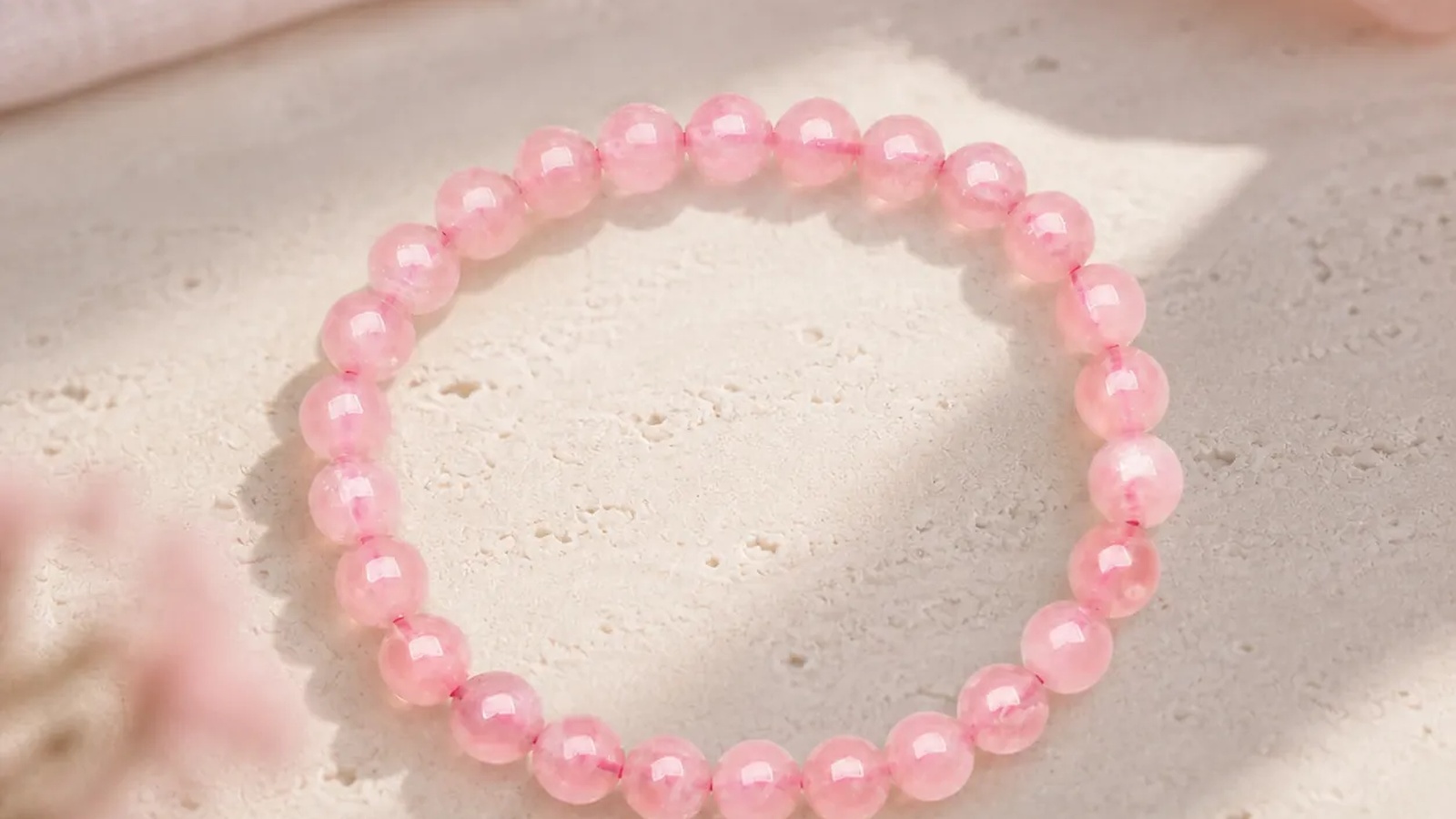
Table of Contents
- What Is Rose Quartz? A Clear Definition
- 10-Second Executive Summary / The Verdict Box
- The Science Behind Rose Quartz: Color, Composition, and Formation
- Why Is Rose Quartz Pink?
- Rose Quartz Meaning and Symbolism
- Healing Properties and Everyday Uses of Rose Quartz
- Step-by-Step Authentication Checklist: Real vs. Fake Rose Quartz
- How to Choose, Care For, and Authenticate Rose Quartz
- Rose Quartz vs. Other Pink Stones: Quick Comparison
- FAQ: Definition of Rose Quartz
- What is the simple definition of rose quartz?
- Is rose quartz natural, or does its color fade?
- How can you tell real rose quartz from fake?
- Sources
What Is Rose Quartz? A Clear Definition
Rose quartz is the pink variety of the mineral quartz (silicon dioxide, SiO₂), and it is defined by two things at once: its identity as a true quartz and its delicate pink hue, which ranges from very light, almost white, to medium-dark pink, according to the Gemological Institute of America (GIA). In other words, "rose quartz" is not a marketing name for any pink crystal — it is a specific gem material defined by quartz's composition and a color that comes from within the stone itself.
10-Second Executive Summary / The Verdict Box
- Direct Verdict: Rose quartz is the naturally pink variety of quartz (SiO₂). Real pieces show soft, translucent pink from internal mineral inclusions — never a painted or dyed surface.
- Mohs Hardness: 7.0 — a genuine quartz hardness that can scratch ordinary window glass (Mohs 5.5) without being damaged.
- Color Source: Microscopic fibrous borosilicate nanoinclusions closely related to dumortierite, not surface dyes.
- Quality Benchmark: Lumina Grade AAA Madagascar Earth-Mined Rose Quartz Standard — earth-mined, no chemical resin filling, no irradiation or dye treatment.
- Best For: Everyday wear as a Heart Chakra (Anahata) stone, traditionally worn on the left wrist; gentle color for jewelry; symbolic self-compassion and relationship rituals.
The Science Behind Rose Quartz: Color, Composition, and Formation
Rose quartz shares the same basic chemistry as clear quartz — silicon dioxide — but it forms in massive veins rather than as single terminated points in most cases. High-grade Madagascar specimens often exhibit a characteristic soft translucency, and some show asterism (a star effect) under focused single-point light, caused by oriented fibrous micro-silk within the stone. This is one of the quiet signatures of natural material that dyed imitations rarely reproduce.
Because it is a true quartz, rose quartz carries a Mohs hardness of 7.0. That matters for authentication: a natural piece can easily scratch ordinary window glass (Mohs 5.5) without sustaining surface damage, while softer fakes such as calcite or glass typically cannot.
Why Is Rose Quartz Pink?
Authentic rose quartz derives its delicate pink hue from microscopic fibrous borosilicate nanoinclusions closely related to dumortierite, rather than chemical surface dyes. The color lives inside the crystal structure, which is why natural stones look softly cloudy and even in tone rather than vividly saturated. Over 70% of overly saturated "vivid pink" crystals sold on mass marketplace platforms are dyed crackle quartz, cheap calcite, or dyed glass — and these bleed pigment when tested with acetone.
Rose Quartz Meaning and Symbolism
Culturally, rose quartz is often associated with love in its gentlest forms: self-compassion, friendship, and emotional steadiness. In somatic and crystal healing traditions, it serves as the quintessential Heart Chakra (Anahata) stone, traditionally worn on the left wrist to nurture internal emotional restoration and self-compassion. These are cultural and symbolic associations, not medical claims — rose quartz may support a personal intention or mindfulness ritual, but it does not replace care for your emotional or physical health.
In a relationship context, the stone is often used as a shared token — a reminder to speak softly and listen well — rather than as a guarantee of harmony. The meaning is carried by the practice you build around it.
Healing Properties and Everyday Uses of Rose Quartz
In everyday life, rose quartz is most often used as a wearable reminder and a grounding object. Common, practical uses include:
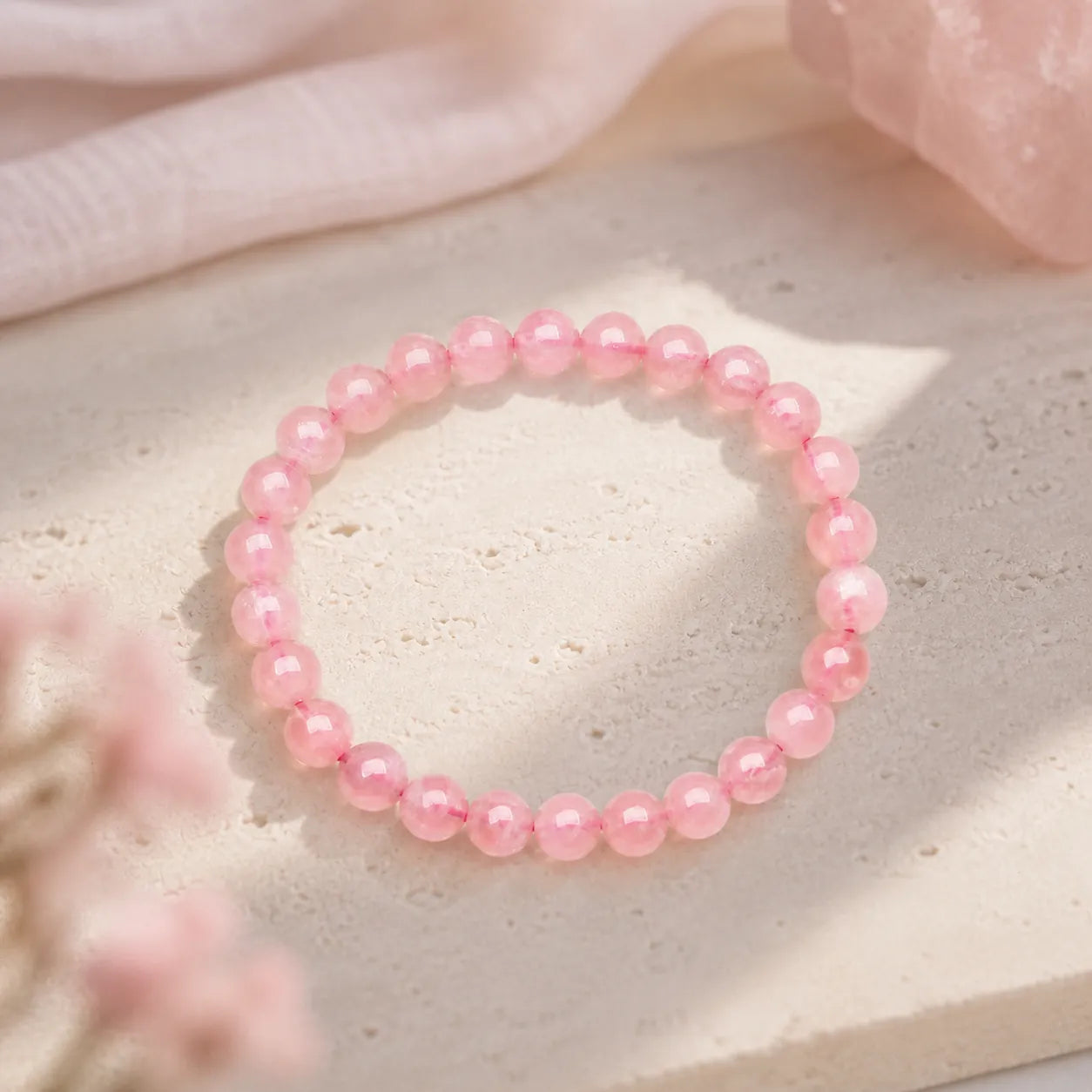
Rose Quartz Love Bracelet
Rose quartz can become a soft daily reminder to return to tenderness, self-trust, and emotional ease.
Shop This Authentic Piece →- Left-wrist wear: Following tradition, a rose quartz bracelet worn on the left wrist is often associated with receiving calm and self-kindness.
- Desk or bedside stone: A palm-sized tumbled piece can serve as a pause cue during stressful moments.
- Journaling ritual: Holding the stone before writing can anchor a short self-reflection practice.
- Gift of intention: A small piece given to a friend or partner can mark a conversation about care and honesty.
These uses are symbolic and personal; the stone may support a calming routine, but any emotional benefit comes from the habit, not from a physical effect on the body.
Step-by-Step Authentication Checklist: Real vs. Fake Rose Quartz
Use this sequence when a piece feels too vivid or too cheap to trust. It follows the material facts above rather than general crystal folklore.
- Check the color first. Natural rose quartz is softly translucent; if the pink looks neon or perfectly even, suspect dye. Overly saturated "vivid pink" pieces are frequently dyed crackle quartz, calcite, or glass.
- Do the acetone test on an inconspicuous spot. Dyed material bleeds pigment when tested with acetone; natural rose quartz does not.
- Test hardness. A genuine piece at Mohs 7.0 should scratch ordinary window glass (Mohs 5.5) without surface damage. Calcite and glass fakes will not behave this way.
- Look for asterism under focused single-point light. High-grade Madagascar specimens may show a soft star effect from oriented fibrous micro-silk — a quiet marker of natural formation.
- Ask about treatment. Confirm the piece is earth-mined, with no chemical resin filling, irradiation, or dye treatment — the standard represented by the Lumina Grade AAA Integrity Standard.
Boundary note: Hardness and acetone checks are indicators, not laboratory certification. For high-value pieces, request gemological documentation.
How to Choose, Care For, and Authenticate Rose Quartz
When selecting rose quartz, prioritize honest color over intensity. Choose pieces with soft translucency and gentle internal variation, and confirm earth-mined origin under the Lumina Grade AAA Integrity Standard — natural rough, zero chemical resin filling, and no irradiation or dye treatment. For jewelry, check that the setting does not hide large filled fractures.
Care is simple because the stone is durable at Mohs 7.0: clean with lukewarm water and mild soap, dry gently, and avoid prolonged sun exposure, which may fade some pink hues over time. Store separately from harder stones such as sapphire to limit surface scratches. Keep dyed imitations away from acetone and perfume, since their pigment can bleed.
Rose Quartz vs. Other Pink Stones: Quick Comparison
| Stone | Mohs Hardness | Color Origin | Everyday Note |
|---|---|---|---|
| Rose quartz | 7.0 | Fibrous borosilicate nanoinclusions related to dumortierite | Durable for daily wear; soft translucent pink; asterism possible in high-grade specimens |
| Pink calcite | 3.0 | Natural body color | Softer and easily scratched; common in fake "vivid pink" listings |
| Dyed crackle quartz | 7.0 | Surface dye in fractures | Bleeds with acetone; color looks unnaturally even |
| Pink glass | ~5.5 | Manufactured pigment | Cannot scratch window glass; often too clear or too vivid |
The key distinction: only rose quartz combines a true quartz hardness of 7.0 with color that comes from inside the stone rather than from a dye.
FAQ: Definition of Rose Quartz
What is the simple definition of rose quartz?
Rose quartz is the naturally pink variety of quartz (silicon dioxide), ranging from very light to medium-dark pink, as described by the GIA. Its color comes from internal mineral inclusions, not surface dye.
Is rose quartz natural, or does its color fade?
Natural rose quartz gets its pink from microscopic fibrous inclusions inside the stone, so it is not a dye that washes off. Prolonged sun exposure may gradually fade some pink hues, so store pieces away from strong direct light.
How can you tell real rose quartz from fake?
Real rose quartz has soft translucency, a Mohs hardness of 7.0 that scratches window glass, and no pigment bleed when tested with acetone. Vivid, perfectly even pink is more often dyed crackle quartz, calcite, or glass.
Sources
© 2026 Lumina Quartz. This guide shares mineral facts and cultural traditions for informational purposes only; it is not medical advice. Crystal symbolism and personal intention practices are distinct from the stone's verified geological properties.
Product Facts From the Current Catalog
These details come from the active Lumina Quartz catalog record checked on 2026-10-25. They are product-listing facts, not laboratory results or invented wear-test claims.
| Listed product | Rose Quartz Love Bracelet |
|---|---|
| Format | Bracelet |
| Listed price snapshot | 28.80 |
Price, availability, and options may change. Check the live product listing before choosing.