The Complete Everyday Guide to Obsidian Necklace: Meaning and Uses
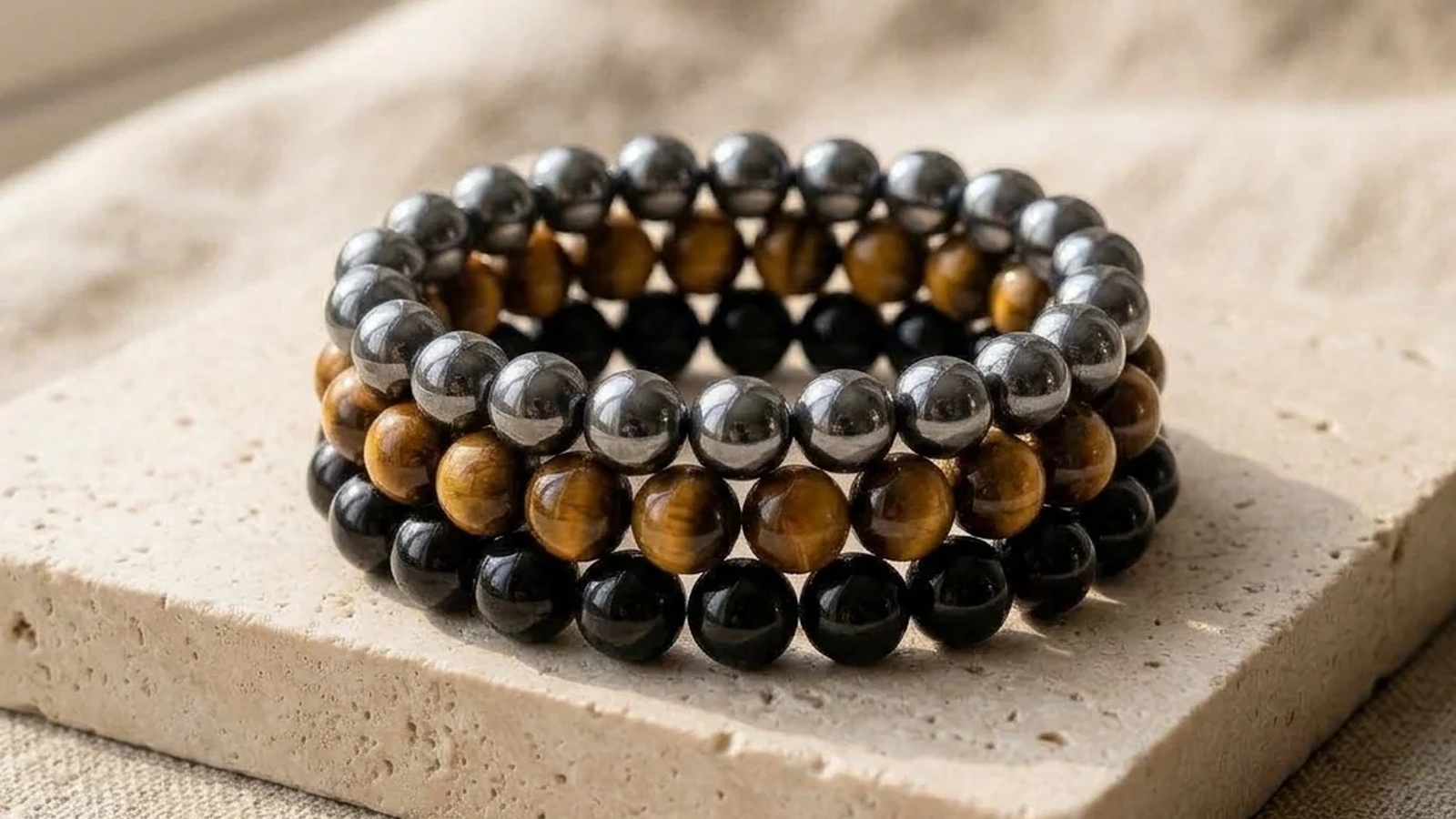
Table of Contents
- What Is Obsidian? The Volcanic Glass Behind Your Necklace
- 10-Second Executive Summary / The Verdict Box
- Obsidian Necklace Meaning and Symbolism
- Protection and Grounding in Crystal Lore
- Historical and Cultural Significance
- Types of Obsidian You’ll See in Necklaces
- How to Spot a Real Obsidian Necklace
- Practical comparison: what to check before you buy
- Everyday Styling and Wear Tips
- Caring for Your Obsidian Necklace
- Choosing the Right Obsidian Necklace for You
- Frequently Asked Questions
- What does an obsidian necklace mean or symbolize?
- Is it safe to wear an obsidian necklace every day?
- How can I tell if my obsidian necklace is real?
- Sources
What Is Obsidian? The Volcanic Glass Behind Your Necklace
Obsidian is a natural volcanic glass formed when silica-rich lava cools so quickly that crystals do not have time to grow. That rapid cooling is what gives obsidian its smooth, glassy surface and conchoidal (shell-like) fracture. The U.S. Geological Survey describes obsidian simply as volcanic glass, which is a useful baseline: it is a mineraloid rather than a crystalline mineral in the strict sense. Its color range—black, bluish, mahogany, golden, peacock, grey-green—is due largely to light refraction by microscopic bubbles and inclusions such as magnetite, as documented by Mindat. For necklace wearers, this matters because the same glassy structure that makes obsidian striking also makes it relatively soft and prone to chipping, which shapes how you should wear and store it.
10-Second Executive Summary / The Verdict Box
- Direct Verdict: An obsidian necklace is a durable-looking, lightweight-feeling piece of volcanic glass jewelry often worn for grounding symbolism and bold contrast; it is suitable for daily wear if protected from hard knocks.
- Mohs Hardness: Approximately 5–5.5 (glass, not crystal) — softer than quartz (7) and far softer than diamond (10).
- Key Physical Parameters: Amorphous (non-crystalline) silica-rich glass; conchoidal fracture; density roughly 2.3–2.6 g/cm³; colors from microscopic bubbles and mineral inclusions.
- Best Use Cases: Everyday layering, minimalist pendants, grounding-intent gifts, and travel-friendly statement pieces.
- Best Avoided: High-impact sports, rough handling with harder stones, and prolonged ultrasonic cleaning.
- Quality Benchmark: Lumina Grade AAA Integrity Standard — natural, untreated obsidian with no chemical resin filling, no irradiation, and no dye.
Obsidian Necklace Meaning and Symbolism
Protection and Grounding in Crystal Lore
In crystal lore, obsidian is often associated with protection and grounding—not because the stone has been shown to influence mood or the nervous system, but because cultures and wearers have long assigned it that symbolic role. A black, mirror-smooth pendant may serve as a personal reminder to pause, recenter, or set a boundary. Treat these as cultural and personal-reminder uses, distinct from the confirmed geological facts above. Obsidian's reflective surface also makes it a natural "mirror" metaphor in many traditions, which is one reason it is frequently chosen for amulets and talismans.
Historical and Cultural Significance
Obsidian has a deep archaeological record. The Smithsonian notes that shifts in obsidian use over time in the Central Plains may indicate larger socioeconomic changes, and that obsidian from Northern Plains assemblages points to interaction networks at least as old as the first Plains Village sites. The Smithsonian Museum Conservation Institute has studied obsidian trade as part of its technical research on materials and technology. In short: obsidian was a valued, transportable material long before it became jewelry—worth knowing if you like your necklace to carry a story.
Types of Obsidian You’ll See in Necklaces
Necklace makers usually work with a few recognizable varieties, and the differences are visual and geological rather than mystical:
- Black obsidian: The classic, opaque black glass; the most common and often the most affordable.
- Rainbow obsidian: Shows iridescent bands caused by microscopic inclusions such as magnetite, per Mindat.
- Mahogany and golden obsidian: Brown-red or golden sheen from included material and bubble refraction.
- Fire obsidian: A rare variety whose vibrant layered patterns reveal flow structures stretched and compressed while molten, as described by GIA. Because the patterns are revealed through careful lapidary work, fire obsidian is usually a collector piece rather than a budget everyday necklace.
- Snowflake obsidian: Black glass with grey-white cristobalite clusters; visually distinct and easy to identify.
How to Spot a Real Obsidian Necklace
Obsidian is glass, so the honest test is a glass test. Real obsidian typically feels cool and weighty for its size, shows a smooth conchoidal fracture rather than a grainy or sugary surface, and may reveal tiny bubbles or flow lines under strong light. Man-made black glass can look nearly identical, so the reliable signals are usually the seller's transparency and the piece's consistency. At Lumina Quartz, the Lumina Grade AAA Integrity Standard means we look for natural, untreated obsidian with zero chemical resin filling, no irradiation, and no dye—so a pendant's color should come from the stone itself, not a treatment. Ask specifically whether the piece is natural, undyed, and unfilled; a confident, specific answer is more useful than a vague "genuine stone" claim.
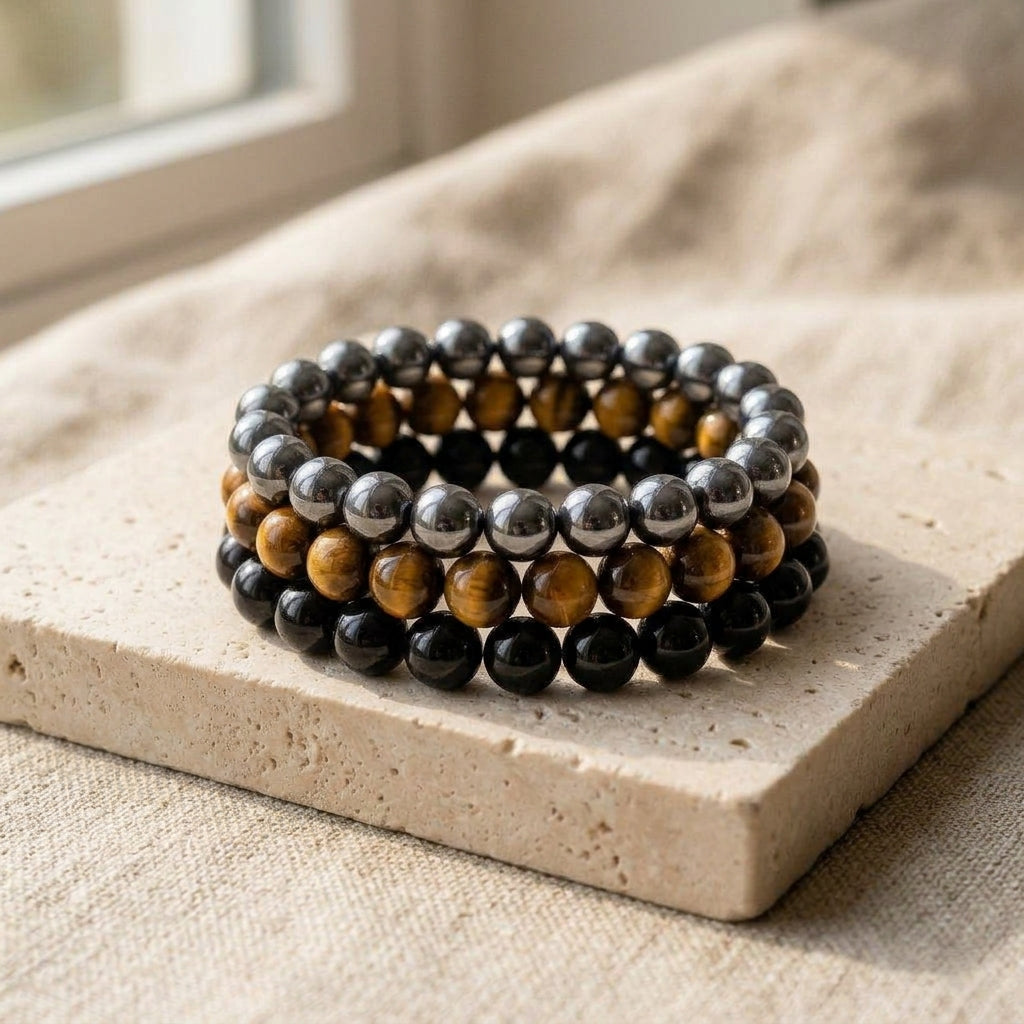
The Master Triple Protection Ritual Stack (Natural Tiger's Eye, Black Obsidian & Hematite)
Black obsidian is often worn as a grounding ritual piece for days that ask for steadier energy.
Shop This Authentic Piece →Practical comparison: what to check before you buy
| Check | What Real, Untreated Obsidian Usually Shows | Red Flag |
|---|---|---|
| Surface | Smooth glassy luster; conchoidal fracture edges | Uniform matte coating or plastic-like sheen |
| Color source | Black, brown, golden, or iridescent bands from bubbles/inclusions | Unnaturally even dye color in cracks |
| Weight | Moderate, glass-like density (~2.3–2.6 g/cm³) | Feels hollow or unusually light |
| Hardness behavior | Scratches more easily than quartz (Mohs ~5–5.5) | Claims of "scratch-proof" or "harder than quartz" |
| Seller disclosure | States natural, undyed, unfilled | Evasive about treatments |
Everyday Styling and Wear Tips
Obsidian's deep black works like a neutral: it sharpens contrast against white, cream, and denim, and it reads as elegant against jewel tones. For daily wear, choose a pendant on a short chain so the stone sits against fabric rather than clinking against desks or zippers. If you layer, place obsidian next to softer metals or leather rather than quartz or harder stones, because obsidian's Mohs hardness of roughly 5–5.5 means harder neighbors can dull or scratch it. A simple rule: obsidian is the piece you style boldly but handle gently.
Caring for Your Obsidian Necklace
Clean obsidian with lukewarm water, a drop of mild soap, and a soft cloth; dry immediately and store it in a pouch or separate compartment. Avoid ultrasonic and steam cleaners, which can stress glass, and skip harsh chemicals. Remove the necklace before swimming, gym sessions, or housework. Because obsidian fractures conchoidally, a sharp knock can chip an edge—so treat it like a fine glass object, not a metal one.
Choosing the Right Obsidian Necklace for You
Choose black obsidian for a versatile everyday piece, rainbow or golden obsidian if you want visible light play, and fire obsidian only if you are collecting and willing to handle a rare, delicate stone. Match the chain length to how you wear it: shorter for layering against skin, longer for statement pendants over knits. Decide whether you want symbolic grounding as a personal reminder or purely aesthetic contrast—both are valid, and neither requires a medical claim. Finally, prioritize disclosure and craftsmanship: a well-set, natural pendant under the Lumina Grade AAA Integrity Standard will wear better and age more gracefully than a treated or poorly mounted one.
Frequently Asked Questions
What does an obsidian necklace mean or symbolize?
In crystal lore, obsidian is often associated with protection and grounding, and it is frequently worn as a personal reminder or amulet. These are cultural and personal meanings, not scientifically established effects.
Is it safe to wear an obsidian necklace every day?
Yes, for most people daily wear is fine because obsidian is a stable natural glass. Just protect it from hard knocks and remove it for impact sports, since it can chip more easily than crystalline stones.
How can I tell if my obsidian necklace is real?
Look for a cool, glassy surface, conchoidal fracture, and tiny bubbles or flow lines under strong light, and ask whether it is natural, undyed, and unfilled. Man-made black glass can look similar, so seller transparency and the Lumina Grade AAA Integrity Standard are your best guides.
Sources
- Mindat — Obsidian: Mineral information, data and localities
- U.S. Geological Survey — Obsidian (volcanic glass)
- Smithsonian Profiles — obsidian use and interaction networks
- Smithsonian Museum Conservation Institute — obsidian trade research
- GIA — Fire Obsidian's Beguiling Spectrum
© 2026 Lumina Quartz. This guide is for educational and styling purposes; cultural and symbolic meanings are presented as lore and personal interpretation, not medical or scientific claims.
Product Facts From the Current Catalog
These details come from the active Lumina Quartz catalog record checked on 2026-10-31. They are product-listing facts, not laboratory results or invented wear-test claims.
| Listed product | The Master Triple Protection Ritual Stack (Natural Tiger's Eye, Black Obsidian & Hematite) | Grade AAA Set // Lumina Quartz |
|---|---|
| Format | Bracelets |
| Listed price snapshot | 89.00 |
Price, availability, and options may change. Check the live product listing before choosing.