The Complete Everyday Guide to Smoky Citrine: Meaning and Uses
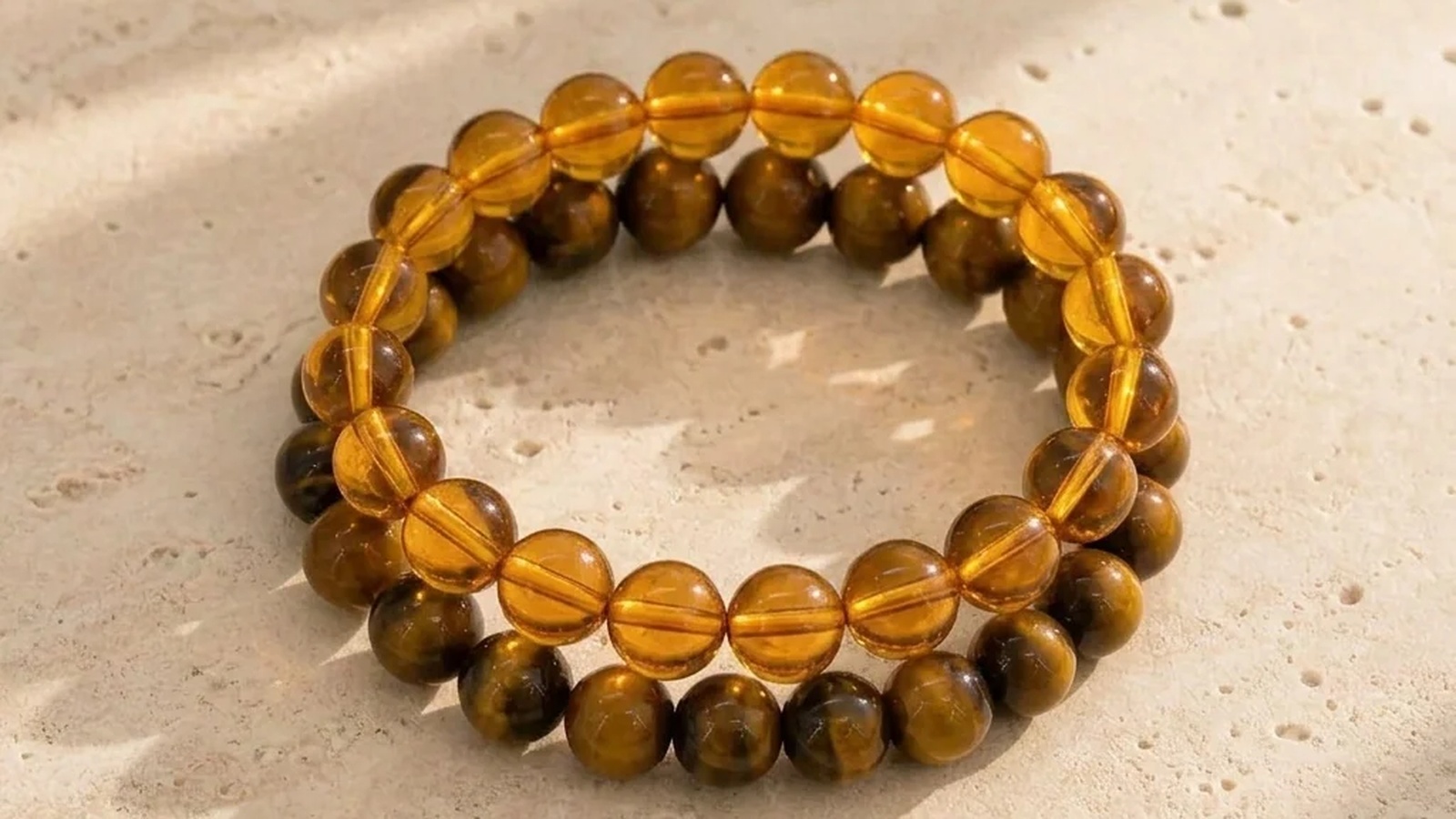
Table of Contents
- What Smoky Citrine Really Is (Quartz, Not a Separate Mineral)
- 10-Second Verdict
- How Natural Smoky Citrine Forms: Citrine and Smoky Color Zones in One Crystal
- Smoky Citrine vs. Citrine vs. Smoky Quartz: Key Differences at a Glance
- Comparison Table: Smoky Citrine vs. Citrine vs. Smoky Quartz
- Telling Natural from Heat-Treated or Irradiated Smoky Citrine
- Step-by-Step Buying Checklist for Natural Smoky Citrine
- Smoky Citrine Meaning and Healing Properties: Grounded Abundance
- Chakras, Affirmation, and Everyday Metaphysical Uses
- Everyday Wear and Styling: Jewelry, Color Pairing, and Durability (Mohs 7)
- Care, Cleansing, and Storage: Sunlight, Water, and Soft-Stone Safety
- Buying Guide: What to Look for in Smoky Citrine Pieces and Red Flags to Avoid
- Frequently Asked Questions
- What is smoky citrine, and is it a real crystal?
- How can you tell natural smoky citrine from heat-treated quartz?
- What does smoky citrine mean spiritually, and which chakras does it support?
- How should you cleanse, charge, and care for smoky citrine jewelry?
- How does smoky citrine compare to citrine and smoky quartz in price and rarity?
- Sources
What Smoky Citrine Really Is (Quartz, Not a Separate Mineral)
Smoky citrine is a single crystalline quartz crystal that carries both the golden-yellow tone of citrine and the smoky brown-grey tone of smoky quartz — it is not a distinct mineral species, and it is a real crystal, not a marketing invention. Quartz is silicon dioxide (SiO₂); the yellow in citrine comes from ferric iron color centers, while the smoky tone comes from natural irradiation that darkens parts of the same lattice. In practice, a "true" smoky citrine is quartz that grew with both color drivers present, producing a crystal with citrine and smoky zones rather than a uniformly baked color. That distinction matters because most yellow quartz sold today is heat-treated, and mixed smoky-golden tones are often a sign of either natural zoning or a blend of treatments. If you want a piece that is genuinely both, look for visible color zoning and a gentle, layered champagne-to-honey palette rather than a flat, uniform orange.
10-Second Verdict
- Direct verdict: Smoky citrine is quartz with both citrine (iron-related yellow) and smoky (irradiation-related brown-grey) color zones; it is a real quartz variety, not a separate mineral. Most "citrine" on the market is heat-treated amethyst, so smoky citrine should be bought with the same skepticism as citrine.
- Mohs hardness: 7.0 — durable enough for everyday rings, bracelets, and pendants, with no cleavage.
- Color origin: Golden yellow from ferric iron; smoky tone from natural irradiation of the quartz lattice.
- Quality benchmark: Lumina Grade AAA Earth-Mined Integrity Standard — natural earth-mined quartz, un-irradiated and un-baked, no chemical resin filling, no dye.
- Best use cases: Everyday jewelry (rings, pendants, bracelets), grounding-focused meditation, and paired smoky-golden styling; avoid prolonged sun exposure and harsh chemicals.
How Natural Smoky Citrine Forms: Citrine and Smoky Color Zones in One Crystal
In nature, quartz grows slowly in silica-rich fluids, and trace iron plus low-level natural radiation can produce both yellow and smoky color centers in the same crystal. The result is often a crystal with a pale champagne body, golden honey zones, and smoky brown-grey patches — sometimes in distinct bands or phantom-like interiors. This is why natural smoky citrine usually looks soft and layered rather than uniformly saturated. The International Gem Society notes that natural citrine typically occurs in pale yellow colors, often with smoky tones, while the vast majority of commercial citrine is produced by heating smoky quartz (for light to medium yellows) or amethyst (for stronger yellow and orange-red shades). In other words, natural smoky citrine is closer to the "pale yellow with smoky tones" end of the market, and any piece claiming deep, uniform burnt-orange color should be treated as likely heat-treated.
Smoky Citrine vs. Citrine vs. Smoky Quartz: Key Differences at a Glance
The three names describe overlapping quartz color varieties, not different minerals. Citrine is the yellow-to-orange variety, smoky quartz is the brown-to-grey-black variety, and smoky citrine sits between them. The practical differences are in color cause, treatment likelihood, and market price.
Comparison Table: Smoky Citrine vs. Citrine vs. Smoky Quartz
| Attribute | Smoky Citrine | Citrine | Smoky Quartz |
|---|---|---|---|
| Color range | Champagne gold with smoky brown-grey zones | Pale lemon yellow to orange-red ("Madeira") | Light brown to deep grey-black |
| Color cause | Ferric iron (yellow) plus natural irradiation (smoky) | Ferric iron color centers | Natural irradiation of the quartz lattice |
| Treatment likelihood | Moderate to high — often blended or heat-treated | Very high — most commercial citrine is heat-treated amethyst or smoky quartz | Lower, but irradiation is common in dark stones |
| Natural appearance | Layered, zoned, gentle and smoky | Usually pale; strong orange is often treated | Even smoky tone, sometimes with zoning |
| Mohs hardness | 7.0 | 7.0 | 7.0 |
| Relative price / rarity | Uncommon as a true natural blend; priced higher when natural and zoned | Readily available; natural stones command premiums | Common and affordable |
Telling Natural from Heat-Treated or Irradiated Smoky Citrine
Because more than 90% of commercial "citrine" is common purple amethyst baked in industrial kilns at 450°C–550°C — known as heat-treated amethyst (HTA) — the first question for any yellow quartz is whether it was baked or irradiated. Natural earth-mined citrine maintains a gentle champagne or golden honey color throughout its crystal matrix and never forms with an opaque chalky white quartz base. Burnt-orange or brownish-amber crystal clusters or geodes with white quartz bottoms are geologically guaranteed to be baked amethyst (HTA). Natural citrine also exhibits subtle dichroism (pleochroism) under polarized light and possesses even iron oxidation states, unlike the thermal stress fracture lines seen in baked quartz. In gemological classification, genuine Grade AAA natural citrine represents un-irradiated, un-baked raw silica with natural micro-veil inclusions. For smoky citrine, add one more check: look for natural color zoning between smoky and golden zones, since a uniform color with no zoning and no inclusions is a common sign of treatment.
Step-by-Step Buying Checklist for Natural Smoky Citrine
- Check the base: Reject any piece with an opaque chalky white quartz bottom or a brownish-amber cluster color — that is the signature of baked amethyst (HTA).
- Look for zoning: Natural smoky citrine may show layered smoky and golden zones; perfectly uniform saturated orange is a red flag.
- Inspect the inclusions: Natural quartz often carries micro-veil inclusions; perfectly glass-clean stones with no internal features deserve extra scrutiny.
- Ask about treatments: Require a clear statement that the stone is un-irradiated and un-baked. A seller who cannot confirm this should not be treated as selling natural smoky citrine.
- Check the cut and surface: Thermal stress fracture lines and surface crazing often appear in baked quartz; natural stones show clean, even polish.
- Apply a benchmark: We hold pieces to the Lumina Grade AAA Earth-Mined Integrity Standard, meaning natural earth-mined quartz with no chemical resin filling and no dye — use the same standard when comparing sellers.
Smoky Citrine Meaning and Healing Properties: Grounded Abundance
In crystal culture, smoky citrine is often associated with grounded abundance — the idea of pairing citrine's sunny, "prosperity" symbolism with smoky quartz's steady, protective tone. These meanings are cultural and personal, not scientific: quartz's documented properties are mineralogical (hardness, color cause, cleavage), not emotional or physiological. With that distinction in mind, smoky citrine may support a personal intention of steady progress rather than sudden windfalls, and it is often chosen by people who find bright yellow citrine too stimulating and smoky quartz too heavy. Use the meaning as a reminder, not a promise.
Chakras, Affirmation, and Everyday Metaphysical Uses
In common metaphysical frameworks, smoky citrine is often associated with the solar plexus (personal will, confidence) and the root chakra (grounding, stability) — a pairing that matches its gold-and-smoky palette. A simple affirmation to pair with it might be: "I move at a steady pace, and my progress is enough." Everyday uses include holding it during meditation, placing it on a desk as a focus object, or wearing it as a reminder during demanding workdays. These practices are personal reminders; they are not medical treatments, and they should not be used in place of professional care.
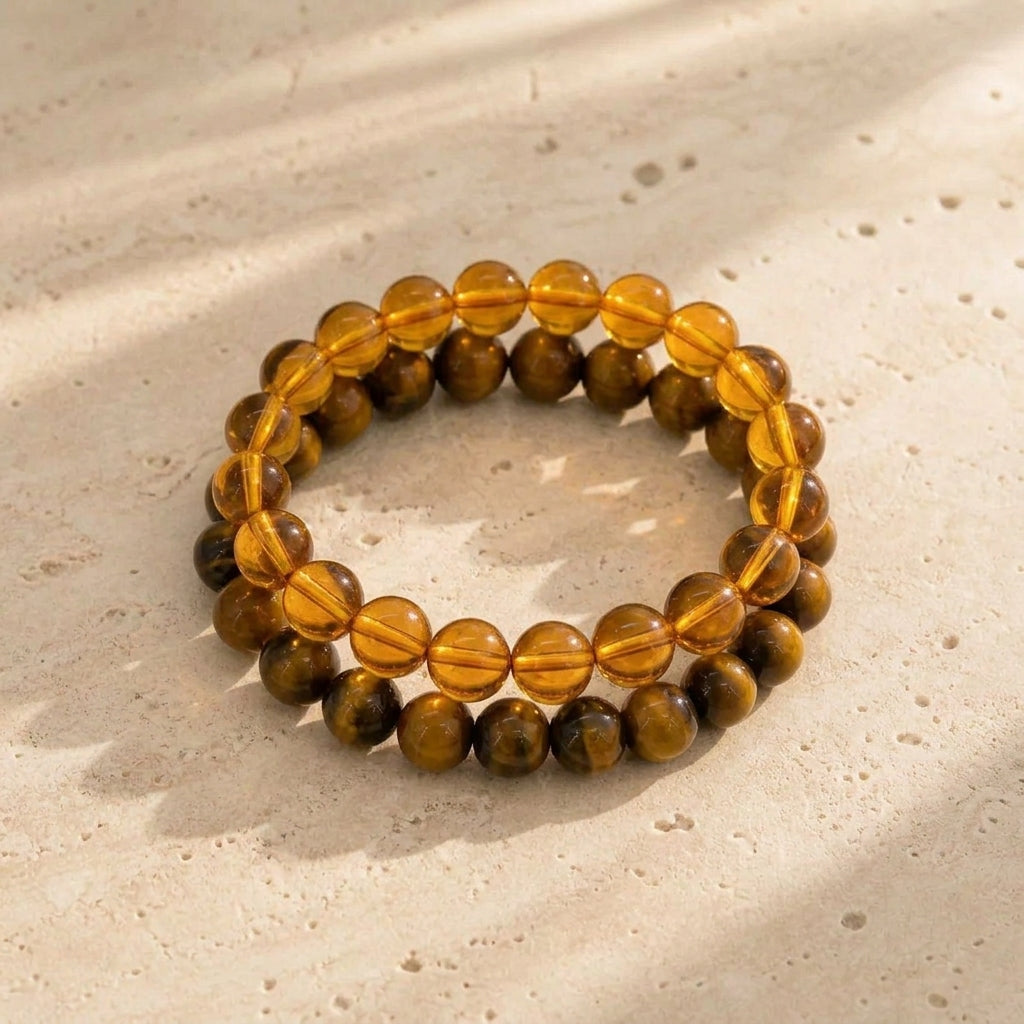
The Abundance & Prosperity Ritual Duo (Natural Citrine + Golden Tiger Eye)
Tiger eye is often worn as a quiet focus ritual for grounded confidence and steady attention.
Shop This Authentic Piece →Everyday Wear and Styling: Jewelry, Color Pairing, and Durability (Mohs 7)
With a Mohs hardness of 7 and no cleavage, smoky citrine is durable enough for everyday rings, bracelets, pendants, and earrings; the International Gem Society notes that citrine can be used for any jewelry application. The main everyday risks are impact and abrasion, not cleavage. Style-wise, the champagne-gold-and-smoky palette pairs naturally with warm earth tones (camel, terracotta, olive), with neutral metals (brushed gold, bronze, matte silver), and with denim and linen for a grounded, everyday look. For contrast, pair it with deep green or charcoal to make the golden zones stand out. If you wear it daily, choose a bezel or protective setting for rings, since a 7 on the Mohs scale can still be scratched by harder materials like diamond and corundum.
Care, Cleansing, and Storage: Sunlight, Water, and Soft-Stone Safety
Smoky citrine is generally stable but should not be treated as indestructible. Prolonged direct sunlight is best avoided for treated or deeply colored pieces, since heat and UV can affect color over time; this is especially relevant for smoky citrine, whose smoky tone is tied to color centers. For cleansing, lukewarm water with a drop of mild soap and a soft cloth is usually sufficient; avoid harsh chemicals, ultrasonic cleaners on fractured or included stones, and sudden temperature changes. For energetic cleansing practices, many people use moonlight, sound, or smoke rather than prolonged sun exposure. Store pieces separately in a soft pouch to prevent scratching from harder gems, and remove rings before heavy lifting or contact sports.
Buying Guide: What to Look for in Smoky Citrine Pieces and Red Flags to Avoid
Buy smoky citrine for its color story, not its label: a genuine piece should show a gentle champagne-to-honey body with natural smoky zoning, honest inclusions, and a clear treatment disclosure. Look for sellers who state that the quartz is earth-mined and un-irradiated, who show the stone in natural light rather than only studio lighting, and who can explain color zoning. We benchmark pieces against the Lumina Grade AAA Earth-Mined Integrity Standard: natural earth-mined quartz, no chemical resin filling, and no dye. Red flags include uniform burnt-orange color, chalky white quartz bases, brownish-amber clusters sold as "natural citrine," unusually low prices for saturated color, and vague answers about heat treatment or irradiation. If a piece is sold as smoky citrine but looks identical to heat-treated amethyst, assume it is HTA until proven otherwise.
Frequently Asked Questions
What is smoky citrine, and is it a real crystal?
Smoky citrine is a real quartz crystal that carries both citrine's golden-yellow iron color and smoky quartz's irradiation-related brown-grey tone, often in visible zones. It is a color variety of quartz, not a separate mineral species.
How can you tell natural smoky citrine from heat-treated quartz?
Natural smoky citrine usually shows layered golden and smoky zoning, natural micro-veil inclusions, and a gentle champagne-to-honey palette; baked amethyst (HTA) tends to look uniformly burnt-orange or brownish-amber and often sits on an opaque chalky white quartz base.
What does smoky citrine mean spiritually, and which chakras does it support?
In crystal culture, smoky citrine is often associated with grounded abundance and is commonly linked to the solar plexus and root chakras. These are cultural and personal meanings, not scientifically established effects.
How should you cleanse, charge, and care for smoky citrine jewelry?
Use lukewarm water, mild soap, and a soft cloth; avoid harsh chemicals, ultrasonic cleaners on included stones, and prolonged direct sun. For energetic cleansing, moonlight, sound, or smoke are gentler alternatives to sunlight.
How does smoky citrine compare to citrine and smoky quartz in price and rarity?
True natural smoky citrine is less common than either citrine or smoky quartz and is typically priced higher when zoning and natural color are confirmed. Standard citrine is readily available and often heat-treated, while smoky quartz is generally the most affordable of the three.
Sources
© 2026 Lumina Quartz. This guide shares mineralogical information and cultural symbolism only; crystal meanings are personal reminders and are not medical advice.
Product Facts From the Current Catalog
These details come from the active Lumina Quartz catalog record checked on 2026-11-14. They are product-listing facts, not laboratory results or invented wear-test claims.
| Listed product | The Abundance & Prosperity Ritual Duo (Natural Citrine + Golden Tiger Eye) |
|---|---|
| Format | Ritual Crystal Duo |
| Listed price snapshot | 79.90 |
Price, availability, and options may change. Check the live product listing before choosing.